
What is the Core Torso Think of it
- Slides: 9
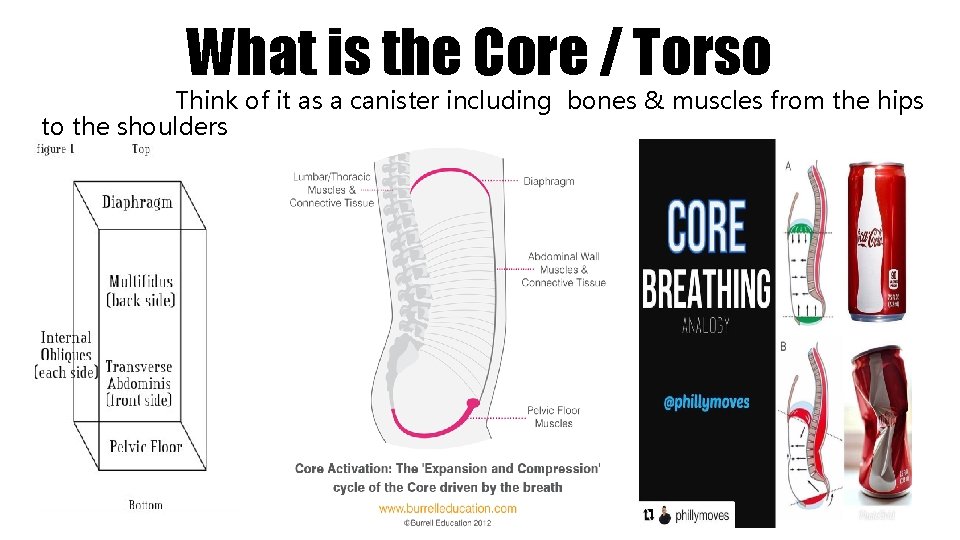
What is the Core / Torso Think of it as a canister including bones & muscles from the hips to the shoulders
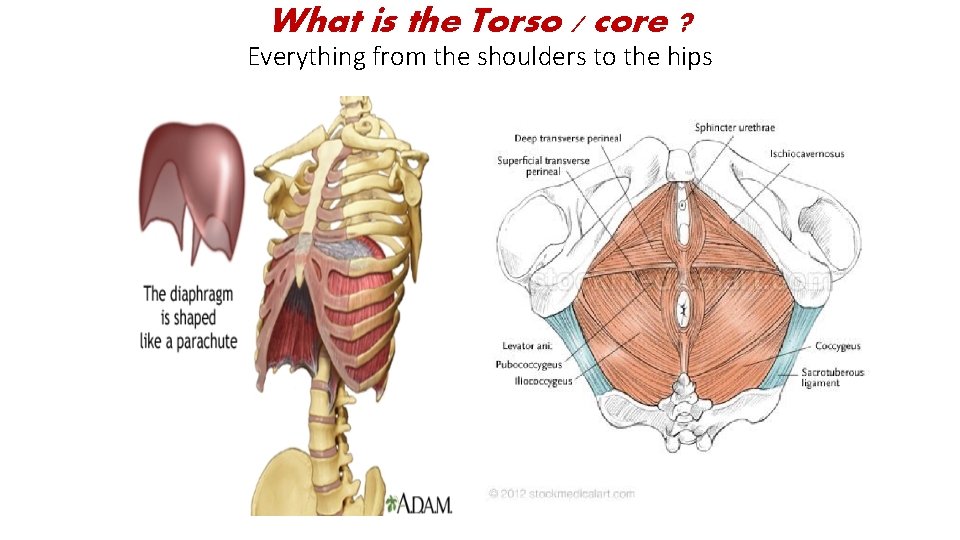
What is the Torso / core ? Everything from the shoulders to the hips
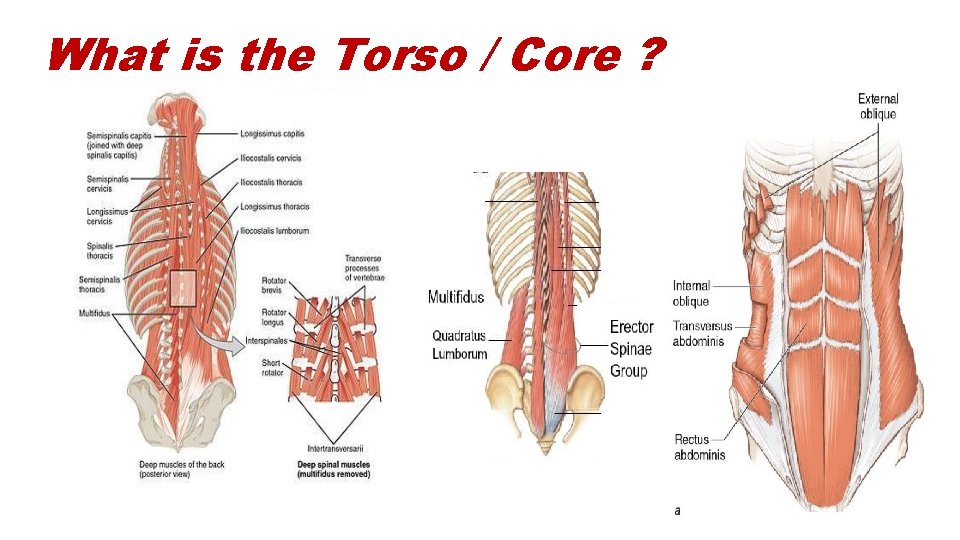
What is the Torso / Core ?
Breathing – Core fitness & Performance Based on the article below • Information gathered from • Nelson, N. Diaphragmatic breathing: The Foundation of Core Stability. NSCA Strength & Conditioning Journal 34 (5): 34 - 40, 2012 • Based on the research & work performed by experts in the fields health sciences & sports performance
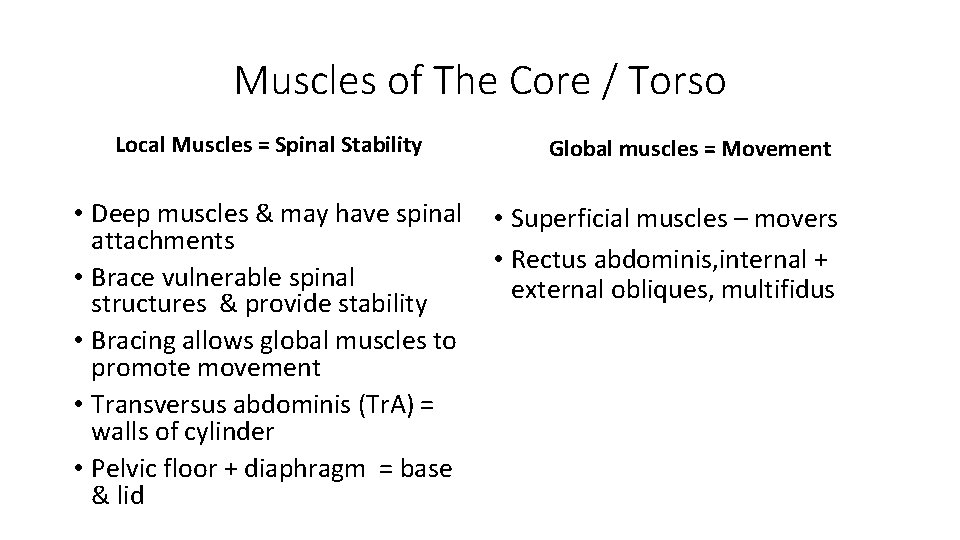
Muscles of The Core / Torso Local Muscles = Spinal Stability • Deep muscles & may have spinal attachments • Brace vulnerable spinal structures & provide stability • Bracing allows global muscles to promote movement • Transversus abdominis (Tr. A) = walls of cylinder • Pelvic floor + diaphragm = base & lid Global muscles = Movement • Superficial muscles – movers • Rectus abdominis, internal + external obliques, multifidus
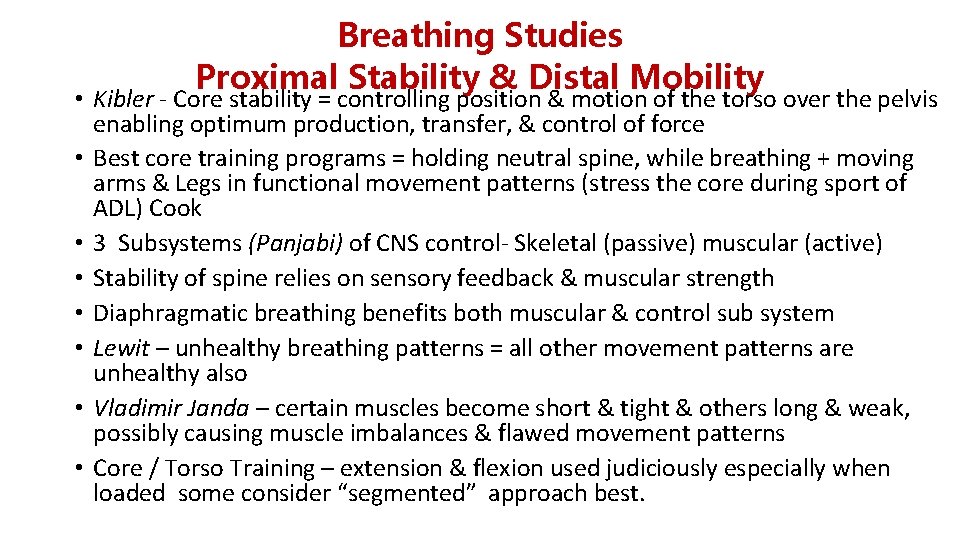
Breathing Studies Proximal Stability & Distal Mobility • Kibler - Core stability = controlling position & motion of the torso over the pelvis enabling optimum production, transfer, & control of force • Best core training programs = holding neutral spine, while breathing + moving arms & Legs in functional movement patterns (stress the core during sport of ADL) Cook • 3 Subsystems (Panjabi) of CNS control- Skeletal (passive) muscular (active) • Stability of spine relies on sensory feedback & muscular strength • Diaphragmatic breathing benefits both muscular & control sub system • Lewit – unhealthy breathing patterns = all other movement patterns are unhealthy also • Vladimir Janda – certain muscles become short & tight & others long & weak, possibly causing muscle imbalances & flawed movement patterns • Core / Torso Training – extension & flexion used judiciously especially when loaded some consider “segmented” approach best.
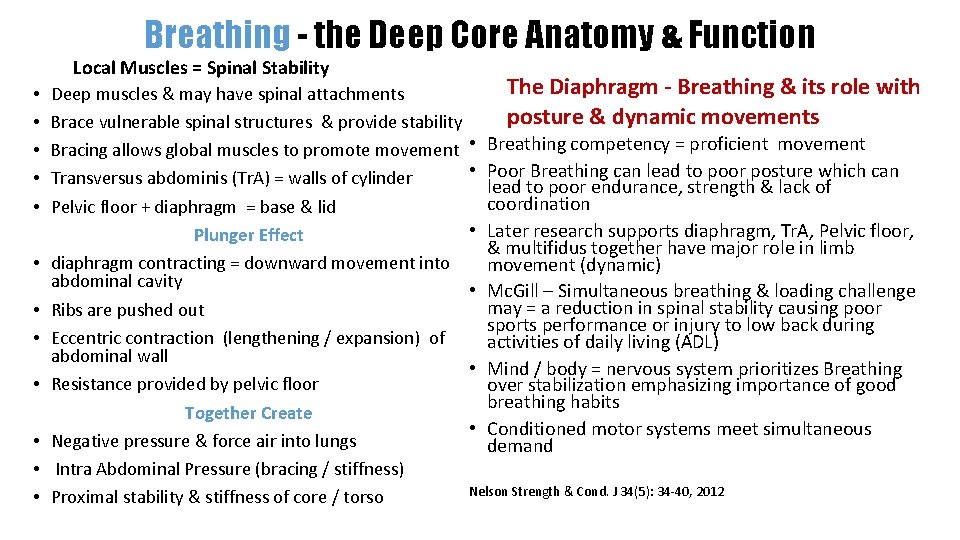
Breathing - the Deep Core Anatomy & Function Local Muscles = Spinal Stability • • • Deep muscles & may have spinal attachments Brace vulnerable spinal structures & provide stability Bracing allows global muscles to promote movement Transversus abdominis (Tr. A) = walls of cylinder Pelvic floor + diaphragm = base & lid Plunger Effect diaphragm contracting = downward movement into abdominal cavity Ribs are pushed out Eccentric contraction (lengthening / expansion) of abdominal wall Resistance provided by pelvic floor Together Create Negative pressure & force air into lungs Intra Abdominal Pressure (bracing / stiffness) Proximal stability & stiffness of core / torso The Diaphragm - Breathing & its role with posture & dynamic movements • Breathing competency = proficient movement • Poor Breathing can lead to poor posture which can lead to poor endurance, strength & lack of coordination • Later research supports diaphragm, Tr. A, Pelvic floor, & multifidus together have major role in limb movement (dynamic) • Mc. Gill – Simultaneous breathing & loading challenge may = a reduction in spinal stability causing poor sports performance or injury to low back during activities of daily living (ADL) • Mind / body = nervous system prioritizes Breathing over stabilization emphasizing importance of good breathing habits • Conditioned motor systems meet simultaneous demand Nelson Strength & Cond. J 34(5): 34 -40, 2012
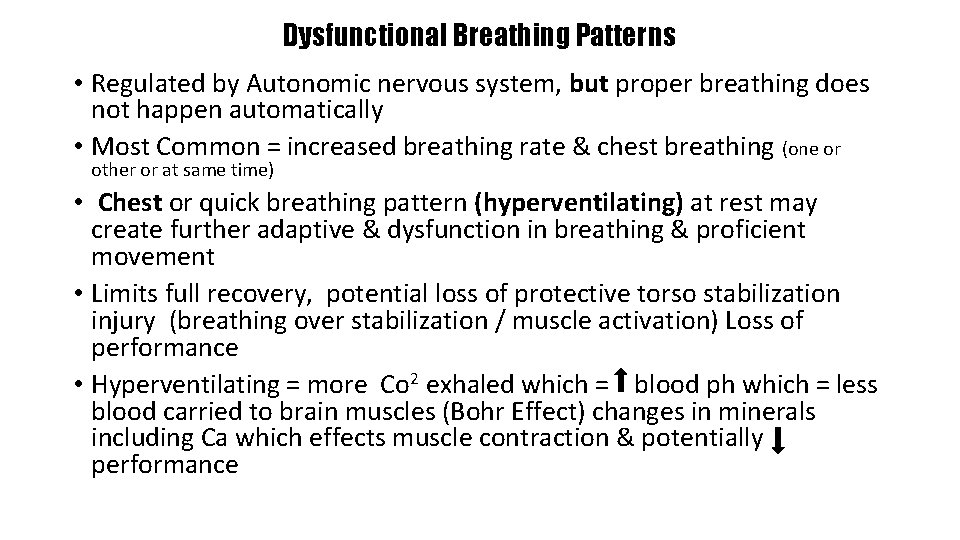
Dysfunctional Breathing Patterns • Regulated by Autonomic nervous system, but proper breathing does not happen automatically • Most Common = increased breathing rate & chest breathing (one or other or at same time) • Chest or quick breathing pattern (hyperventilating) at rest may create further adaptive & dysfunction in breathing & proficient movement • Limits full recovery, potential loss of protective torso stabilization injury (breathing over stabilization / muscle activation) Loss of performance • Hyperventilating = more Co 2 exhaled which = blood ph which = less blood carried to brain muscles (Bohr Effect) changes in minerals including Ca which effects muscle contraction & potentially performance
Breathing Generally Speaking 1) Proper breathing practices 2) Activation of Deep core muscles pelvic floor & transverse 3) Core / Torso training centered around 1 st creating stiffness / stability, muscular endurance with the ability to resist movement torques before Utiliziting Core / Torso training that emphasizes proper loading & movement patterns is considered prudent for both general health & sports performance