
WHAT IS THE BIBLE Chapter 1 Overview How
WHAT IS THE BIBLE? Chapter 1
Overview § How to read the Bible § Catholic Perspective § Who wrote the Bible? § Salvation History – Covenants with God § Connection with the Church § The Canon: Why only these books?

Key Ideas – Chapter 1 § What is the Bible? § Scripture, Tradition and the Magisterium (pp. 6 -9) § The Bible as Religious History (pp. 10 -13) § Salvation History and the Canon of Scripture (pp. 14 -18) § Focused Reading 2 Timothy 3: 10 -4: 5; “What is the nature of Sacred Scripture and what are its purposes? ”
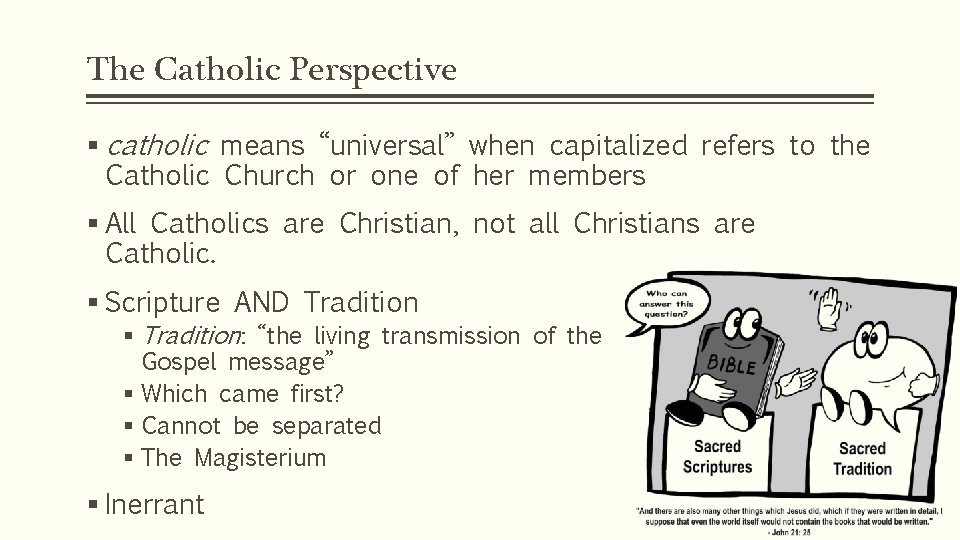
The Catholic Perspective § catholic means “universal” when capitalized refers to the Catholic Church or one of her members § All Catholics are Christian, not all Christians are Catholic. § Scripture AND Tradition § Tradition: “the living transmission of the Gospel message” § Which came first? § Cannot be separated § The Magisterium § Inerrant

Who wrote the Bible? § Divinely Inspired – God is the principal author § Human Authors § Many different authors § Free, intelligent, subordinate instruments of the Holy Spirit § Different Styles and Audiences
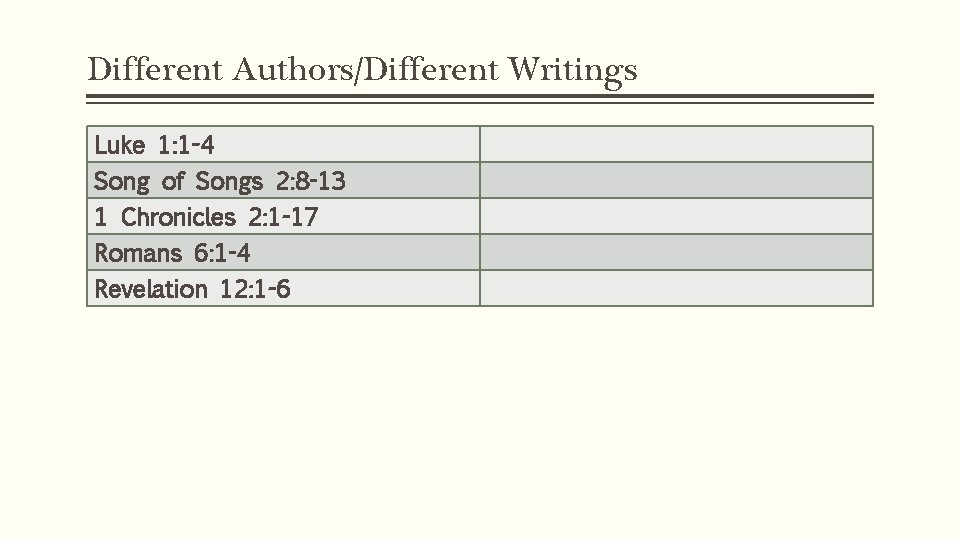
Different Authors/Different Writings Luke 1: 1 -4 Song of Songs 2: 8 -13 1 Chronicles 2: 1 -17 Romans 6: 1 -4 Revelation 12: 1 -6
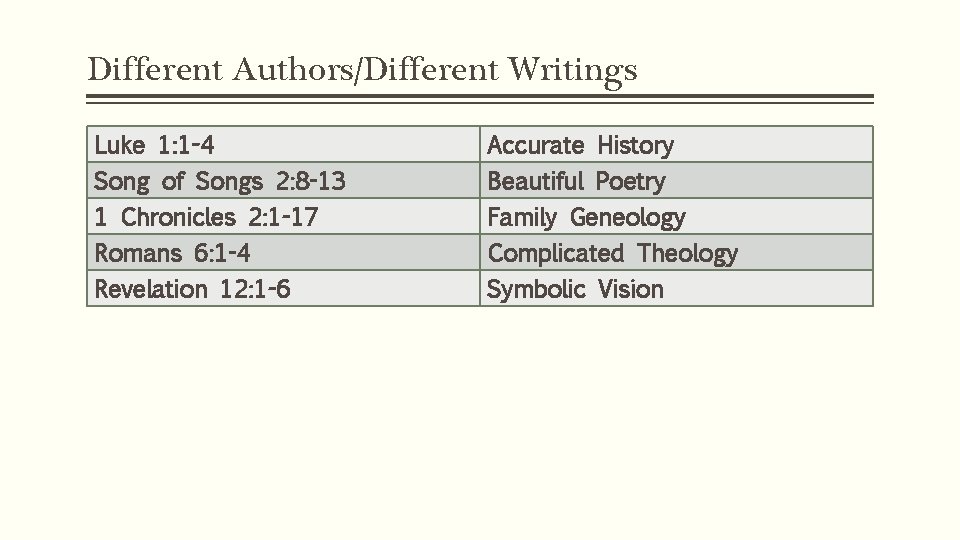
Different Authors/Different Writings Luke 1: 1 -4 Song of Songs 2: 8 -13 1 Chronicles 2: 1 -17 Romans 6: 1 -4 Accurate History Beautiful Poetry Family Geneology Complicated Theology Revelation 12: 1 -6 Symbolic Vision
The Bible is Sacred Literature § Not a History book, but takes place throughout history § Not a science book, but explains the “Why” § Ancient Literature – yet still completely relevant today § The Bible is religious § Literal vs. Spiritual
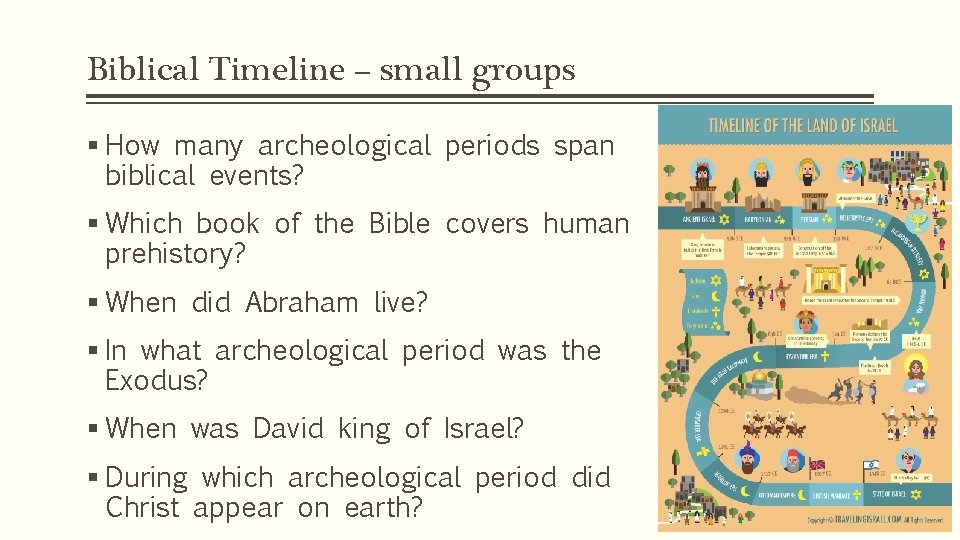
Biblical Timeline – small groups § How many archeological periods span biblical events? § Which book of the Bible covers human prehistory? § When did Abraham live? § In what archeological period was the Exodus? § When was David king of Israel? § During which archeological period did Christ appear on earth?
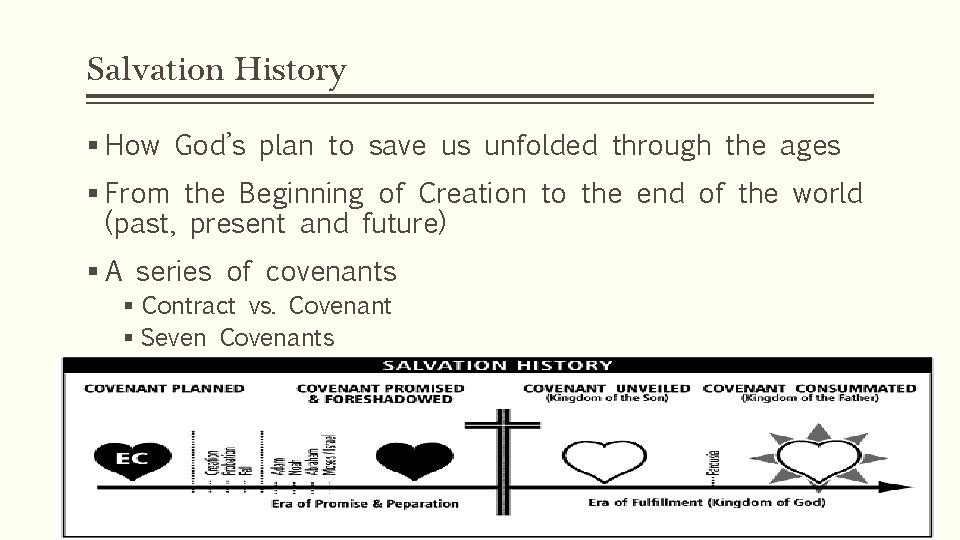
Salvation History § How God’s plan to save us unfolded through the ages § From the Beginning of Creation to the end of the world (past, present and future) § A series of covenants § Contract vs. Covenant § Seven Covenants
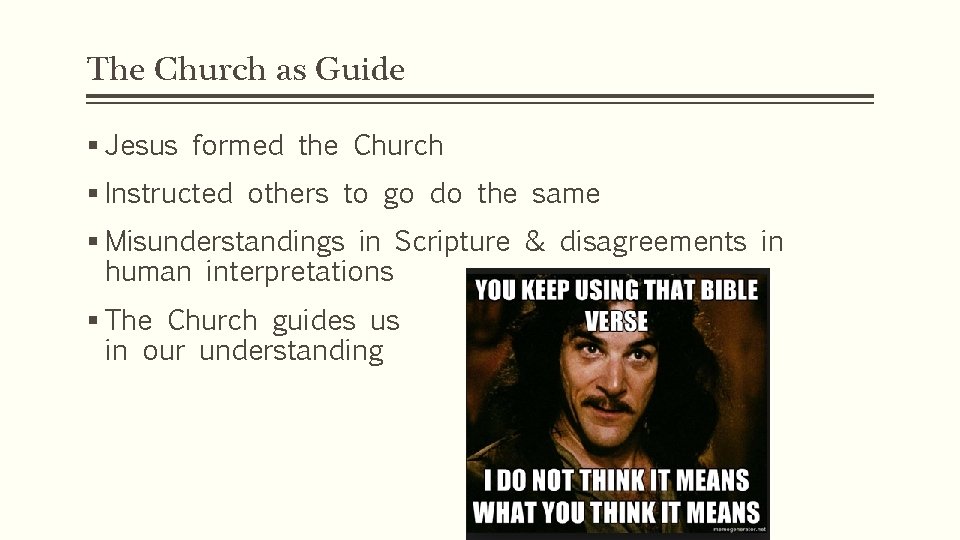
The Church as Guide § Jesus formed the Church § Instructed others to go do the same § Misunderstandings in Scripture & disagreements in human interpretations § The Church guides us in our understanding
The Canon § Divided into two sections § Old Testament – Before Christ § New Testament – After Christ § Both equally important § What can be used during Liturgy of the Word? § canon – from the Greek word meaning “measuring rod” or “rule” – divinely inspired, under the guidance of the Holy Spirit § Tradition and the Council of Trent (1545 -1563) § “Deuterocanonical” and “Apocrypha”
Canonicity – what makes a book Canonical § Three Criteria for Canonicity § Apostolicity § Orthodoxy § Catholicity § What did Sacred Authors wanted to affirm and what God wanted to reveal? (to understand Scriptures correctly for us): § Conditions of the time and culture § Literary Genres § Modes of Feeling § Modes of Speaking § Modes of Narrating, etc.
Conclusion § The Relationship among Sacred Scripture, Tradition and the Magisterium. § The Bible as an inerrant, human-divine creation § The Bible as works of literature § The Bible as Objective History § The Concept of Salvation History § How Catholics understand Faith, including the Scriptures § How the canon of Scripture was determined.
THE OLD TESTAMENT Chapter 2
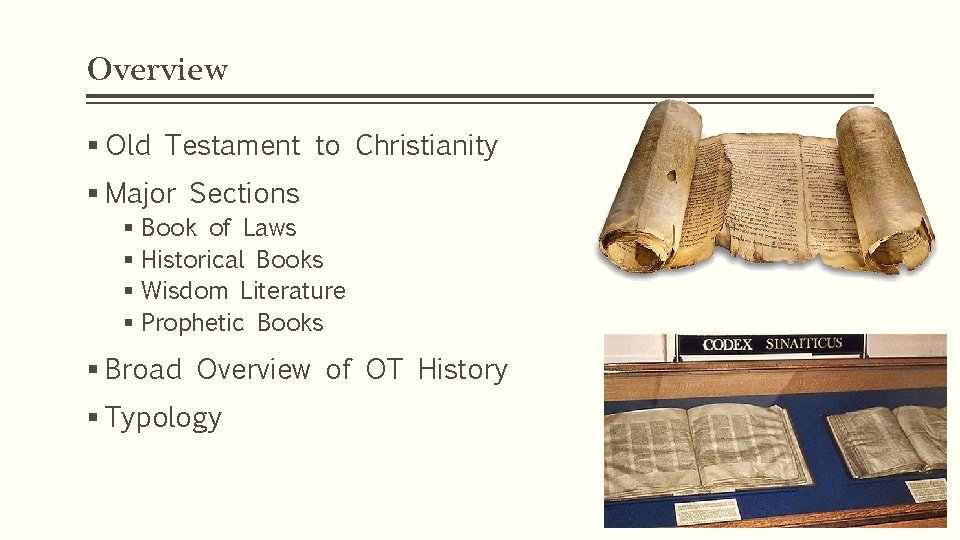
Overview § Old Testament to Christianity § Major Sections § Book of Laws § Historical Books § Wisdom Literature § Prophetic Books § Broad Overview of OT History § Typology
Key Ideas – Chapter 2 § The Old Testament § The Old § Old (pp. Law of the Old Testament (pp. 24 -27) History, Wisdom and Prophecy of the Testament (pp. 28 -33) Testament History and Typology 34 -38)
- Slides: 17