
What is Taxonomy System of classifying and naming


- Slides: 16
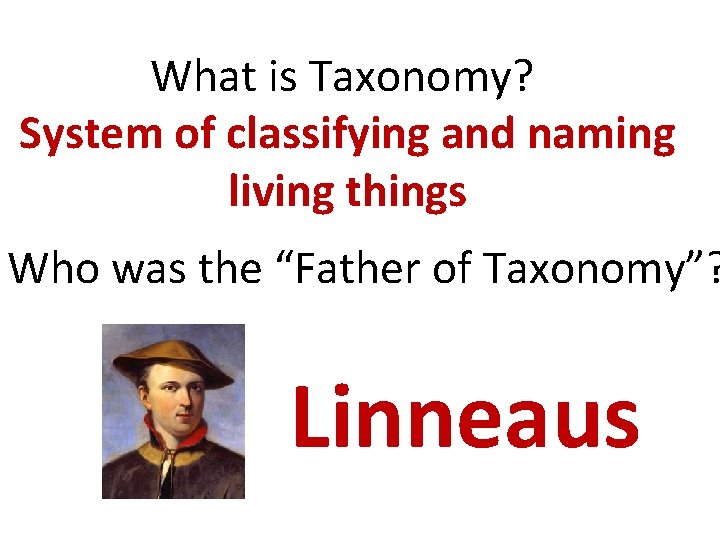
What is Taxonomy? System of classifying and naming living things Who was the “Father of Taxonomy”? Linneaus
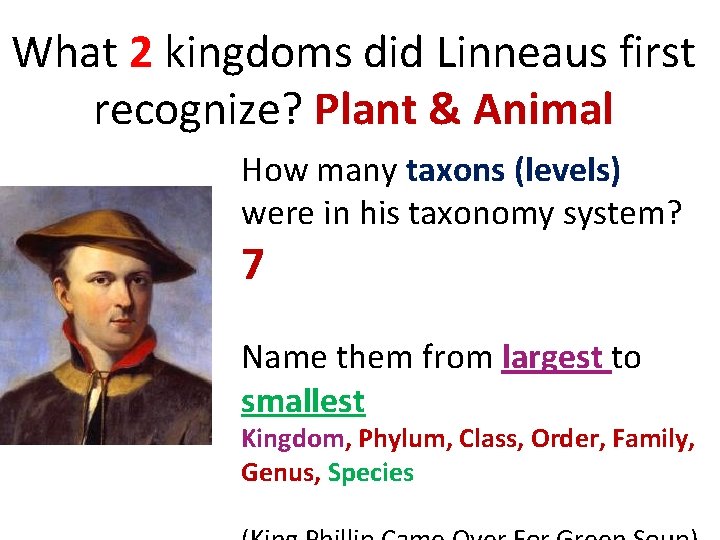
What 2 kingdoms did Linneaus first recognize? Plant & Animal How many taxons (levels) were in his taxonomy system? 7 Name them from largest to smallest Kingdom, Phylum, Class, Order, Family, Genus, Species
• What system did Linneaus create to help name species? Binomial Nomenclature • What 2 parts are in this naming system? Genus species (scientific name) • What language is used in names? Latin
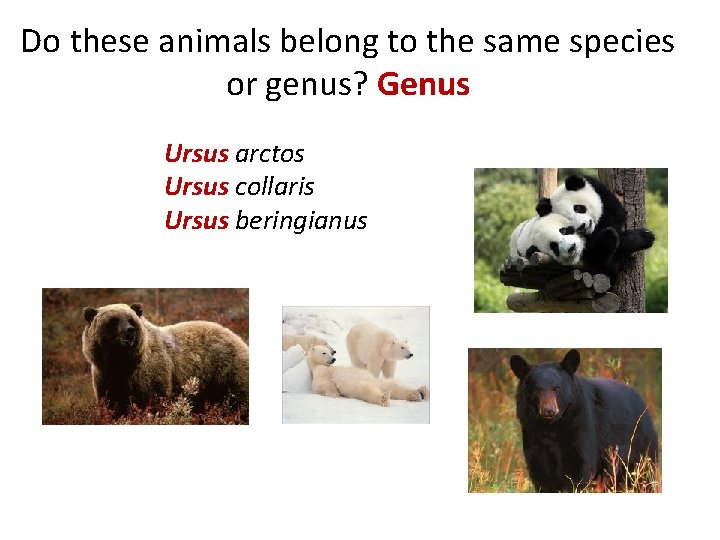
Do these animals belong to the same species or genus? Genus Ursus arctos Ursus collaris Ursus beringianus
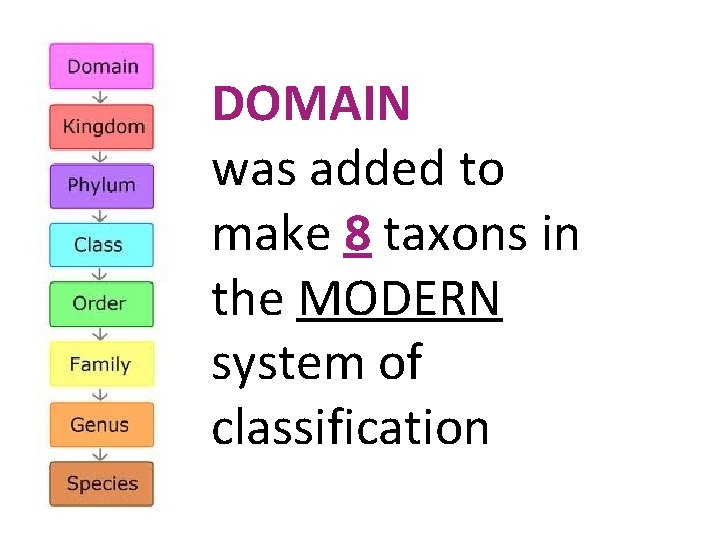
DOMAIN was added to make 8 taxons in the MODERN system of classification
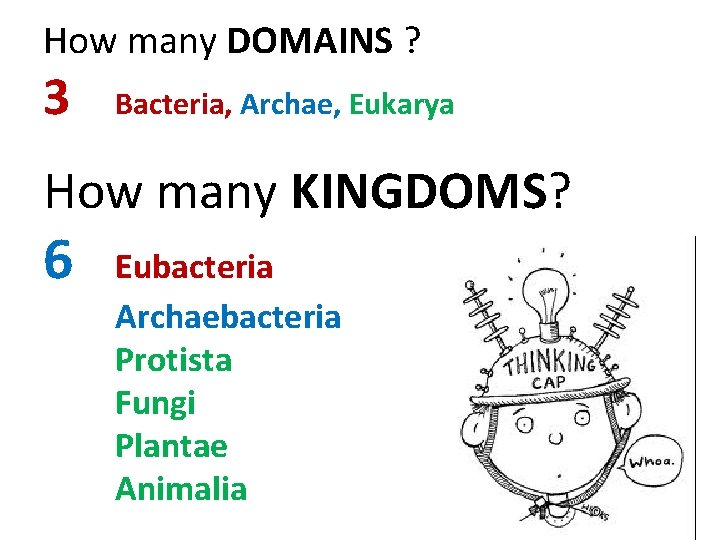
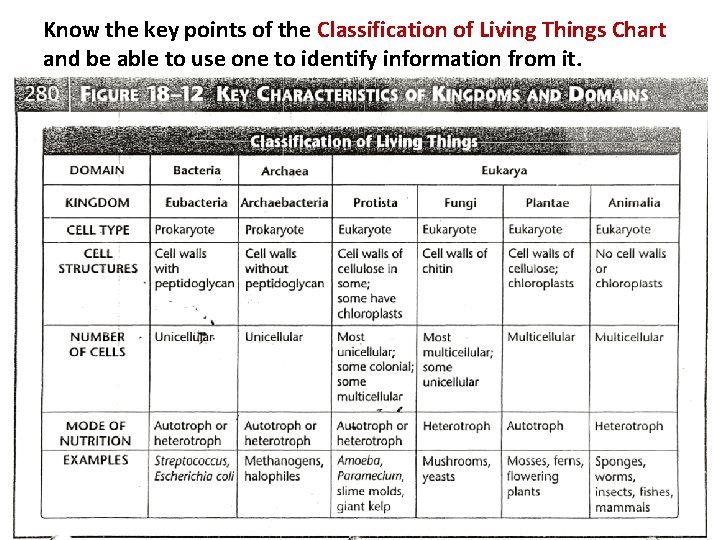
How many DOMAINS ? 3 Bacteria, Archae, Eukarya How many KINGDOMS? 6 Eubacteria Archaebacteria Protista Fungi Plantae Animalia
Why do we classify living things? Give 4 reasons • • Universal System (Common names are different in various locations around the world making it difficult to talk about an animal. Ex: puma, mountain lion, cougar) Organizes living things Easier to study living things Looks at relationships (interactions)
Traditional classification is based on shared physical characteristics. Evolutionary classification is based on evolutionary (ancestors) characteristics. Molecular (clock) classification is based on DNA and time.
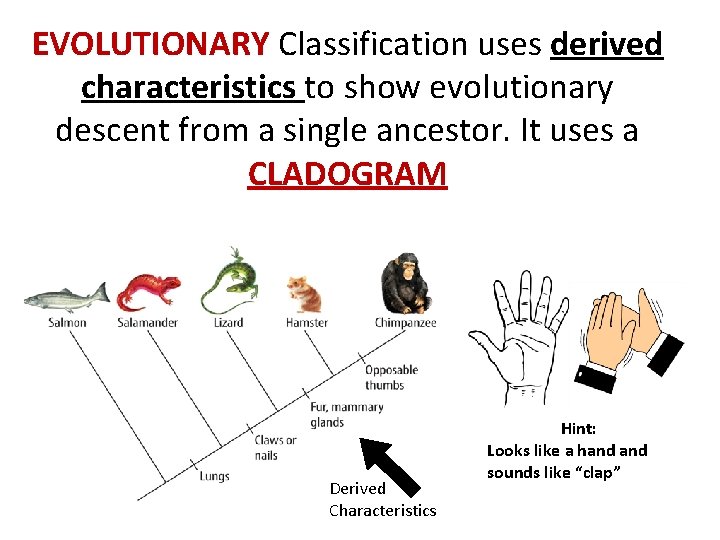
EVOLUTIONARY Classification uses derived characteristics to show evolutionary descent from a single ancestor. It uses a CLADOGRAM Derived Characteristics Hint: Looks like a hand sounds like “clap”
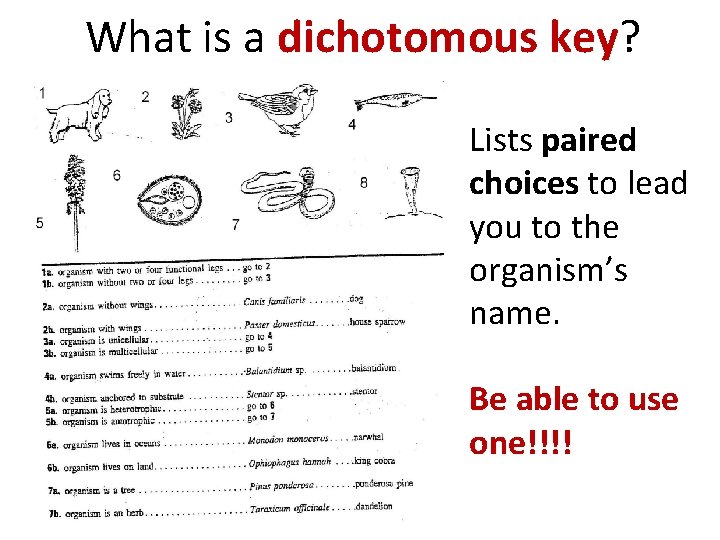
What is a dichotomous key? Lists paired choices to lead you to the organism’s name. Be able to use one!!!!
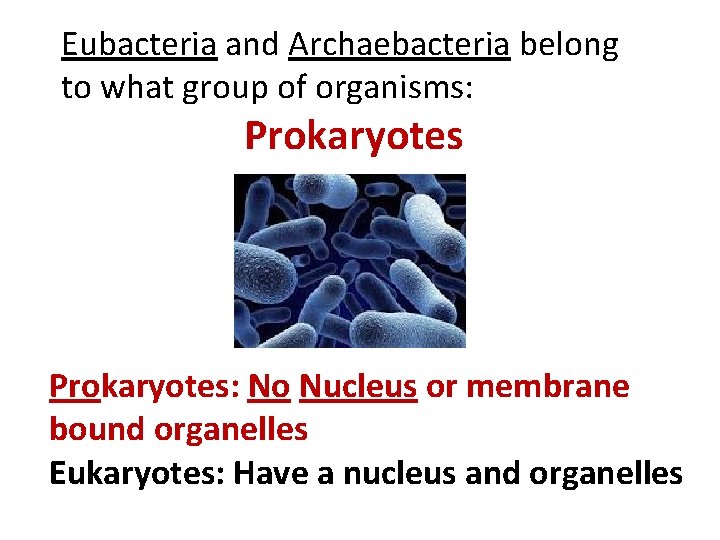
Eubacteria and Archaebacteria belong to what group of organisms: Prokaryotes: No Nucleus or membrane bound organelles Eukaryotes: Have a nucleus and organelles
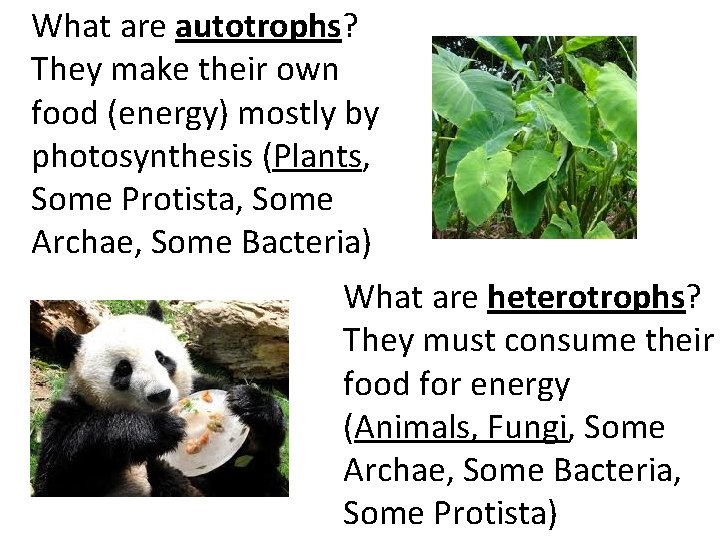
What are autotrophs? They make their own food (energy) mostly by photosynthesis (Plants, Some Protista, Some Archae, Some Bacteria) What are heterotrophs? They must consume their food for energy (Animals, Fungi, Some Archae, Some Bacteria, Some Protista)
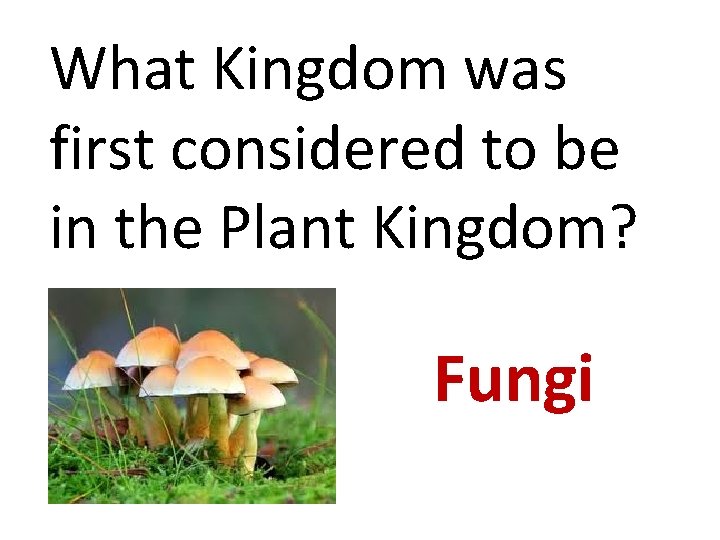
What Kingdom was first considered to be in the Plant Kingdom? Fungi
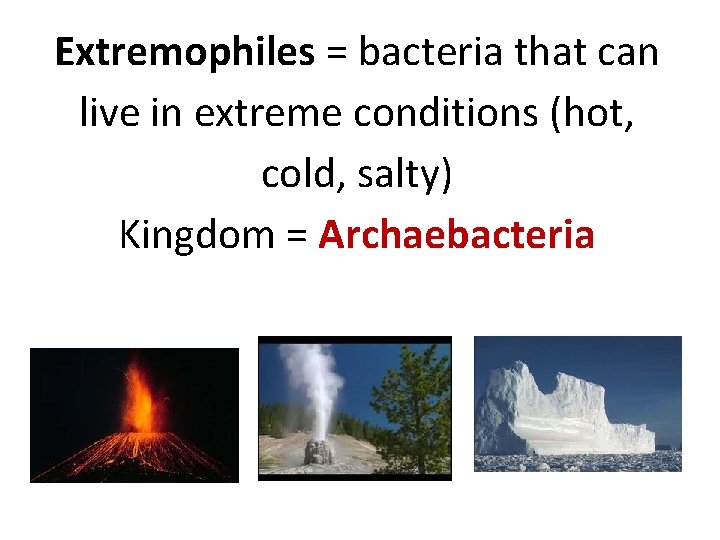
Extremophiles = bacteria that can live in extreme conditions (hot, cold, salty) Kingdom = Archaebacteria
Know the key points of the Classification of Living Things Chart and be able to use one to identify information from it.