
what is systems analysis preparation of the systems
- Slides: 9
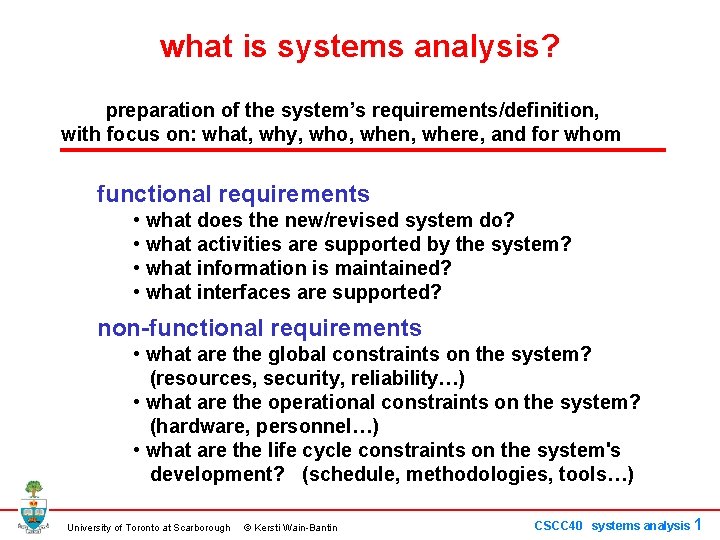
what is systems analysis? preparation of the system’s requirements/definition, with focus on: what, why, who, when, where, and for whom functional requirements • what does the new/revised system do? • what activities are supported by the system? • what information is maintained? • what interfaces are supported? non-functional requirements • what are the global constraints on the system? (resources, security, reliability…) • what are the operational constraints on the system? (hardware, personnel…) • what are the life cycle constraints on the system's development? (schedule, methodologies, tools…) University of Toronto at Scarborough © Kersti Wain-Bantin CSCC 40 systems analysis 1
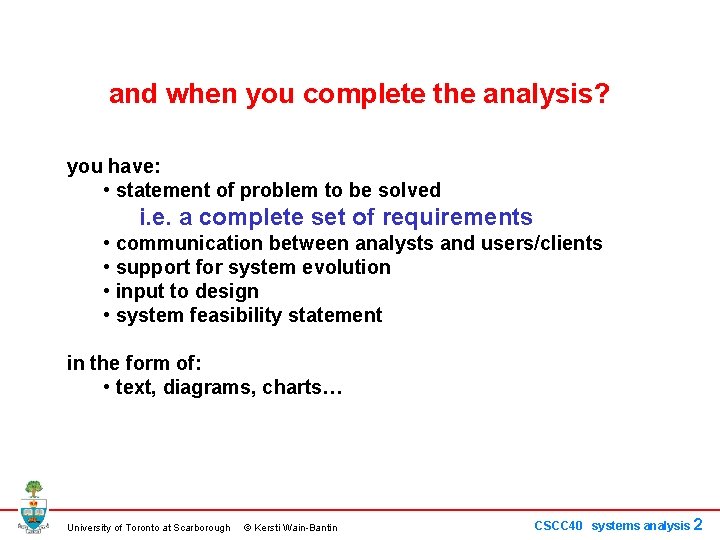
and when you complete the analysis? you have: • statement of problem to be solved i. e. a complete set of requirements • communication between analysts and users/clients • support for system evolution • input to design • system feasibility statement in the form of: • text, diagrams, charts… University of Toronto at Scarborough © Kersti Wain-Bantin CSCC 40 systems analysis 2
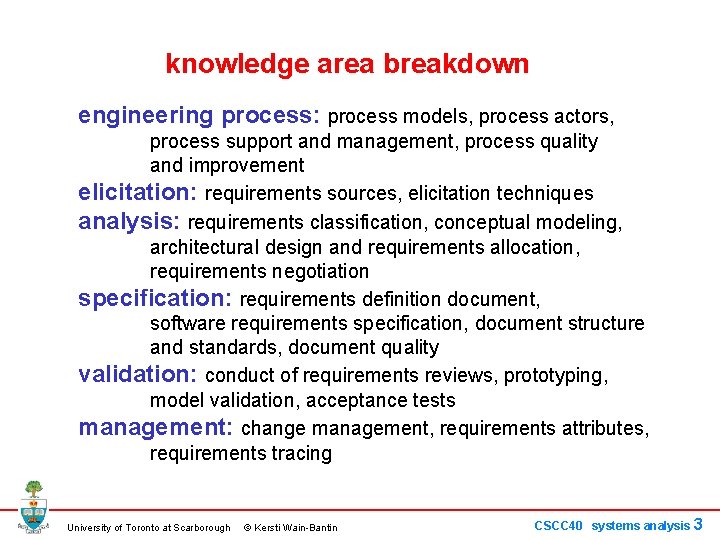
knowledge area breakdown engineering process: process models, process actors, process support and management, process quality and improvement elicitation: requirements sources, elicitation techniques analysis: requirements classification, conceptual modeling, architectural design and requirements allocation, requirements negotiation specification: requirements definition document, software requirements specification, document structure and standards, document quality validation: conduct of requirements reviews, prototyping, model validation, acceptance tests management: change management, requirements attributes, requirements tracing University of Toronto at Scarborough © Kersti Wain-Bantin CSCC 40 systems analysis 3
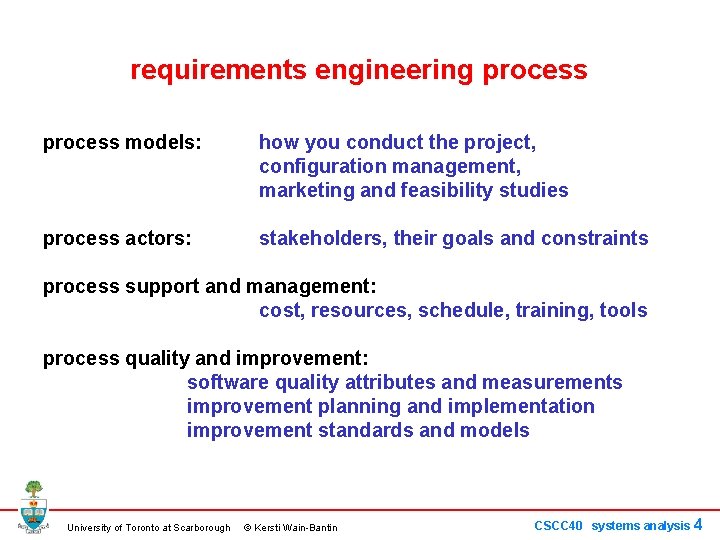
requirements engineering process models: how you conduct the project, configuration management, marketing and feasibility studies process actors: stakeholders, their goals and constraints process support and management: cost, resources, schedule, training, tools process quality and improvement: software quality attributes and measurements improvement planning and implementation improvement standards and models University of Toronto at Scarborough © Kersti Wain-Bantin CSCC 40 systems analysis 4
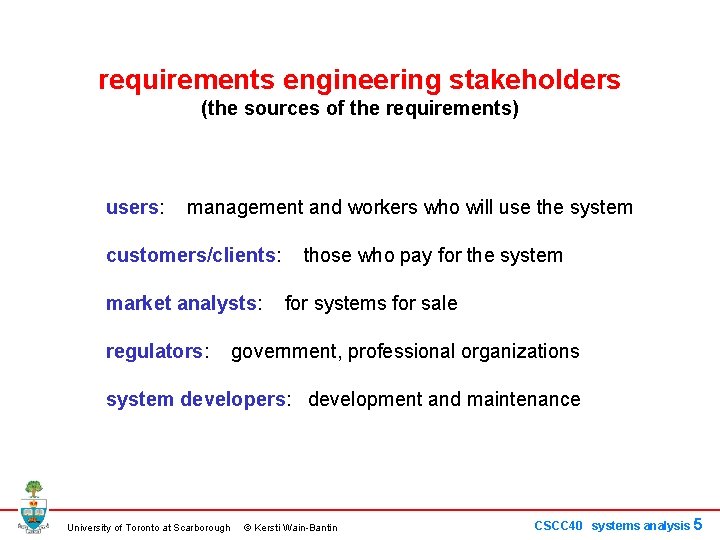
requirements engineering stakeholders (the sources of the requirements) users: management and workers who will use the system customers/clients: market analysts: regulators: those who pay for the system for systems for sale government, professional organizations system developers: development and maintenance University of Toronto at Scarborough © Kersti Wain-Bantin CSCC 40 systems analysis 5
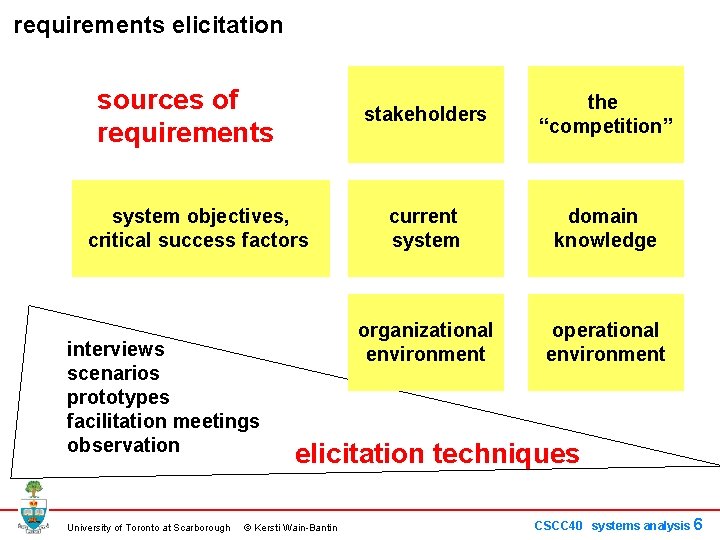
requirements elicitation sources of requirements system objectives, critical success factors interviews scenarios prototypes facilitation meetings observation University of Toronto at Scarborough stakeholders the “competition” current system domain knowledge organizational environment operational environment elicitation techniques © Kersti Wain-Bantin CSCC 40 systems analysis 6
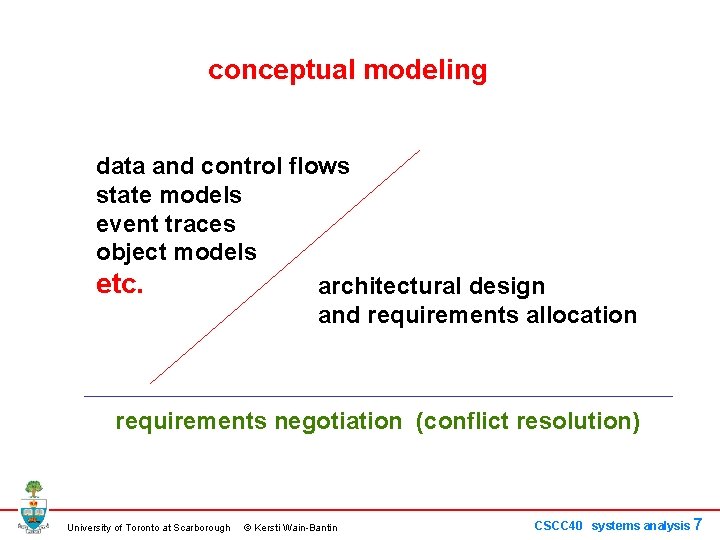
conceptual modeling data and control flows state models event traces object models etc. architectural design and requirements allocation requirements negotiation (conflict resolution) University of Toronto at Scarborough © Kersti Wain-Bantin CSCC 40 systems analysis 7
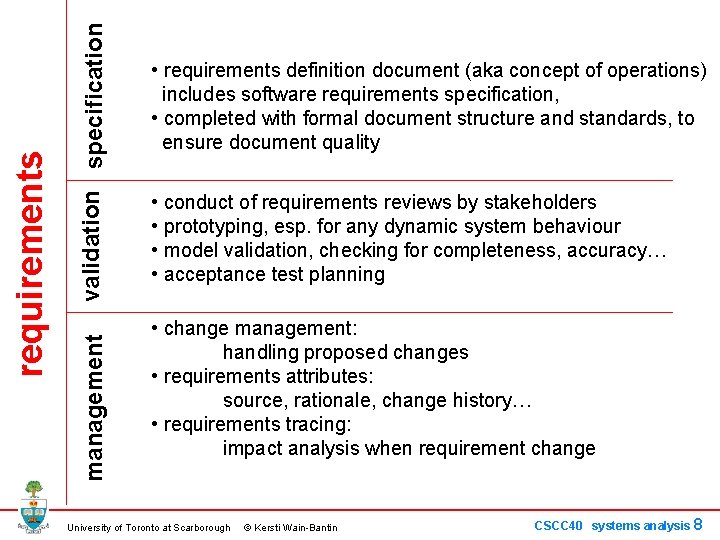
validation specification management requirements • requirements definition document (aka concept of operations) includes software requirements specification, • completed with formal document structure and standards, to ensure document quality • conduct of requirements reviews by stakeholders • prototyping, esp. for any dynamic system behaviour • model validation, checking for completeness, accuracy… • acceptance test planning • change management: handling proposed changes • requirements attributes: source, rationale, change history… • requirements tracing: impact analysis when requirement change University of Toronto at Scarborough © Kersti Wain-Bantin CSCC 40 systems analysis 8
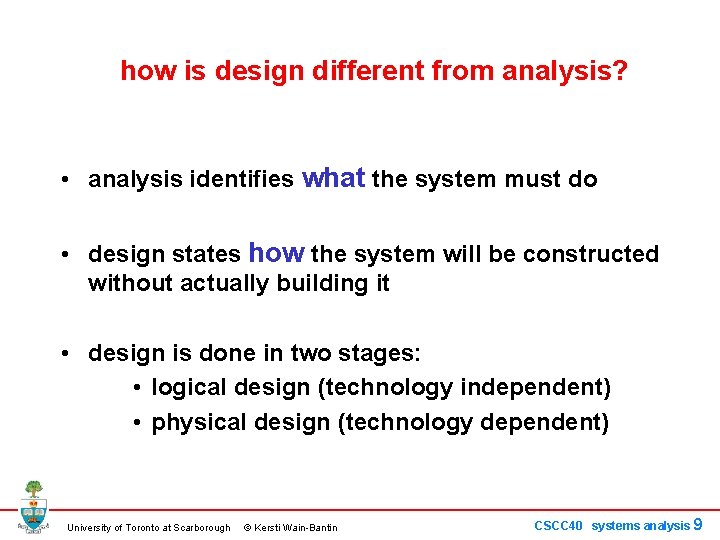
how is design different from analysis? • analysis identifies what the system must do • design states how the system will be constructed without actually building it • design is done in two stages: • logical design (technology independent) • physical design (technology dependent) University of Toronto at Scarborough © Kersti Wain-Bantin CSCC 40 systems analysis 9