
What is Stress Assumptions 1 Stress is ubiquitous
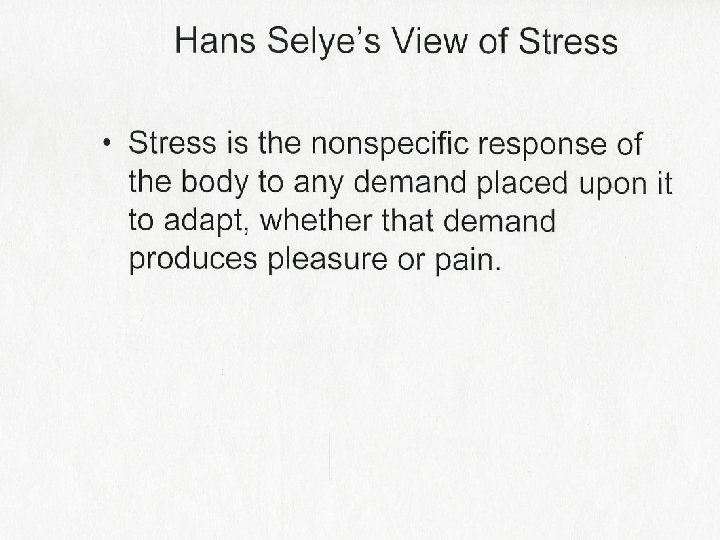
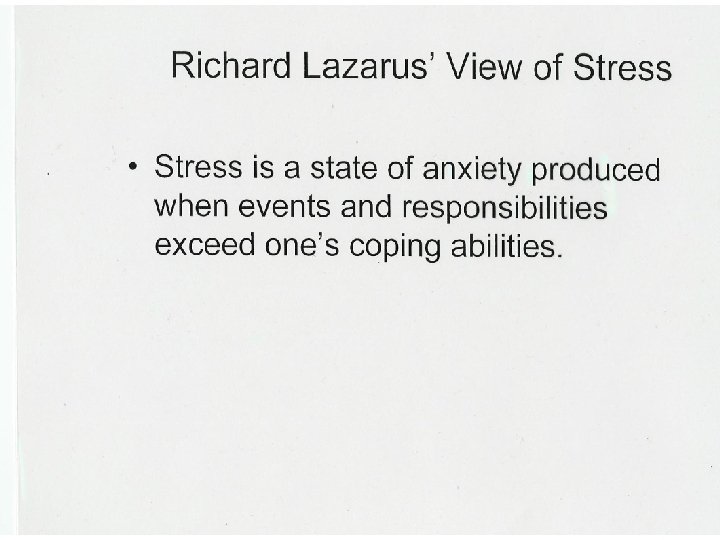
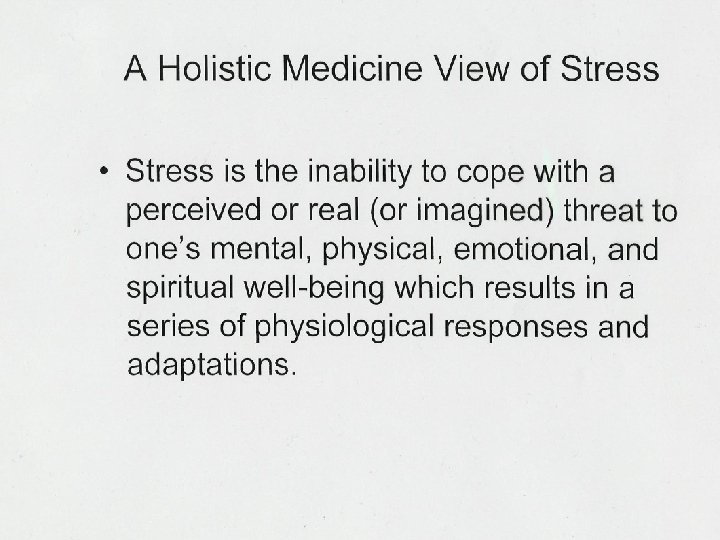
What is Stress? • Assumptions: – 1. Stress is ubiquitous – 2. Stress can be both positive and negative – 3. Stress is a result of both inside the body and outside the body factors – 4. Everybody has the capacity to alter their stress reactions – 5. The best way to understand the stress cycle is from an holistic approach (mind, body, environment) – 6. Today’s world has more stressful stimuli than ever before.
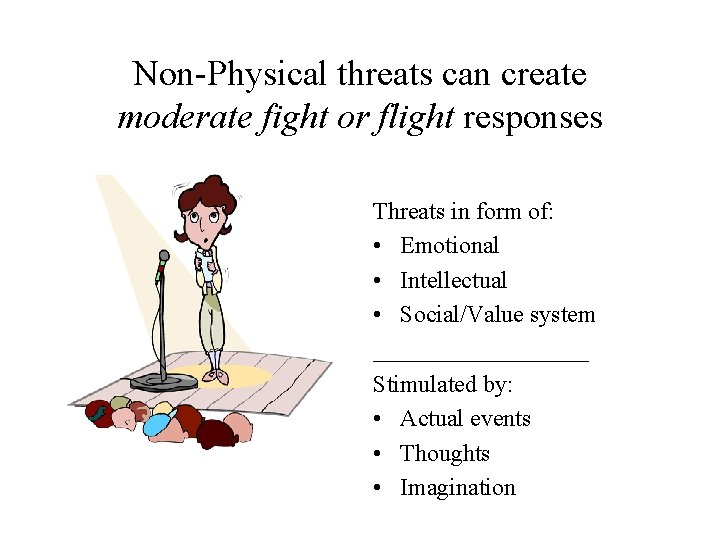
Non-Physical threats can create moderate fight or flight responses Threats in form of: • Emotional • Intellectual • Social/Value system _________ Stimulated by: • Actual events • Thoughts • Imagination
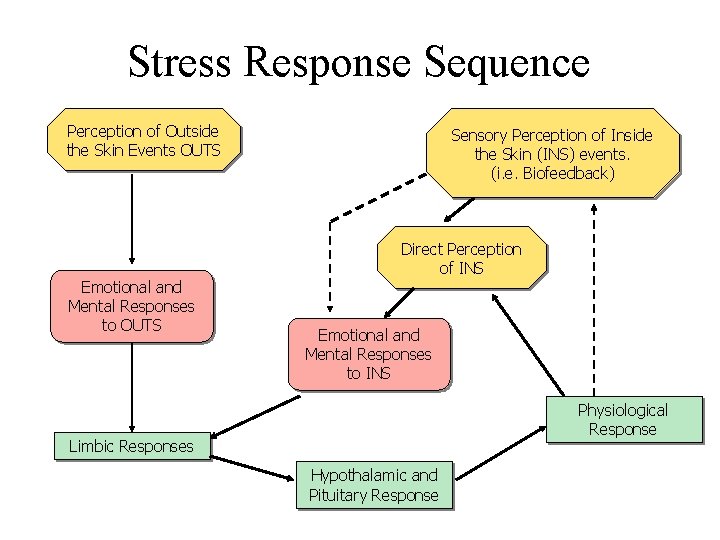
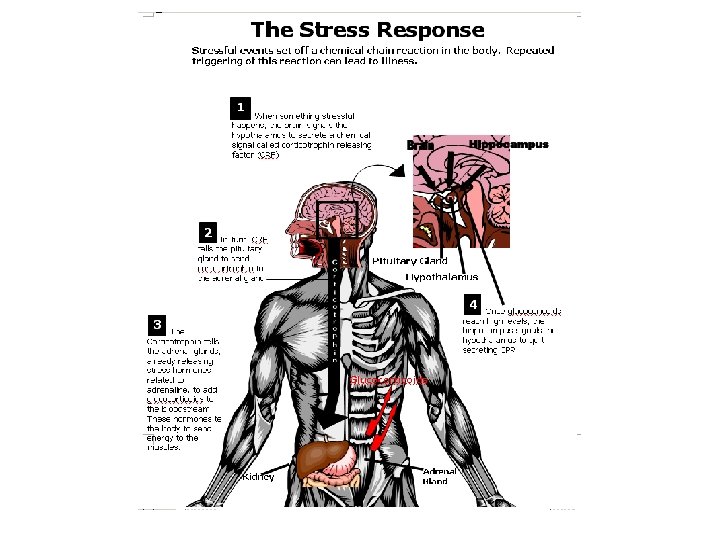
Stress Response Sequence Perception of Outside the Skin Events OUTS Emotional and Mental Responses to OUTS Sensory Perception of Inside the Skin (INS) events. (i. e. Biofeedback) Direct Perception of INS Emotional and Mental Responses to INS Physiological Response Limbic Responses Hypothalamic and Pituitary Response
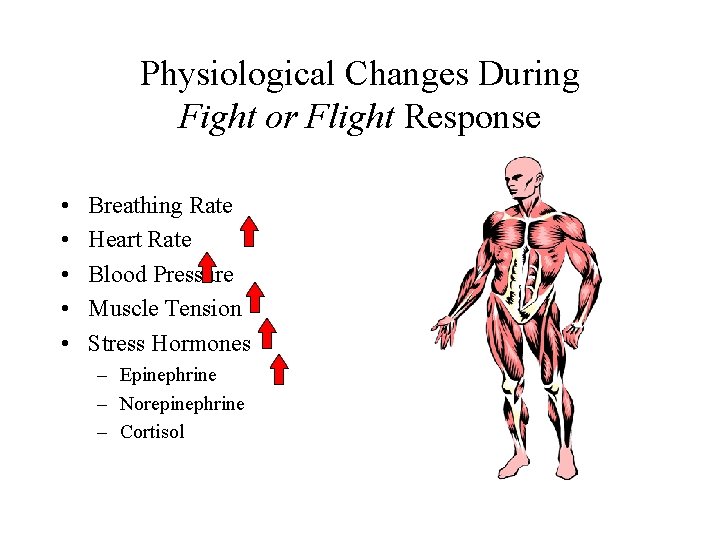
Physiological Changes During Fight or Flight Response • • • Breathing Rate Heart Rate Blood Pressure Muscle Tension Stress Hormones – Epinephrine – Norepinephrine – Cortisol
Physiological Stress Symptoms • • • Increased fatty acid Increased blood coagulation Increased muscular strength Decreased gastric movement Increased perspiration Increased heart rate Increased ventilation Vasodilatation of arteries to periphery Increased serum glucose levels
Mind/Body Paradigm • “Every change in the physiological state is accompanied by an appropriate change in the mental emotional state, conscious or unconscious, and conversely, every change in the mental-emotional state, conscious or unconscious, is accompanied by an appropriate change in the physiological state” • This principle , when coupled with volition. . makes possible psychosomatic self-regulation.
The Stre
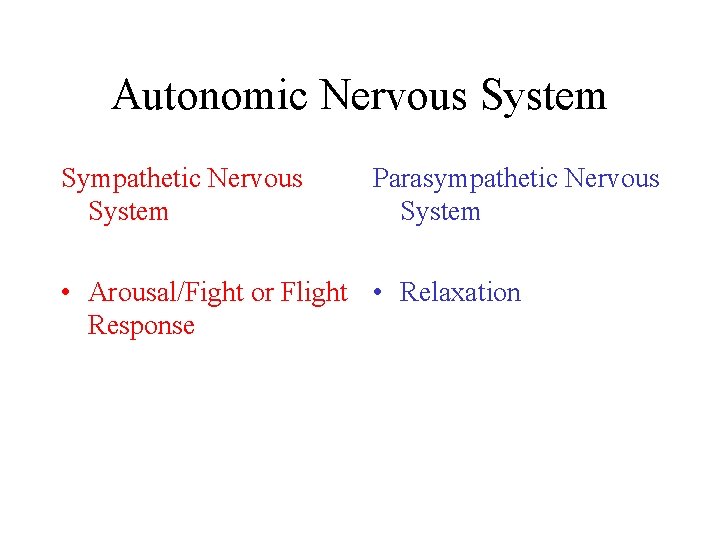
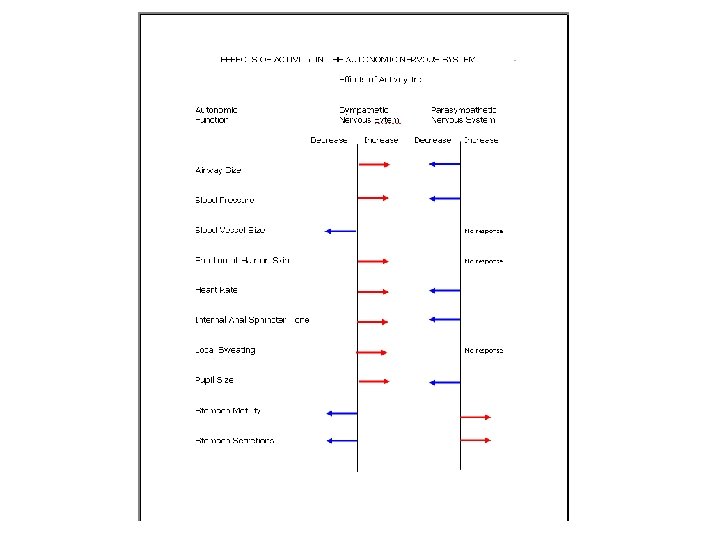
Autonomic Nervous System Sympathetic Nervous System Parasympathetic Nervous System • Arousal/Fight or Flight • Relaxation Response
The Nature of Stress Where Stressors Come From • Either from outside ourselves: – Physical Environment: noise, heat, technology – Social: aggressiveness, disagreements, bossiness – Organizational: work tasks and deadlines – Major life events: marriage, new baby, major illness, promotion
The Nature of Stress • Or from inside ourselves: – Desire to perform well – Wanting to feel “in control” of situations – Attitude and Outlook on situations – Personal choices: alcohol/drugs, diet, working overtime, taking time to relax
Activity: Self-Assessment of Your Stressors and Stress Warning Signs • Tip: Stressors could be major life events, daily hassles, things from the physical environment, relationships with others, thoughts, feelings, or physical maladies that have a negative impact on your physical, emotional, mental, and spiritual well-being.
Mind/Body Paradigm • “Every change in the physiological state is accompanied by an appropriate change in the mental emotional state, conscious or unconscious, and conversely, every change in the mental-emotional state, conscious or unconscious, is accompanied by an appropriate change in the physiological state” • This principle , when coupled with volition. . makes possible psychosomatic self-regulation.
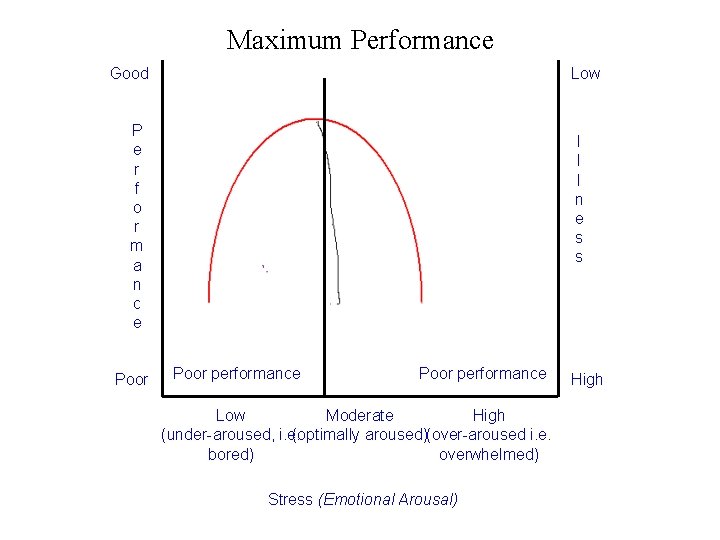
Maximum Performance Good Low P e r f o r m a n c e Poor I l l n e s s Poor performance Low Moderate High (under-aroused, i. e. (optimally aroused)(over-aroused i. e. bored) overwhelmed) Stress (Emotional Arousal) High
Self-Regulation: Physiological Controls • • • Learning to push your own buttons Awareness Biofeedback as a training tool Training as learning (and unlearning) Practice develops self-efficacy
KEYS TO EFFECTIVE STRESS MANAGEMENT • 1. Know your stressors • 2. Awareness of specific stress impact • 3. Understanding individual response patterns • 4. Learning methods to moderate patterns • 5. Invoke personal change process • 6. Do it: How to follow through and maintain
- Slides: 23