
What is Stress A Conceptual Understanding Stress General


- Slides: 52
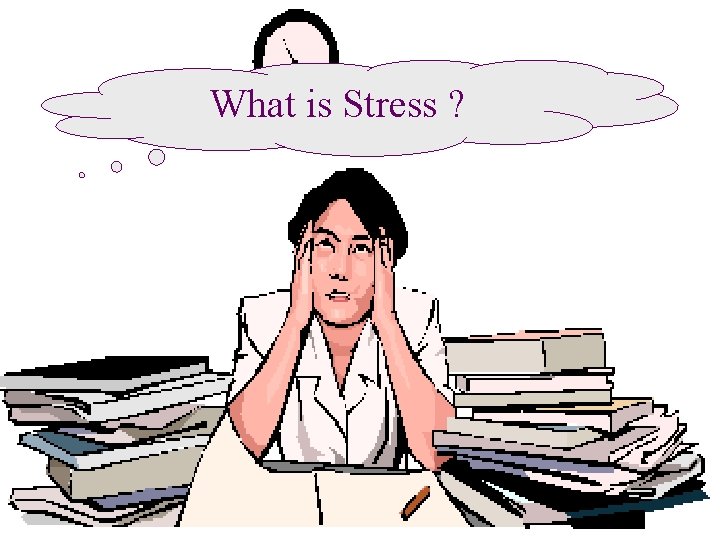
What is Stress ?
A Conceptual Understanding • Stress - General concept describing a ‘load’ on the system • Stressor - A specific problem, issue, challenge, personal conflict (External / Internal) • Strain - The prolonged impact of a stressor on the system (overload), fatigue, precursor to illness. • Stress Reaction - An individual response to a given stressor (physiological, behavioural, emotional, cognitive, signs and symptoms)
When you leave office today. Study this small story, Hope that makes a BIG change in YOU
Professor began his class by holding up a glass with some water in it. He held it up for all to see & asked the students…… “How much do you think this glass weighs? ”. . the students answered '50 gms!'. . '100 gms!'. . . '125 gms'
“I really don't know unless I weigh it, ” said the professor, “but, my question is: What would happen if I held it up like this for a few minutes? ” 'Nothing' …. . the students said.
'Ok what would happen if I held it up like this for an hour? ' the professor asked. 'Your arm would begin to ache' said one of the student
“You're right, now what would happen if I held it for a day? ” “Your arm could go numb, you might have severe muscle stress & paralysis & have to go to hospital for sure!” …. . ventured another student & all the students laughed
“Very good. But during all this, did the weight of the glass change? ” asked the professor. 'No‘…. Was the answer.
“Then what caused the arm ache & the muscle stress? ” The students were puzzled. “What should I do now to come out of pain? ” asked professor again. “Put the glass down!” said one of the students
“Exactly!” said the professor. Life's problems are something like this. Hold it for a few minutes in your head & they seem OK. Think of them for a long time & they begin to ache. Hold it even longer & they begin to paralyze you. You will not be able to do anything.
It's important to think of the challenges or problems in your life, but EVEN MORE IMPORTANT is to ‘PUT THEM DOWN' at the end of every day before You go to sleep. That way, you are not stressed, you wake up every day fresh &strong & can handle any issue, any challenge that comes your way!
So, When you leave office today, Remember friend to 'PUT THE GLASS DOWN TODAY! '
STRESS IS NOT NECESSARILY BAD AND AS SUCH! • IT ALSO HAS A POSITIVE VALUE EXAMPLES: • PERFORMANCE IN SPORTS • PERFORMANCE IN ACTING
STRESS IS WHEN YOU CONFRONT • OPPORTUNITIES • CONSTRIANTS • DEMANDS
ARE YOU A Zero Stress Individual?
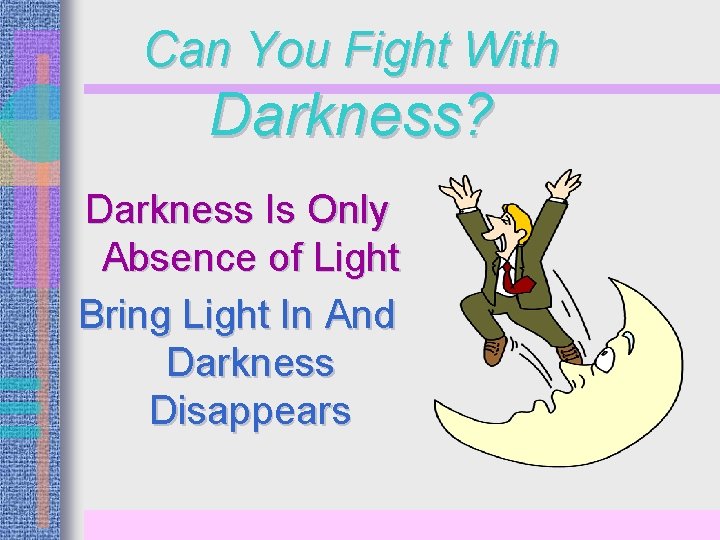
Can You Fight With Darkness? Darkness Is Only Absence of Light Bring Light In And Darkness Disappears
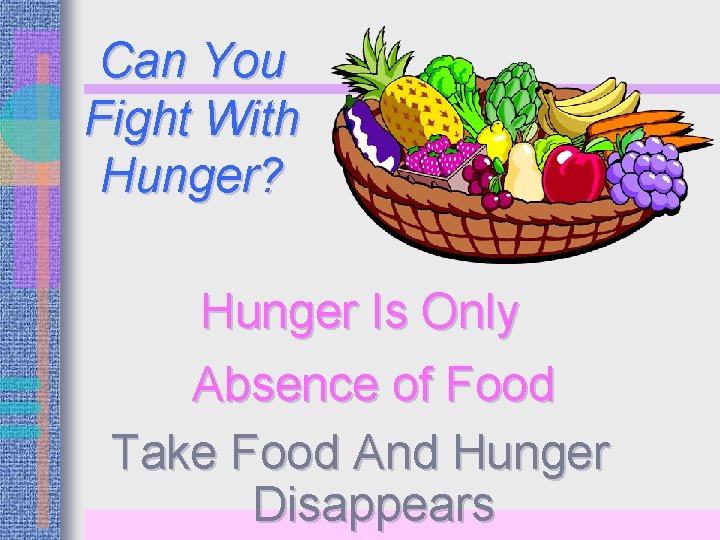
Can You Fight With Hunger? Hunger Is Only Absence of Food Take Food And Hunger Disappears
Can You Fight With Confusion? Confusion Is Only Absence of Clarity Get Clarity And Confusion Disappears
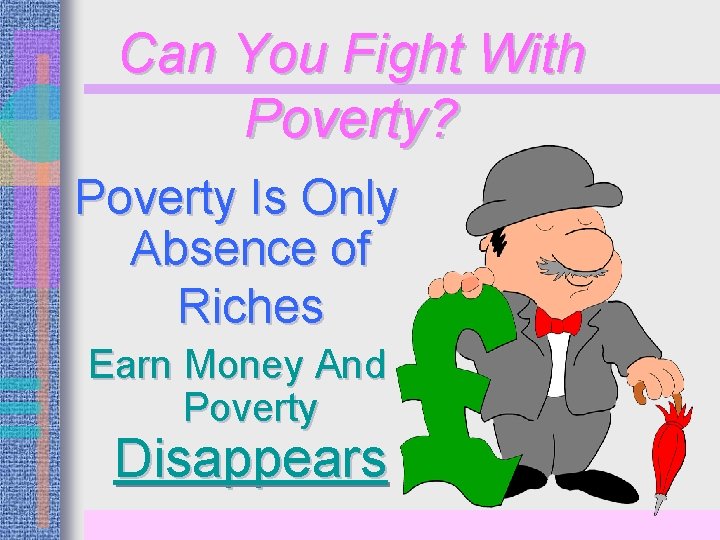
Can You Fight With Poverty? Poverty Is Only Absence of Riches Earn Money And Poverty Disappears
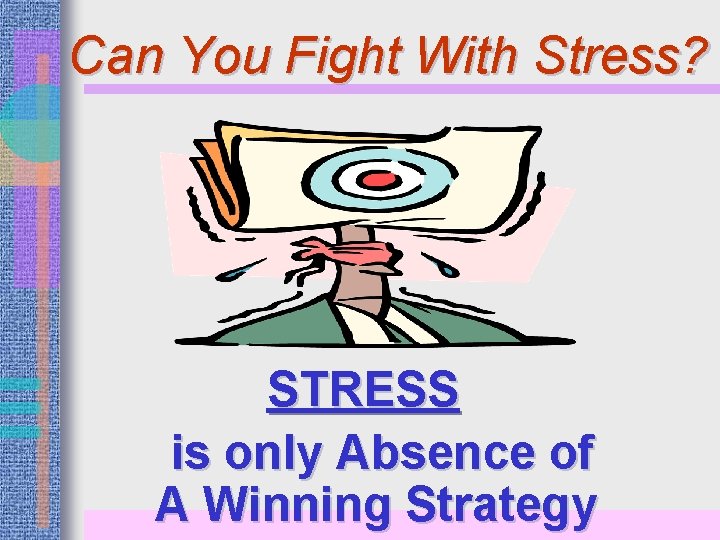
Can You Fight With Stress? STRESS is only Absence of A Winning Strategy
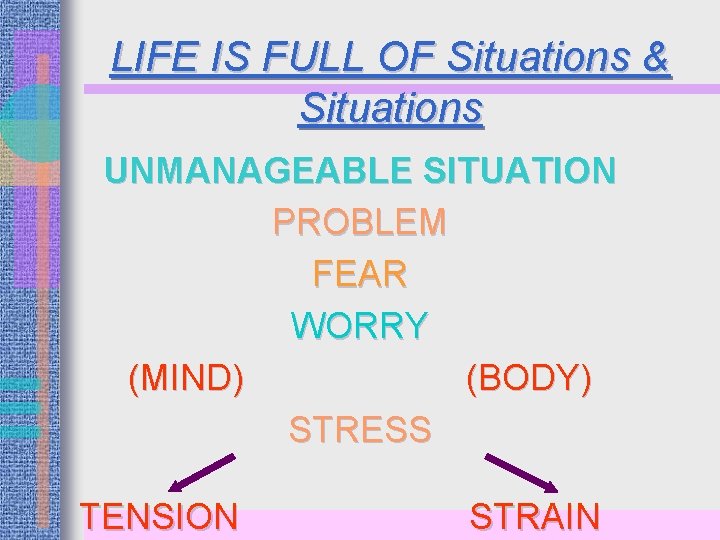
LIFE IS FULL OF Situations & Situations UNMANAGEABLE SITUATION PROBLEM FEAR WORRY (MIND) (BODY) STRESS TENSION STRAIN
Symptoms of Stress • • • Fatigue • Headaches • Insomnia • Heart palpitations • Decrease in concentration/memory • • Loss of sense of • humor • Anxiety Depression Anger Irritability Increased/decreased eating Crying Yelling
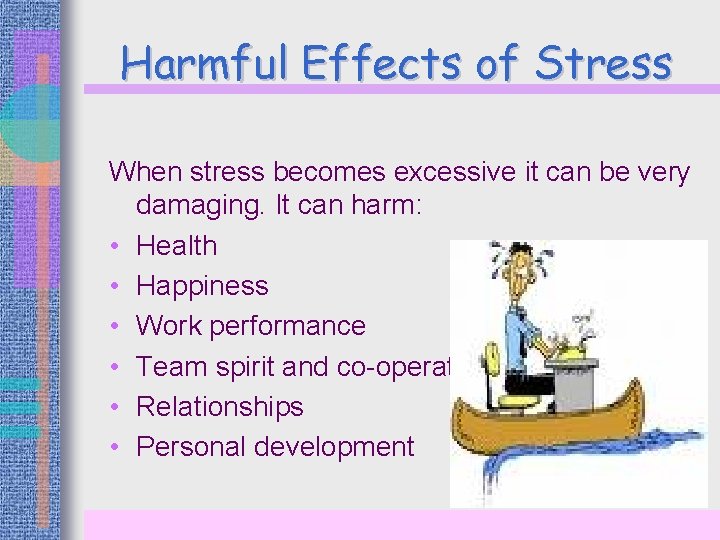
Harmful Effects of Stress When stress becomes excessive it can be very damaging. It can harm: • Health • Happiness • Work performance • Team spirit and co-operation • Relationships • Personal development
EFFECT OF STRESS Stress can manifest in many ways, but the four most common are: v Physical: Sometimes stress can contribute to conditions like headaches, high blood pressure, chest pains and stomach aches. v Emotional: Stress can contribute to anger, sadness and anxiety. v Behavioral: Sometimes people react to stress by crying, drinking excessively, or nervous habits like nail biting. v Cognitive: Stress can impact cognitive functions like concentration and memory.
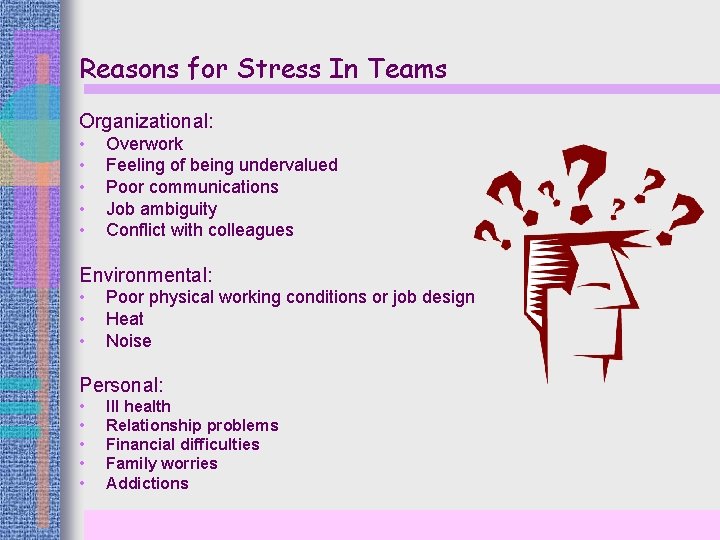
Reasons for Stress In Teams Organizational: • • • Overwork Feeling of being undervalued Poor communications Job ambiguity Conflict with colleagues Environmental: • • • Poor physical working conditions or job design Heat Noise Personal: • • • Ill health Relationship problems Financial difficulties Family worries Addictions
Harmful Effects Of Stress In a Team The impact of excessive stress on teamwork is also harmful, and it can damage: • Individual work performance • Team performance • Working relationships • Cooperation between team members • Team spirit
STAGES OF STRESS
ALARM STAGE As you begin to experience a stressful event or perceive something to be stressful psychological changes occur in your body. This experience or perception disrupts your body’s normal balance and immediately your body begins to respond to the stressor(s) as effectively as possible.
EXAMPLES l Cardiac - increased heart rate l Respiratory - increased respiration l Skin - decreased temperature l Hormonal - increased stimulation of adrenal genes which produce an adrenal rush.
RESISTANCE STAGE During this stage your body tries to cope or adapt to the stressors by beginning a process of repairing any damage the stressor has caused. Your friends, family or co-workers may notice changes in you before you do so it is important to examine their feedback to make sure you do not reach overload.
EXAMPLES l Behavior indicators include: lack of enthusiasm for family, school, work or life in general, withdrawal, change in eating habits, insomnia, hypersomnia, anger, fatigue. l Cognitive Indicators include: poor problem solving, confusion, nightmares, hypervigilance.
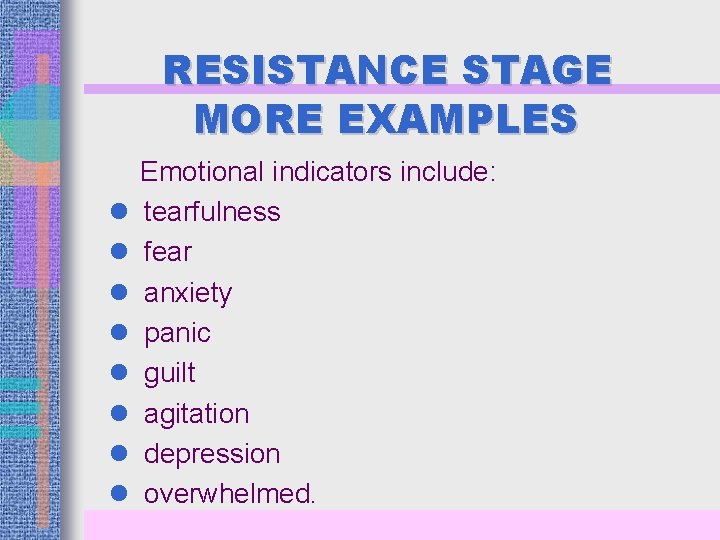
RESISTANCE STAGE MORE EXAMPLES l l l l Emotional indicators include: tearfulness fear anxiety panic guilt agitation depression overwhelmed.
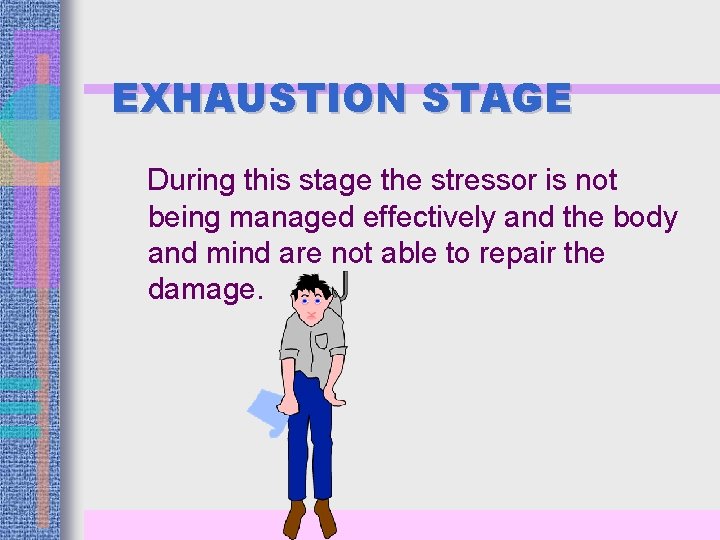
EXHAUSTION STAGE During this stage the stressor is not being managed effectively and the body and mind are not able to repair the damage.
EXAMPLES Digestive disorders, withdrawal, headaches, tension, insomnia, loss of temper.
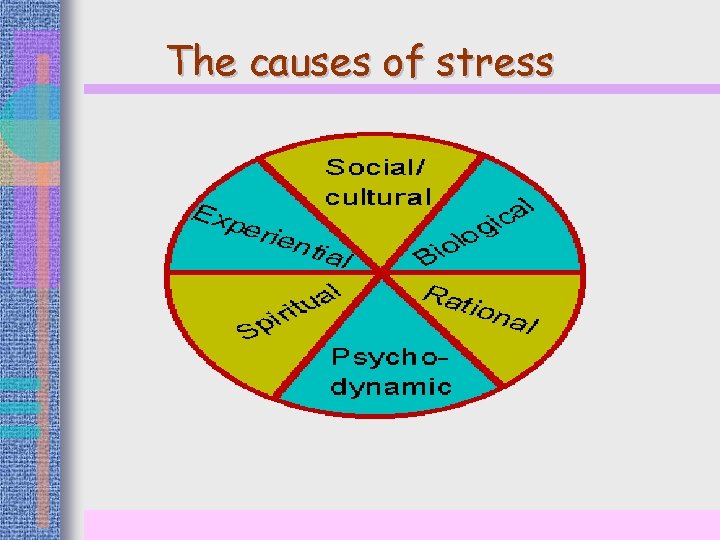
The causes of stress
High Stress Cause: • Harm the Heart, promote clogged arteries. • Surge of stress harmones in the bloodstream – weakens the body’s immune defences. • Heartburn • Cold sores to asthma • Cancer
• People say they’re too busy to stop and deal with stress. • By learning to calm down, can actually feel less busy
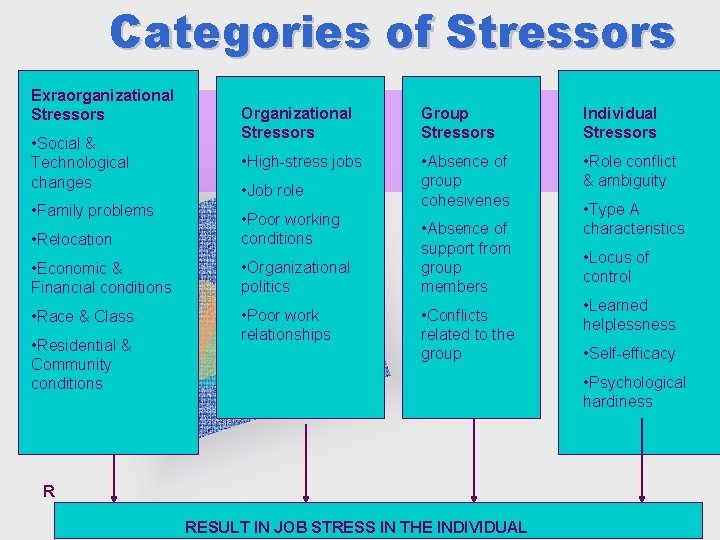
Categories of Stressors Exraorganizational Stressors • Social & Technological changes • Family problems Organizational Stressors Group Stressors Individual Stressors • High-stress jobs • Absence of group cohesivenes • Role conflict & ambiguity • Job role • Relocation • Poor working conditions • Economic & Financial conditions • Organizational politics • Race & Class • Poor work relationships • Residential & Community conditions • Absence of support from group members • Conflicts related to the group • Type A characteristics • Locus of control • Learned helplessness • Self-efficacy • Psychological hardiness R RESULT IN JOB STRESS IN THE INDIVIDUAL
EXTERNAL STRESSORS • Physical Environment: Noise, Heat • Social: Rudeness, Aggressiveness • Organizational: Regulations, Deadlines • Major Life Events: Death of a Relative, New Baby • Daily Hassles: Traffic, Vehicle Breakdown
Internal Stressors • Lifestyle choices: Not enough sleep, Overloaded schedule. • Negative self-talk: Pessimistic thinking, Selfcriticism. • Mind traps: Unrealistic expectations, Taking things personally. • Stressful personality types: Perfectionist, Workaholic
• Emotional disorders caused by stress – – Anxiety Panic attack Depression Adjustment disorders • Behavioural disorders caused by stress – – Conduct disorders Eating disorders Alcoholism Discuss the relationship between stress and illness
Work Related Stress • • • Decreased quality and/or quantity of work. Loss of the sense of humor. Working late or more obsessively than usual. Sudden increase in accidents. Difficulty in communicating and getting along with others. • Apathy • Sudden reversal of usual behavior.
LEVELS OF STRESS
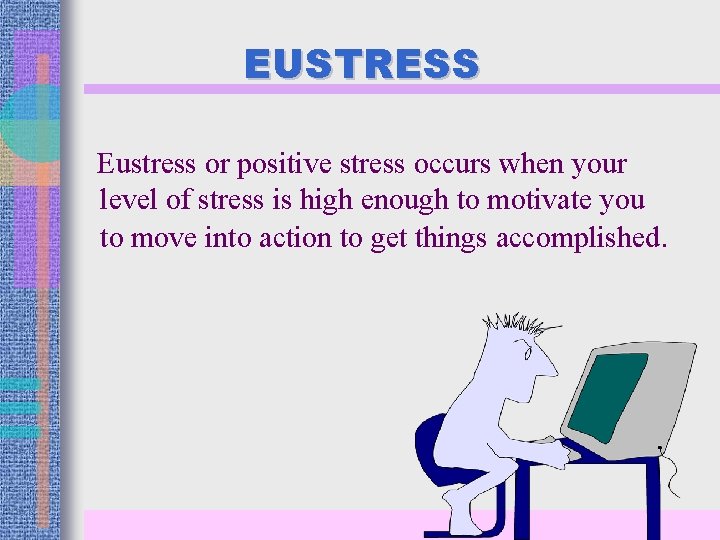
EUSTRESS Eustress or positive stress occurs when your level of stress is high enough to motivate you to move into action to get things accomplished.
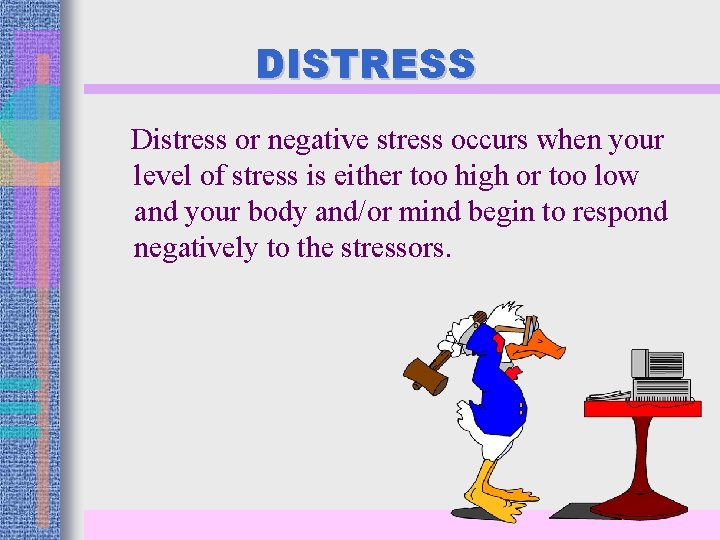
DISTRESS Distress or negative stress occurs when your level of stress is either too high or too low and your body and/or mind begin to respond negatively to the stressors.
SOURCES FOR STRESS ENVIRONMENTAL • UNCERTAINITES IN FACORS: • SOCIAL • ECONOMICAL • POLITICAL • TECHNOLOGICAL • LEGAL
Contd… ORGANISATIONAL: • TASK DEMANDS • INTERPERSONAL FACTORS • ROLE EFFECIVENESS DEMANDS • ORGANISATIONAL STRUCTURE • LEADERSHIP • AGE OF THE ORGANISATION
Contd… INDIVIDUAL • FAMILY PROBLEMS • ECONOMIC PROBLEMS • ATTITUDINAL FACTORS • SELF IMAGE
STUDIES SHOWS: • The most stressful situations are things we can’t control. • We can’t change the past. • We can’t predict the future. • Only thing is we can control the present. Practice this technique – regain a sense of control – and ease stress.