
What is Strategy Strategic Development Progamme 6 March
- Slides: 74
What is Strategy? Strategic Development Progamme 6 March 2012 Prof. Gianvito Lanzolla, Ph. D Cass Business School, London, UK g. lanzolla@city. ac. uk
Agenda • What is Strategy? – The levels of strategy – How do you know if you have one? • The most common pitfalls • Where does successful Strategy come from? • Strategy Formulation & Strategy Execution Gianvito Lanzolla
What is Strategy?
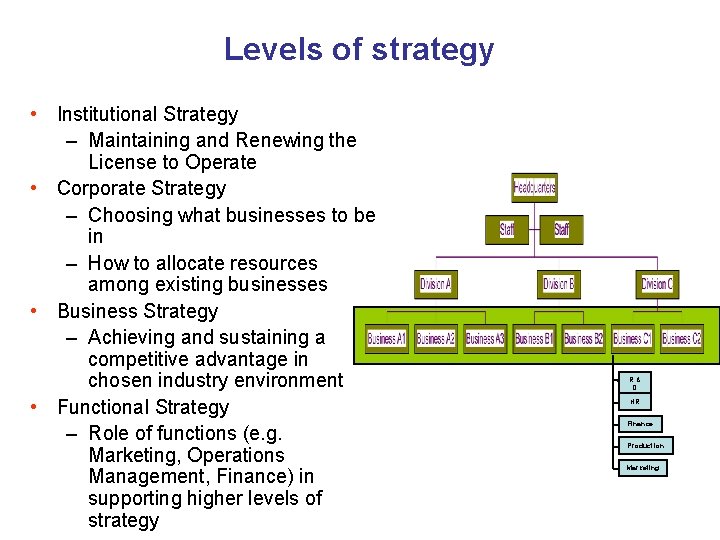
Levels of strategy • Institutional Strategy – Maintaining and Renewing the License to Operate • Corporate Strategy – Choosing what businesses to be in – How to allocate resources among existing businesses • Business Strategy – Achieving and sustaining a competitive advantage in chosen industry environment • Functional Strategy – Role of functions (e. g. Marketing, Operations Management, Finance) in supporting higher levels of strategy R& D HR Finance Production Marketing
What is business Strategy?
Strategy: some “classical” definitions • “Strategy is the great work of an organization. In situations of life or death, it is the Tao of survival or extinction. Its study cannot be neglected. ” Sun Tsu, The Art of War • “The determination of the long-run goals and objectives of an enterprise; and the adoption of courses of action and the allocation of resources necessary for carrying out these goals. ” Alfred Chandlers, Strategy and Structure • “Strategy is a pattern of resource allocation that enables firms to maintain or improve their performance. ” Jay Barney, Gaining and Sustaining Competitive Advantage • “A diagnosis, a guiding policy, a set of coherent actions. ” Richard Rumelt, Good Strategy Bad Strategy
…Strategy, really?
Strategy = How do organizations make money?
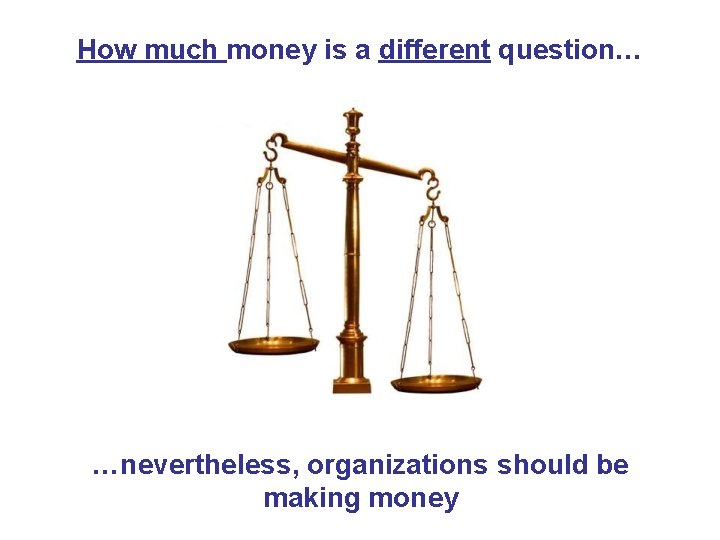
How much money is a different question… …nevertheless, organizations should be making money
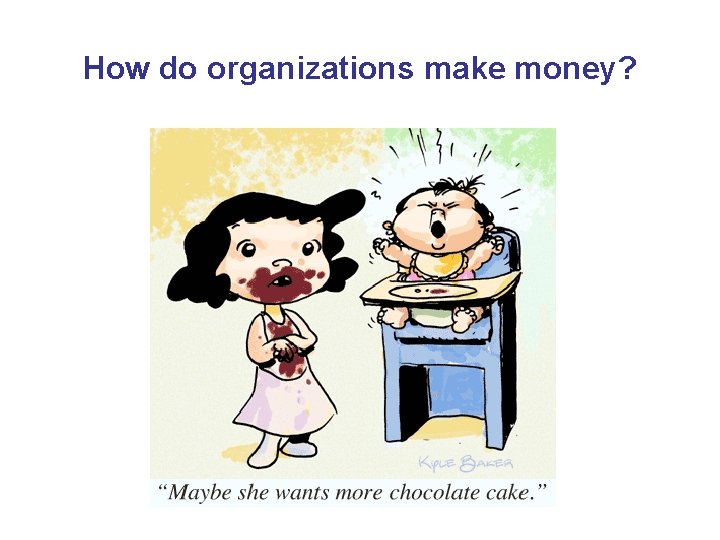
How do organizations make money?
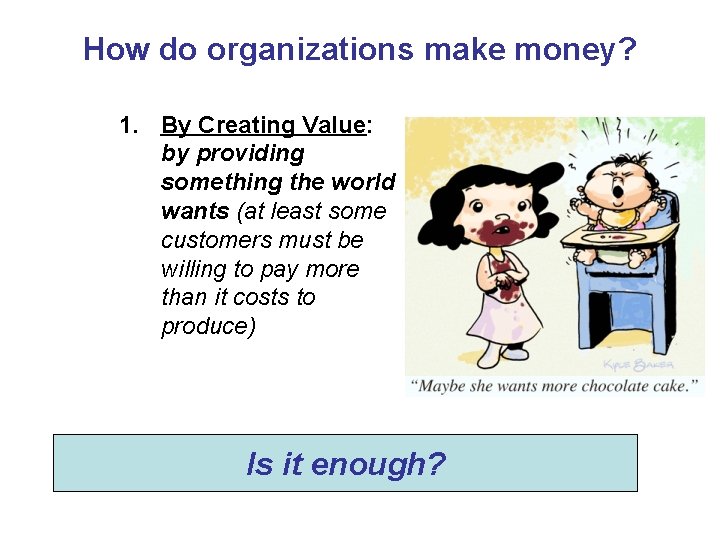
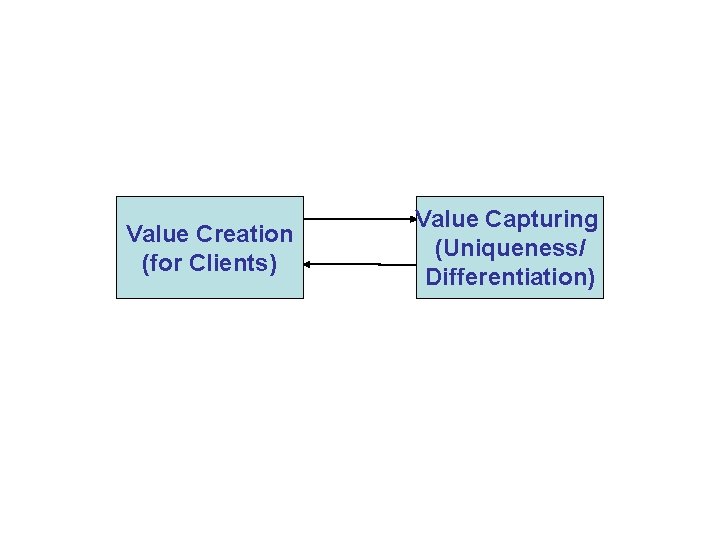
How do organizations make money? 1. By Creating Value: by providing something the world wants (at least some customers must be willing to pay more than it costs to produce) Is it enough?
Business history is full of examples of organizations that created value and were very short lived…
2. By Capturing Value How do organizations capture value?
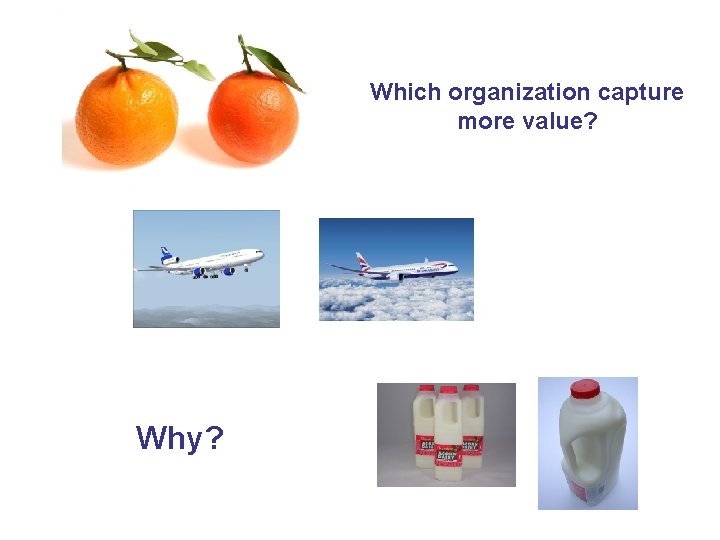
Which organization capture more value? Why?
How do organizations make money? 2. By Capturing Value: because what they provide is scarce (customers cannot buy the identical product or service from competitors or cannot buy the same service at a lower cost)
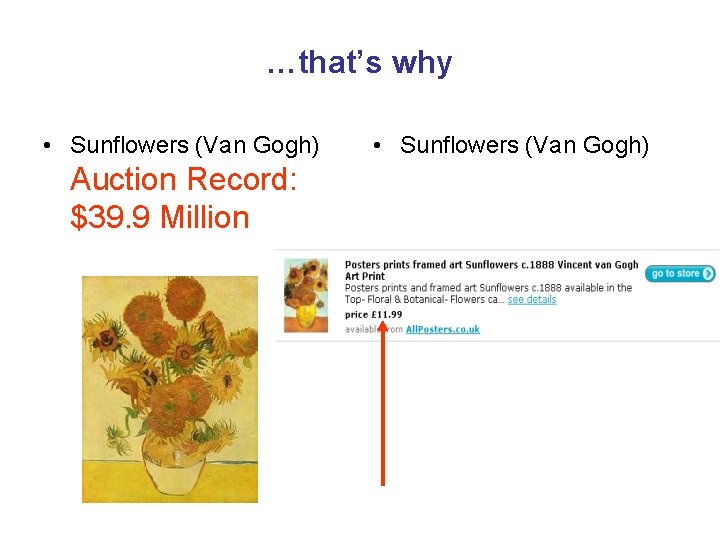
…that’s why • Sunflowers (Van Gogh) Auction Record: $39. 9 Million • Sunflowers (Van Gogh)
Value Creation (for Clients) Value Capturing (Uniqueness/ Differentiation)
Which company has been more successful? “We want to do it all and we want to do it now” Eckhard Pfeiffer, CEO Compaq, 1998 “Our game plan is to be an infrastructure technology company using our R&D resources to compete against Dell and leaving IBM to focus on business processing” Mark Hurd, CEO, HP, September 2005 Why?
Strategy is about making choices!
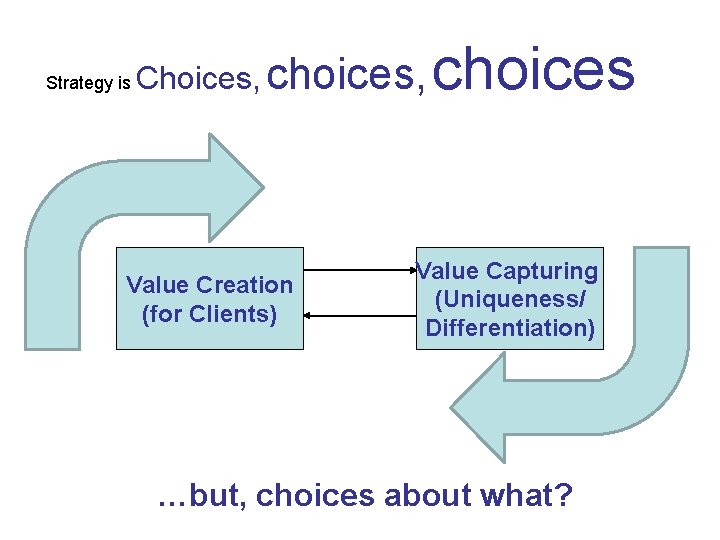
Strategy is Choices, choices, Value Creation (for Clients) choices Value Capturing (Uniqueness/ Differentiation) …but, choices about what?
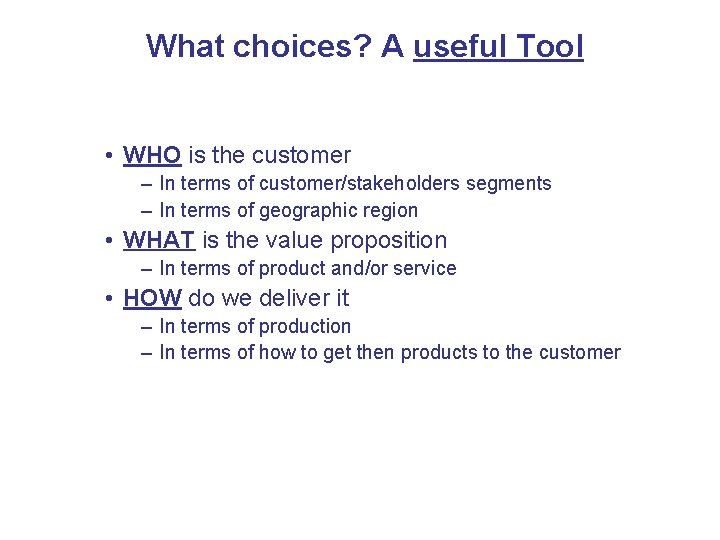
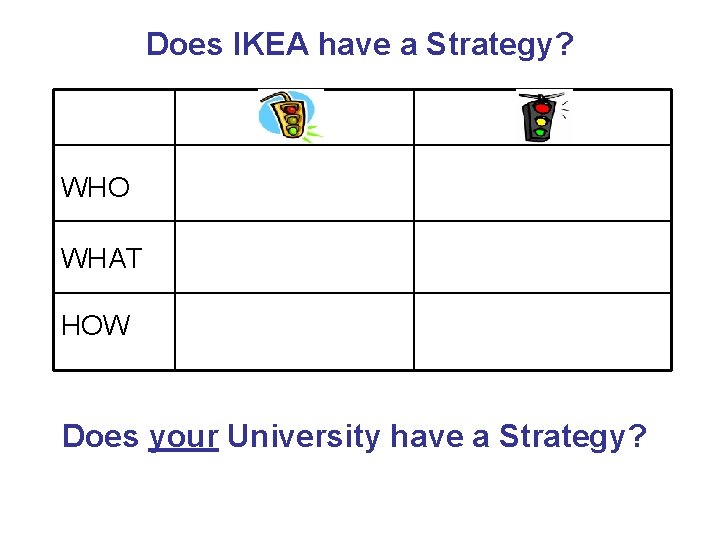
What choices? A useful Tool • WHO is the customer – In terms of customer/stakeholders segments – In terms of geographic region • WHAT is the value proposition – In terms of product and/or service • HOW do we deliver it – In terms of production – In terms of how to get then products to the customer
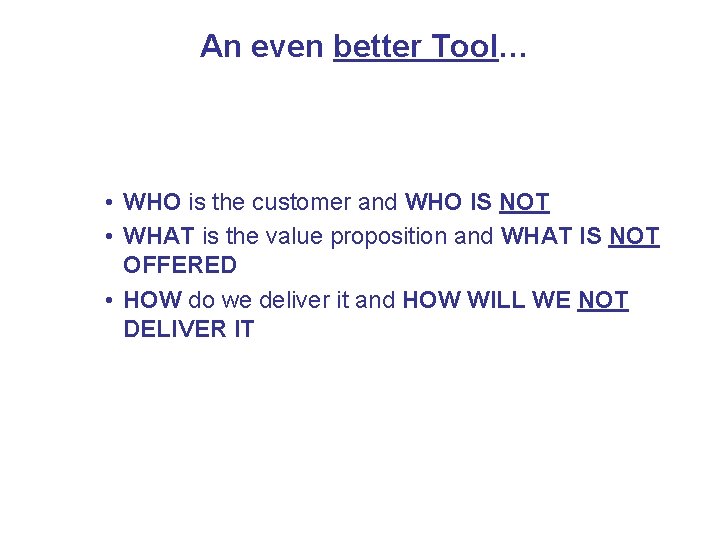
An even better Tool… • WHO is the customer and WHO IS NOT • WHAT is the value proposition and WHAT IS NOT OFFERED • HOW do we deliver it and HOW WILL WE NOT DELIVER IT
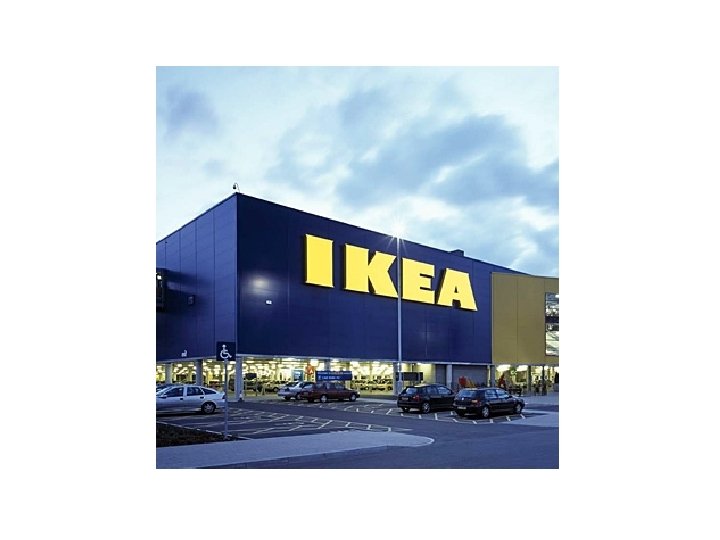
Does IKEA have a Strategy? WHO WHAT HOW Does your University have a Strategy?
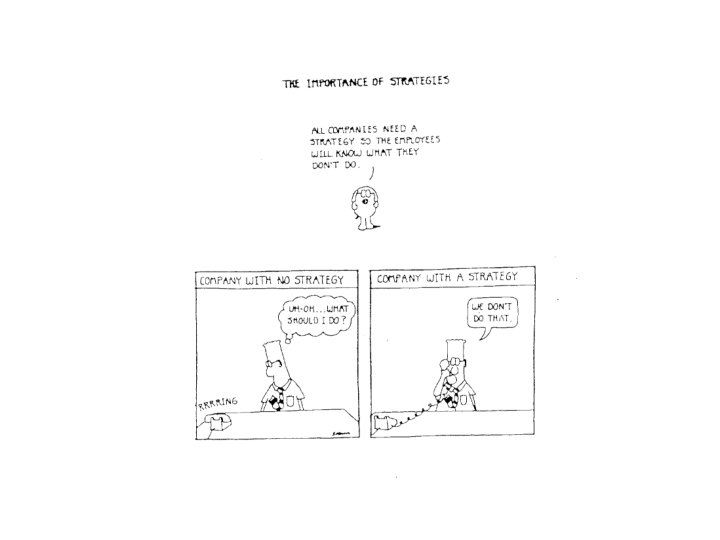
It is a simple principle but… The need and importance of making choices is “obvious” and simple enough. Unfortunately, very few companies actually follow it! As Professor Michael Porter at Harvard wrote: “The worst strategic mistake that companies make is failure to make difficult choices. ”
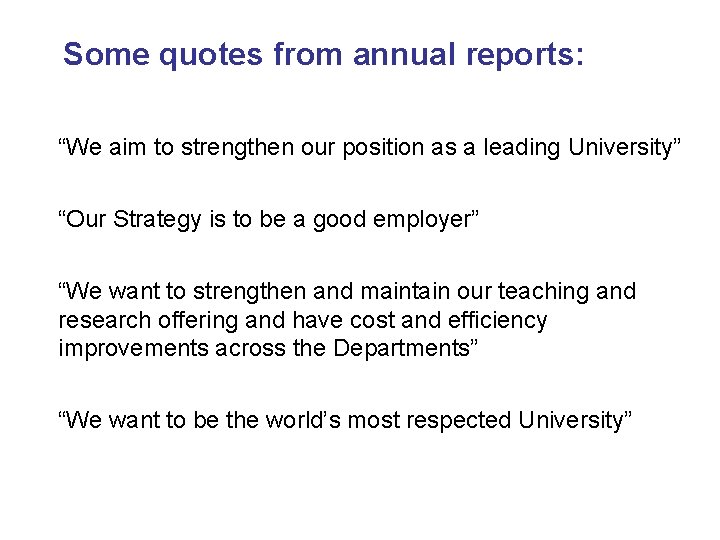
Some quotes from annual reports: “We aim to strengthen our position as a leading University” “Our Strategy is to be a good employer” “We want to strengthen and maintain our teaching and research offering and have cost and efficiency improvements across the Departments” “We want to be the world’s most respected University”
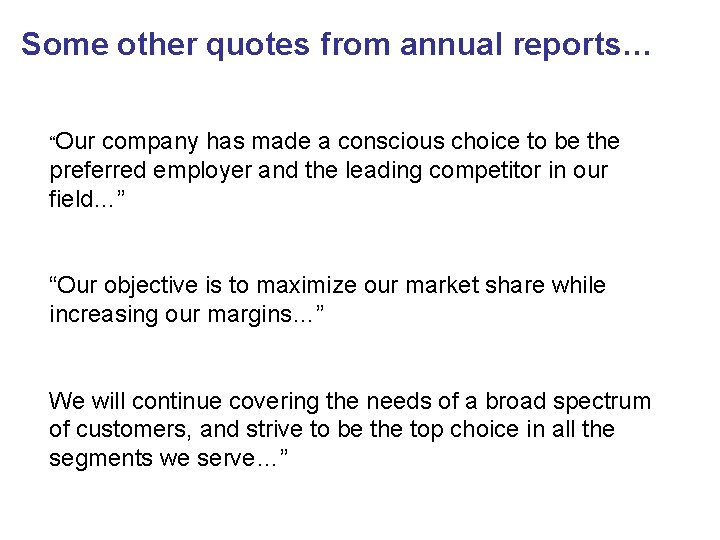
Some other quotes from annual reports… “Our company has made a conscious choice to be the preferred employer and the leading competitor in our field…” “Our objective is to maximize our market share while increasing our margins…” We will continue covering the needs of a broad spectrum of customers, and strive to be the top choice in all the segments we serve…”
Agenda • What is Strategy? – The levels of strategy – How do you know if you have one? • The most common pitfalls • Where does successful Strategy come from? • Strategy Formulation & Strategy Execution
Common pitfalls
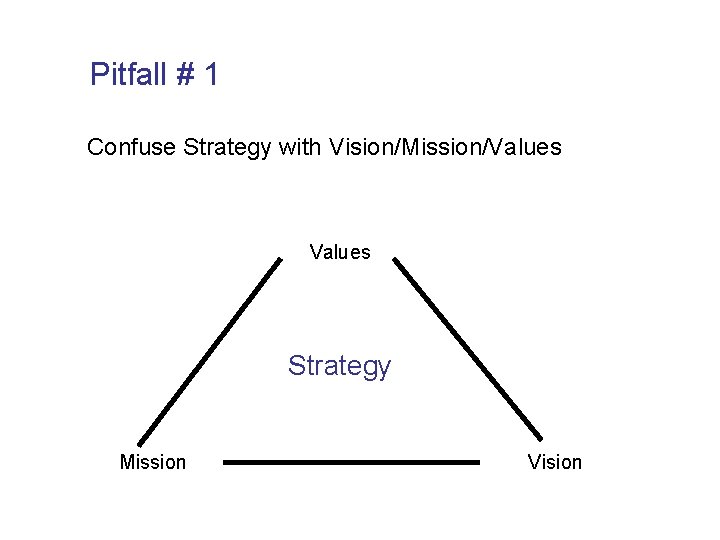
Pitfall # 1 Confuse Strategy with Vision/Mission/Values Strategy Mission Vision
Pitfall # 2 Confuse Strategy with Plans or data analysis (hint: you should be able to write down your strategy in half a page). • Analysis Paralysis
Pitfall # 3 Failure to be creative in identifying a unique strategic position. (Imitate each other believing that your competitor knows something that you don’t).
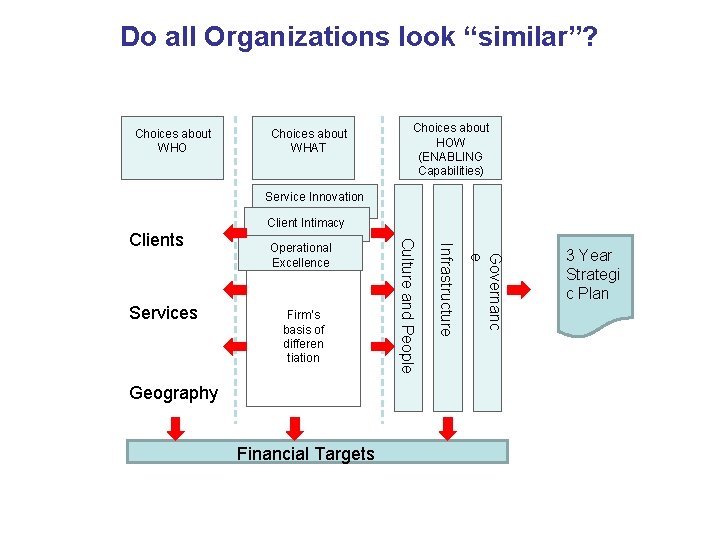
Do all Organizations look “similar”? Choices about WHO Choices about WHAT Choices about HOW (ENABLING Capabilities) Service Innovation Client Intimacy Geography Financial Targets Governanc e Firm’s basis of differen tiation Infrastructure Services Operational Excellence Culture and People Clients 3 Year Strategi c Plan
Pitfall # 4 Failure to make choices! • Uncertainty • Focus on day-to-day problems that slowly erode our “planned” choices • Grab “opportunities” as they come along without considering how these actions dilute our original choices, slowly but steadily! • Fear: You don’t want to put all your eggs in one basket, do you? • Several stakeholders to be pleased.
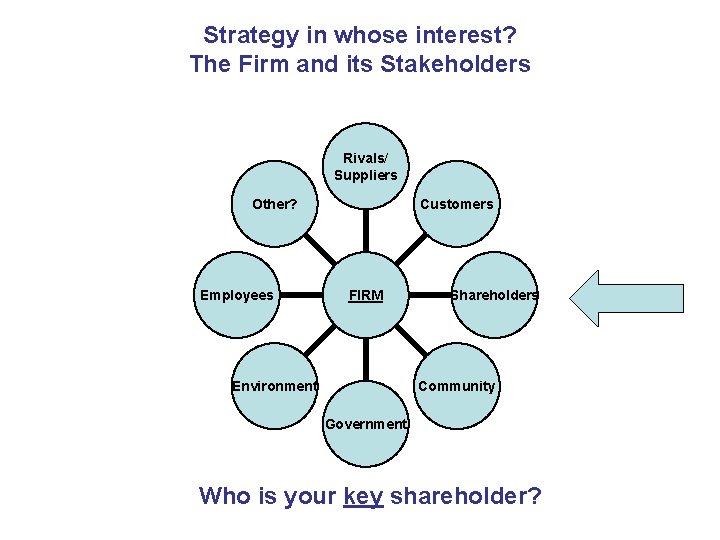
Strategy in whose interest? The Firm and its Stakeholders Rivals/ Suppliers Other? Employees Customers FIRM Environment Shareholders Community Government Who is your key shareholder?
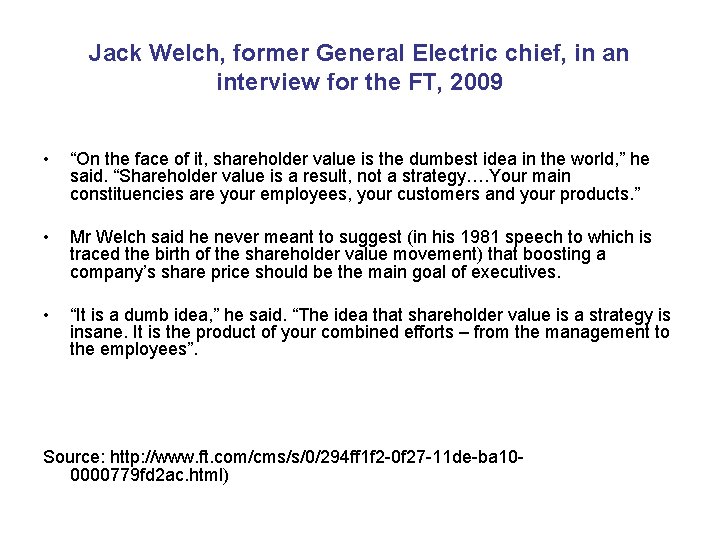
Jack Welch, former General Electric chief, in an interview for the FT, 2009 • “On the face of it, shareholder value is the dumbest idea in the world, ” he said. “Shareholder value is a result, not a strategy…. Your main constituencies are your employees, your customers and your products. ” • Mr Welch said he never meant to suggest (in his 1981 speech to which is traced the birth of the shareholder value movement) that boosting a company’s share price should be the main goal of executives. • “It is a dumb idea, ” he said. “The idea that shareholder value is a strategy is insane. It is the product of your combined efforts – from the management to the employees”. Source: http: //www. ft. com/cms/s/0/294 ff 1 f 2 -0 f 27 -11 de-ba 100000779 fd 2 ac. html)
Pitfall # 5 • Believing that “strategic” means important; • It means long-term
Pitfall # 6 Believing that only top (important!) people can help develop strategic (important!) ideas.
Pitfall # 7 Believing that “Strategic Planning” is for planning strategy! (hint: it’s not. You don’t change strategy every year).
Pitfall # 8 Believing that questioning something means that it is wrong. (hint: question = change)
Pitfall # 9 Believing that all strategies can be executed! e. g. Failing to sell it to people (i. e. employees) to win emotional commitment to it.
Pitfall # 10 Believing that in today’s fast-changing world, we need to change our strategy to be competitive. (hint: you need to “adjust” but strategy does not change that often!)
Pitfall # 11 Believing that planning is dead or Believing that the strategy can be entirely planned
Pitfall # 12 Thinking that your strategy is “secret” (and so failing to communicate it clearly to our employees in case competitors find out what it is!).
Pitfall # 13 Believing that our competitive advantage will last forever!
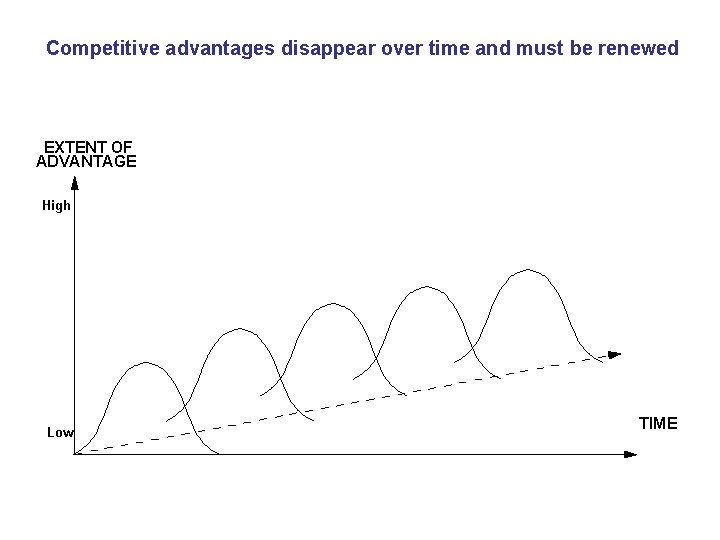
Competitive advantages disappear over time and must be renewed EXTENT OF ADVANTAGE High Low TIME
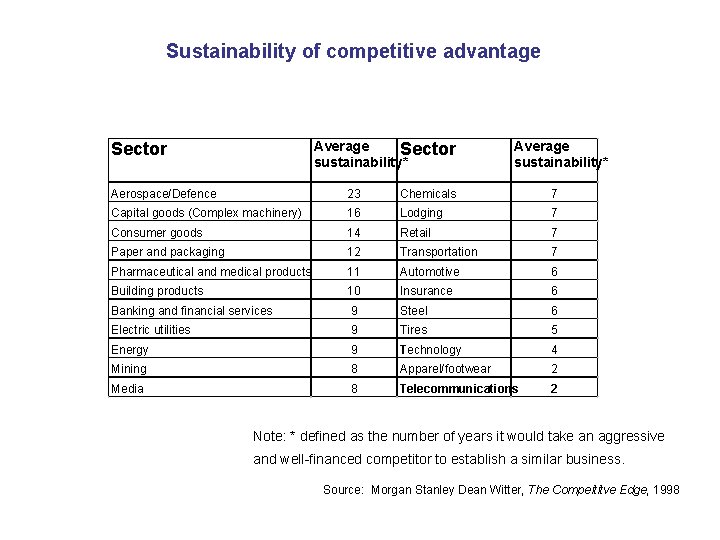
Sustainability of competitive advantage Sector Average Sector sustainability* Average sustainability* Aerospace/Defence 23 Chemicals 7 Capital goods (Complex machinery) 16 Lodging 7 Consumer goods 14 Retail 7 Paper and packaging 12 Transportation 7 Pharmaceutical and medical products 11 Automotive 6 Building products 10 Insurance 6 Banking and financial services 9 Steel 6 Electric utilities 9 Tires 5 Energy 9 Technology 4 Mining 8 Apparel/footwear 2 Media 8 Telecommunications 2 Note: * defined as the number of years it would take an aggressive and well-financed competitor to establish a similar business. Source: Morgan Stanley Dean Witter, The Compeititve Edge, 1998
Agenda • What is Strategy? – The levels of strategy – How do you know if you have one? • The most common pitfalls • Where does successful Strategy come from? • Strategy Formulation & Strategy Execution
Where does Successful Business Strategy come from?
Business Strategy
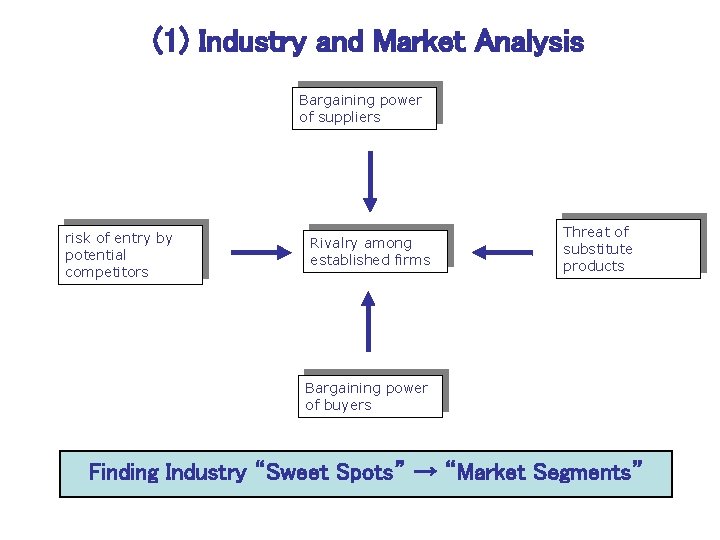
(1) Industry and Market Analysis Bargaining power of suppliers risk of entry by potential competitors Rivalry among established firms Threat of substitute products Bargaining power of buyers Finding Industry “Sweet Spots” → “Market Segments”
So, why did Starbucks enter the Coffee Shop Industry? Market segmentation and changing the rules of the game!
(2) Resources and Capabilities Analysis Building on Unique Resources and Capabilities Gianvito Lanzolla
When is a Resource or Capability Unique? RARE – DIFFICULT to IMITATE – DIFFICULT to TRANSFER Is there a market for our Unique Resources and Capabilities, really? Gianvito Lanzolla
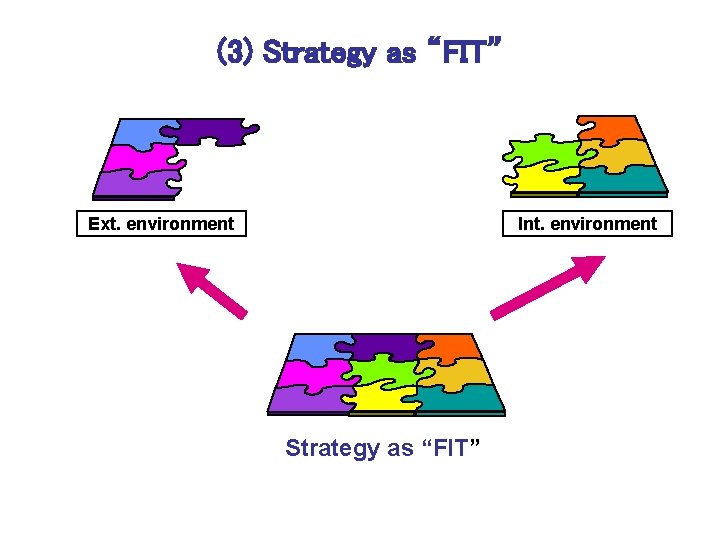
(3) Strategy as “FIT” Ext. environment Int. environment Strategy as “FIT”
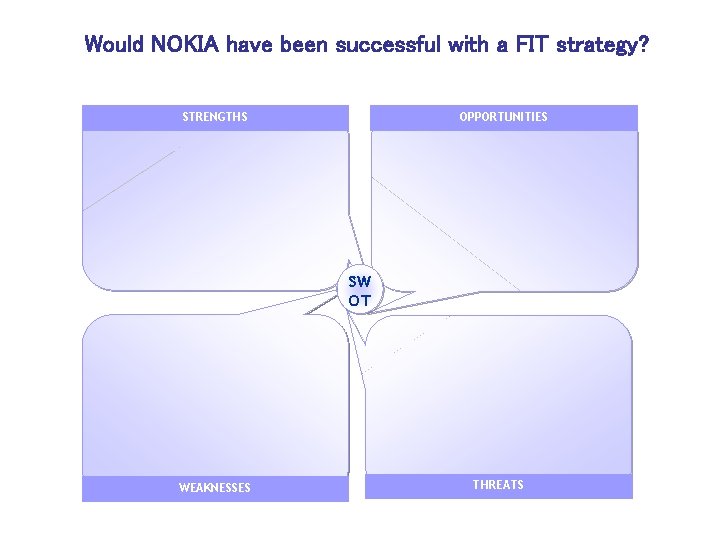
Would NOKIA have been successful with a FIT strategy? STRENGTHS OPPORTUNITIES SW OT WEAKNESSES THREATS
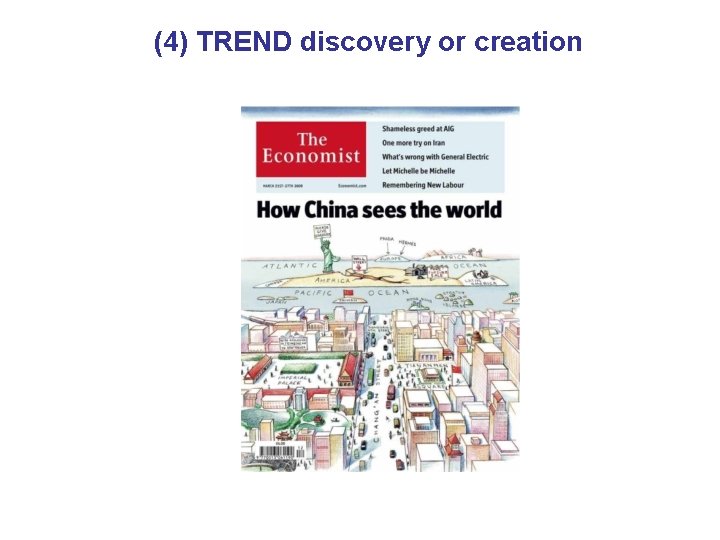
(4) TREND discovery or creation
From mostly “Consumer products” To “Professional products and services” • Medical Systems • Lighting • Professional Displays • Other activities
From a instant imaging company To……a Chapter 11 company
Agenda • What is Strategy? – The levels of strategy – How do you know if you have one? • The most common pitfalls • Where does successful Strategy come from? • Strategy Formulation & Strategy Execution
Linking Strategy formulation to Strategy execution
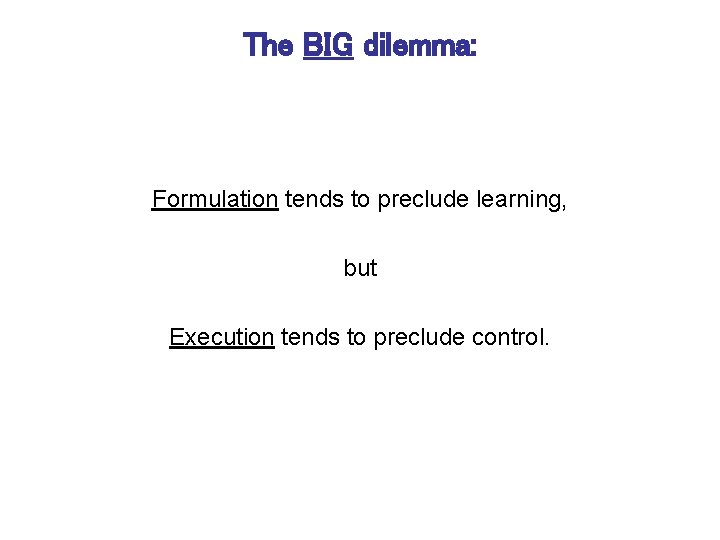
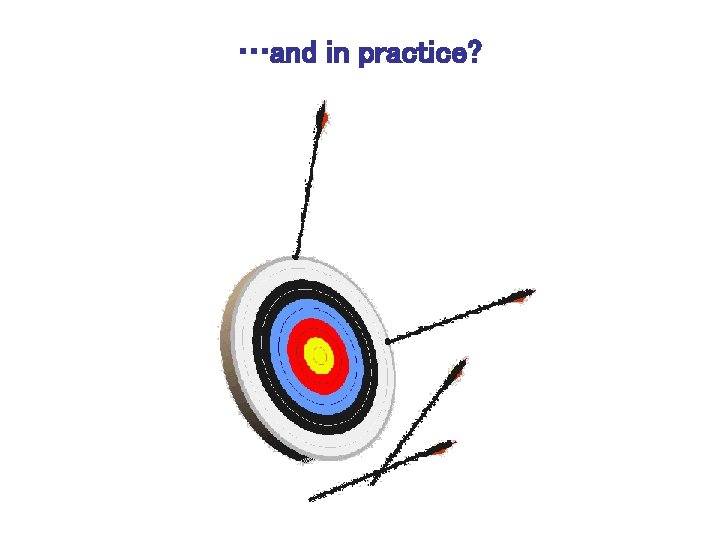
The BIG dilemma: Formulation tends to preclude learning, but Execution tends to preclude control.
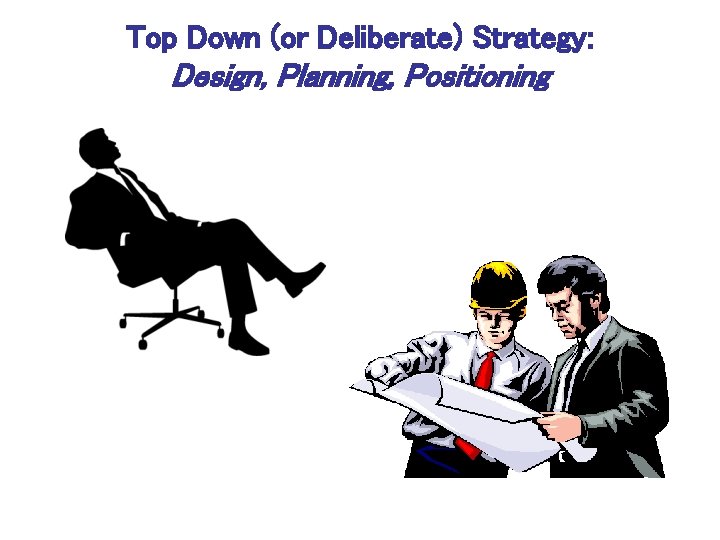
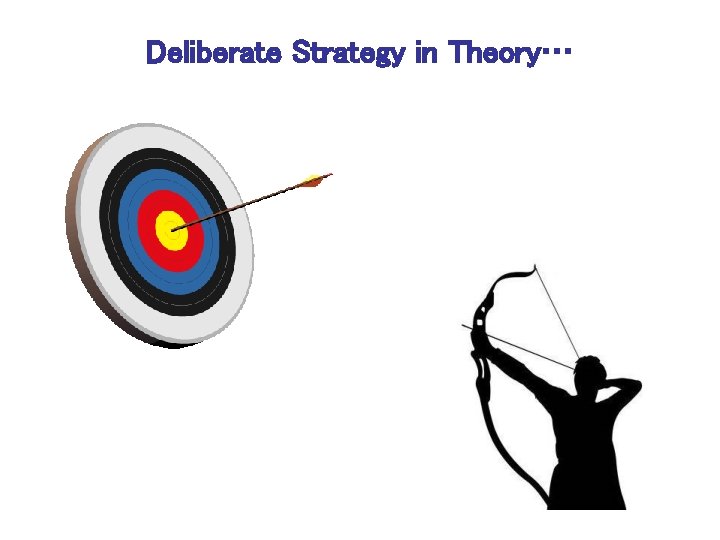
Top Down (or Deliberate) Strategy: Design, Planning, Positioning
Deliberate Strategy in Theory…
…and in practice?
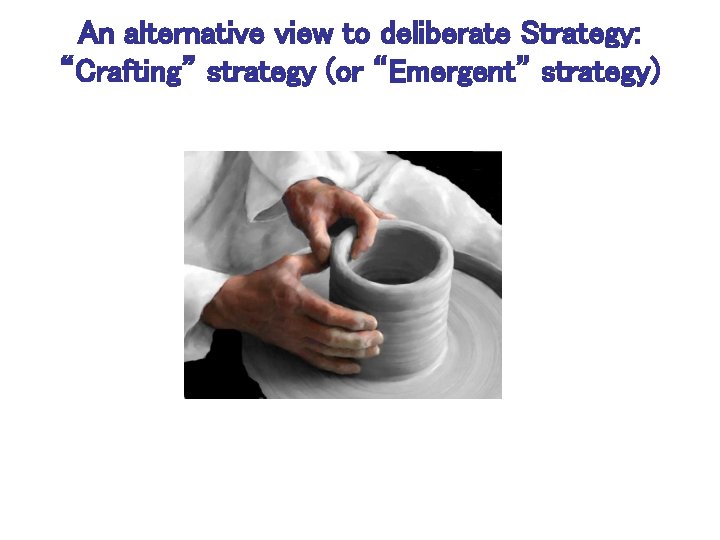
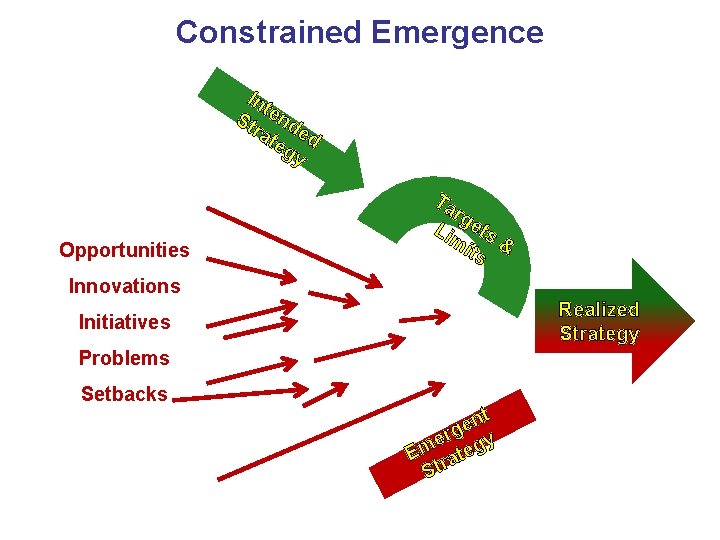
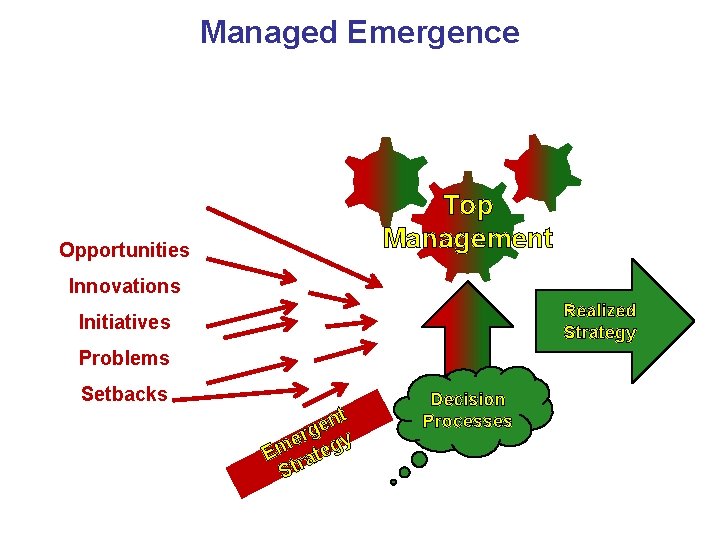
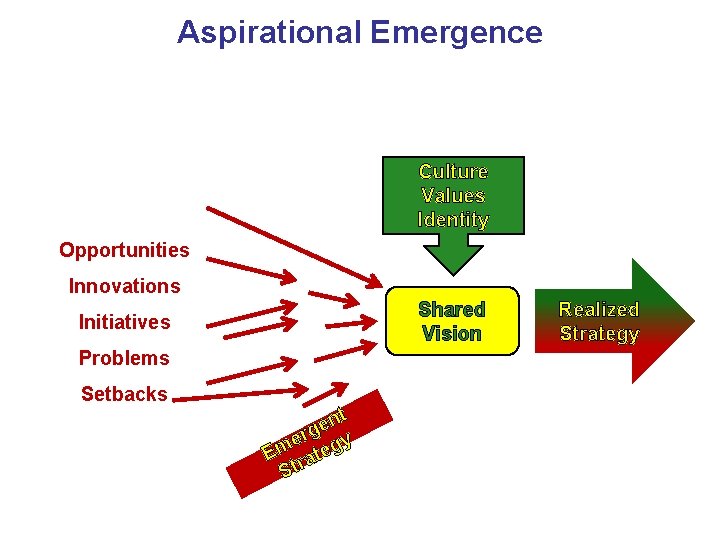
An alternative view to deliberate Strategy: “Crafting” strategy (or “Emergent” strategy)
To “craft”, we need to • utilize both analysis (breaking down) and synthesis (building up). • realize that strategies are both plans for the future and patterns of the past. • effectively manage stability as well as change, patterns as well as plans.
Constrained Emergence Int St end ra ed teg y Opportunities Ta rg Lim ets its & Innovations Realized Strategy Initiatives Problems Setbacks nt e rg y e Em rateg St
Managed Emergence Top Management Opportunities Innovations Realized Strategy Initiatives Problems Setbacks nt e rg y e Em rateg St Decision Processes
Aspirational Emergence Culture Values Identity Opportunities Innovations Shared Vision Initiatives Problems Setbacks nt e rg y e Em rateg St Realized Strategy
What does your University need? More control or more learning?
So far we have seen: • What is Strategy? – The levels of strategy – How do you know if you have one? • The most common pitfalls • Where does successful Strategy come from? • Strategy Formulation & Strategy Execution
What is Strategy? Strategic Development Progamme 6 March 2012 Prof. Gianvito Lanzolla, Ph. D Cass Business School, London, UK g. lanzolla@city. ac. uk