
What is Strategic Sourcing Definition A systematic and
- Slides: 4
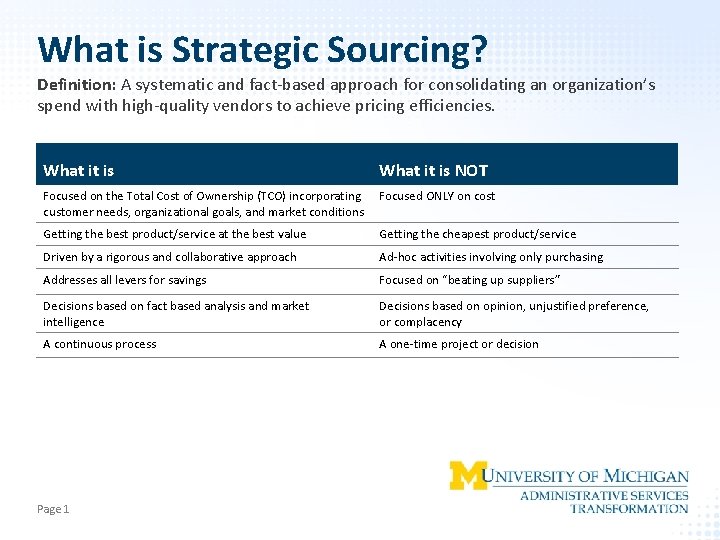
What is Strategic Sourcing? Definition: A systematic and fact-based approach for consolidating an organization’s spend with high-quality vendors to achieve pricing efficiencies. What it is NOT Focused on the Total Cost of Ownership (TCO) incorporating customer needs, organizational goals, and market conditions Focused ONLY on cost Getting the best product/service at the best value Getting the cheapest product/service Driven by a rigorous and collaborative approach Ad-hoc activities involving only purchasing Addresses all levers for savings Focused on “beating up suppliers” Decisions based on fact based analysis and market intelligence Decisions based on opinion, unjustified preference, or complacency A continuous process A one-time project or decision Page 1
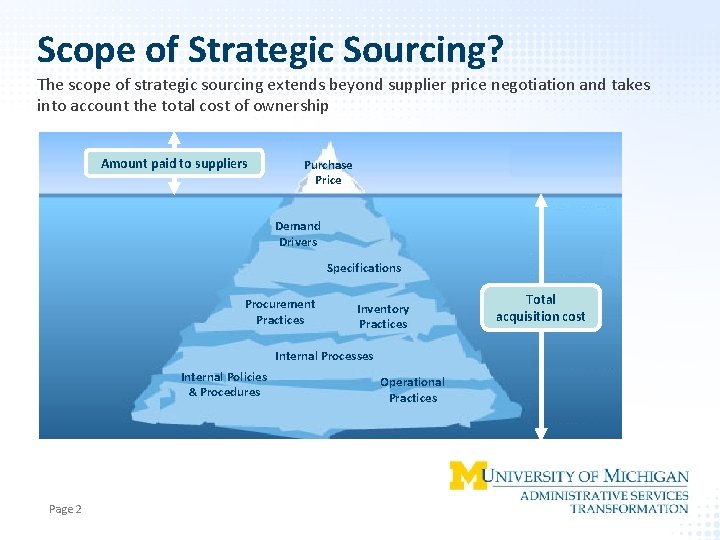
Scope of Strategic Sourcing? The scope of strategic sourcing extends beyond supplier price negotiation and takes into account the total cost of ownership Amount paid to suppliers Purchase Price Demand Drivers Specifications Procurement Practices Inventory Practices Internal Processes Internal Policies & Procedures Page 2 Operational Practices Total acquisition cost
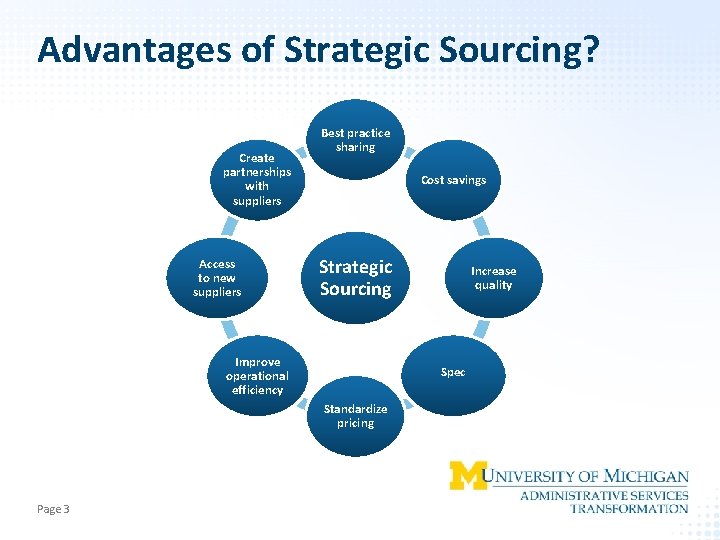
Advantages of Strategic Sourcing? Create partnerships with suppliers Access to new suppliers Best practice sharing Cost savings Strategic Sourcing Improve operational efficiency Spec Standardize pricing Copyright © 2010 Accenture All Rights Reserved. Page 3 Increase quality
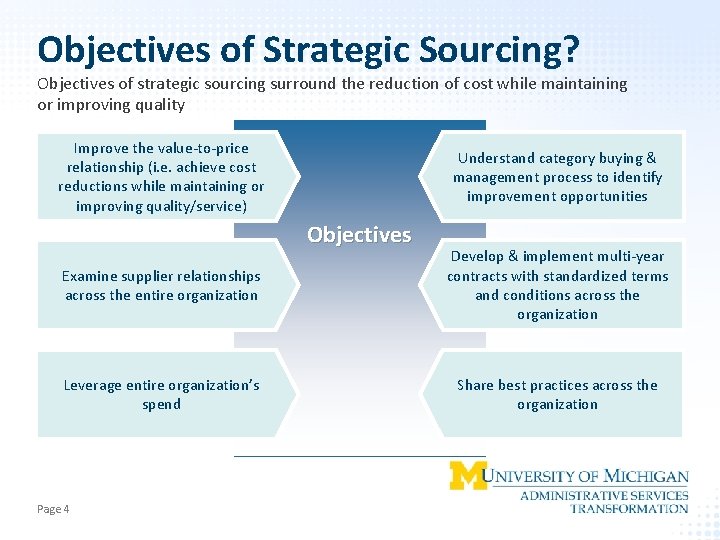
Objectives of Strategic Sourcing? Objectives of strategic sourcing surround the reduction of cost while maintaining or improving quality Improve the value-to-price relationship (i. e. achieve cost reductions while maintaining or improving quality/service) Understand category buying & management process to identify improvement opportunities Objectives Examine supplier relationships across the entire organization Develop & implement multi-year contracts with standardized terms and conditions across the organization Leverage entire organization’s spend Share best practices across the organization Page 4