
What is Statistics A set of numbers or

What is Statistics? A set of numbers or quantitative facts summarized in the form of charts, tables, and graphs A field of study concerned with the methods of obtaining, summarizing, and drawing inferences from data derived from groups of individuals Robert Woolson (1987) 2
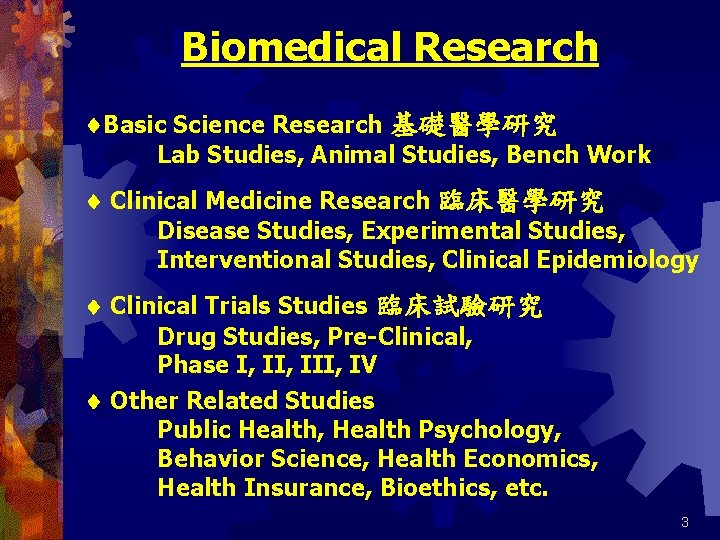
Biomedical Research Basic Science Research 基礎醫學研究 Lab Studies, Animal Studies, Bench Work Clinical Medicine Research 臨床醫學研究 Disease Studies, Experimental Studies, Interventional Studies, Clinical Epidemiology Clinical Trials Studies 臨床試驗研究 Drug Studies, Pre-Clinical, Phase I, III, IV Other Related Studies Public Health, Health Psychology, Behavior Science, Health Economics, Health Insurance, Bioethics, etc. 3
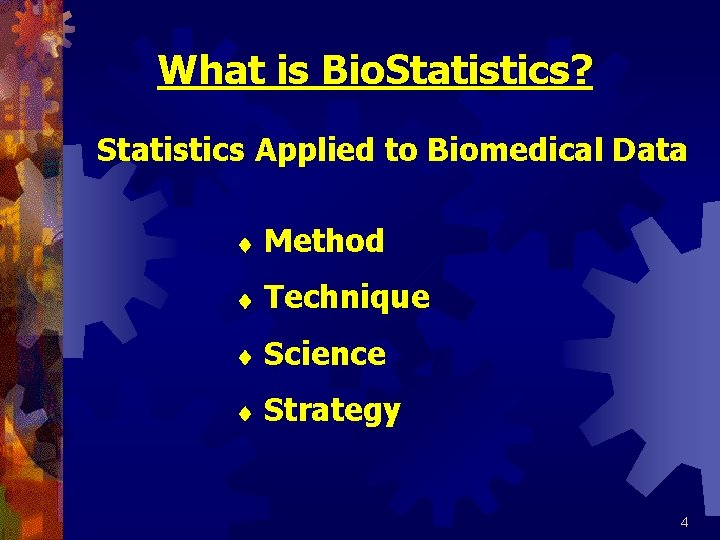
What is Bio. Statistics? Statistics Applied to Biomedical Data Method Technique Science Strategy 4
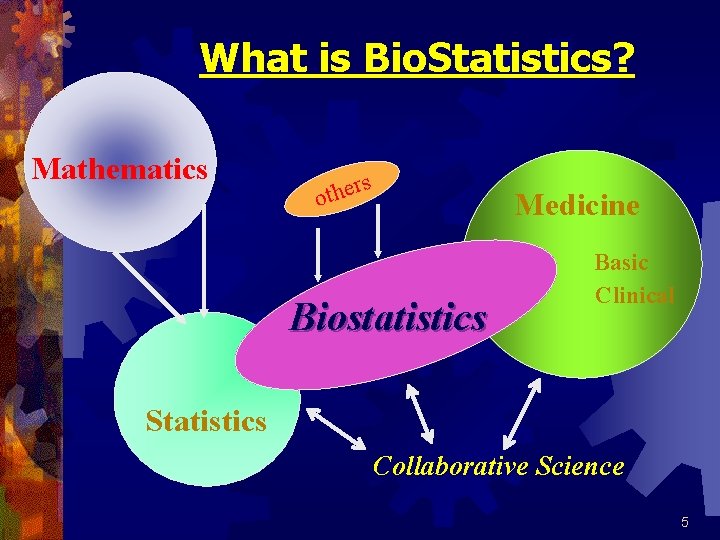
What is Bio. Statistics? Mathematics rs e h t o Medicine Biostatistics Basic Clinical Statistics Collaborative Science 5

Physiology of Research Investigator’s View: Truth in the Findings inference Universe Study in the Study External Validity Internal Validity Hulley & Cummings: Designing Clinical Research 6
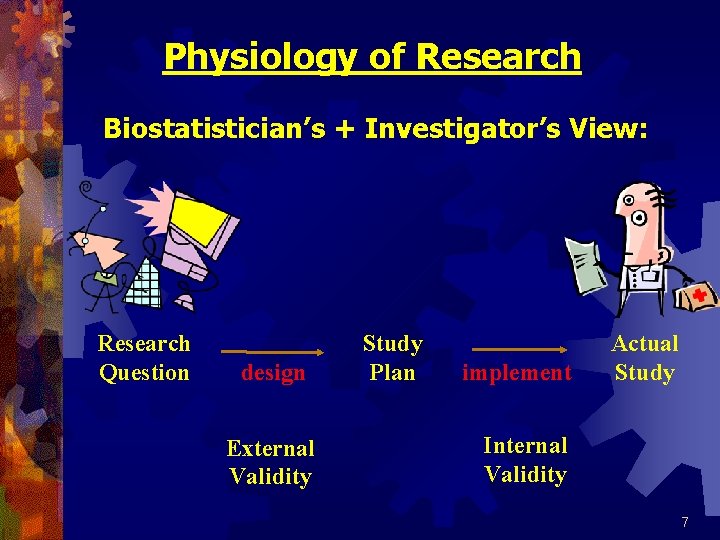
Physiology of Research Biostatistician’s + Investigator’s View: Research Question design External Validity Study Plan implement Actual Study Internal Validity 7
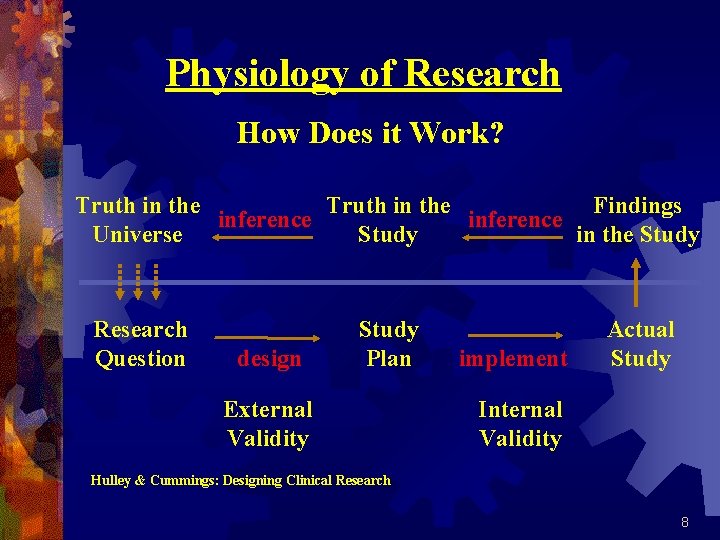
Physiology of Research How Does it Work? Truth in the Findings inference Universe Study in the Study Research Question design Study Plan External Validity implement Actual Study Internal Validity Hulley & Cummings: Designing Clinical Research 8

Collaborating Team Work Principal Investigator Biostatistician Lab Scientist Project Director Research Nurse Data Programmer etc. 9
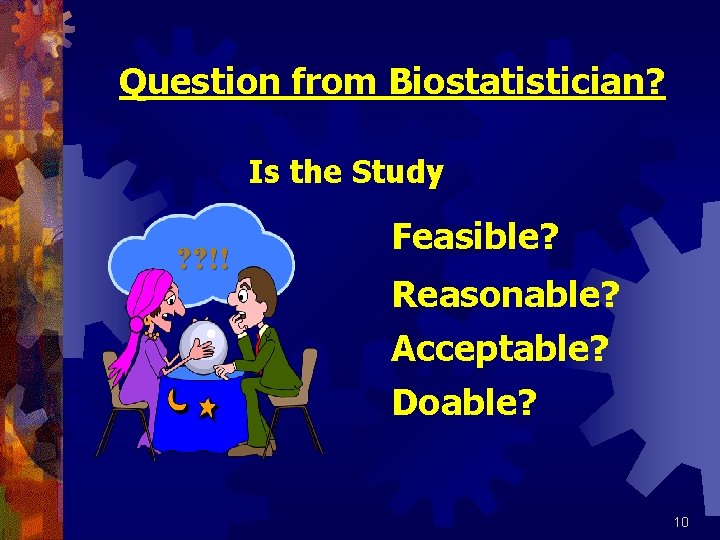
Question from Biostatistician? Is the Study ? ? !! Feasible? Reasonable? Acceptable? Doable? 10
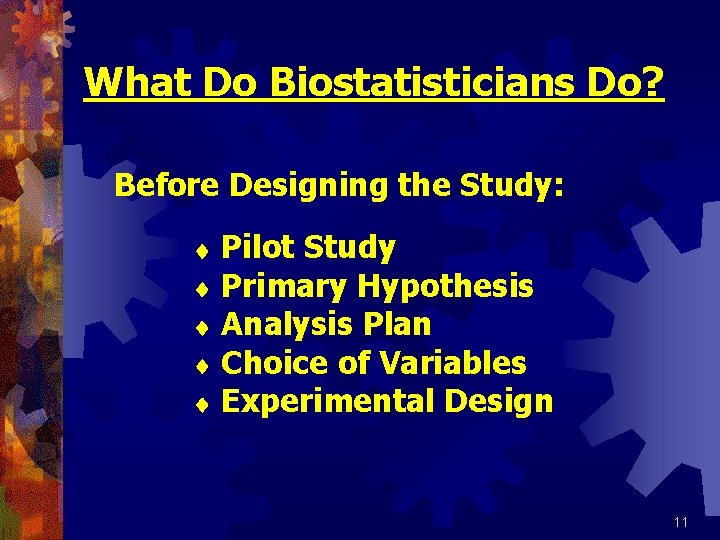
What Do Biostatisticians Do? Before Designing the Study: Pilot Study Primary Hypothesis Analysis Plan Choice of Variables Experimental Design 11
What Do Biostatisticians Do? Before Designing the Study: Sample Size Calculation Power Analysis N=2987? ! 12
What Do Biostatisticians Do? During the Study: TEAM work Questionnaire Design Data Base Management Quality Assurance/Quality Control Monthly, Semi Annual, Annual Reports Interim Data Analysis etc. . . 13
What Do Biostatisticians Do? At the End of the Study: Tips in Statistical analysis Always start with descriptive statistics Scatter plot Use of appropriate variable Use simple, efficient, and practical methods Time independent vs. time dependent covariates Not necessary advanced methods Use most popular, acceptable statistical packages Use universal recognizable data format 14
What Do Biostatisticians Do? Making Conclusions and Interpretation How to control type-I, II errors One answer for one hypothesis Statistical vs. clinical significance Over powered vs. under powered Multiple comparisons Over stretch statistical method 15

Example: KSBPS Kidney Stone - Blood Pressure Study A study of the effects of Extracoporeal Shock Wave Lithotripsy (ESWL) on Hypertension 腎結石病人使用電動碎石機後 與高血壓相關性之研究 PI : Michael Alderman, M. D. Co-PI : Chee Jen Chang, Ph. D. Co-PI : Jonathan Tobin, Ph. D. Albert Einstein College of Medicine Funded by National Electronic Manufacture Association (NEMA) and approved by FDA in 1990 16
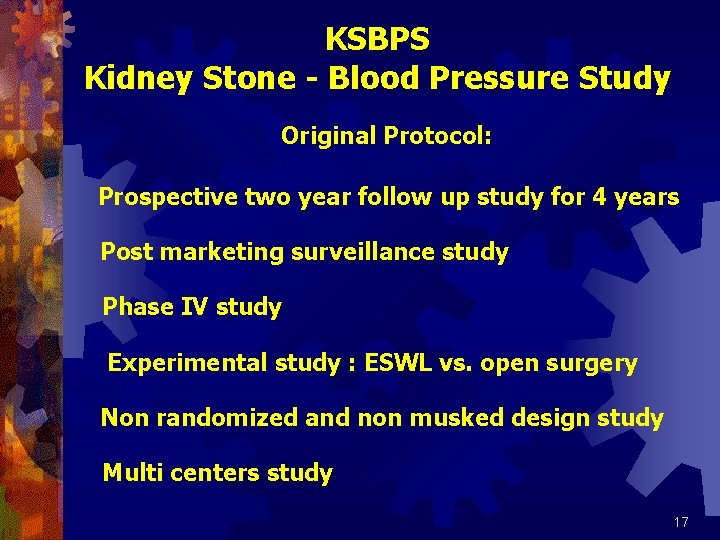
KSBPS Kidney Stone - Blood Pressure Study Original Protocol: Prospective two year follow up study for 4 years Post marketing surveillance study Phase IV study Experimental study : ESWL vs. open surgery Non randomized and non musked design study Multi centers study 17
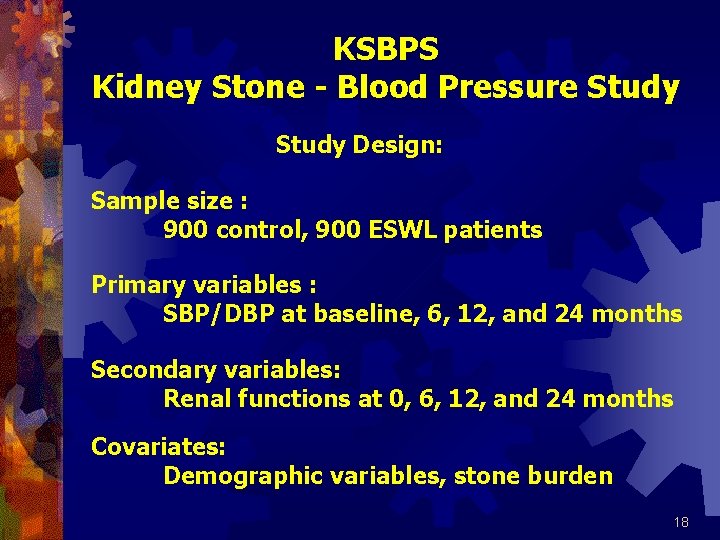
KSBPS Kidney Stone - Blood Pressure Study Design: Sample size : 900 control, 900 ESWL patients Primary variables : SBP/DBP at baseline, 6, 12, and 24 months Secondary variables: Renal functions at 0, 6, 12, and 24 months Covariates: Demographic variables, stone burden 18
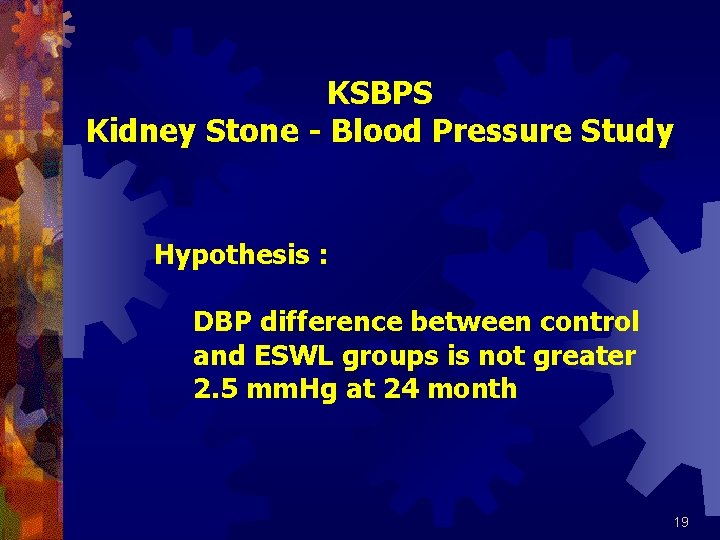
KSBPS Kidney Stone - Blood Pressure Study Hypothesis : DBP difference between control and ESWL groups is not greater 2. 5 mm. Hg at 24 month 19
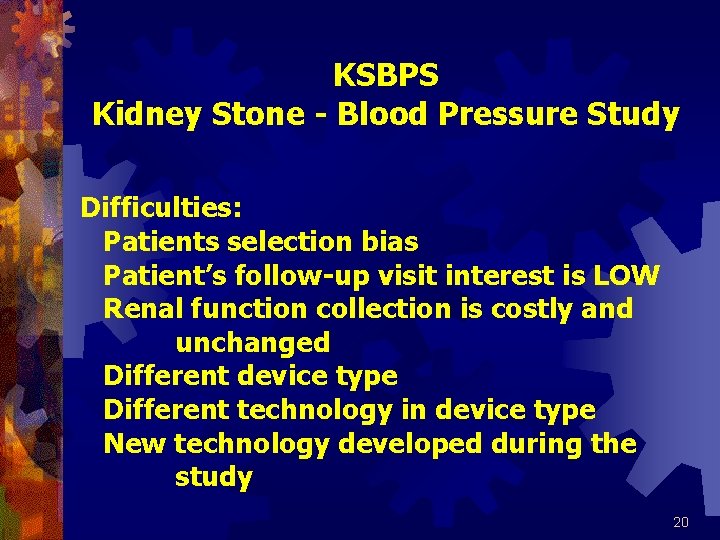
KSBPS Kidney Stone - Blood Pressure Study Difficulties: Patients selection bias Patient’s follow-up visit interest is LOW Renal function collection is costly and unchanged Different device type Different technology in device type New technology developed during the study 20
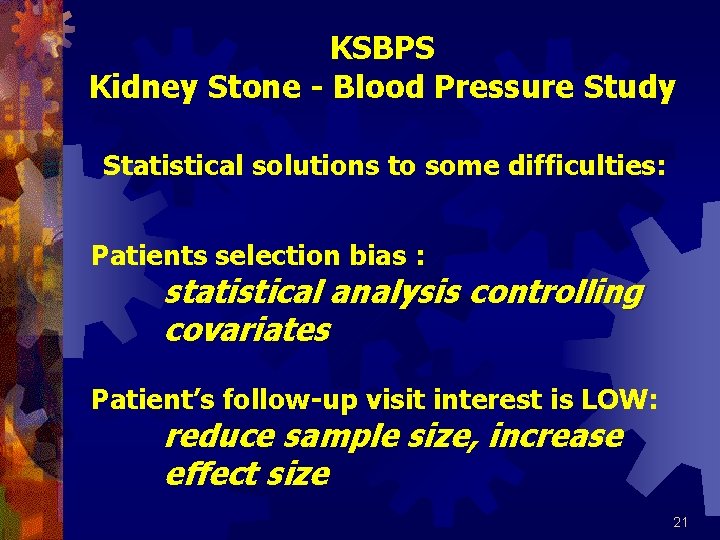
KSBPS Kidney Stone - Blood Pressure Study Statistical solutions to some difficulties: Patients selection bias : statistical analysis controlling covariates Patient’s follow-up visit interest is LOW: reduce sample size, increase effect size 21
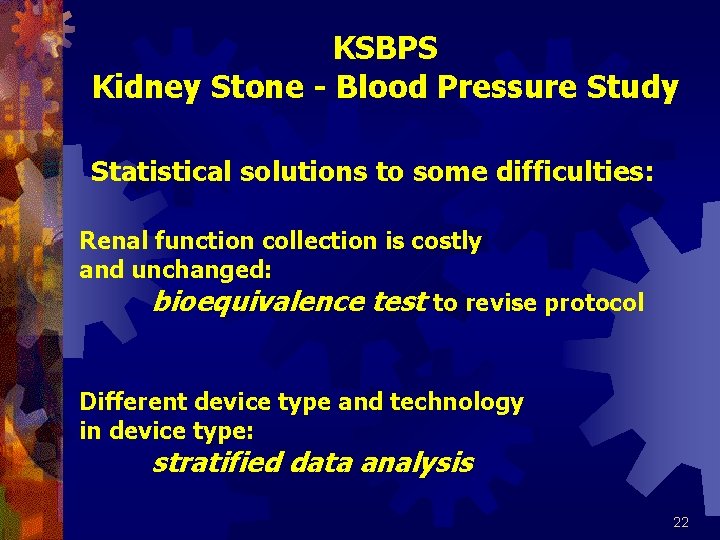
KSBPS Kidney Stone - Blood Pressure Study Statistical solutions to some difficulties: Renal function collection is costly and unchanged: bioequivalence test to revise protocol Different device type and technology in device type: stratified data analysis 22
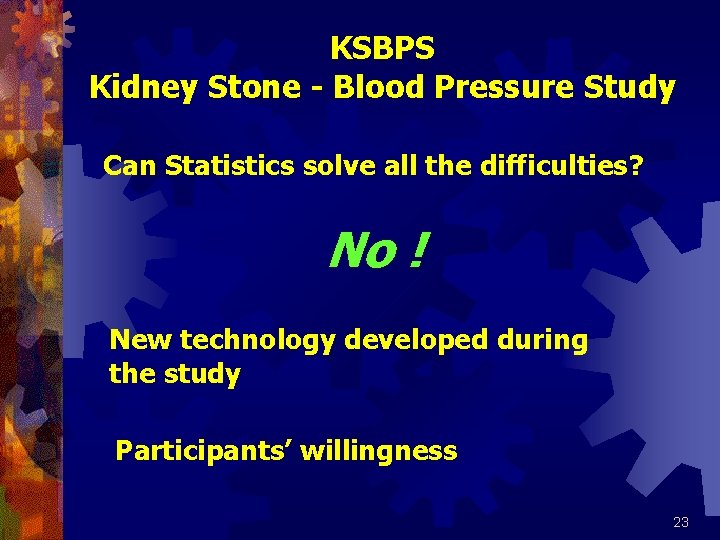
KSBPS Kidney Stone - Blood Pressure Study Can Statistics solve all the difficulties? No ! New technology developed during the study Participants’ willingness 23
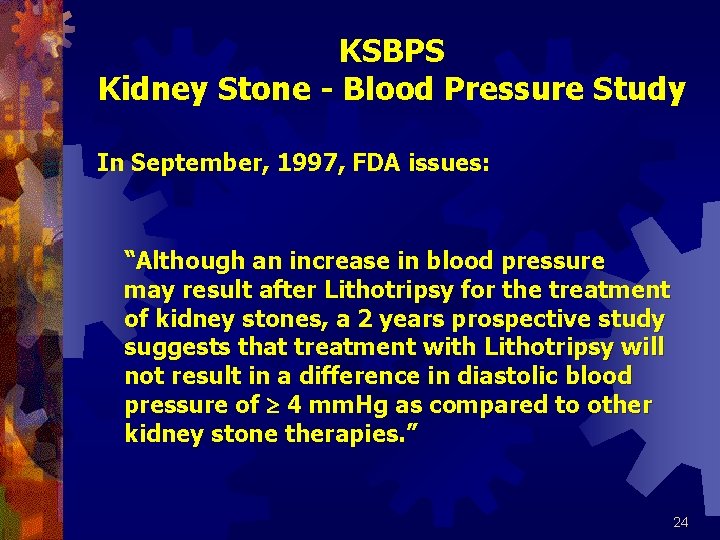
KSBPS Kidney Stone - Blood Pressure Study In September, 1997, FDA issues: “Although an increase in blood pressure may result after Lithotripsy for the treatment of kidney stones, a 2 years prospective study suggests that treatment with Lithotripsy will not result in a difference in diastolic blood pressure of 4 mm. Hg as compared to other kidney stone therapies. ” 24
What Do Biostatistician Do? then, now and future ¨Methodology development ¨Consultant ¨Health- and bio- informatics ¨Research protocols review Committee of Clinical Investigation (CCI) Internal Review Board (IRB) ¨Regulatory review 25
What Do Biostatistician Do? then, now and future ¨Teaching (university, medical school) Research (institute, foundation) Government Agency (NIH, CDC) ¨Regulatory Agency (FDA) ¨Industry (Pharmaceutical, Biotech. ) ¨Consulting (CRO) 26

Thank You! Email: cjchang@ha. mc. ntu. edu. tw Phone: 02 -2312 -3456 ext 6588 Fax: 02 -2371 -0262 27
- Slides: 27