
What is solubility Solubility is the ability of
What is solubility? • Solubility is the ability of a substance to dissolve (become trapped in) another substance. • Temperature can increase solubility. • Example: hot tea vs. iced tea
What is a solution? • A solution is formed when one substance dissolves in another substance. The two substances mix evenly. • The ingredients lose some of their physical properties and they can be difficult to separate. Solute + Solvent = Solution
What properties do sugar and salt lose when they dissolve in water?
What properties do sugar and salt lose when they dissolve in water? 1. 2. 3. 4. Color Texture Shape State of matter …they seem to disappear!
Can you name a property that sugar and salt do NOT lose when they dissolve in water?
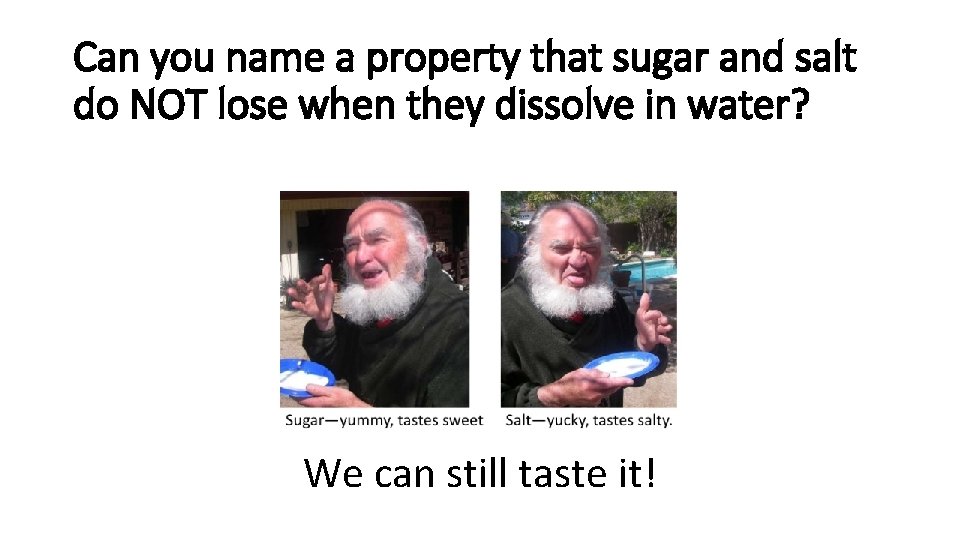
Can you name a property that sugar and salt do NOT lose when they dissolve in water? We can still taste it!
Did sand lose any of its physical properties when it was mixed with water?
Did sand lose any of its physical properties when it was mixed with water? • Sand DOES NOT lose any of its physical properties when it is mixed with water. The sand is still: 1. A solid 2. A tan color 3. Gritty 4. Easy to separate (pour off water or filter)
If you leave a solution of sugar and water or salt and water out on the counter for several days, what happens? a. The sugar or salt disappear. b. The sugar or salt water take on a different taste. c. The water evaporates and sugar or salt crystals form. d. The sugar and salt evaporate along with the water.
If you leave a solution of sugar and water or salt and water out on the counter for several days, what happens? a. The sugar or salt disappear. b. The sugar or salt water take on a different taste. c. The water evaporates and sugar or salt crystals form. d. The sugar and salt evaporate along with the water.
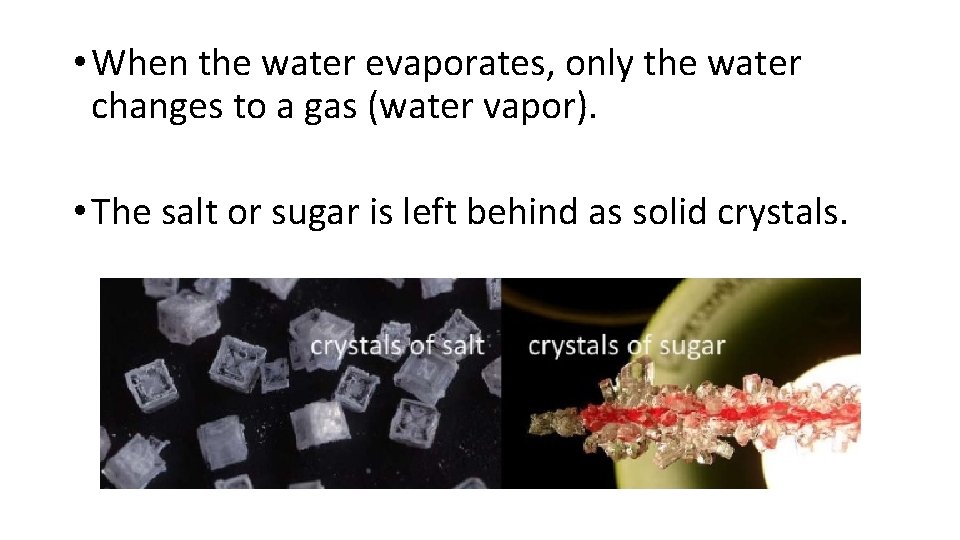
• When the water evaporates, only the water changes to a gas (water vapor). • The salt or sugar is left behind as solid crystals.
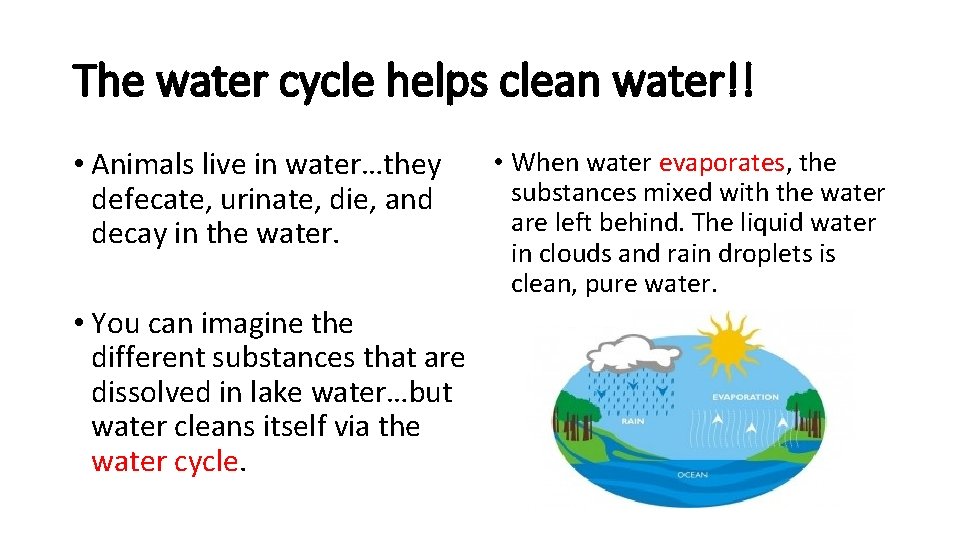
The water cycle helps clean water!! • Animals live in water…they defecate, urinate, die, and decay in the water. • You can imagine the different substances that are dissolved in lake water…but water cleans itself via the water cycle. • When water evaporates, the substances mixed with the water are left behind. The liquid water in clouds and rain droplets is clean, pure water.
What are some other substances that are water soluble (able to dissolve in water)?
What are some other substances that are water soluble (able to dissolve in water)? • Soap • Coffee • Aspirin tablet • Food coloring • Carbon dioxide • Baking soda • Epsom salt • Vinegar • Honey • Oxygen • Lemon juice • Hot chocolate
These are called…the solute. • A solute is the substance that is being dissolved • The substance that is the smaller amount or the substance that experiences a phase change
What are some other substances that are water insoluble (unable to dissolve)?
What are some other substances that are water insoluble (unable to dissolve)? • Oil • Flour • Metal • Plastic • Chalk • Black pepper • Wood • Wax
Water as a solvent • The solvent is the substance doing the dissolving • The substance that is the larger amount • Water is considered the universal solvent because it dissolves more substances than any other liquid. This is important to every living thing on earth!!
Remember… • A solution is formed when one substance dissolves in another substance. Solute + Solvent = Solution
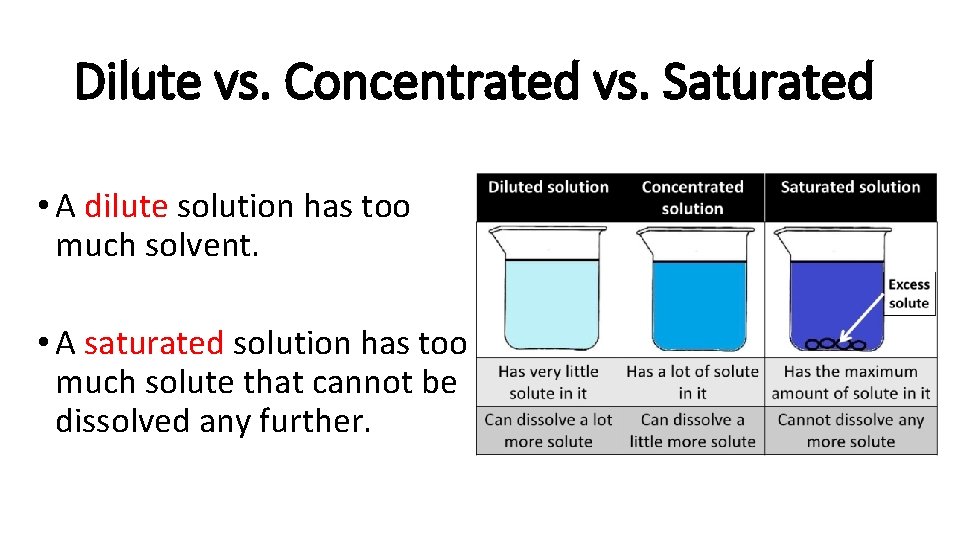
Dilute vs. Concentrated vs. Saturated • A dilute solution has too much solvent. • A saturated solution has too much solute that cannot be dissolved any further.
In Summary… • When certain substances mix with water they dissolve. • When a substance dissolves in water, the resulting liquid is called a solution. • When a substance dissolves in water, that substance loses some of its physical properties.

Matter Weekly Packet • Due Friday, December 6 th.
- Slides: 22