
What is Self Esteem Think of someone who
- Slides: 7
What is Self Esteem Think of someone who you think has high self-esteem and chat to the person next to you about why you feel this person has high self esteem?
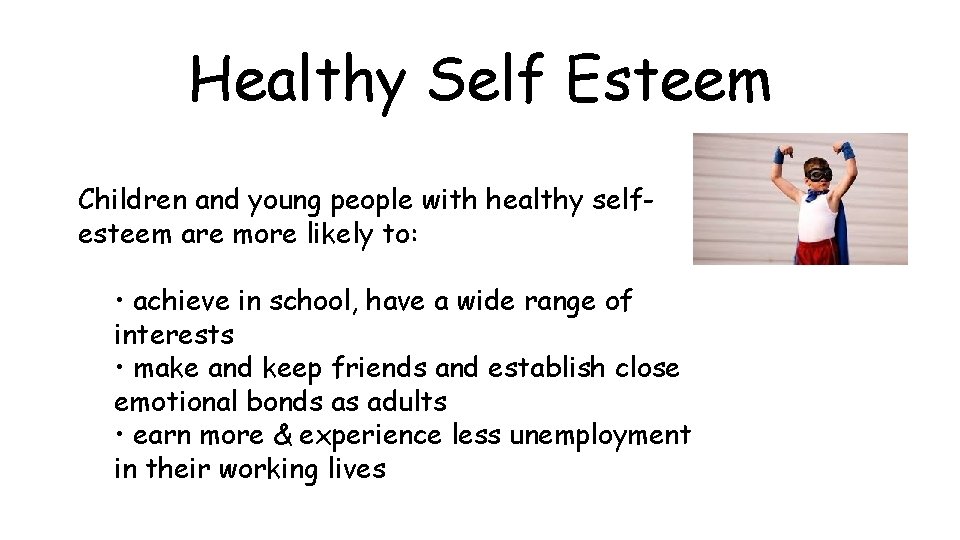
Healthy Self Esteem Children and young people with healthy selfesteem are more likely to: • achieve in school, have a wide range of interests • make and keep friends and establish close emotional bonds as adults • earn more & experience less unemployment in their working lives
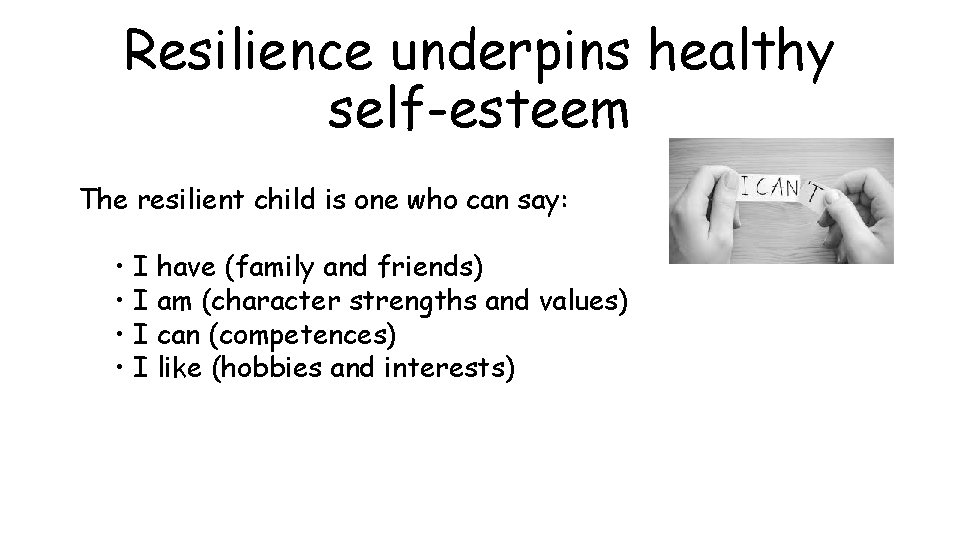
Resilience underpins healthy self-esteem The resilient child is one who can say: • I have (family and friends) • I am (character strengths and values) • I can (competences) • I like (hobbies and interests)
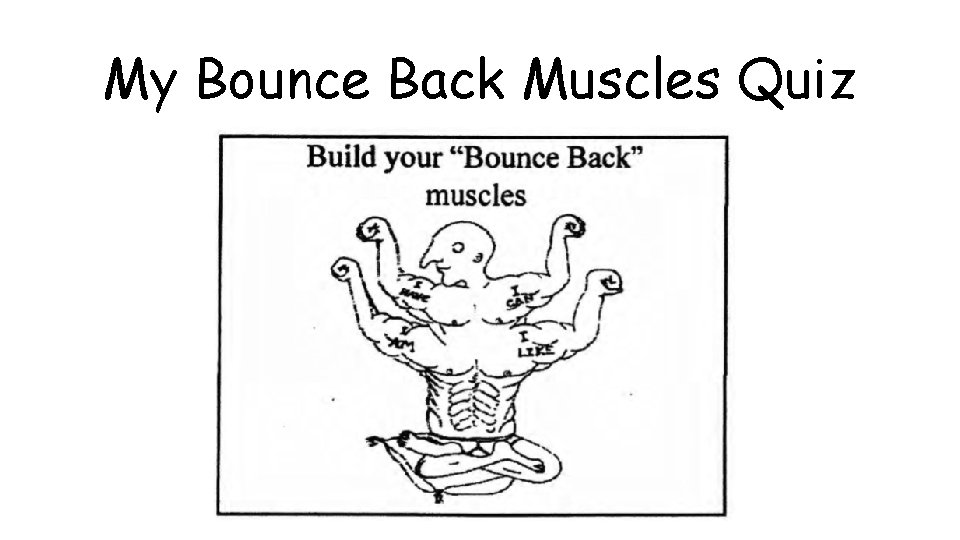
My Bounce Back Muscles Quiz
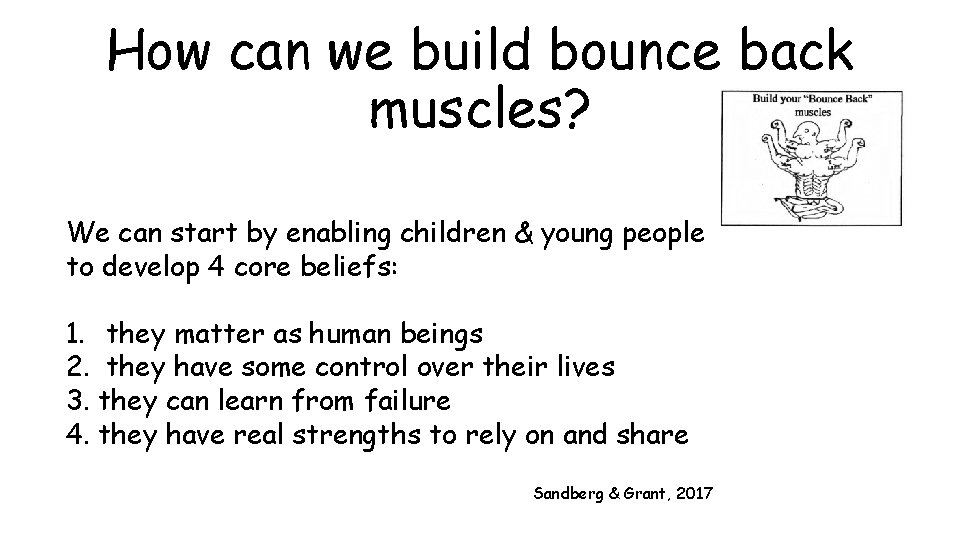
How can we build bounce back muscles? We can start by enabling children & young people to develop 4 core beliefs: 1. they matter as human beings 2. they have some control over their lives 3. they can learn from failure 4. they have real strengths to rely on and share Sandberg & Grant, 2017
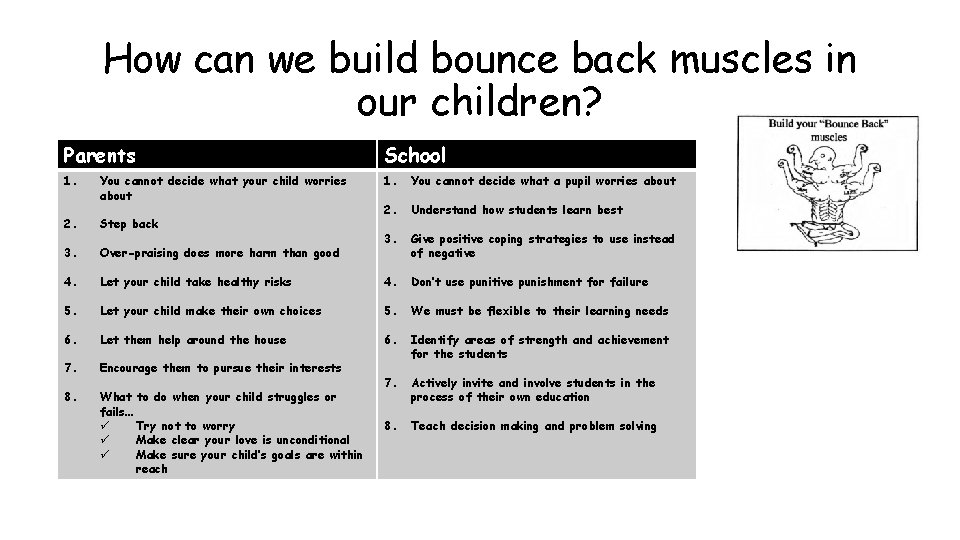
How can we build bounce back muscles in our children? Parents School 1. You cannot decide what a pupil worries about 2. Understand how students learn best 3. Give positive coping strategies to use instead of negative You cannot decide what your child worries about 2. Step back 3. Over-praising does more harm than good 4. Let your child take healthy risks 4. Don’t use punitive punishment for failure 5. Let your child make their own choices 5. We must be flexible to their learning needs 6. Let them help around the house 6. 7. Encourage them to pursue their interests Identify areas of strength and achievement for the students 8. What to do when your child struggles or fails… ü Try not to worry ü Make clear your love is unconditional ü Make sure your child’s goals are within reach 7. Actively invite and involve students in the process of their own education 8. Teach decision making and problem solving
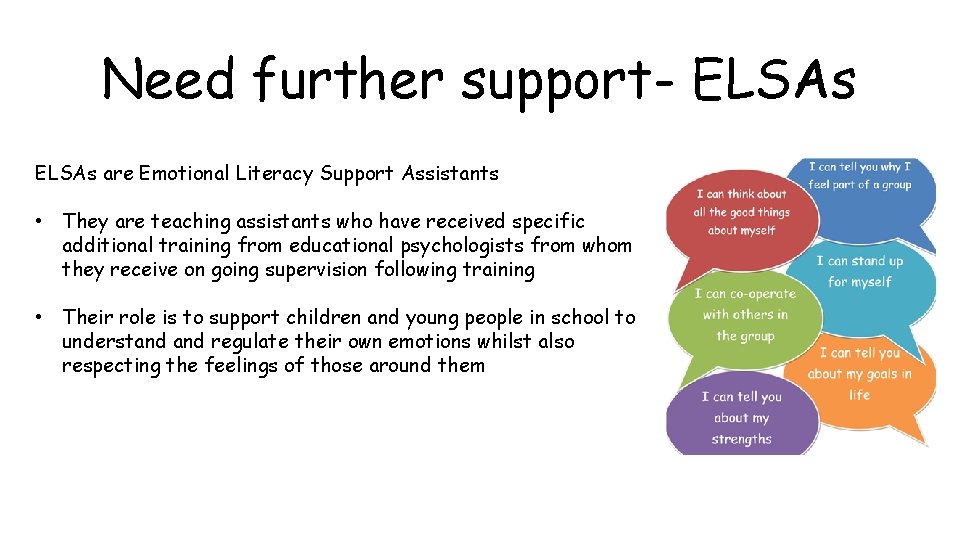
Need further support- ELSAs are Emotional Literacy Support Assistants • They are teaching assistants who have received specific additional training from educational psychologists from whom they receive on going supervision following training • Their role is to support children and young people in school to understand regulate their own emotions whilst also respecting the feelings of those around them