
What Is Science Slide 1 of 21 What
- Slides: 15
What Is Science? Slide 1 of 21
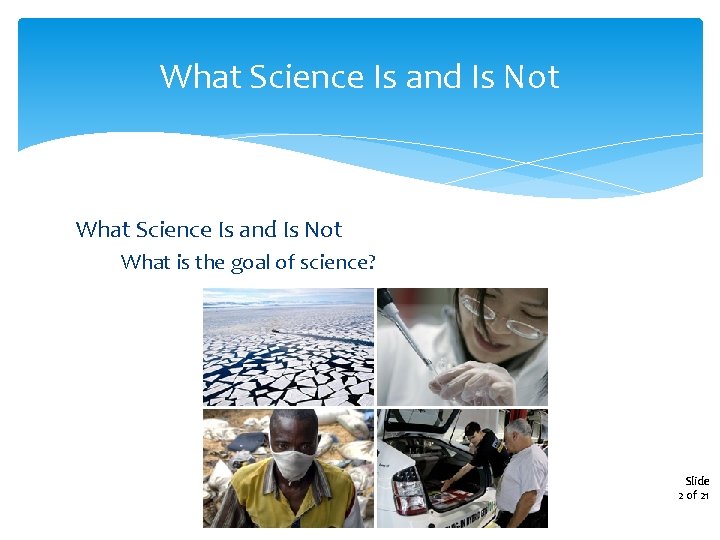
What Science Is and Is Not What is the goal of science? Slide 2 of 21
What Science Is and Is Not The goal of science is to: investigate and understand the natural world. explain events in the natural world. use those explanations to make useful predictions. Slide 3 of 21
What Science Is and Is Not Science is an organized way of using evidence to learn about the natural world. Body of knowledge Slide 4 of 21
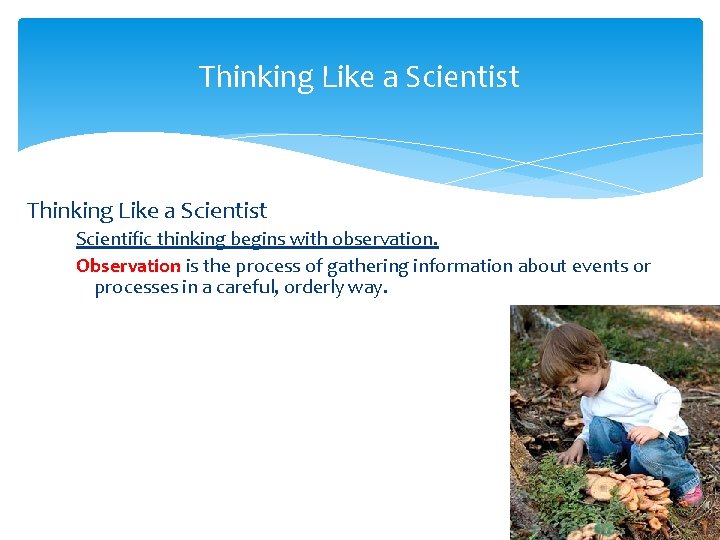
Thinking Like a Scientist Scientific thinking begins with observation. Observation is the process of gathering information about events or processes in a careful, orderly way. Slide 5 of 21
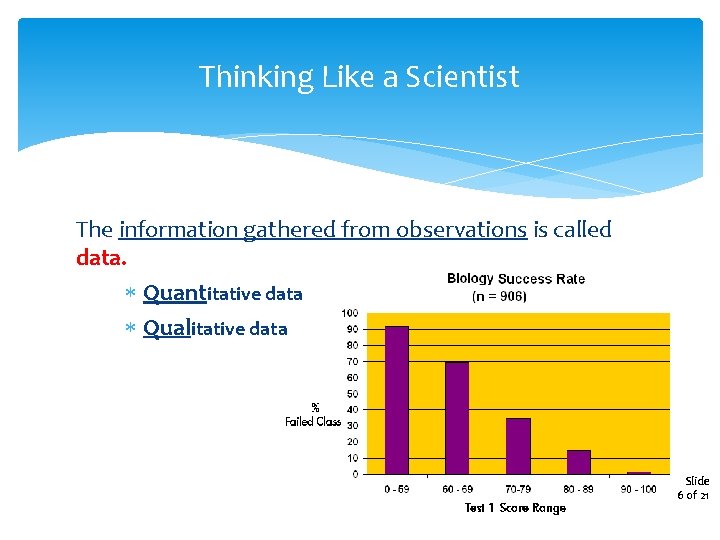
Thinking Like a Scientist The information gathered from observations is called data. Quantitative data Qualitative data Slide 6 of 21
Thinking Like a Scientists use data to make inferences. An inference is a logical interpretation based on prior knowledge or experience. Why do riddles mess with our heads? Slide 7 of 21
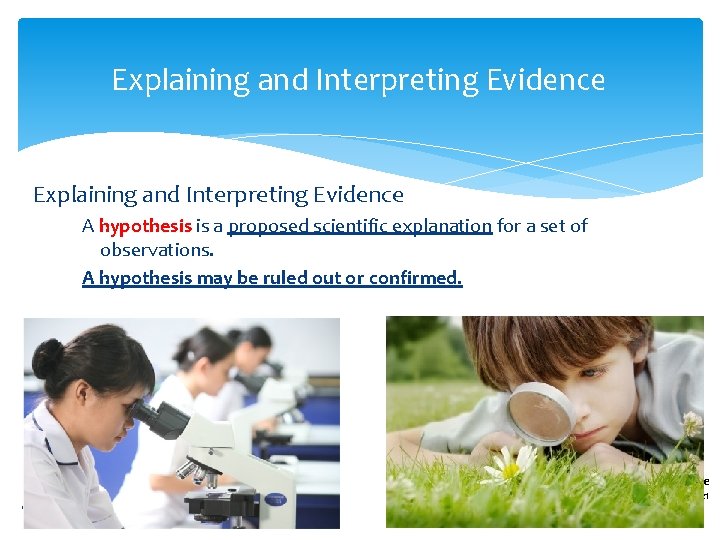
Explaining and Interpreting Evidence A hypothesis is a proposed scientific explanation for a set of observations. A hypothesis may be ruled out or confirmed. Copyright Pearson Prentice Hall Slide 8 of 21
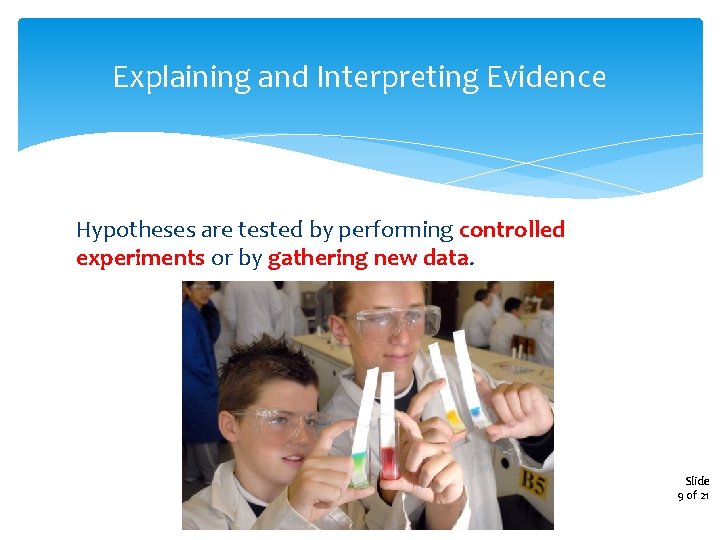
Explaining and Interpreting Evidence Hypotheses are tested by performing controlled experiments or by gathering new data. Slide 9 of 21
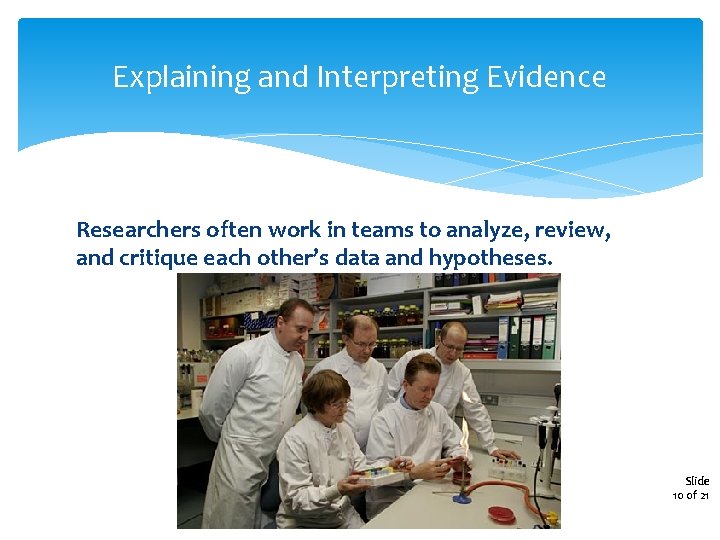
Explaining and Interpreting Evidence Researchers often work in teams to analyze, review, and critique each other’s data and hypotheses. Slide 10 of 21
Science as a Way of Knowing Science is an ongoing process that involves: asking questions observing making inferences testing hypotheses Slide 11 of 21
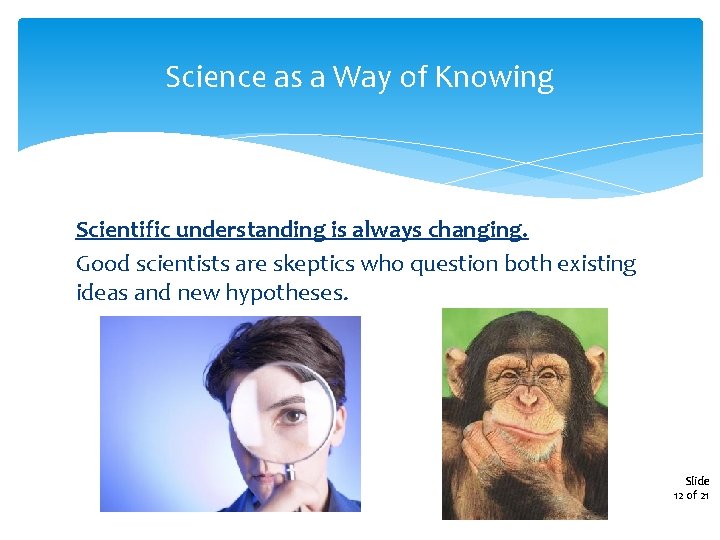
Science as a Way of Knowing Scientific understanding is always changing. Good scientists are skeptics who question both existing ideas and new hypotheses. Slide 12 of 21
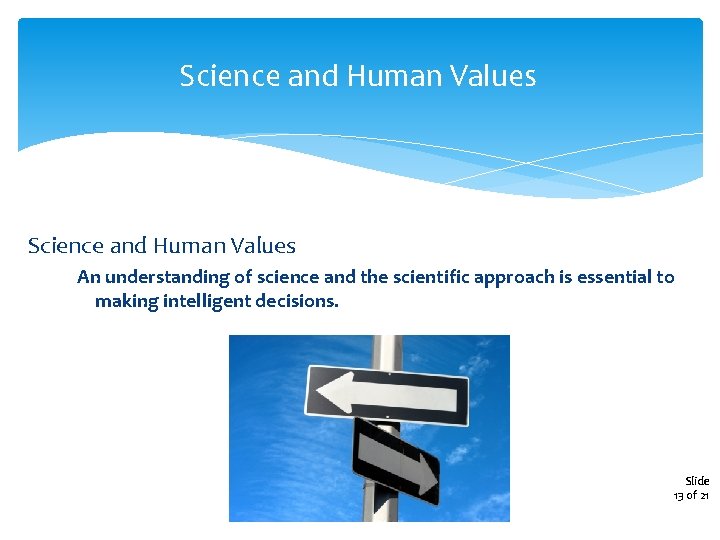
Science and Human Values An understanding of science and the scientific approach is essential to making intelligent decisions. Slide 13 of 21
Science and Human Values Decisions involve many factors besides scientific information, including: the society in which we live economic considerations laws moral principles Citizens decide what to do when they vote. Slide 14 of 21
Questions? Slide 15 of 21