
What is science Scientific Method A blueprint for
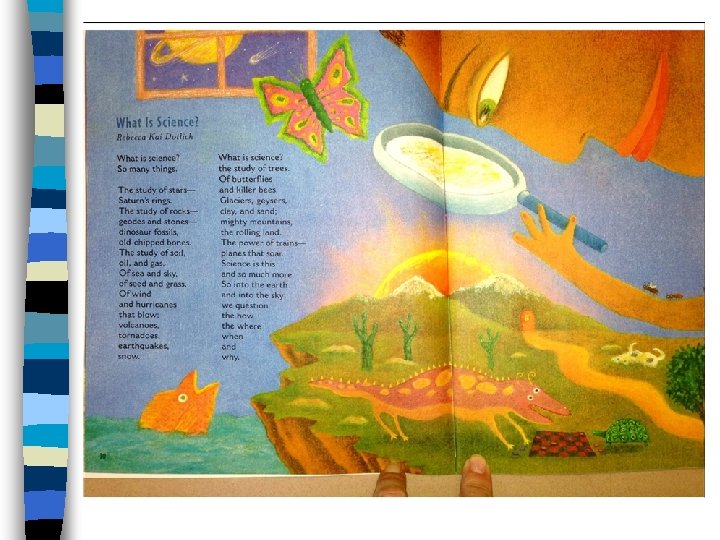
What is science?
Scientific Method A blueprint for experiment success.
What is the scientific method? n It is a simple method scientists use to conduct an investigation. n It is a way to ask & answer scientific questions by asking questions & conducting experiments.
I. Question/Problem n Ask a question about something observed. – Why? – How? – What? n Question to be solved. n Must be about something measurable.
II. Hypothesis n Testable n If, then because statements – If ____ [I do this], then _____ [this will happen] because ____(explain why you think it will happen) n Educated guess about how things work. n Mnemonic - TIE
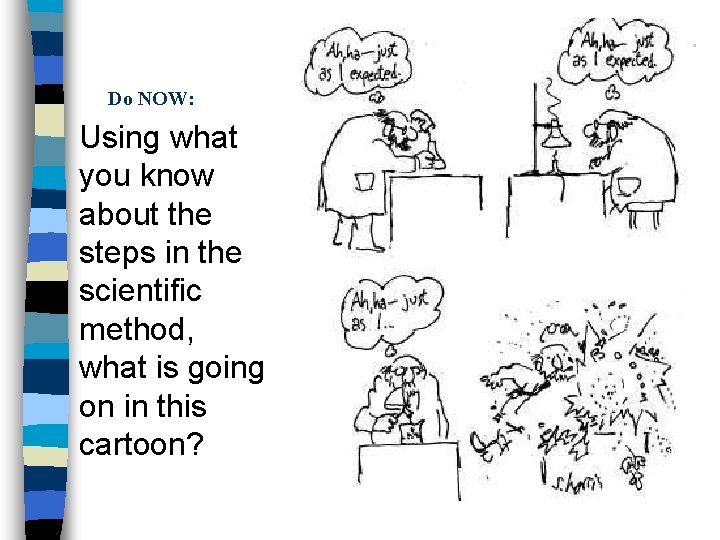
Do NOW: Using what you know about the steps in the scientific method, what is going on in this cartoon?
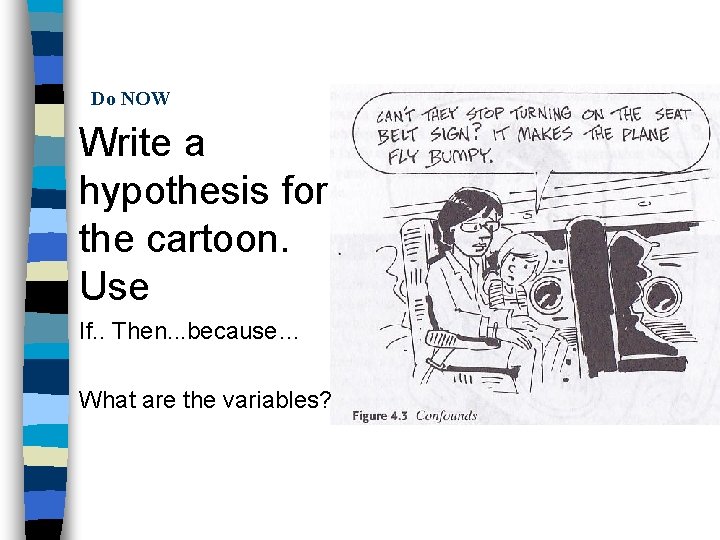
Do NOW Write a hypothesis for the cartoon. Use If. . Then. . . because… What are the variables?
III. Experiment n Tests your hypothesis. Is it accepted (right) or rejected (wrong) ? n Change only one variable.
Variable – (from the word) varies n The dependent variable is what happens in the experiment due to the change. The “then” part of the hypothesis. (the effect) n The Independent variable is the condition (thing) that the scientist controls or changes on purpose. The “if” part of a hypothesis. I do it. (The cause of the change. )
Experiment n Control – part you do nothing to, to compare n Data – information n Constant – Everything except your variable stays exactly the same. n Trial – You need to test it more than once
III. Experiment n Record your data in a data table. – Numerical (quantitative) data organized in rows and columns – The specific independent variables are listed – The number of trials are listed – Blanks are left for the data (dependent variable) to be filled in
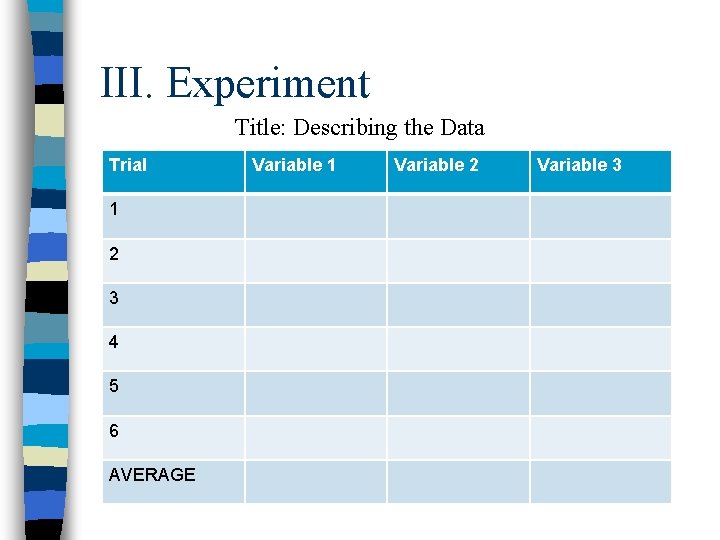
III. Experiment Title: Describing the Data Trial 1 2 3 4 5 6 AVERAGE Variable 1 Variable 2 Variable 3
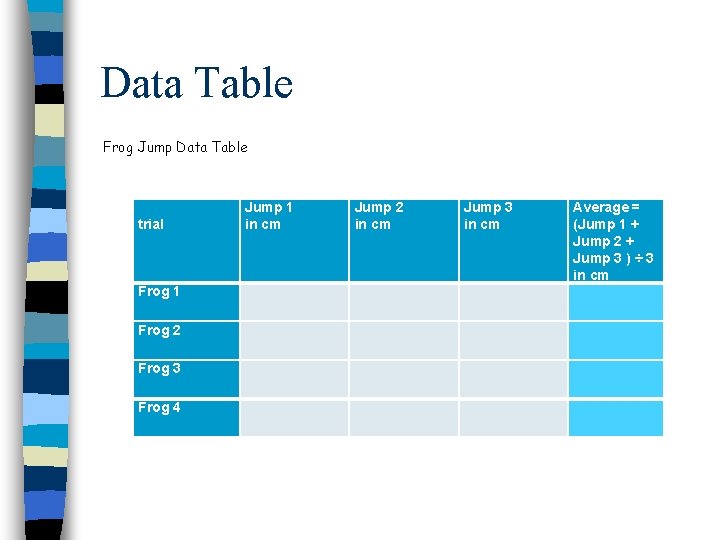
Data Table Frog Jump Data Table trial Frog 1 Frog 2 Frog 3 Frog 4 Jump 1 in cm Jump 2 in cm Jump 3 in cm Average = (Jump 1 + Jump 2 + Jump 3 ) ÷ 3 in cm
IV. Data Analysis n Reduce the data – Average (Mean) n Graph – Graph the data to look for trends & relationships.
V. Conclusion Summary of your experiment. n After your experiment, analyze your data to see if your hypothesis was accepted or rejected. n If hypothesis is rejected, give possible reasons for the difference between your hypothesis and the experimental results. n
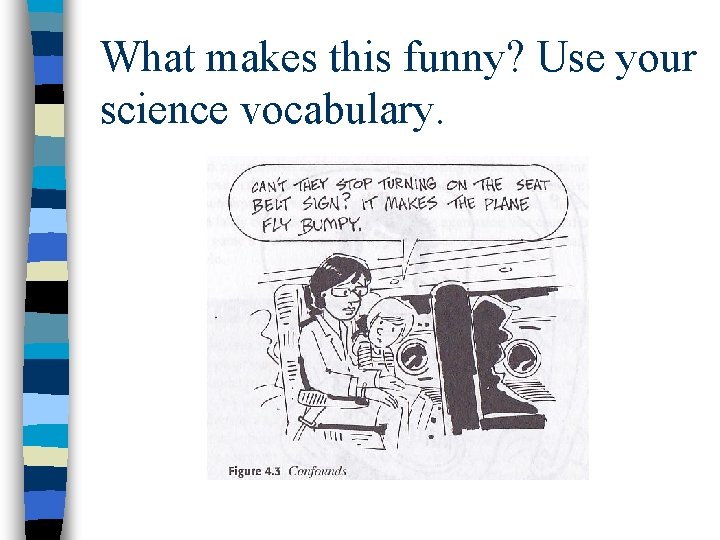
What makes this funny? Use your science vocabulary.
- Slides: 17