
What is RFID RFID stands for Radio Frequency


- Slides: 8
What is RFID ? • RFID stands for Radio Frequency identification. • Wireless non-contact use of radio-frequency electromagnetic fields to transfer data • For the purpose of automatic identification & tracking of tags attached to assets Types • RFID tags may or may not have a battery in them. • Those that do not have a battery are called passive tags • Those that use a battery are called active tags. The battery mostly assists in boosting the read range of the RFID tag. • Passive tags are powered by the RF signal from the interrogator/reader Frequencies • LF – Low frequency @ 125 khz • HF: High frequency @ 13. 56 Mhz • UHF: Ultra high frequency @ 860 – 960 Mhz
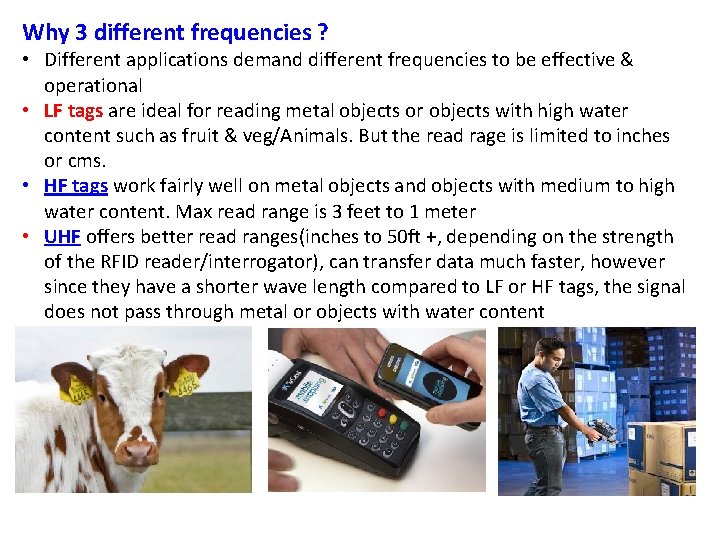
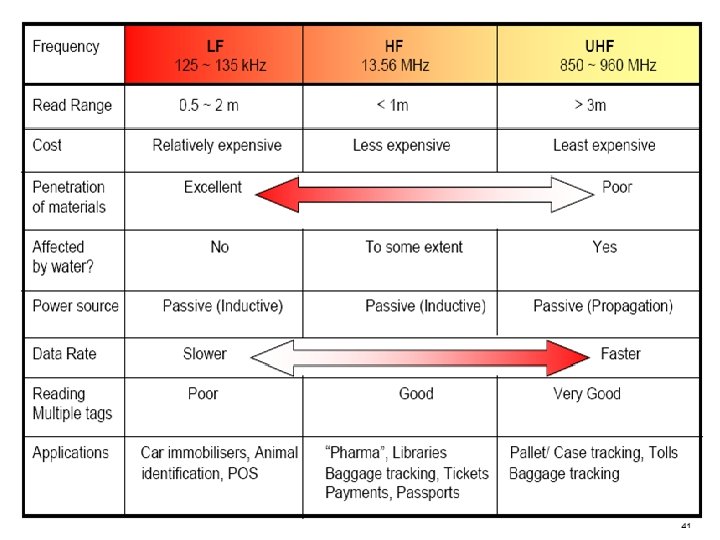
Why 3 different frequencies ? • Different applications demand different frequencies to be effective & operational • LF tags are ideal for reading metal objects or objects with high water content such as fruit & veg/Animals. But the read rage is limited to inches or cms. • HF tags work fairly well on metal objects and objects with medium to high water content. Max read range is 3 feet to 1 meter • UHF offers better read ranges(inches to 50 ft +, depending on the strength of the RFID reader/interrogator), can transfer data much faster, however since they have a shorter wave length compared to LF or HF tags, the signal does not pass through metal or objects with water content
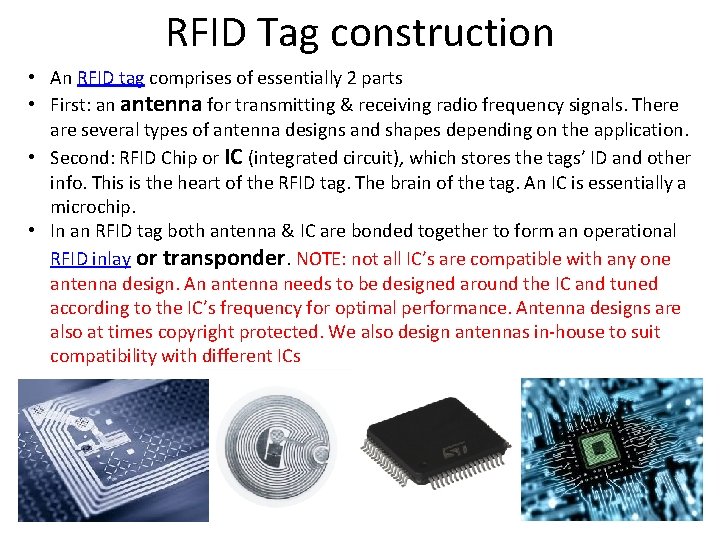
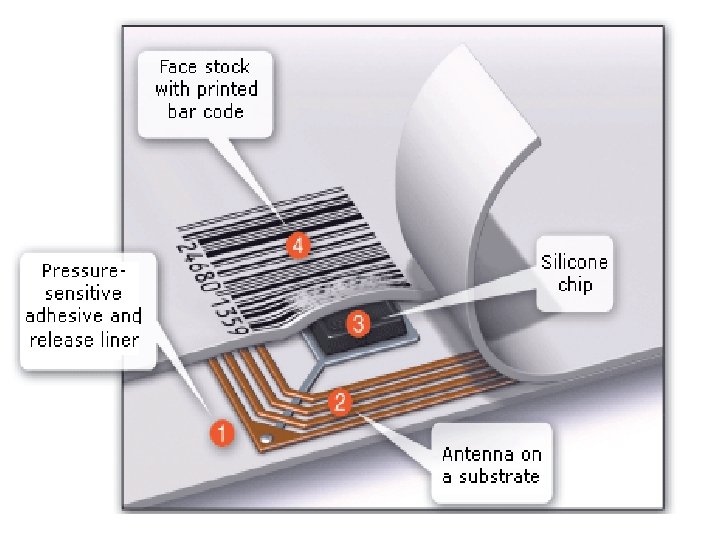
RFID Tag construction • An RFID tag comprises of essentially 2 parts • First: an antenna for transmitting & receiving radio frequency signals. There are several types of antenna designs and shapes depending on the application. • Second: RFID Chip or IC (integrated circuit), which stores the tags’ ID and other info. This is the heart of the RFID tag. The brain of the tag. An IC is essentially a microchip. • In an RFID tag both antenna & IC are bonded together to form an operational RFID inlay or transponder. NOTE: not all IC’s are compatible with any one antenna design. An antenna needs to be designed around the IC and tuned according to the IC’s frequency for optimal performance. Antenna designs are also at times copyright protected. We also design antennas in-house to suit compatibility with different ICs
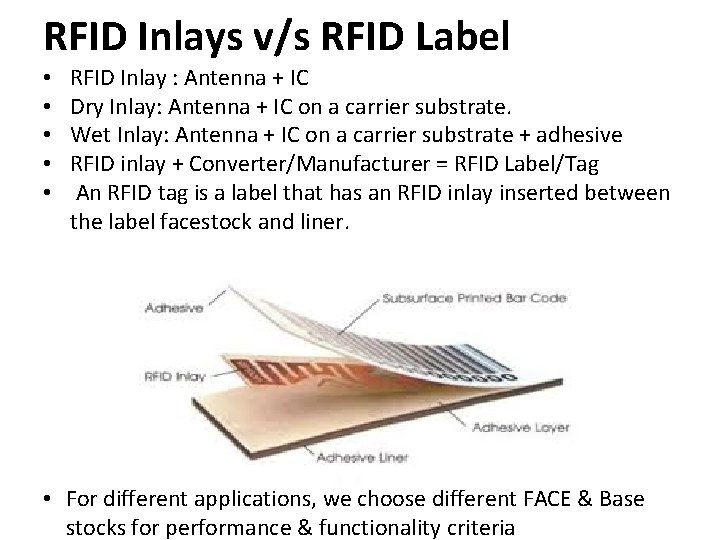
RFID Inlays v/s RFID Label • • • RFID Inlay : Antenna + IC Dry Inlay: Antenna + IC on a carrier substrate. Wet Inlay: Antenna + IC on a carrier substrate + adhesive RFID inlay + Converter/Manufacturer = RFID Label/Tag An RFID tag is a label that has an RFID inlay inserted between the label facestock and liner. • For different applications, we choose different FACE & Base stocks for performance & functionality criteria
Interesting, right? This is just a sneak preview of the full presentation. We hope you like it! To see the rest of it, just click here to view it in full on Power. Show. com. Then, if you’d like, you can also log in to Power. Show. com to download the entire presentation for free.