
What is Renewable Energy 1 Forms of energy
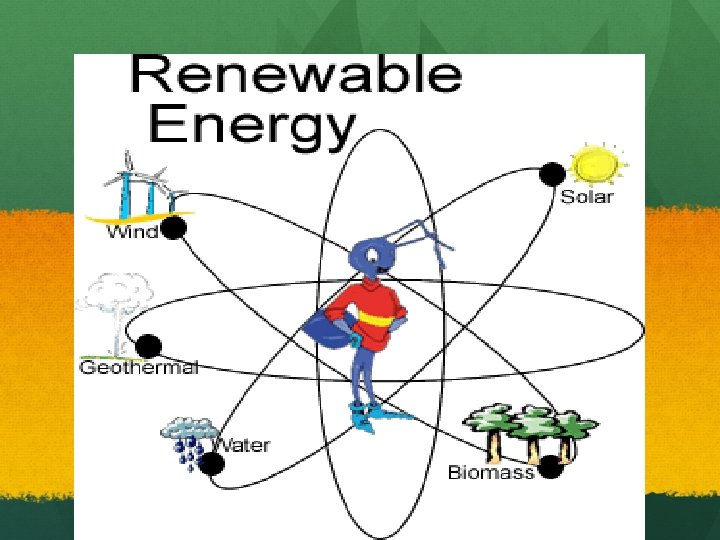

What is Renewable Energy? 1. Forms of energy that are constantly being formed 2. Includes solar, wind, biomass, geothermal, and hydropower
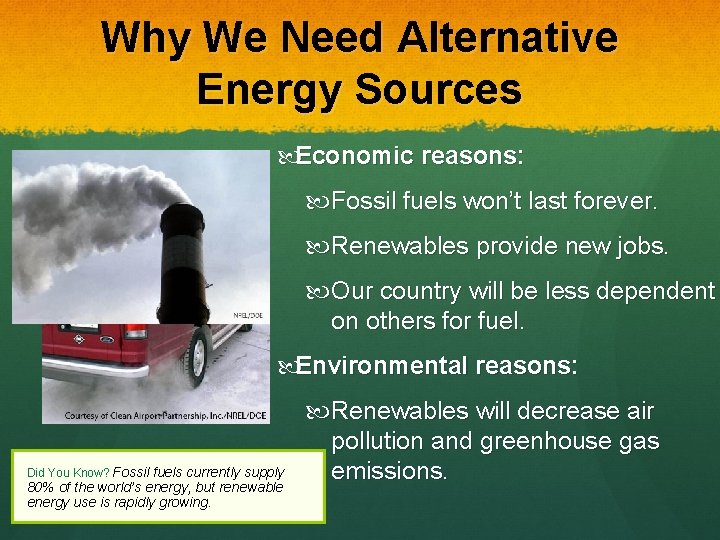
Why We Need Alternative Energy Sources Economic reasons: Fossil fuels won’t last forever. Renewables provide new jobs. Our country will be less dependent on others for fuel. Environmental reasons: Did You Know? Fossil fuels currently supply 80% of the world’s energy, but renewable energy use is rapidly growing. Renewables will decrease air pollution and greenhouse gas emissions.
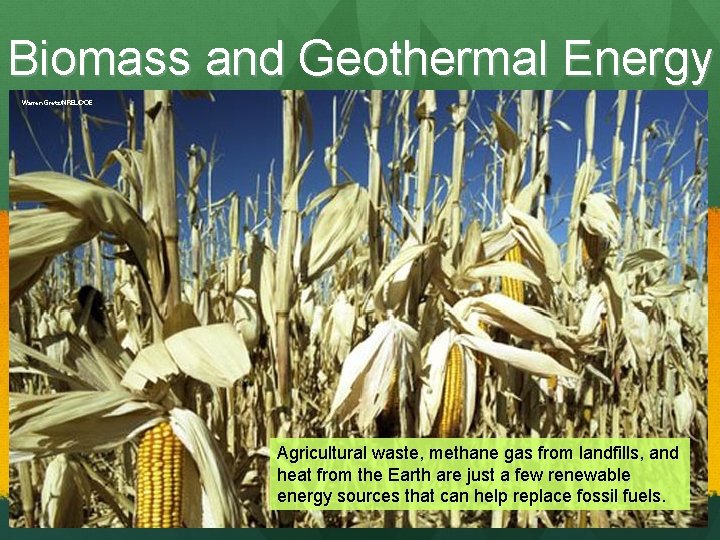
Biomass and Geothermal Energy Agricultural waste, methane gas from landfills, and heat from the Earth are just a few renewable energy sources that can help replace fossil fuels.
Biomass Energy • Biomass is material—such as wood, manure, and grain—that makes up living organisms or comes from living organisms. • Biomass energy, called biopower, is produced by burning biomass. • Biomass energy can be used for heating, cooking, lighting, vehicle fuel, or electricity generation.
Biomass Energy • Major source of energy used in developing countries • Being used in developed countries to generate electricity: • Great Britain – has manure powered stations • U. S. – uses methane gas from decomposition of trash • U. S. – uses corn to make ethanol (component in “gasahol” fuel source that causes less air pollution than burning fossil fuels

How Biomass Works https: //www. youtube. com/watch? v=-ck 3 FYVNl 6 s
Biomass Energy Sources Solids: Wood, charcoal, manure, agricultural and timber waste, Gases: Methane “landfill gas” produced by breakdown of waste in landfills rcoal, a h c , d o w? Wo o n K u of the o % 5 3 Did Y y l p re sup u n a ons, i t m a d n g an n i evelop d n i y g ergy in r n e ene e h t f 90% o r e v o d ations. n n a t s e r o ’s po the world

Biofuels Liquids (biofuels): 1. Ethanol: Produced by fermentation of starches and sugar Mainly produced from corn *used in gasoline engines 2. Biodiesel: Produced from vegetable oil *used in diesel engines
Benefits and Costs of Biomass Energy Benefits: No net change in atmospheric carbon dioxide Can be produced by all nations Costs/Disadvantage s Takes away land from food crops or natural habitats Deforestation, soil erosion, and desertification can result if plant biomass is harvested too rapidly. Large energy input is needed. Burning biomass indoors can lead to indoor air pollution.
GEOTHERMAL ENERGY

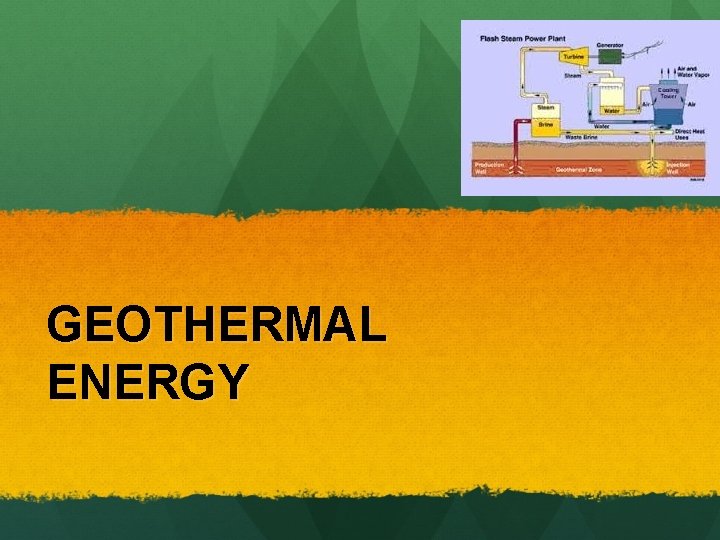
Geothermal Energy Underground heat generated by high pressures and breakdown of radioactive elements Usually accessed by drilling deep below ground; steam turns turbines, generating electricity. https: //www. youtube. com/watch? v=m. C RDf 7 Qxj. Dk
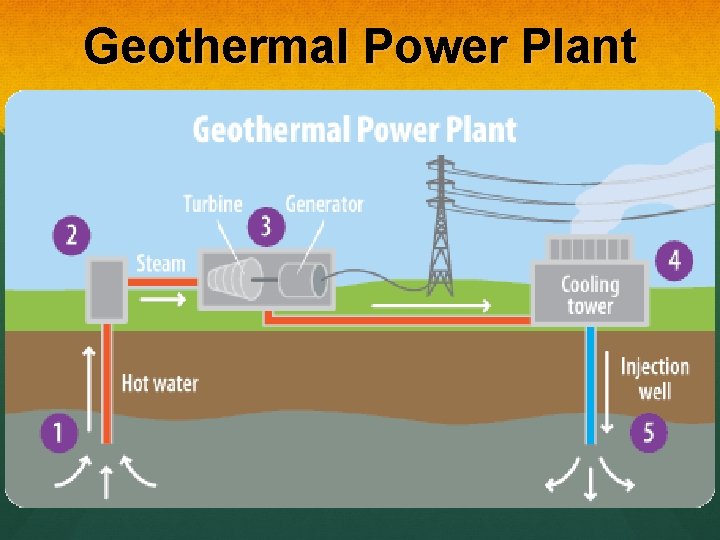
Geothermal Power Plant
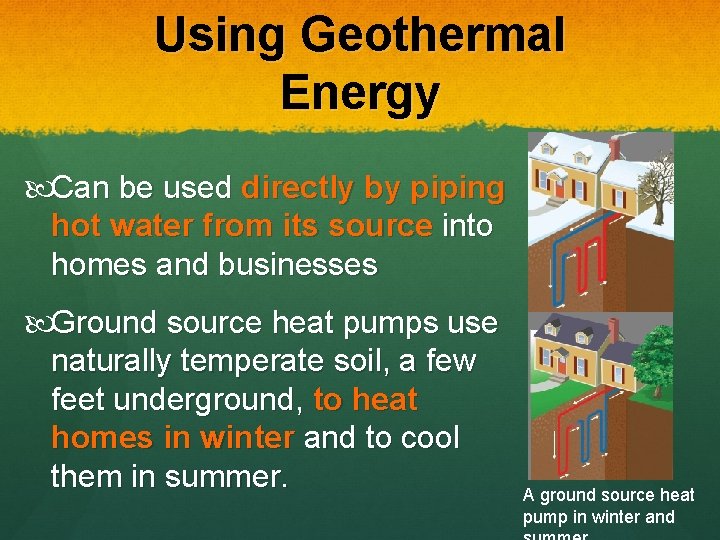
Using Geothermal Energy Can be used directly by piping hot water from its source into homes and businesses Ground source heat pumps use naturally temperate soil, a few feet underground, to heat homes in winter and to cool them in summer. A ground source heat pump in winter and
Geothermal Energy U. S. = world’s largest producer of geothermal energy Ex: Michigan https: //www. youtube. com/watch? v=u. VDBR Qv. BVso
Benefits and Costs of Geothermal Energy Benefits Causes much less air pollution than fossil fuels Low greenhouse gas emissions Costs/Disadvantage s Not sustainable if hot groundwater is used faster than it is naturally replenished Hot groundwater can contain pollutants that damage machines or add to pollution. Can trigger earthquakes
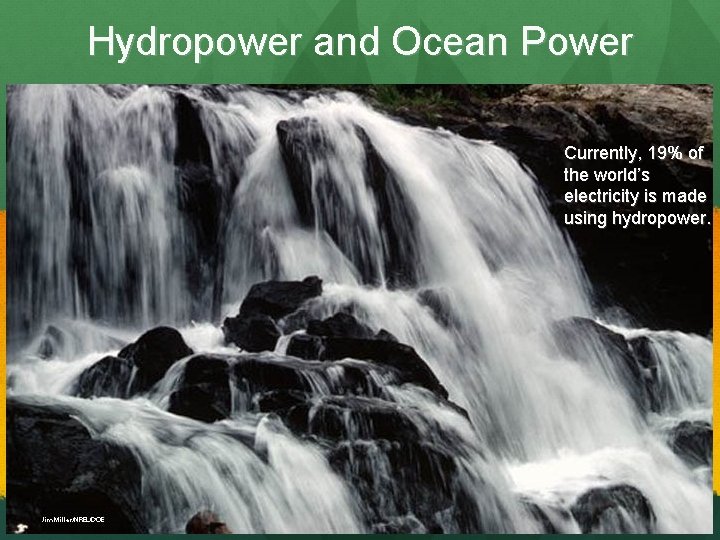
Hydropower and Ocean Power Currently, 19% of the world’s electricity is made using hydropower.
Generating Electricity With Hydropower • https: //www. youtube. com/watch? v=q 8 Hm. RLCg. DAI • Hydropower is generated by turbines turned by moving water. • Two basic approaches: • Water flows through a dam and pushes turbines. • Naturally flowing water is diverted through turbines. • Naturally flowing water can lead to a variable supply of electricity. Dams provide constant electricity but can disturb natural habitats.
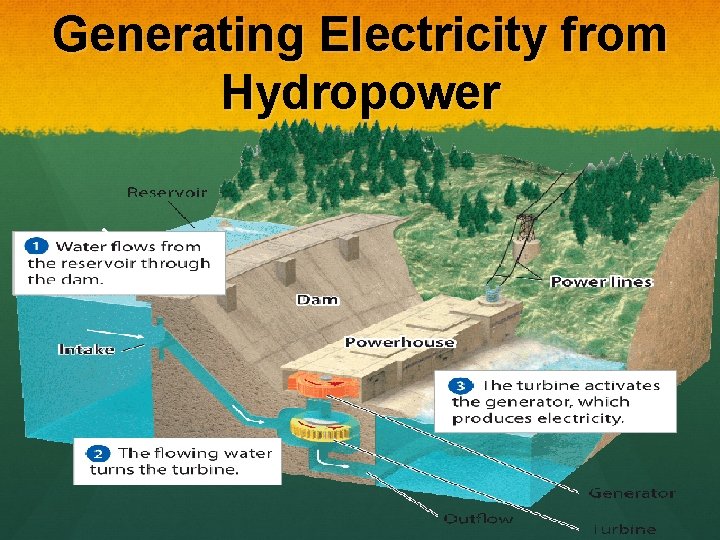
Generating Electricity from Hydropower
Benefits and Costs of Hydropower • BENEFITS • Completely renewable • No air pollution or greenhouse gas emissions • Yields relatively cheap electricity COSTS • Dams alter ecosystems and affect organisms (especially fish). • Dams trap soil-enriching silt, preventing it from reaching downstream. • Building dams and reservoirs can displace people.

Tidal Energy Electricity generated by the flow of ocean water as tides go in and out Tidal waters push turbines in a dam. The best places to harness tidal energy have big differences in the heights of high and low tides. Generates little to no pollution, but shore ecosystems can be negatively affected and very few locations are currently High and low tide in the Bay of Fundy,
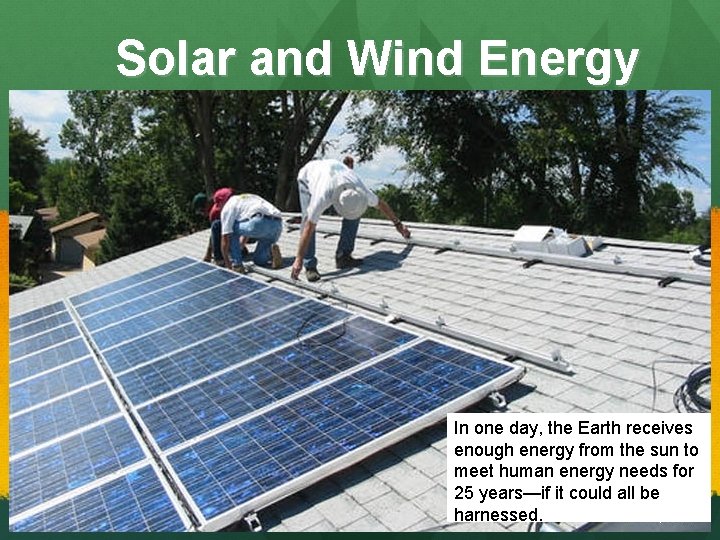
Solar and Wind Energy In one day, the Earth receives enough energy from the sun to meet human energy needs for 25 years—if it could all be harnessed.
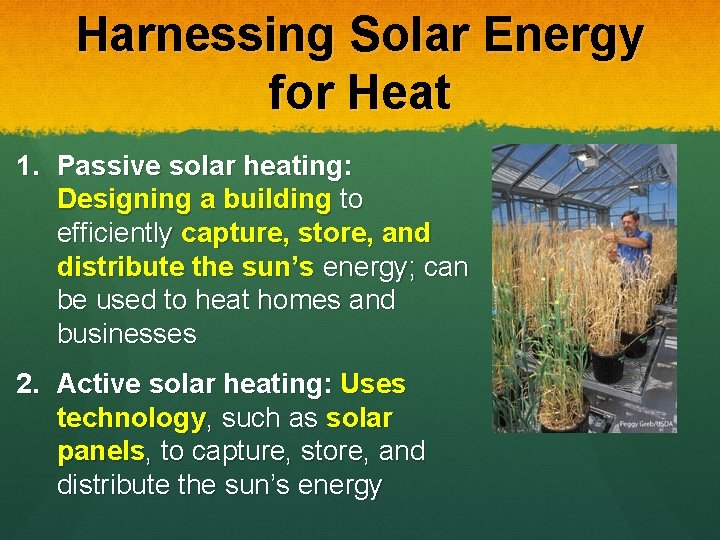
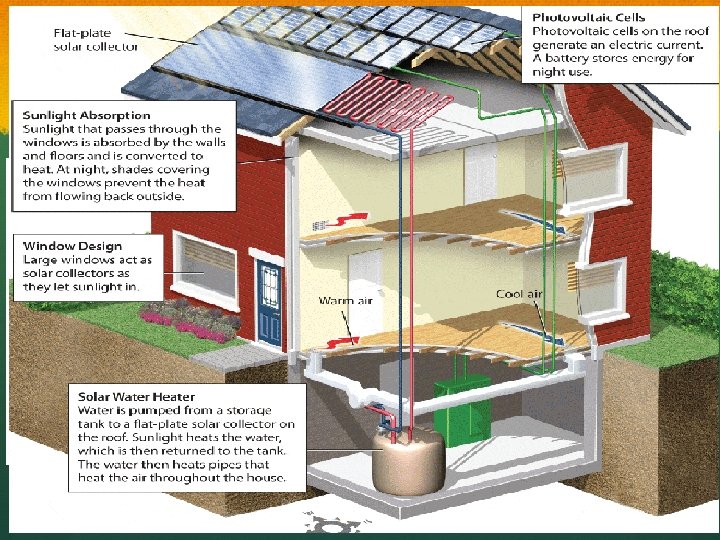
Harnessing Solar Energy for Heat 1. Passive solar heating: Designing a building to efficiently capture, store, and distribute the sun’s energy; can be used to heat homes and businesses 2. Active solar heating: Uses technology, such as solar panels, to capture, store, and distribute the sun’s energy
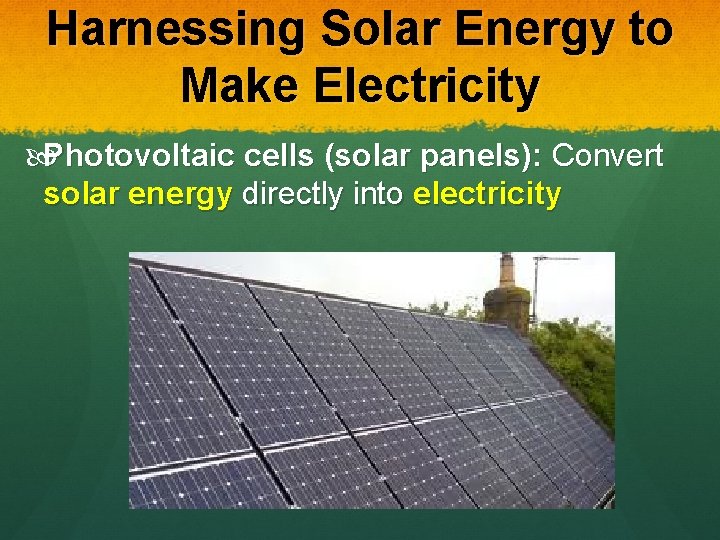
Harnessing Solar Energy to Make Electricity Photovoltaic cells (solar panels): Convert solar energy directly into electricity
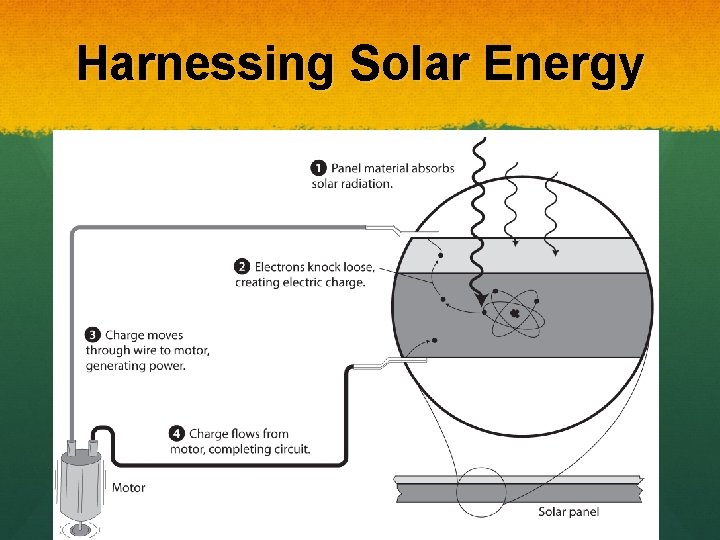
Harnessing Solar Energy
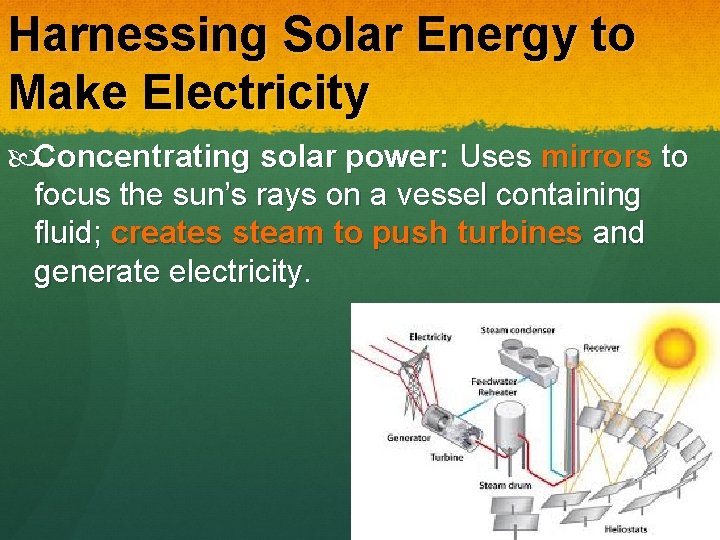
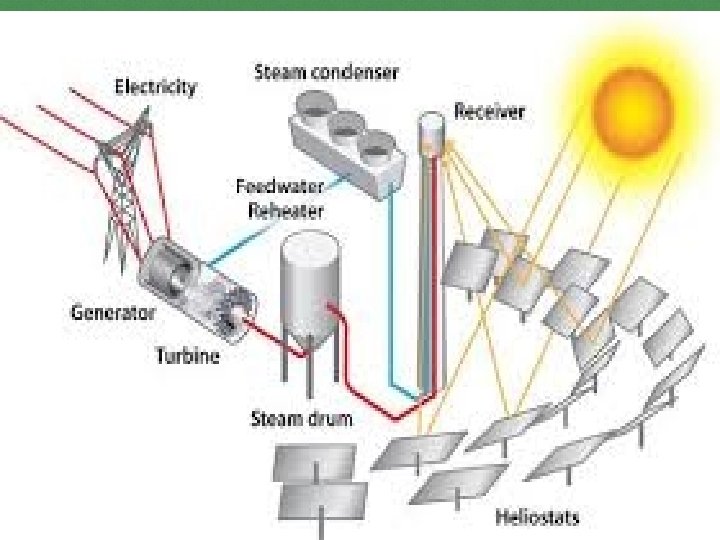
Harnessing Solar Energy to Make Electricity Concentrating solar power: Uses mirrors to focus the sun’s rays on a vessel containing fluid; creates steam to push turbines and generate electricity.
Benefits and Costs of Solar Power Benefits • Inexhaustible • Clean—no air or water pollution produced during operation • Low maintenance devices • New jobs to make solar devices Costs/Disadvantages • Some pollution during manufacture • Many regions aren’t sunny enough. • Devices are expensive.
How Does Solar Energy Work https: //www. youtube. com/watch? v=c 1 y ir. T_Wq. Ms
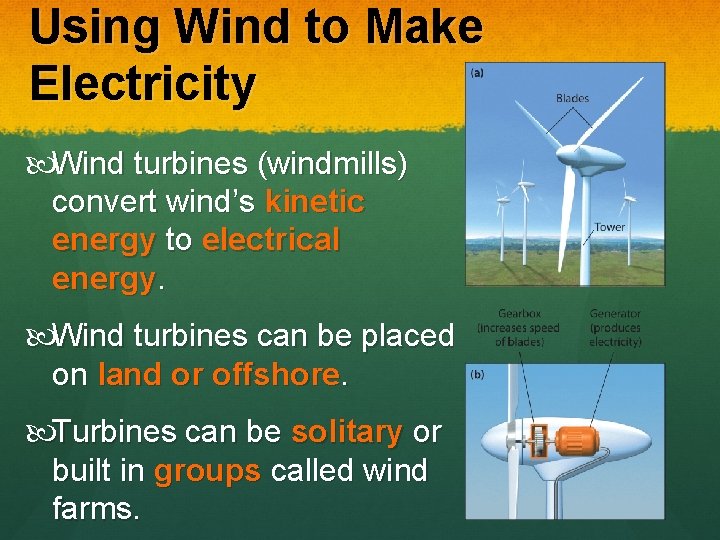
Using Wind to Make Electricity Wind turbines (windmills) convert wind’s kinetic energy to electrical energy. Wind turbines can be placed on land or offshore. Turbines can be solitary or built in groups called wind farms.

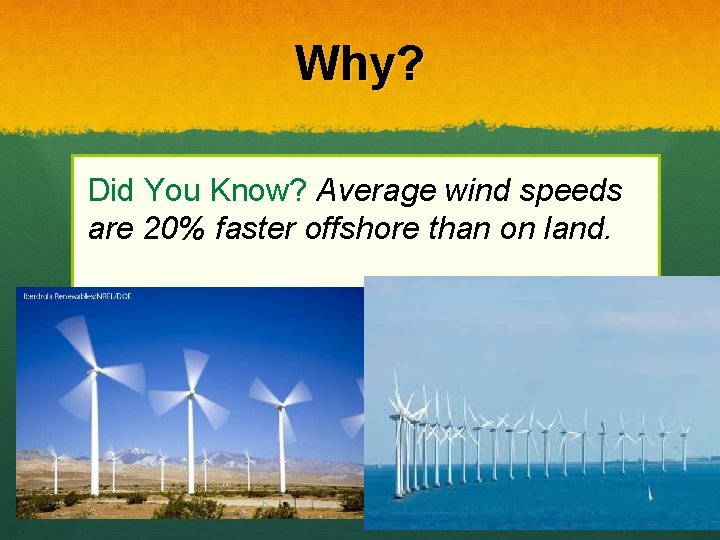
Why? Did You Know? Average wind speeds are 20% faster offshore than on land.
Wind Energy Fun https: //www. youtube. com/watch? v=ts. ZITSe. QFR 0 1. What are some benefits of using wind energy? 1. What are some disadvantages of using wind energy?
Benefits and Costs of Wind Power Benefits: No pollution or greenhouse gases produced during operation Under good wind conditions, produces far more energy than it uses Relatively cheap to Costs: • High startup costs • Winds can be unpredictable. • Fastest winds are often not near population centers. • Communities complain about the looks and noise of wind farms. • Can be harmful to birds and bats

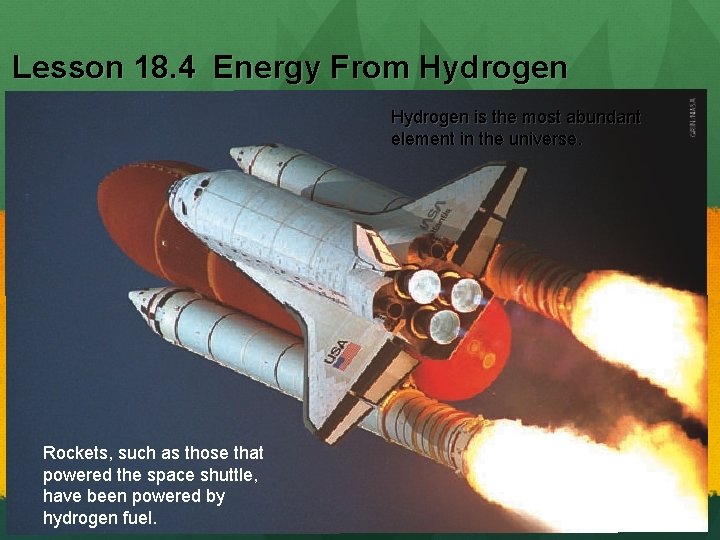
Lesson 18. 4 Energy From Hydrogen is the most abundant element in the universe. Rockets, such as those that powered the space shuttle, have been powered by hydrogen fuel.

Hydrogen (H 2) as a Fuel Source Algae used to produce hydrogen gas H 2 gas can be combusted to produce heat, with just water as a byproduct. On Earth, H 2 is commonly found in compounds such as water, though it is rare in its elemental form, H 2 gas. H 2 can be produced by breaking down water (H 2 O) or methane (CH 4). A new technology involves using green algae to produce H 2 from water.
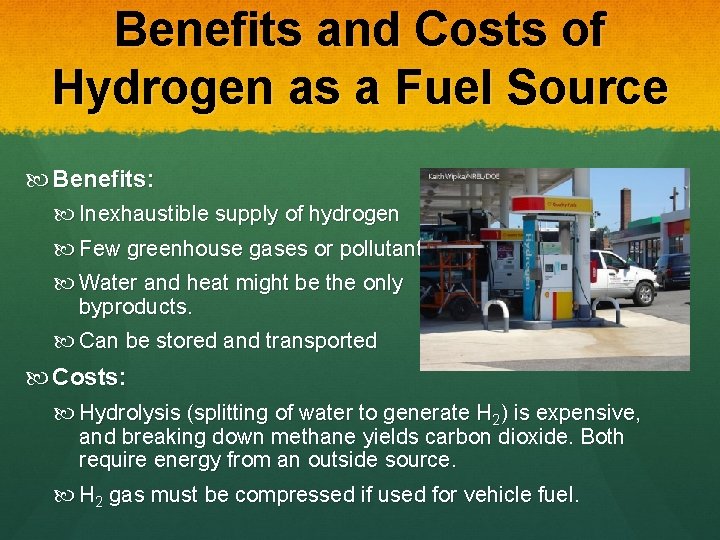
Benefits and Costs of Hydrogen as a Fuel Source Benefits: Inexhaustible supply of hydrogen Few greenhouse gases or pollutants Water and heat might be the only byproducts. Can be stored and transported Costs: Hydrolysis (splitting of water to generate H 2) is expensive, and breaking down methane yields carbon dioxide. Both require energy from an outside source. H 2 gas must be compressed if used for vehicle fuel.
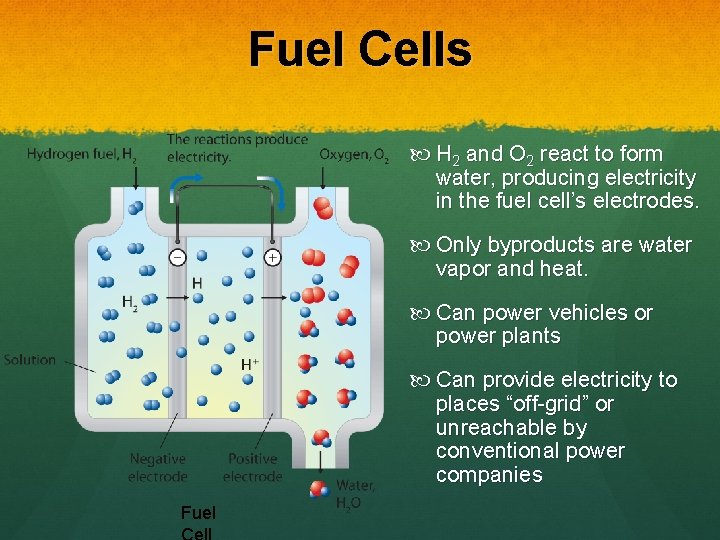
Fuel Cells H 2 and O 2 react to form water, producing electricity in the fuel cell’s electrodes. Only byproducts are water vapor and heat. Can power vehicles or power plants Can provide electricity to places “off-grid” or unreachable by conventional power companies Fuel
- Slides: 40