
What is Reconstruction The period of rebuilding after
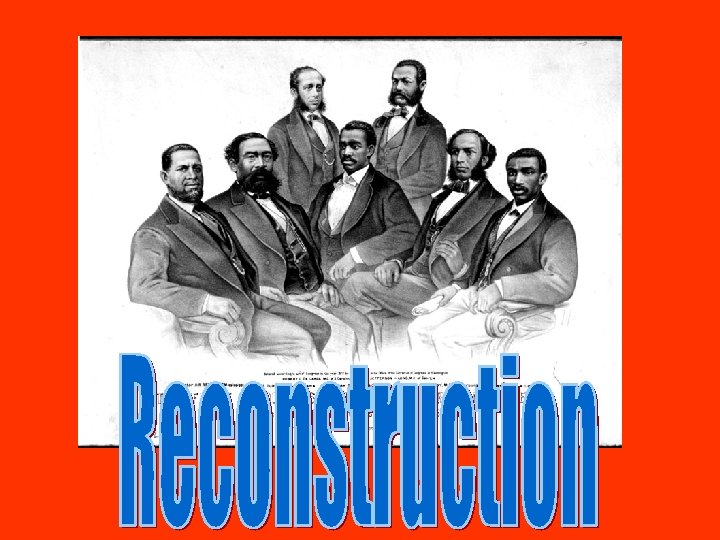

What is Reconstruction? • The period of rebuilding after the Civil War during which Confederate states were readmitted into the Union
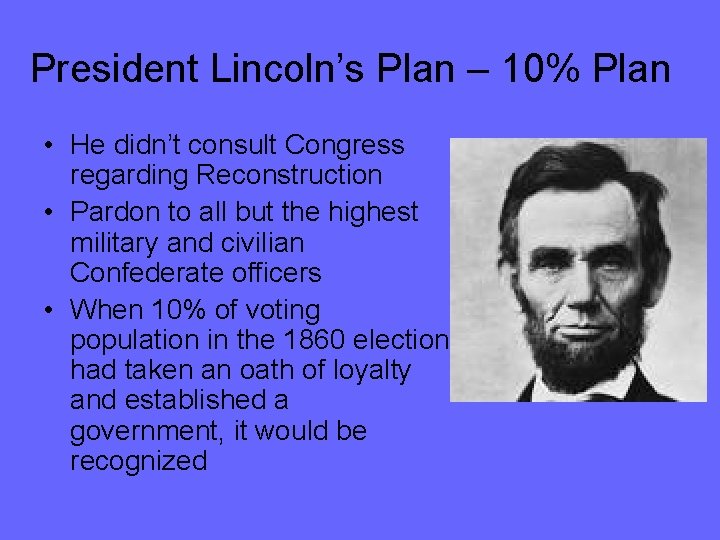
President Lincoln’s Plan – 10% Plan • He didn’t consult Congress regarding Reconstruction • Pardon to all but the highest military and civilian Confederate officers • When 10% of voting population in the 1860 election had taken an oath of loyalty and established a government, it would be recognized
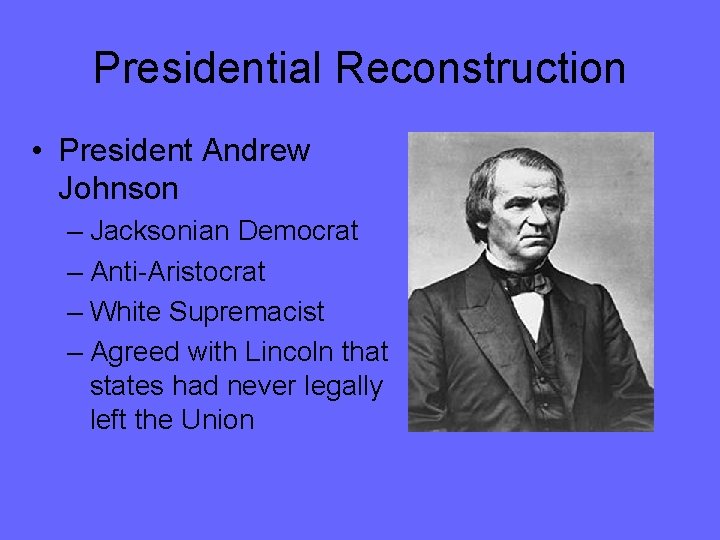
Presidential Reconstruction • President Andrew Johnson – Jacksonian Democrat – Anti-Aristocrat – White Supremacist – Agreed with Lincoln that states had never legally left the Union
President Johnson’s Plan – 10% and then some • To re-enter the Union, 10% had to take a simple oath; except Confederate civil and military officers and those with property over $20, 000 (they could apply directly to Johnson) • In new constitutions, they must set minimum conditions repudiating slavery, secession, and state debts • Named provisional governors in Confederate states and called them to oversee elections for constitutional conventions
Effects of Johnson’s Plan 1. Disenfranchised certain leading Confederates 2. Pardoned planter aristocrats and brought them back to political power to control state organizations 3. Republicans were outraged that the planter elite were back in power in the South!
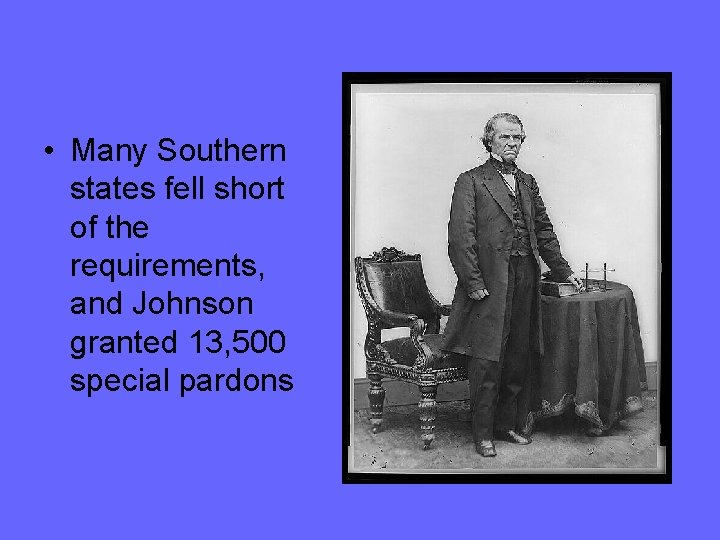
• Many Southern states fell short of the requirements, and Johnson granted 13, 500 special pardons
Congress Breaks with the President • Congress bars Southern Congressional delegates • Joint Committee on Reconstruction created • February 1866 President vetoed the Freedmen’s Bureau Bill • March 1866 Johnson vetoed the Civil Rights Act • Congress passed both bills over Johnson’s vetoes 1 st in U. S. History!
Radical Republican Reconstruction • Civil Authorities in the territories were subject to military supervision • Required new state constitutions, including black suffrage, and the ratification of the 13 th and 14 th Amendment • In March 1867, Congress passed an act that authorized the military to enroll eligible black voters and begin the process of constitution making
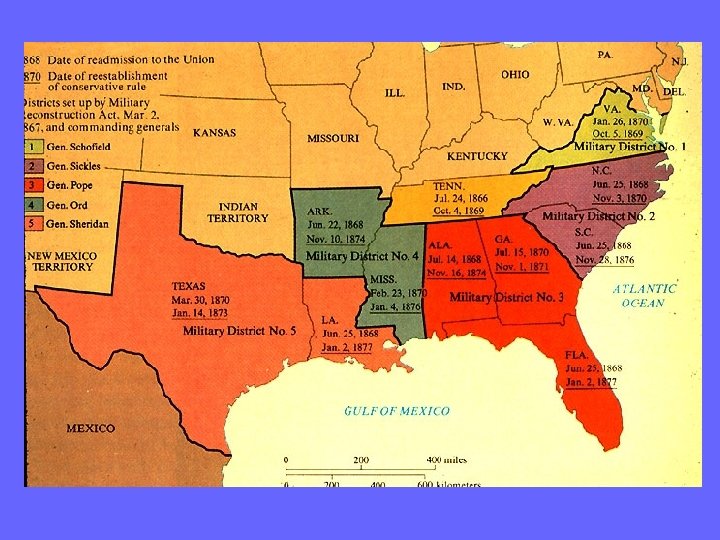
Military Reconstruction Act • Restart Reconstruction in the 10 Southern states that refused to ratify the 14 th Amendment • Divide the 10 “unreconstructed states” into 5 military districts
Command of the Army Act • The President must issue all reconstruction orders through the commander of the military
Tenure of Office Act • The President could not remove any officials (especially Cabinet members) without the Senate’s consent, if the position originally required Senate’s approval – Designed to protect the radical members of Lincoln’s government – A question of the constitutionality of this law
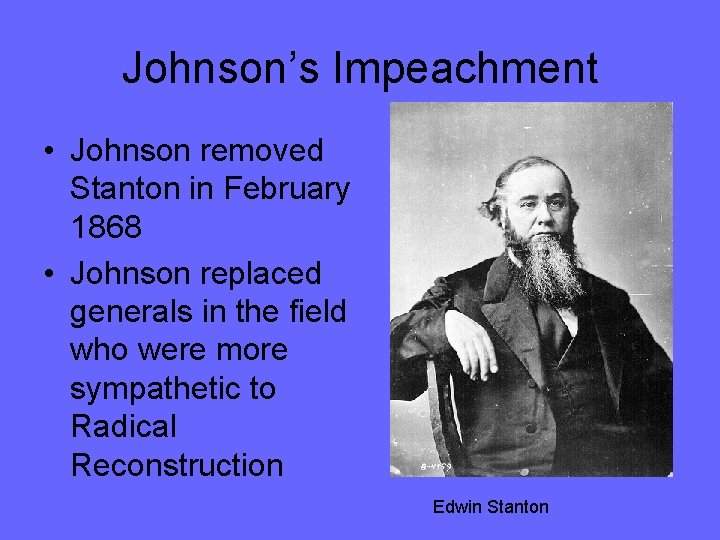
Johnson’s Impeachment • Johnson removed Stanton in February 1868 • Johnson replaced generals in the field who were more sympathetic to Radical Reconstruction Edwin Stanton
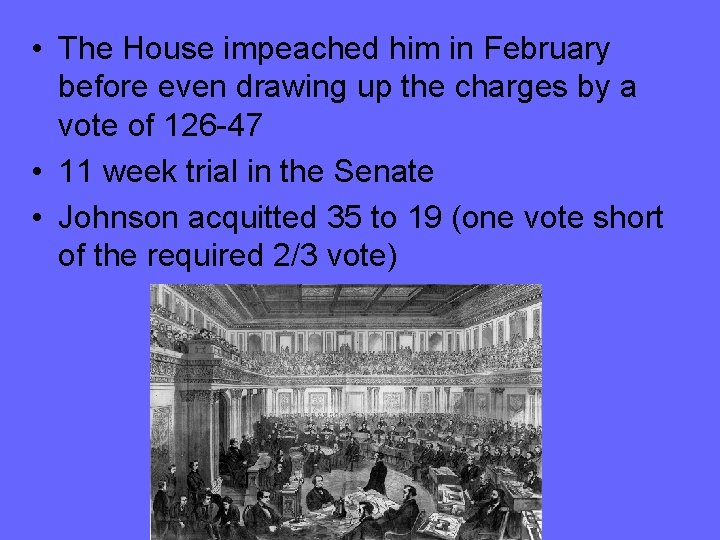
• The House impeached him in February before even drawing up the charges by a vote of 126 -47 • 11 week trial in the Senate • Johnson acquitted 35 to 19 (one vote short of the required 2/3 vote)
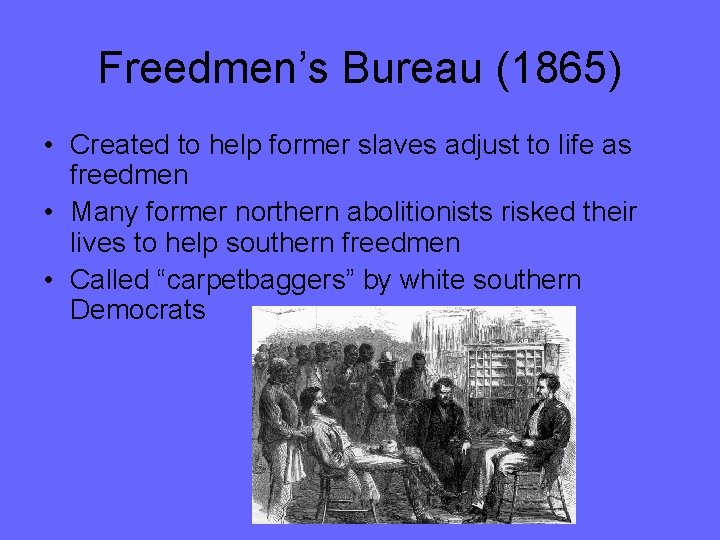
Freedmen’s Bureau (1865) • Created to help former slaves adjust to life as freedmen • Many former northern abolitionists risked their lives to help southern freedmen • Called “carpetbaggers” by white southern Democrats
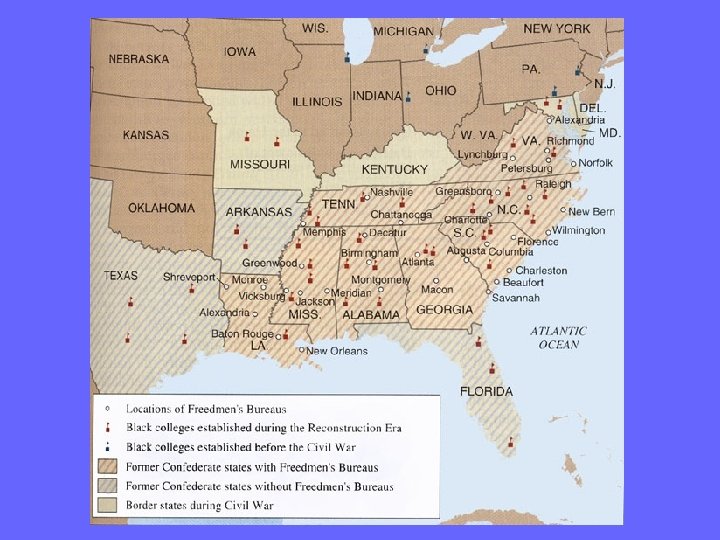
Morehouse College • Founded in 1867 to teach freed slaves how to read and write • Originally located in Augusta, GA but moved to Atlanta and became Atlanta Baptist Seminary • First college instruction introduced in 1897 and the name was changed to Morehouse College
40 Acres and a Mule (efforts to redistribute land to freedmen) • During the war Sherman promised former slaves who helped the army 40 acres and an army mule • Freedmen settled abandoned land, but in 1865 Johnson ordered the land returned to original owners and former slaves were evicted • Some land was set aside, but it was unsuitable for farming (1866 Southern Homestead Act)
The Black Codes • Purpose: – Meant to keep black laborers where they were by limiting their ability to move about – Restore pre-emancipation race relations
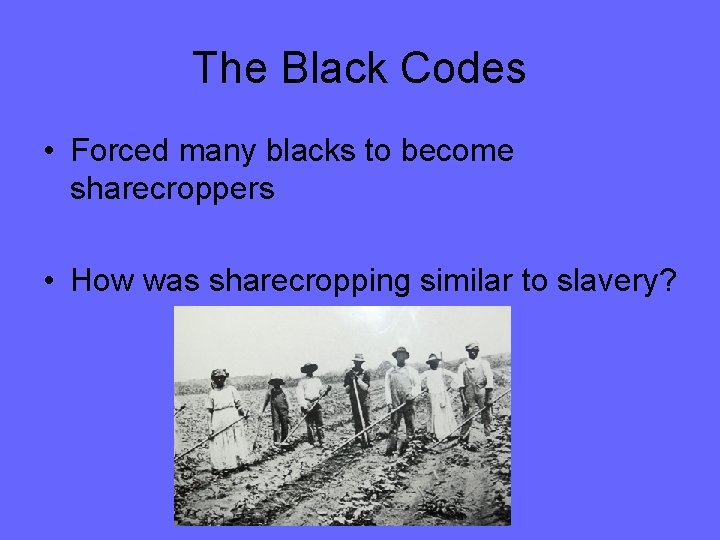
The Black Codes • Forced many blacks to become sharecroppers • How was sharecropping similar to slavery?
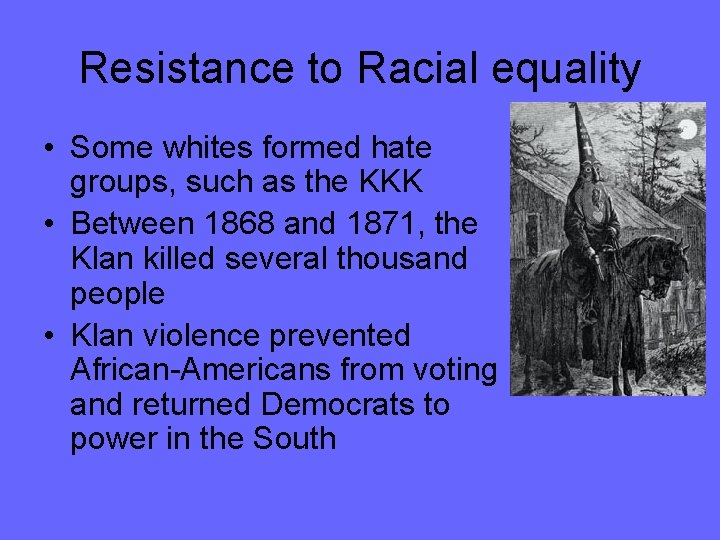
Resistance to Racial equality • Some whites formed hate groups, such as the KKK • Between 1868 and 1871, the Klan killed several thousand people • Klan violence prevented African-Americans from voting and returned Democrats to power in the South
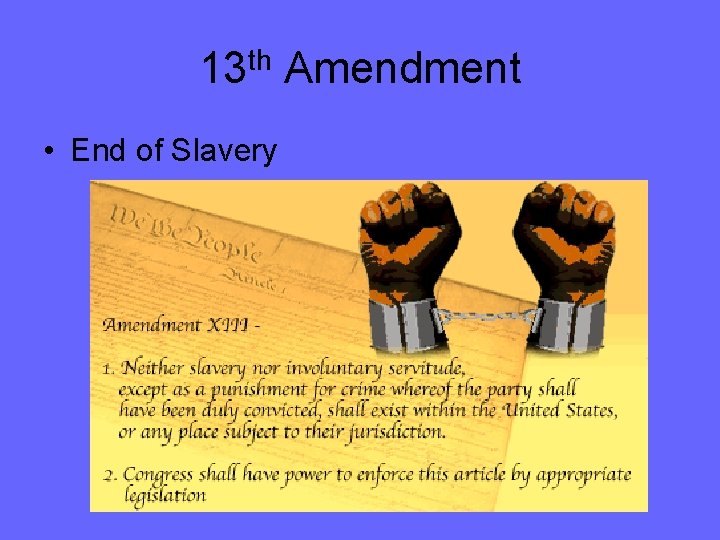
13 th Amendment • End of Slavery
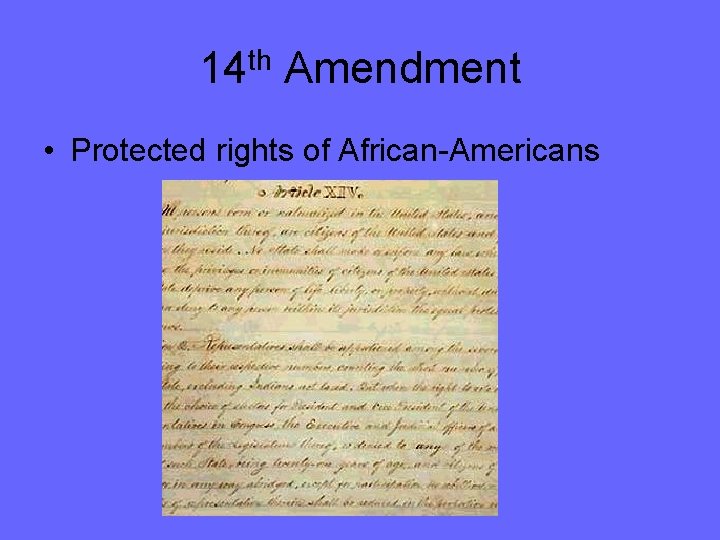
14 th Amendment • Protected rights of African-Americans
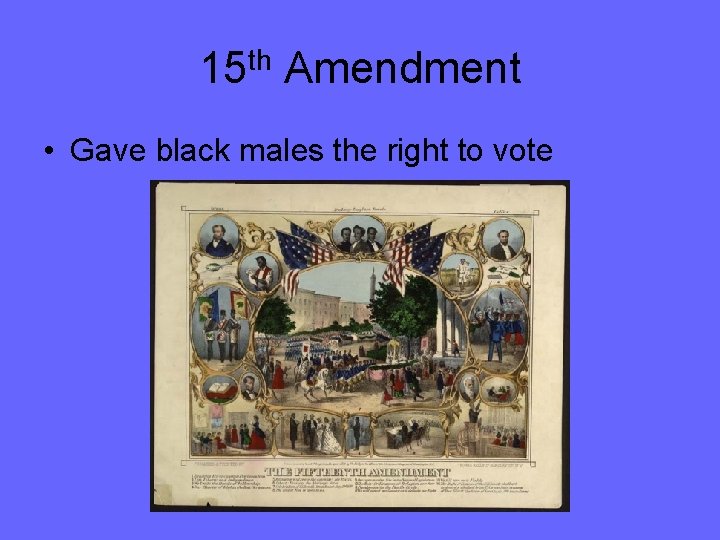
15 th Amendment • Gave black males the right to vote
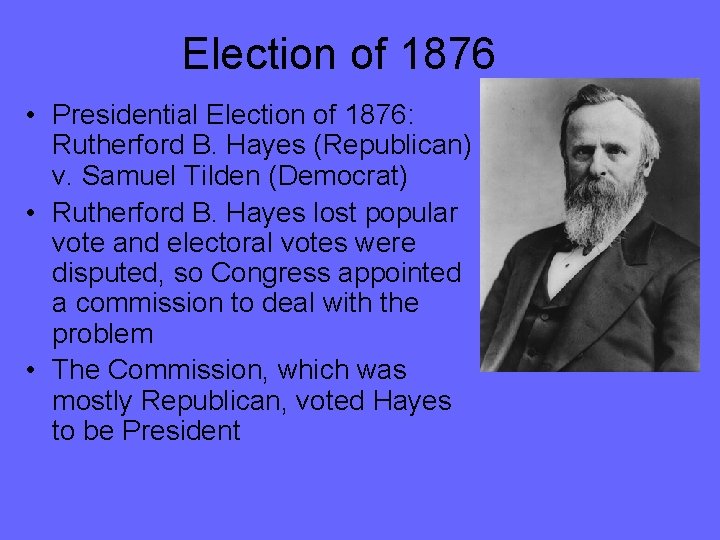
Election of 1876 • Presidential Election of 1876: Rutherford B. Hayes (Republican) v. Samuel Tilden (Democrat) • Rutherford B. Hayes lost popular vote and electoral votes were disputed, so Congress appointed a commission to deal with the problem • The Commission, which was mostly Republican, voted Hayes to be President
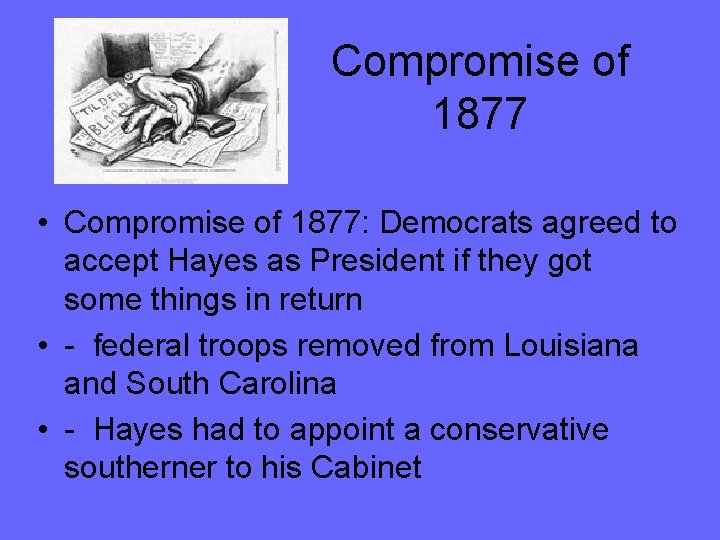
Compromise of 1877 • Compromise of 1877: Democrats agreed to accept Hayes as President if they got some things in return • - federal troops removed from Louisiana and South Carolina • - Hayes had to appoint a conservative southerner to his Cabinet
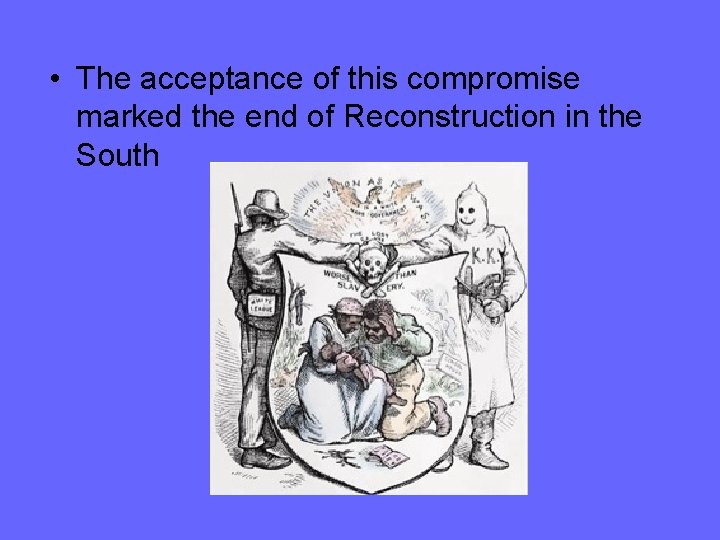
• The acceptance of this compromise marked the end of Reconstruction in the South
- Slides: 29