
What is Propaganda 1 It is the spreading

- Slides: 12
What is Propaganda? 1. It is the spreading of ideas, information or rumor for the purpose of helping or injuring an institution, a cause or a person. 2. Propaganda is intended to make us accept or approve something without looking closely at the evidence. 3. Most of the propaganda devices utilize emotion and avoid critical thinking.
Why study Propaganda? Your deeper understanding of propaganda devices can: 1. Save you lots of money. 2. Assist you in making better political decisions. 3. Help you distinguish between fact and opinion. 4. Aid you in persuading others.
Recognizing Propaganda Techniques • • • Bandwagon Testimonial Plain Folks Card Staking Glittering Generalization Transfer Name-Calling Fear Logical Fallacy
Bandwagon • Persuasive technique that invites you to join the crowd. • Everybody’s doing it! • Often uses weasel words (evades the truth, deflects) Everyone in Port Huron is supporting Bob Riley. Shouldn’t you be part of the winning team?
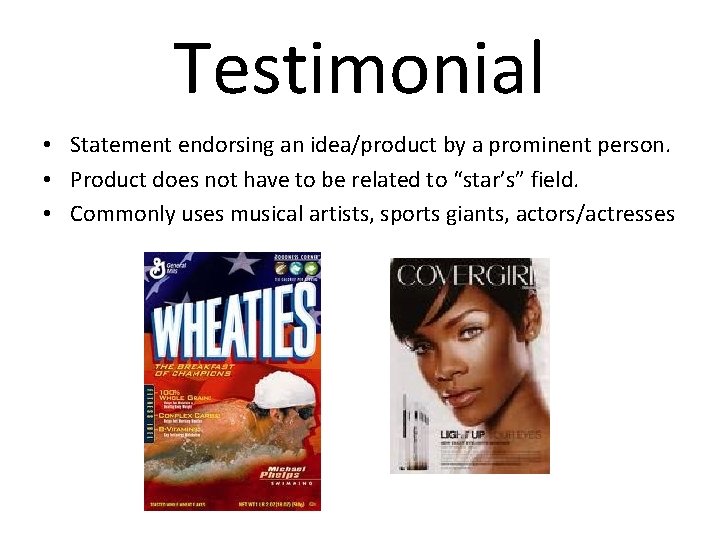
Testimonial • Statement endorsing an idea/product by a prominent person. • Product does not have to be related to “star’s” field. • Commonly uses musical artists, sports giants, actors/actresses
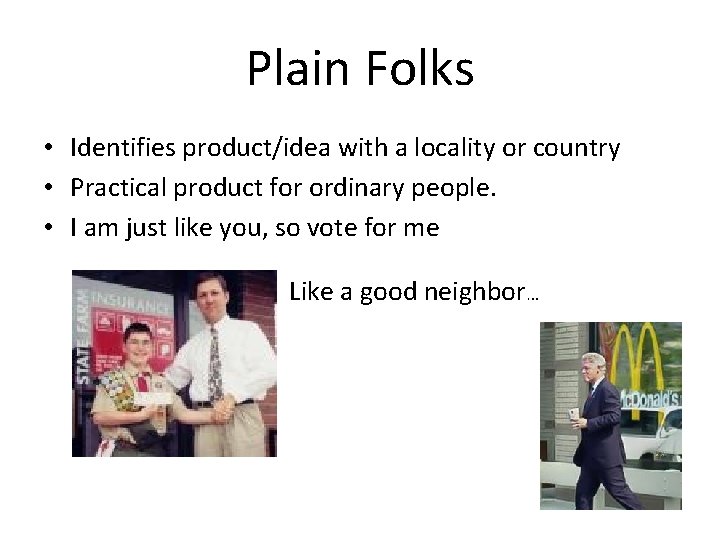
Plain Folks • Identifies product/idea with a locality or country • Practical product for ordinary people. • I am just like you, so vote for me Like a good neighbor…
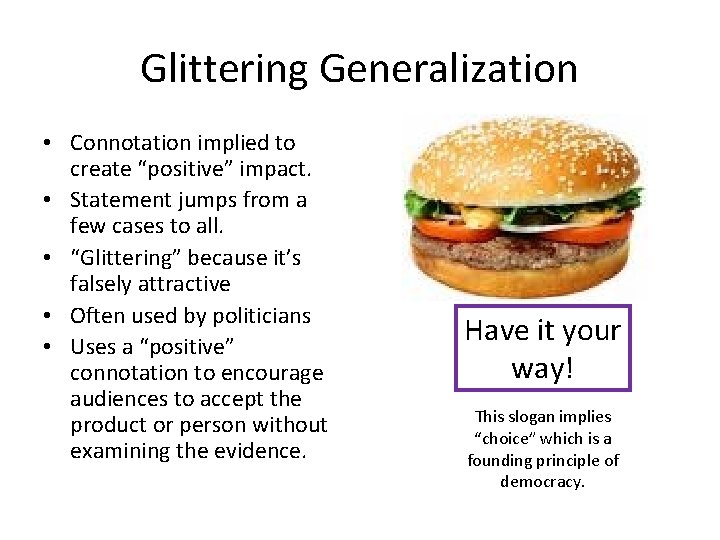
Glittering Generalization • Connotation implied to create “positive” impact. • Statement jumps from a few cases to all. • “Glittering” because it’s falsely attractive • Often used by politicians • Uses a “positive” connotation to encourage audiences to accept the product or person without examining the evidence. Have it your way! This slogan implies “choice” which is a founding principle of democracy.
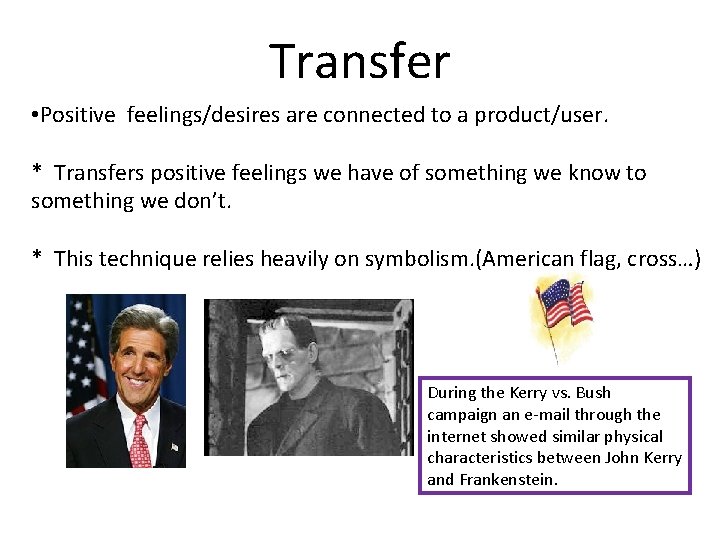
Transfer • Positive feelings/desires are connected to a product/user. * Transfers positive feelings we have of something we know to something we don’t. * This technique relies heavily on symbolism. (American flag, cross…) During the Kerry vs. Bush campaign an e-mail through the internet showed similar physical characteristics between John Kerry and Frankenstein.
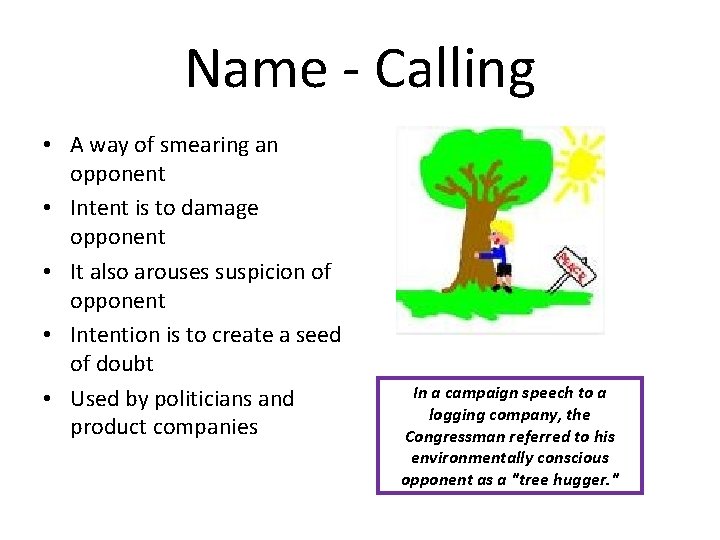
Name - Calling • A way of smearing an opponent • Intent is to damage opponent • It also arouses suspicion of opponent • Intention is to create a seed of doubt • Used by politicians and product companies In a campaign speech to a logging company, the Congressman referred to his environmentally conscious opponent as a "tree hugger. "
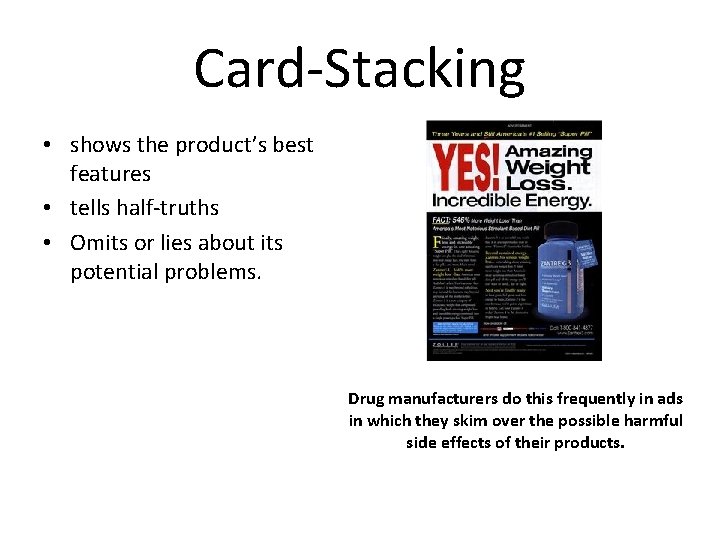
Card-Stacking • shows the product’s best features • tells half-truths • Omits or lies about its potential problems. Drug manufacturers do this frequently in ads in which they skim over the possible harmful side effects of their products.
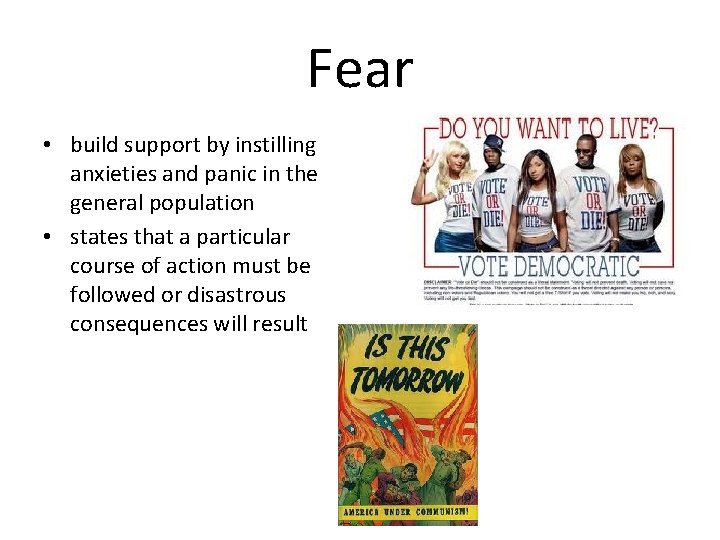
Fear • build support by instilling anxieties and panic in the general population • states that a particular course of action must be followed or disastrous consequences will result
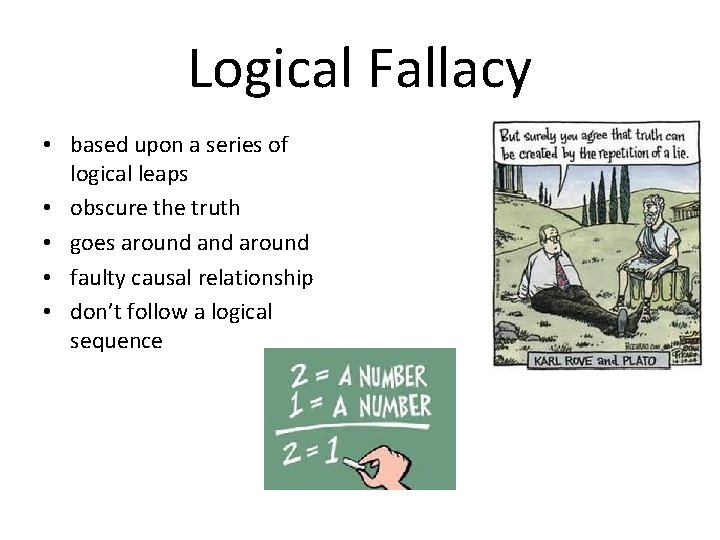
Logical Fallacy • based upon a series of logical leaps • obscure the truth • goes around • faulty causal relationship • don’t follow a logical sequence