
What is Professional Curiosity To be used at
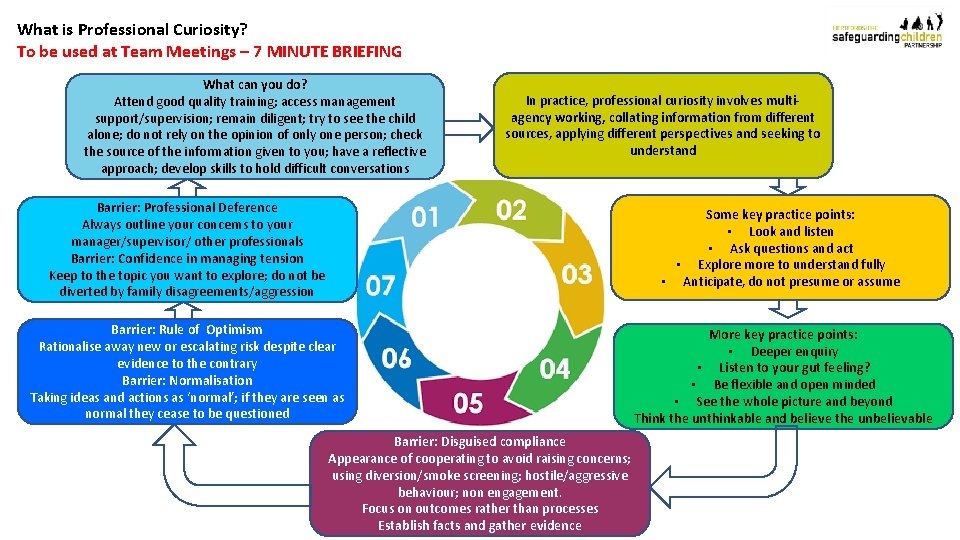
What is Professional Curiosity? To be used at Team Meetings – 7 MINUTE BRIEFING What can you do? Attend good quality training; access management support/supervision; remain diligent; try to see the child alone; do not rely on the opinion of only one person; check the source of the information given to you; have a reflective approach; develop skills to hold difficult conversations In practice, professional curiosity involves multiagency working, collating information from different sources, applying different perspectives and seeking to understand Barrier: Professional Deference Always outline your concerns to your manager/supervisor/ other professionals Barrier: Confidence in managing tension Keep to the topic you want to explore; do not be diverted by family disagreements/aggression Some key practice points: • Look and listen • Ask questions and act • Explore more to understand fully • Anticipate, do not presume or assume Barrier: Rule of Optimism Rationalise away new or escalating risk despite clear evidence to the contrary Barrier: Normalisation Taking ideas and actions as ‘normal’; if they are seen as normal they cease to be questioned More key practice points: • Deeper enquiry • Listen to your gut feeling? • Be flexible and open minded • See the whole picture and beyond Think the unthinkable and believe the unbelievable Barrier: Disguised compliance Appearance of cooperating to avoid raising concerns; using diversion/smoke screening; hostile/aggressive behaviour; non engagement. Focus on outcomes rather than processes Establish facts and gather evidence
- Slides: 1