
What is Physics Objectives Compare and contrast hypothesis
What is Physics?
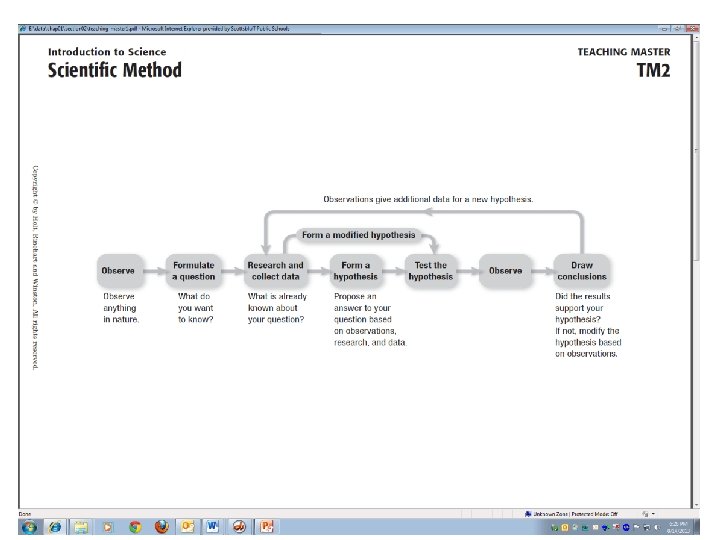
Objectives • Compare and contrast hypothesis, theory and law. 12. 1. 1. a • Know the steps of the scientific method. 12. 1. 1. b • Distinguish between control, independent and dependent variable. 12. 1. 1. c • Distinguish between the different areas of physics.

The study of the physical world. • Mechanics – Motion & its causes, object interactions • Thermodynamics – Heat & temperature • Wave phenomena – Repetitive motions • Optics – Light (reflection, refraction, etc. ) • Electromagnetism – Magnets, electricity, light • Relativity – Particles at very high speeds • Quantum Mechanics – Submicroscopic behavior
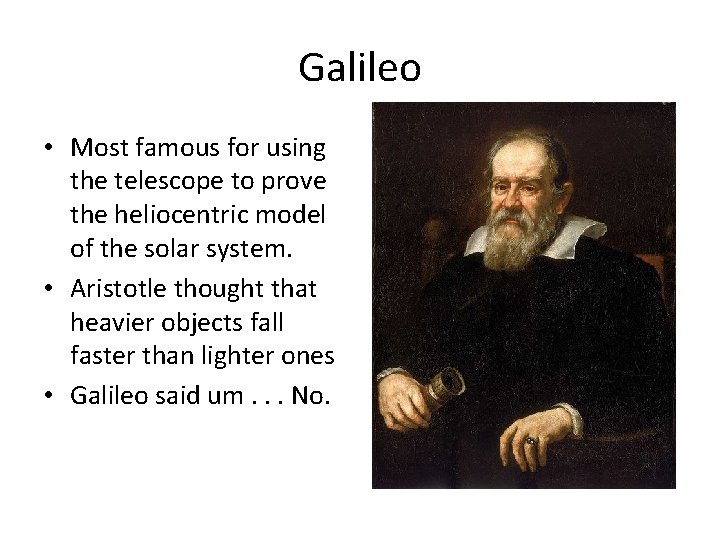
Galileo • Most famous for using the telescope to prove the heliocentric model of the solar system. • Aristotle thought that heavier objects fall faster than lighter ones • Galileo said um. . . No.

• Define “theory” – An idea that explains a phenomena and is supported by many experiments. • Define “law” – A statement or formula that accurately predicts events • Define “hypothesis” – An educated guess hypothesis theory law
Chubby Bunny Data Name # of Marshmallows Eaten
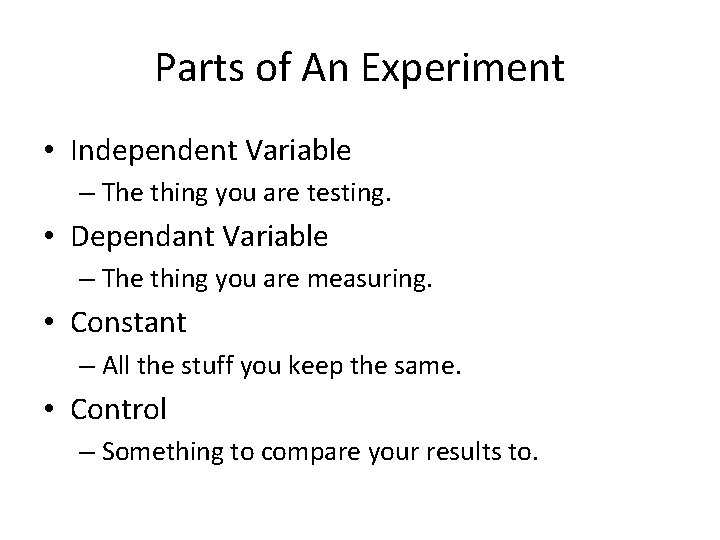
Parts of An Experiment • Independent Variable – The thing you are testing. • Dependant Variable – The thing you are measuring. • Constant – All the stuff you keep the same. • Control – Something to compare your results to.
Remember A good experiment tests ONE independent variable at a time
Objectives • Students will be able to make a decent graph. 12. 1. 1. h, g, f • Students will be able to identify the appropriate SI base units. 12. 1. 1. f, l • Students will compare and contrast qualitative and quantitative data. 12. 1. 1. e
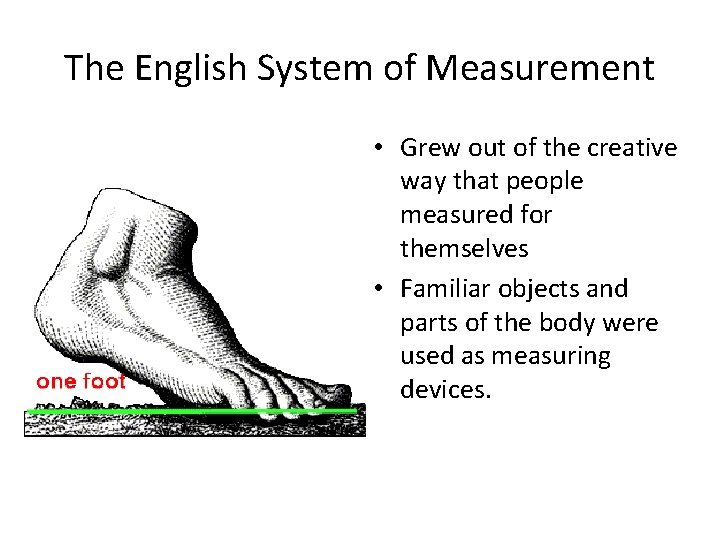
The English System of Measurement • Grew out of the creative way that people measured for themselves • Familiar objects and parts of the body were used as measuring devices.
English System • Length – 12 inches (in) = 1 foot (ft) – 3 feet = 1 yard (yd) – 5280 feet = 1 mile (mi) • Weight – 16 ounces (oz) = 1 pound (lb) – 2000 lb = 1 ton • Volume – 16 tbsp = 1 cup (c) 8 ounces (oz) = 1 c 2 c = 1 pint (pt)

YUCK!
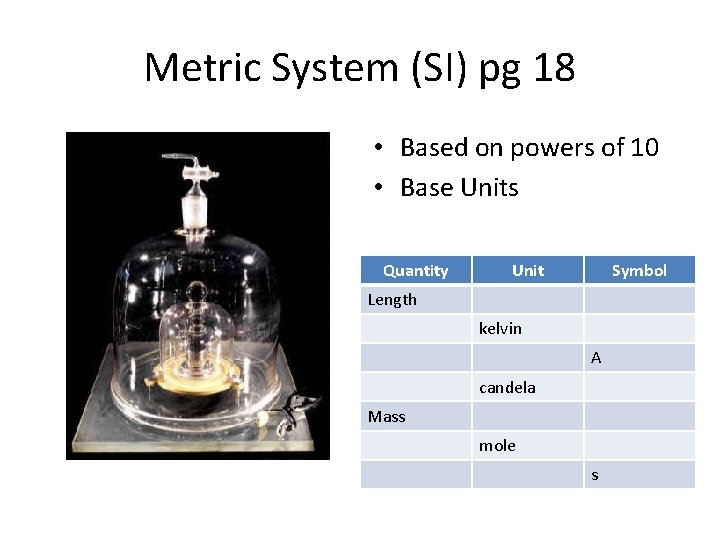
Metric System (SI) pg 18 • Based on powers of 10 • Base Units Quantity Unit Symbol Length kelvin A candela Mass mole s
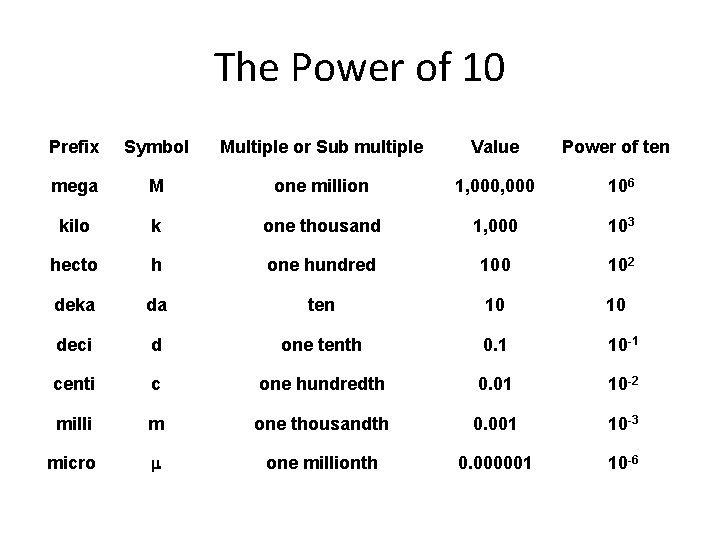
The Power of 10 Prefix Symbol Multiple or Sub multiple Value Power of ten mega M one million 1, 000 106 kilo k one thousand 1, 000 103 hecto h one hundred 100 102 deka da ten 10 10 deci d one tenth 0. 1 10 -1 centi c one hundredth 0. 01 10 -2 milli m one thousandth 0. 001 10 -3 micro m one millionth 0. 000001 10 -6
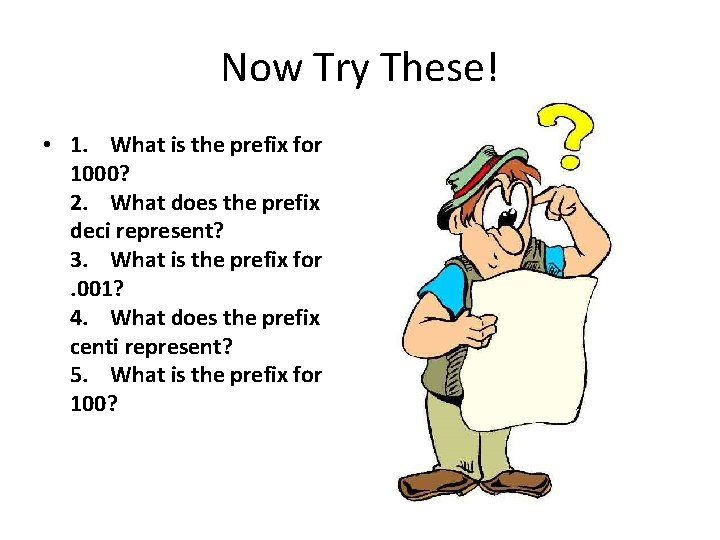
Now Try These! • 1. What is the prefix for 1000? 2. What does the prefix deci represent? 3. What is the prefix for . 001? 4. What does the prefix centi represent? 5. What is the prefix for 100?
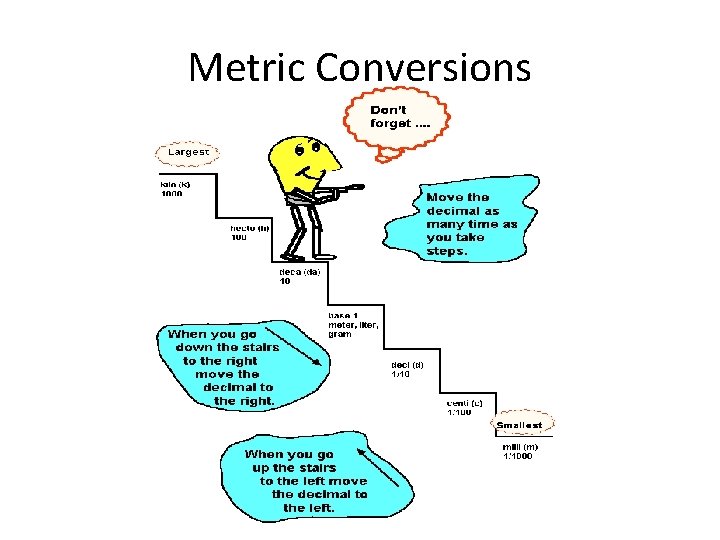
Metric Conversions
Types of data • Qualitative – Descriptions of what is happening. • James I laughing while he says “Chubby Bunny” • Quantitative – Numbers or quantities • James could fit 7 marshmallows in his mouth.
- Slides: 19