
What is PHONICS What is phonics l l

- Slides: 10
What is… PHONICS
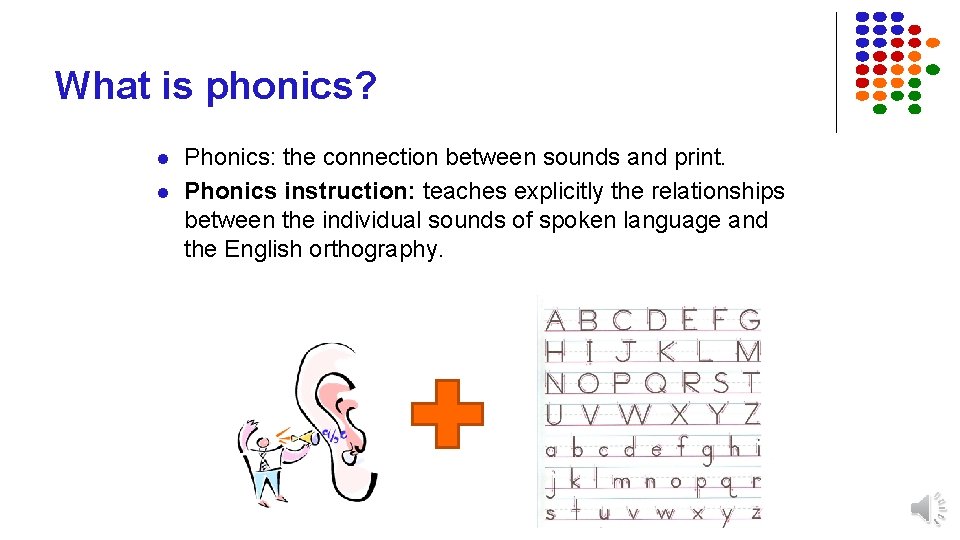
What is phonics? l l Phonics: the connection between sounds and print. Phonics instruction: teaches explicitly the relationships between the individual sounds of spoken language and the English orthography.
Phonics is the Code l l l Alphabetic Principle Sounds (phonemes) are represented in written language as symbols (graphemes – letters) The Code l l Decoding – the ability to translate a word from print to speech, usually by employing knowledge of sound-symbol correspondences; “sounding it out” Encoding – production of graphemes or spellings Moats, 2020 One L Publishing
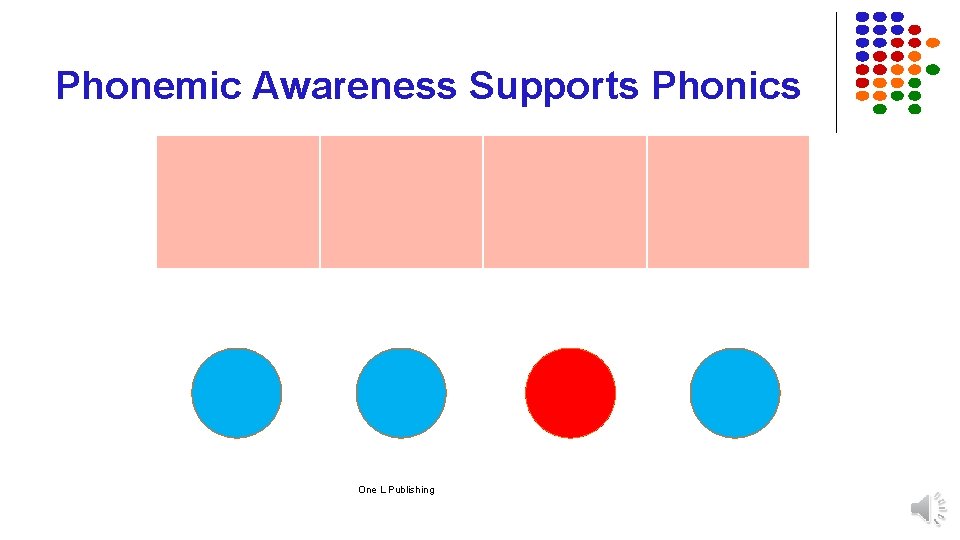
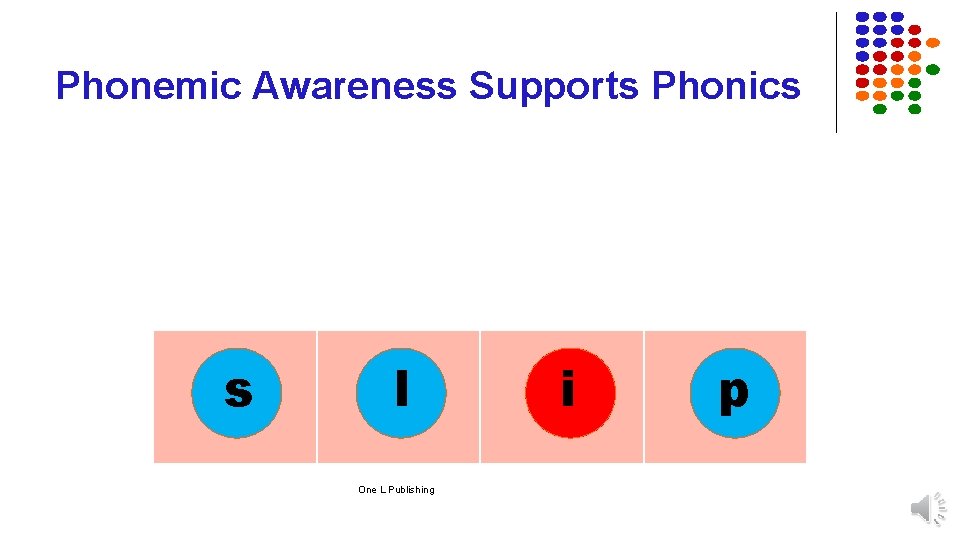
Phonemic Awareness Supports Phonics One L Publishing
Phonemic Awareness Supports Phonics s l One L Publishing i p
How should we teach phonics? l NRP findings, 2000. l found that all phonics approaches, grapheme-phoneme level, onsetrime and analogy were more effective than not teaching phonics at all or than relying only on incidental , unsystematic phonics, but it did not find a difference between larger unit and smaller-unit phonics approaches. One L Publishing
Update: How we should teach phonics l POST NRP findings, 2005 -2016 l l suggests that phonics instruction with an initial focus on graphemephoneme level relationships, rather than larger-unit phonics approaches, can lead to better reading outcomes, especially on more advanced code skills. As students learn to decode more complex types of words, children must also be taught about larger units in words such as l l common orthographic patterns (e. g. , igh, ea, ar) morphology (i. e. , word parts that carry meaning such as roots, prefixes, and suffixes) Brady, 2011, for a review; also, Christensen & Bowey, 2005; Foorman et al. , 2016) One L Publishing
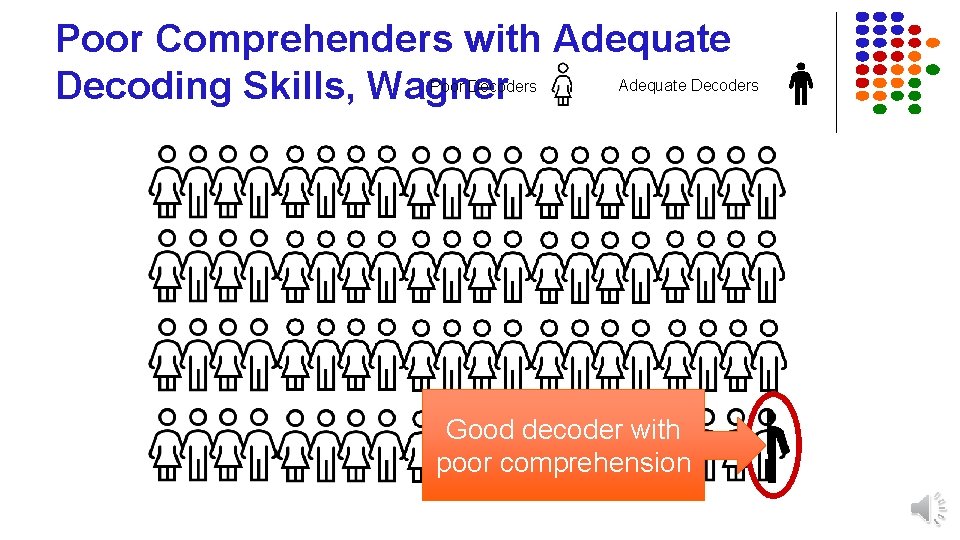
Decoding l l Primary concern to prevent reading difficulties is decoding; it is the most serious threat to reading achievement Studies with thousands of children, replicated 3 times: nearly all poor comprehenders had decoding AND vocabulary deficits – Rick Wagner from FCRR One L Publishing
Poor Comprehenders with Adequate Decoders Poor Decoders Decoding Skills, Wagner Good decoder with poor comprehension
Word Reading Accuracy l Accuracy is the first and foremost foundation of fluency l l 95% accuracy is the aim, although no consensus 97% to 98% accuracy for emerging readers l Enhances motivation to read when they are more accurate Handbook of Reading Research; Rasinski, Reutzel, Chard, and Thompson, 2011 One L Publishing