
WHAT IS PERSUASION using coercion or force to
- Slides: 12
WHAT IS PERSUASION ? • using coercion or force to produce an effect? • using tools to produce x effect in an audience? • using symbols to induce action ? • motivating a sense of identification to produce action?
EARLY PERSUASION THEORIES • …focussed on rhetoric • PERSUASION TODAY includes. . . • advertising • movements • organisational identification practices
ARISTOTLE • 3 persuasion types: Deliberative Forensic Epideictic • PERSUADERS USE PROOF • Inartistic (controlled by the situation eg photos, statistics) • Artistic (invented/created by the persuader) • Ethos Pathos Logos
CICERO’S THEORY OF STASIS • • • 3 KEY STASIS (clash points) : DEFINITION OF A FACT/VALUE EXISTENCE QUALITY STYLE Plain Middle Grand
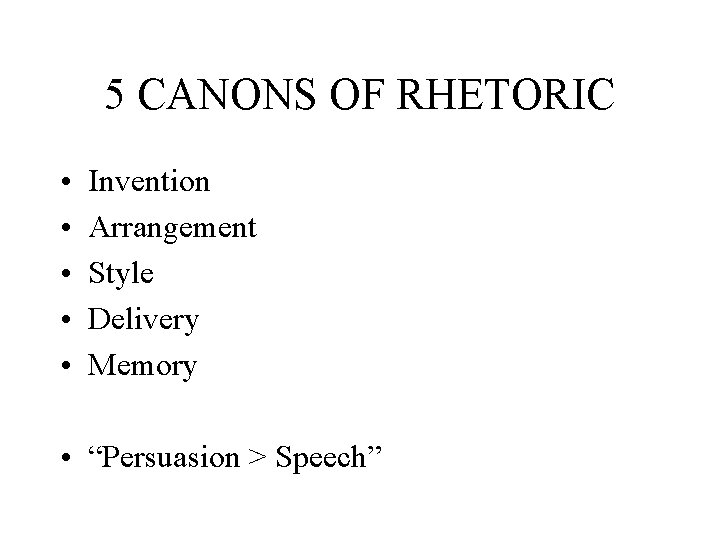
5 CANONS OF RHETORIC • • • Invention Arrangement Style Delivery Memory • “Persuasion > Speech”
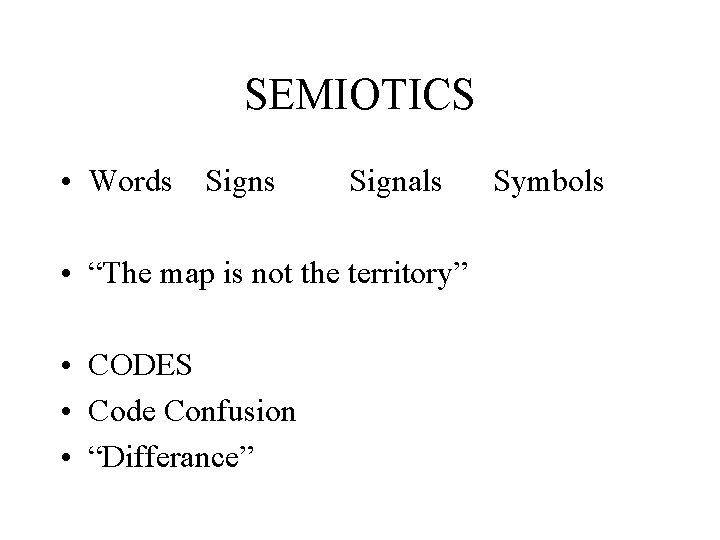
SEMIOTICS • Words Signals • “The map is not the territory” • CODES • Code Confusion • “Differance” Symbols
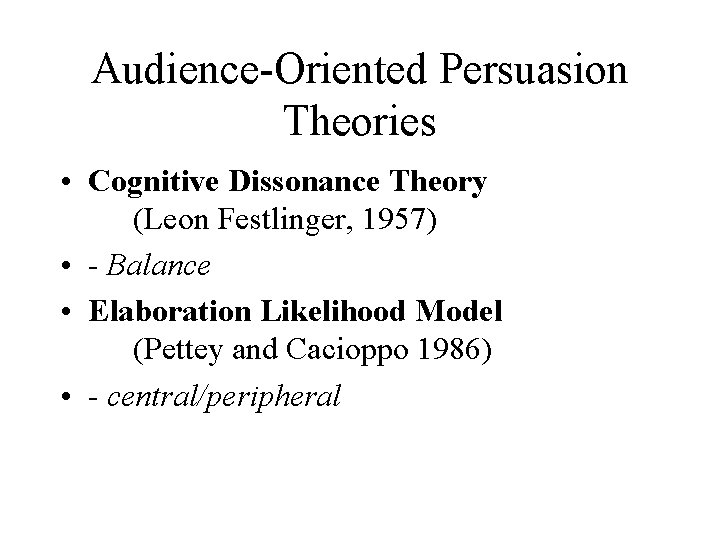
Audience-Oriented Persuasion Theories • Cognitive Dissonance Theory (Leon Festlinger, 1957) • - Balance • Elaboration Likelihood Model (Pettey and Cacioppo 1986) • - central/peripheral
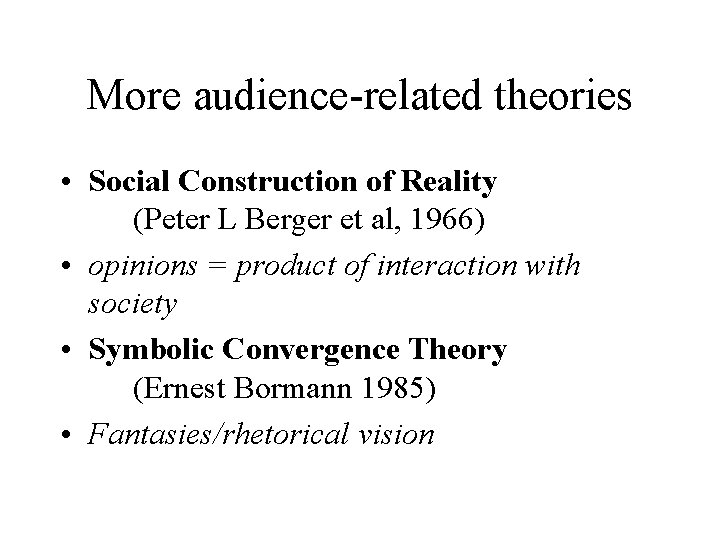
More audience-related theories • Social Construction of Reality (Peter L Berger et al, 1966) • opinions = product of interaction with society • Symbolic Convergence Theory (Ernest Bormann 1985) • Fantasies/rhetorical vision
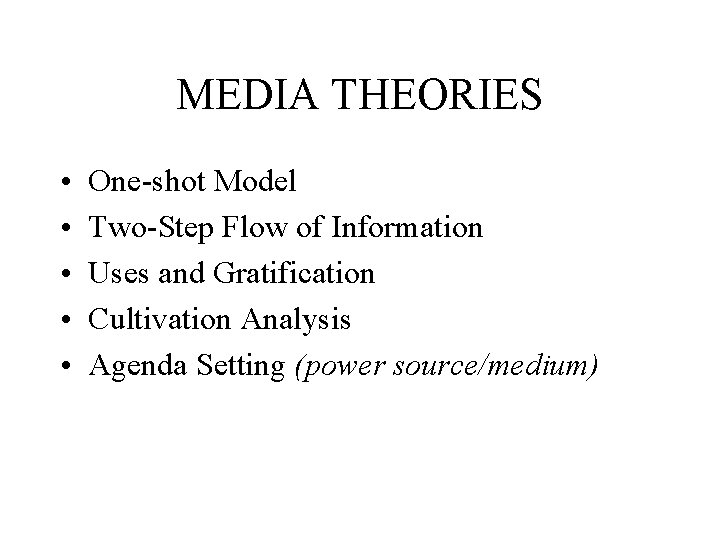
MEDIA THEORIES • • • One-shot Model Two-Step Flow of Information Uses and Gratification Cultivation Analysis Agenda Setting (power source/medium)
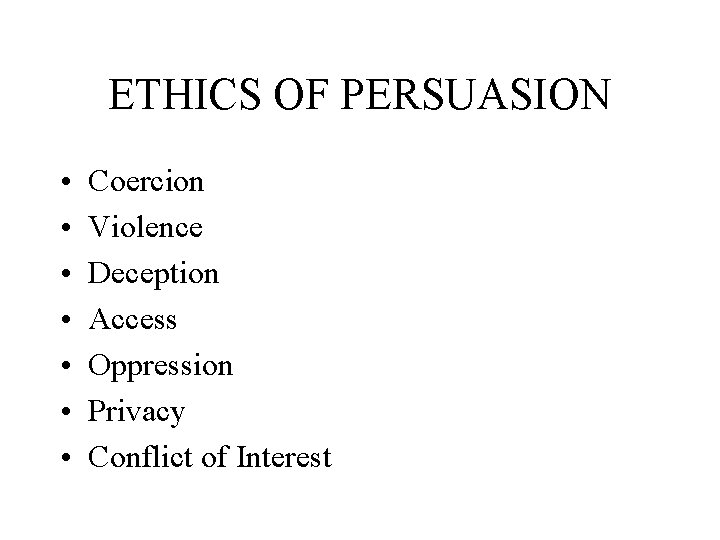
ETHICS OF PERSUASION • • Coercion Violence Deception Access Oppression Privacy Conflict of Interest
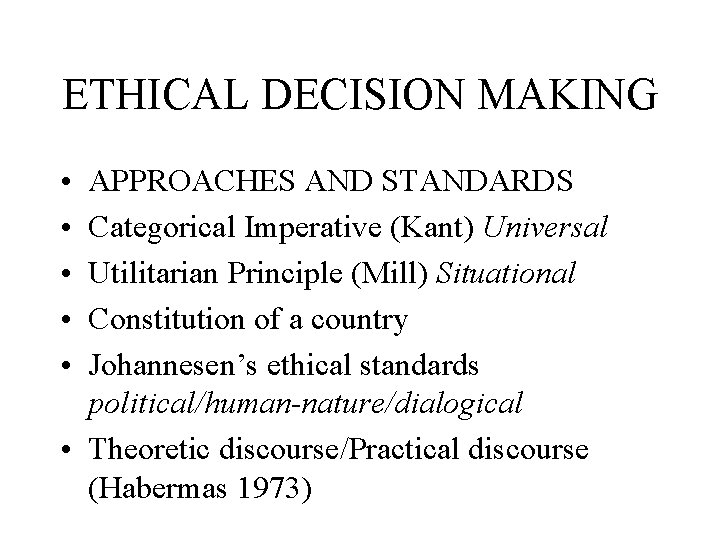
ETHICAL DECISION MAKING • • • APPROACHES AND STANDARDS Categorical Imperative (Kant) Universal Utilitarian Principle (Mill) Situational Constitution of a country Johannesen’s ethical standards political/human-nature/dialogical • Theoretic discourse/Practical discourse (Habermas 1973)
Think about. . . • • Visual Images and Ethics Political Persuasion Advertising Organizational Advocacy Journalism Ethical Communication Ethics and Audience Members