
What is personal hygiene How do I keep
- Slides: 9
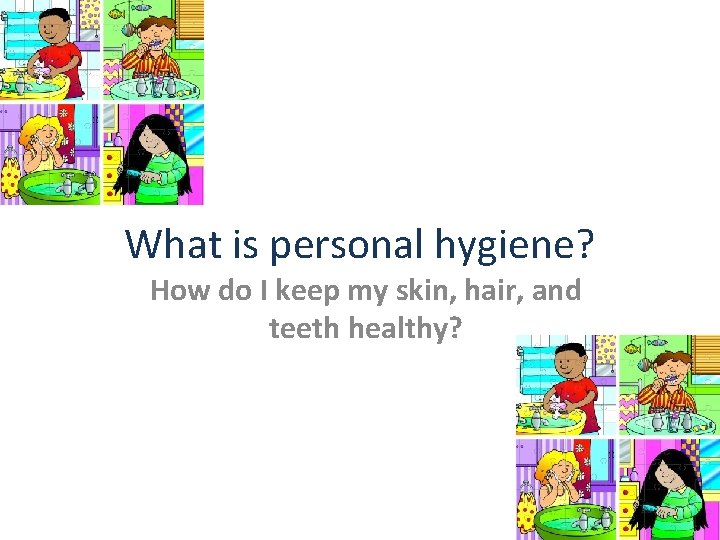
What is personal hygiene? How do I keep my skin, hair, and teeth healthy?
Personal hygiene properly caring for your body by keeping it clean and healthy while allowing you to look and feel your best
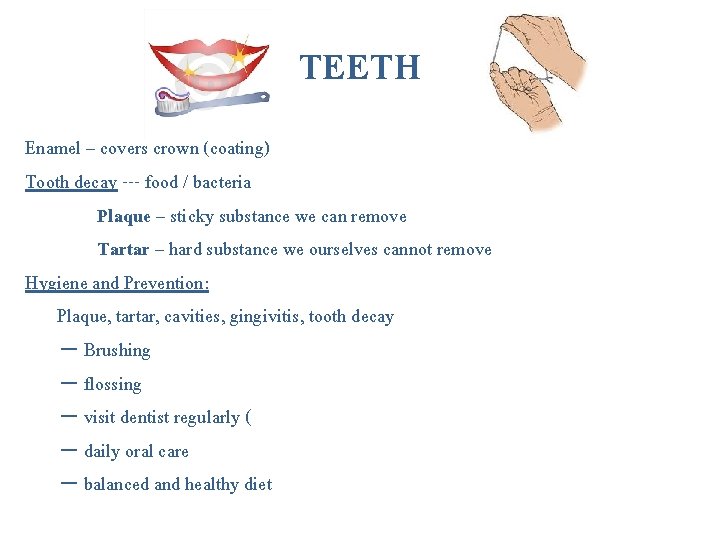
TEETH Enamel – covers crown (coating) Tooth decay --- food / bacteria Plaque – sticky substance we can remove Tartar – hard substance we ourselves cannot remove Hygiene and Prevention: Plaque, tartar, cavities, gingivitis, tooth decay – Brushing – flossing – visit dentist regularly ( – daily oral care – balanced and healthy diet
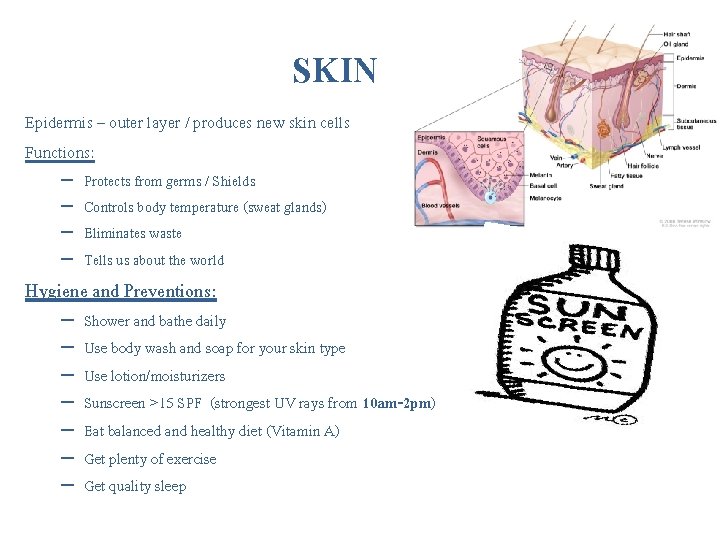
SKIN Epidermis – outer layer / produces new skin cells Functions: – – Protects from germs / Shields Controls body temperature (sweat glands) Eliminates waste Tells us about the world Hygiene and Preventions: – – – – Shower and bathe daily Use body wash and soap for your skin type Use lotion/moisturizers Sunscreen >15 SPF (strongest UV rays from 10 am-2 pm) Eat balanced and healthy diet (Vitamin A) Get plenty of exercise Get quality sleep
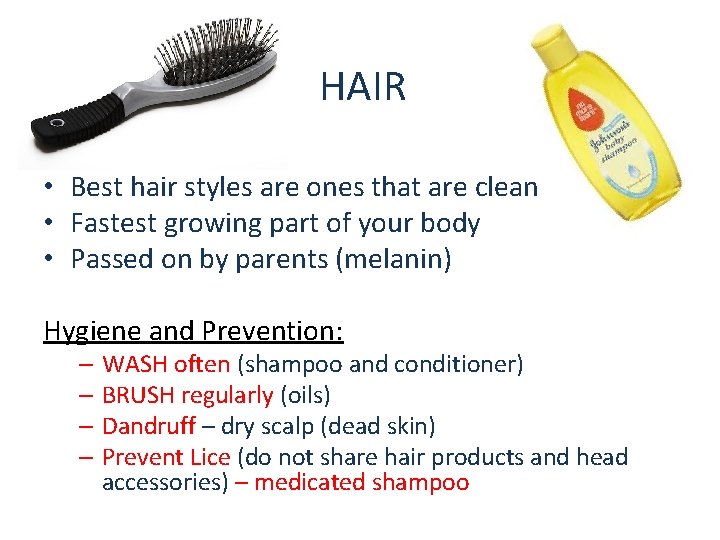
HAIR • Best hair styles are ones that are clean • Fastest growing part of your body • Passed on by parents (melanin) Hygiene and Prevention: – WASH often (shampoo and conditioner) – BRUSH regularly (oils) – Dandruff – dry scalp (dead skin) – Prevent Lice (do not share hair products and head accessories) – medicated shampoo
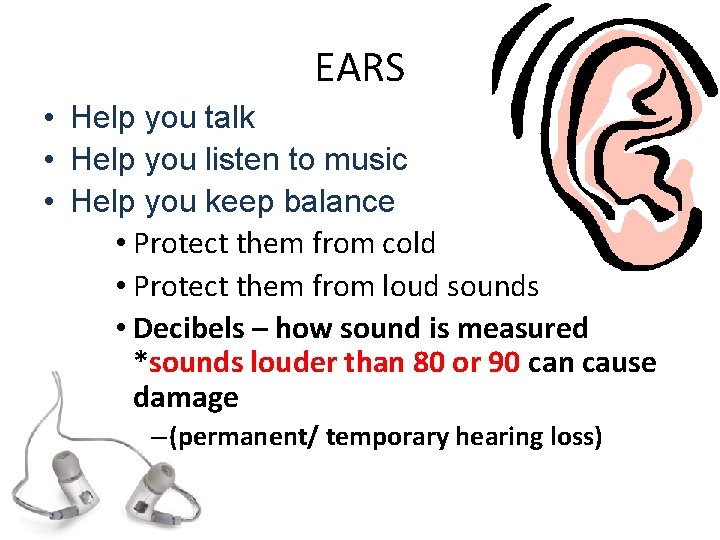
EARS • Help you talk • Help you listen to music • Help you keep balance • Protect them from cold • Protect them from loud sounds • Decibels – how sound is measured *sounds louder than 80 or 90 can cause damage – (permanent/ temporary hearing loss)
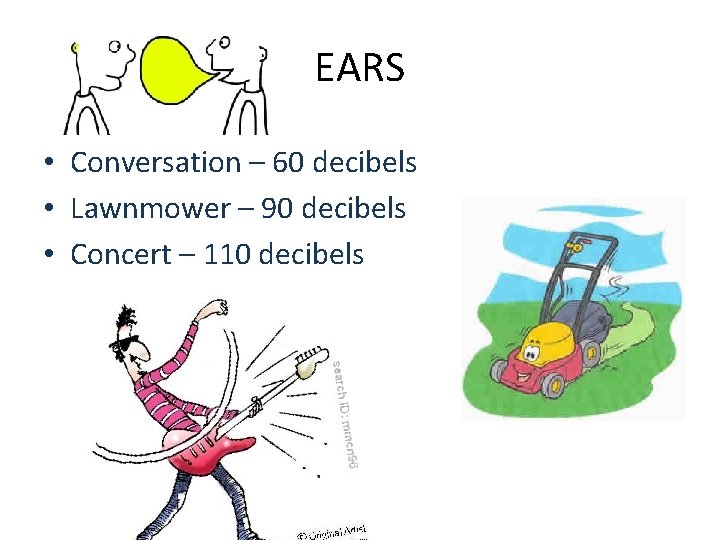
EARS • Conversation – 60 decibels • Lawnmower – 90 decibels • Concert – 110 decibels
EYES • Avoid eyestrain – – read and watch TV in a well lighted room, shine light on what you are reading, sit a comfortable distance (at least 6 feet) from the TV, • Protect your eyes from infection – do not rub your eyes – Change contacts according to directions • Get regular checkups – – every year if you wear glasses – every 2 years if you do not • Protect your eyes from injury – safety goggles, visor, safety eyewear, rinse out by splashing, wear sunglasses
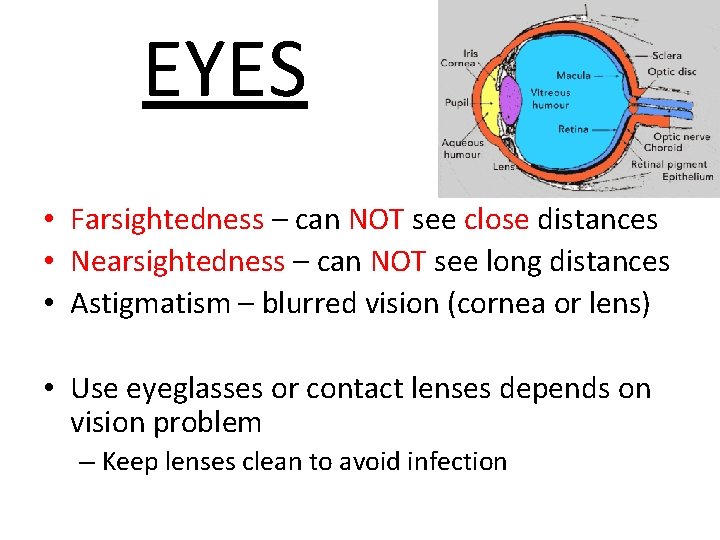
EYES • Farsightedness – can NOT see close distances • Nearsightedness – can NOT see long distances • Astigmatism – blurred vision (cornea or lens) • Use eyeglasses or contact lenses depends on vision problem – Keep lenses clean to avoid infection