
What is PBIS A proactive preventative systems approach

What is PBIS? A proactive, preventative systems approach that establishes behavioral supports and social culture needed for ALL students in a school to achieve social, emotional and academic success.
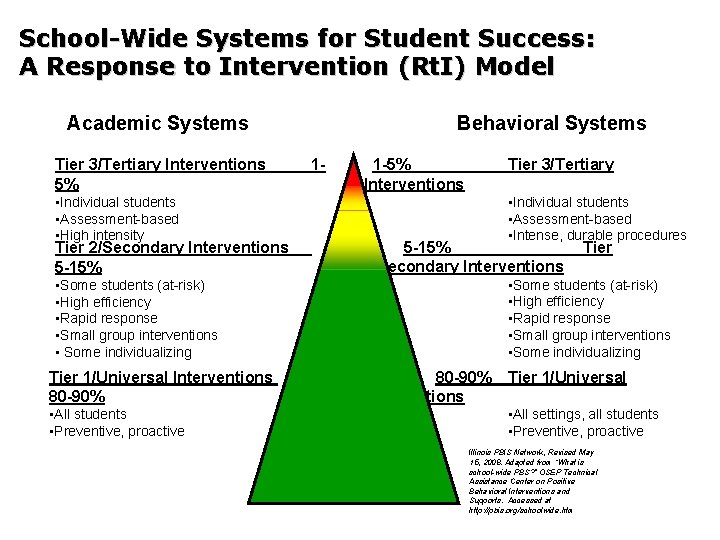
School-Wide Systems for Student Success: A Response to Intervention (Rt. I) Model Academic Systems Tier 3/Tertiary Interventions 5% • Individual students • Assessment-based • High intensity Tier 2/Secondary Interventions 5 -15% Behavioral Systems 1 - 1 -5% Interventions Tier 3/Tertiary • Individual students • Assessment-based • Intense, durable procedures 5 -15% 2/Secondary Interventions • Some students (at-risk) • High efficiency • Rapid response • Small group interventions • Some individualizing Tier 1/Universal Interventions 80 -90% • All students • Preventive, proactive Tier 80 -90% Interventions Tier 1/Universal • All settings, all students • Preventive, proactive Illinois PBIS Network, Revised May 15, 2008. Adapted from “What is school-wide PBS? ” OSEP Technical Assistance Center on Positive Behavioral Interventions and Supports. Accessed at http: //pbis. org/schoolwide. htm
How Can School-wide Positive Behavior Support Help? PBIS helps schools identify needs and develop strategies that promote: • increased academic performance • increased safety • decreased problem behaviors • a positive school culture
• Loud talking • Out of seat • Consistency with rules • Common language • Disrespect to driver • Common procedures & monitor • Bullying • Throwing items • Consistent consequences COMMON CONCERNS
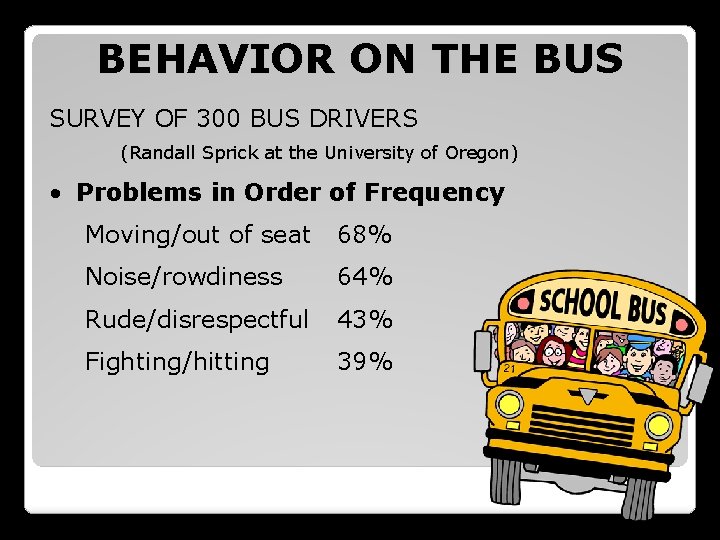
BEHAVIOR ON THE BUS SURVEY OF 300 BUS DRIVERS (Randall Sprick at the University of Oregon) • Problems in Order of Frequency Moving/out of seat 68% Noise/rowdiness 64% Rude/disrespectful 43% Fighting/hitting 39%
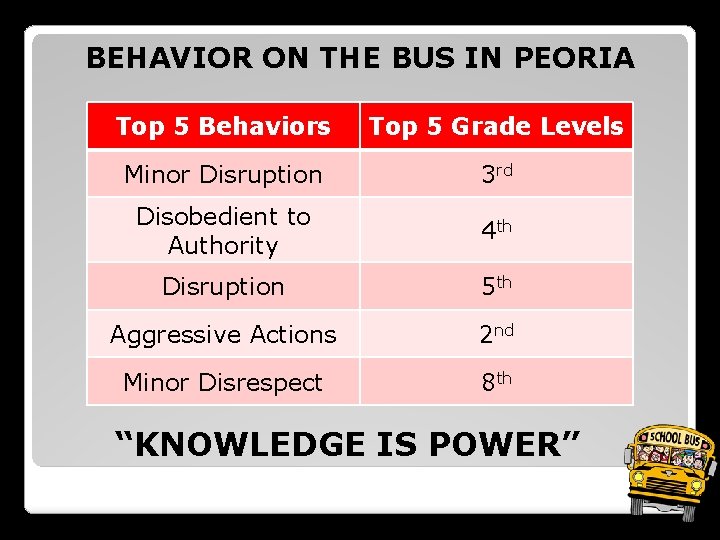
BEHAVIOR ON THE BUS IN PEORIA Top 5 Behaviors Top 5 Grade Levels Minor Disruption 3 rd Disobedient to Authority 4 th Disruption 5 th Aggressive Actions 2 nd Minor Disrespect 8 th “KNOWLEDGE IS POWER”
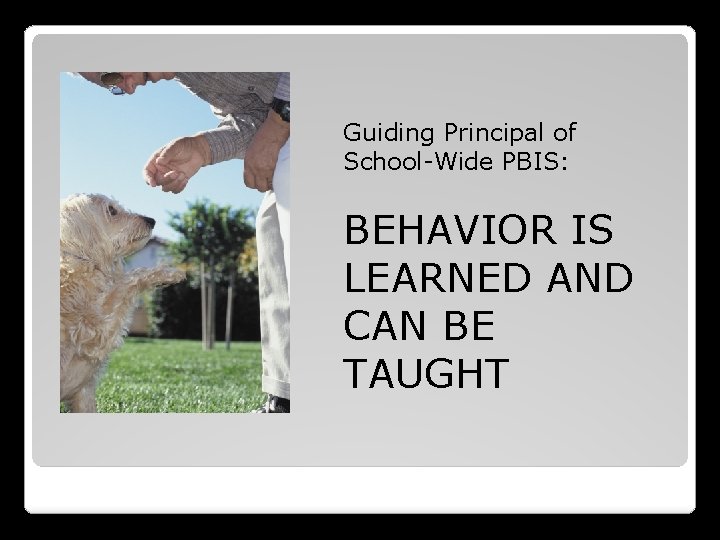
Guiding Principal of School-Wide PBIS: BEHAVIOR IS LEARNED AND CAN BE TAUGHT
In each school…
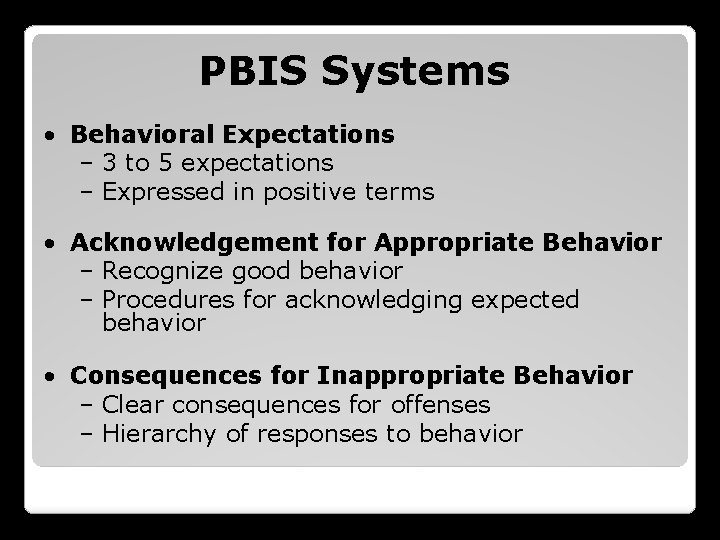
PBIS Systems • Behavioral Expectations – 3 to 5 expectations – Expressed in positive terms • Acknowledgement for Appropriate Behavior – Recognize good behavior – Procedures for acknowledging expected behavior • Consequences for Inappropriate Behavior – Clear consequences for offenses – Hierarchy of responses to behavior
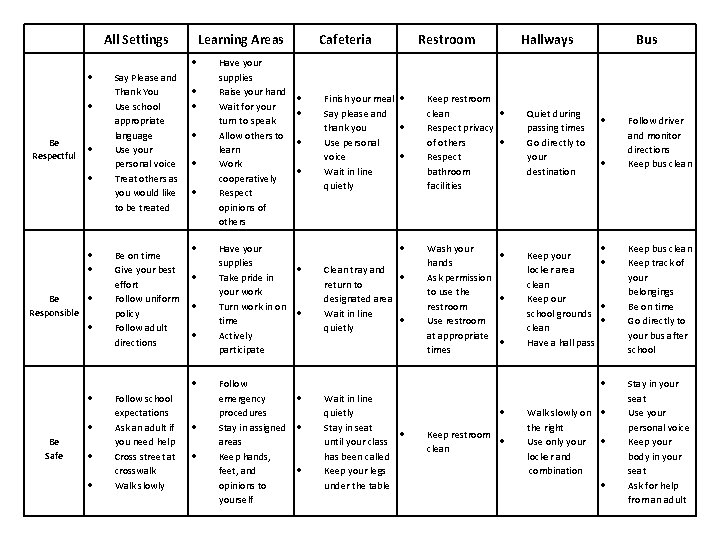
All Settings Learning Areas Be Respectful Be Responsible Say Please and Thank You Use school appropriate language Use your personal voice Treat others as you would like to be treated Be on time Give your best effort Follow uniform policy Follow adult directions Be Safe Follow school expectations Ask an adult if you need help Cross street at crosswalk Walk slowly Have your supplies Raise your hand Wait for your turn to speak Allow others to learn Work cooperatively Respect opinions of others Have your supplies Take pride in your work Turn work in on time Actively participate Follow emergency procedures Stay in assigned areas Keep hands, feet, and opinions to yourself Cafeteria Restroom Hallways Bus Finish your meal Say please and thank you Use personal voice Wait in line quietly Keep restroom clean Respect privacy of others Respect bathroom facilities Quiet during passing times Go directly to your destination Wash your hands Ask permission to use the restroom Use restroom at appropriate times Keep your locker area clean Keep our school grounds clean Have a hall pass Keep bus clean Keep track of your belongings Be on time Go directly to your bus after school Stay in your seat Use your personal voice Keep your body in your seat Ask for help from an adult Clean tray and return to designated area Wait in line quietly Wait in line quietly Stay in seat until your class has been called Keep your legs under the table Keep restroom clean Walk slowly on the right Use only your locker and combination Follow driver and monitor directions Keep bus clean
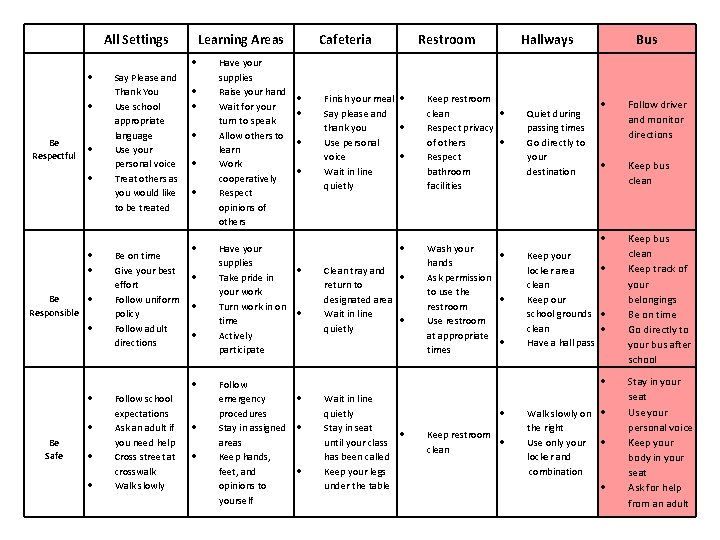
All Settings Learning Areas Be Respectful Be Responsible Say Please and Thank You Use school appropriate language Use your personal voice Treat others as you would like to be treated Be on time Give your best effort Follow uniform policy Follow adult directions Be Safe Follow school expectations Ask an adult if you need help Cross street at crosswalk Walk slowly Have your supplies Raise your hand Wait for your turn to speak Allow others to learn Work cooperatively Respect opinions of others Have your supplies Take pride in your work Turn work in on time Actively participate Follow emergency procedures Stay in assigned areas Keep hands, feet, and opinions to yourself Cafeteria Restroom Hallways Finish your meal Say please and thank you Use personal voice Wait in line quietly Keep restroom clean Respect privacy of others Respect bathroom facilities Wash your hands Ask permission to use the restroom Use restroom at appropriate times Clean tray and return to designated area Wait in line quietly Quiet during passing times Go directly to your destination Bus Follow driver and monitor directions Keep bus clean Keep track of your belongings Be on time Go directly to your bus after school Keep your locker area clean Keep our school grounds clean Have a hall pass Wait in line quietly Stay in seat until your class has been called Keep your legs under the table Keep restroom clean Walk slowly on the right Use only your locker and combination Stay in your seat Use your personal voice Keep your body in your seat Ask for help from an adult
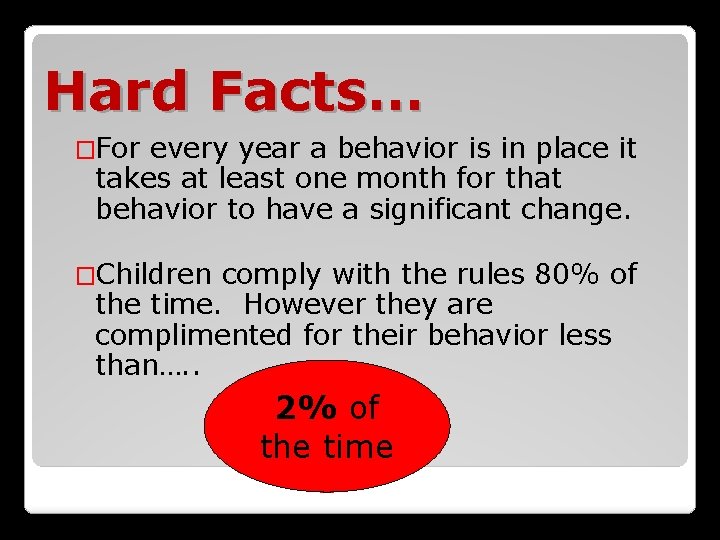
Hard Facts… �For every year a behavior is in place it takes at least one month for that behavior to have a significant change. �Children comply with the rules 80% of the time. However they are complimented for their behavior less than…. . 2% of the time
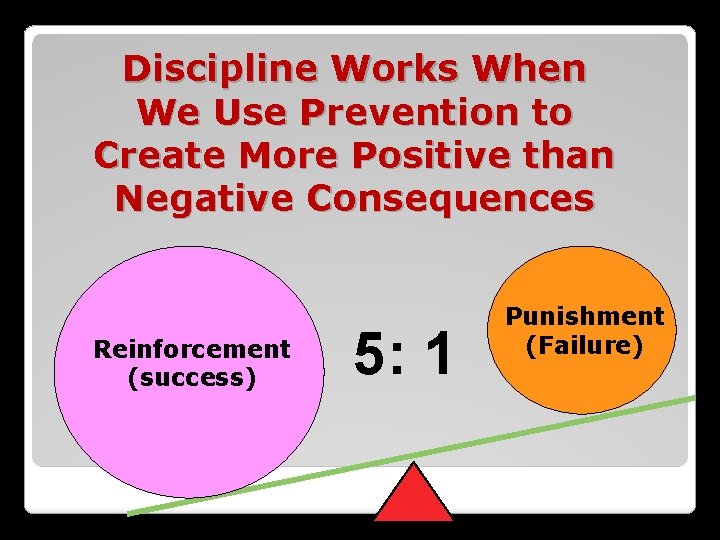
Discipline Works When We Use Prevention to Create More Positive than Negative Consequences Reinforcement (success) 5: 1 Punishment (Failure)
How can you be a part of supporting children in Peoria Public Schools?
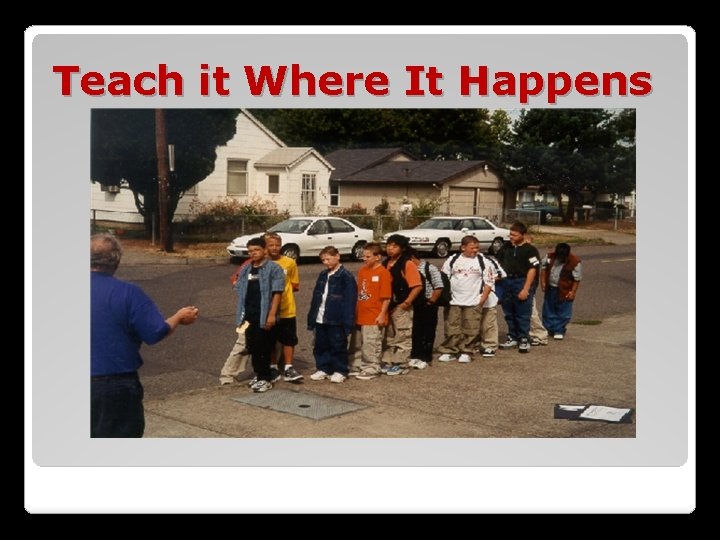
Teach it Where It Happens
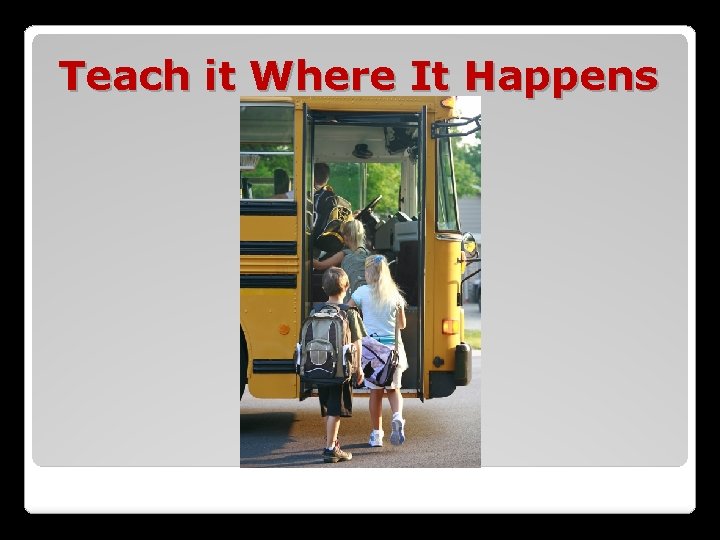
Teach it Where It Happens
Teach or re-teach bus rules when all students are on the bus. At the start of the year Pick up after school Drop off in morning After a Break When Needed
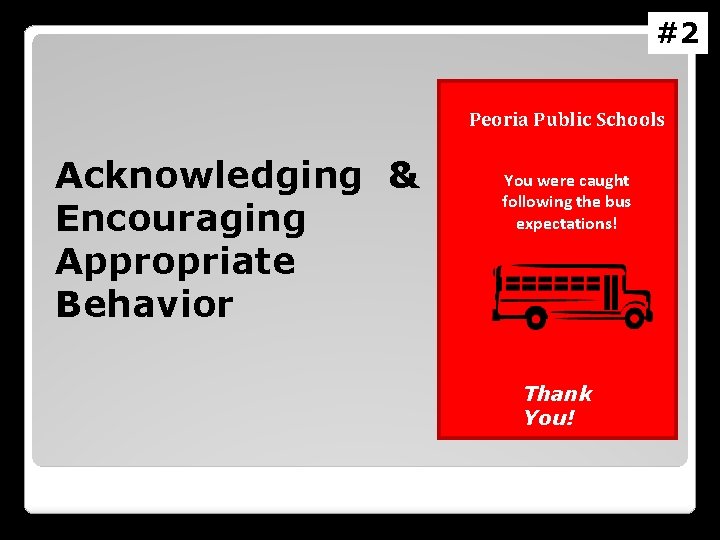
#2 Peoria Public Schools Acknowledging & Encouraging Appropriate Behavior You were caught following the bus expectations! Thank You!
Research Says… �You can improve behavior by 80% just by pointing out what someone is doing correctly. �A student is less likely to drop out of school if one other adult, other than their teacher, knows their name.
How to Give Positives �Avoid general praise. Instead of “Great job”, say, “Great job of staying in your seat today. ” �Be specific. Point out what they’re doing right. Say, “Thanks for talking quietly today. ”
Restate a bus rule when correcting a student’s misbehavior. “The bus rule is to sit in the seat facing forward in order to stay safe. ” #3
#4 Restate a bus rule when giving a Red Bus Ticket. “Way to be respectful! Saying “excuse me” when you bump into someone accidently is the polite thing to do!”
Be Consistent �Students need to know boundaries and need structure. �You won’t be tempted to let your mood get in the way. �Apply the rules consistently to every student
Consistent Effective Consequences �use eye contact �tackle the small problems �verbal prompts �try not to take it �hand signal personally �Re-teach �stay consistent �Model �stay calm
PBIS Things you could do… � Locate a copy of your school route’s bus expectations � Teach expectations to your riders � Give out red bus tickets to students exhibiting the expected behaviors � Use the bus referral system for students who commit major violations of the bus expectations � Reteach the expectations frequently, especially after breaks! � Get to know your riders and greet them each day! � Communicate with building principals and teacher bus supervisors.
- Slides: 26