
What Is PayforPerformance Pay for performance plans signal
- Slides: 24
What Is Pay-for-Performance? Pay for performance plans signal a movement awayfrom entitlements. Pay will vary with some measure of individual, team, or organizational performance.
Purposes of Pay-for-Performance u. Attain strategic goals u. Reinforce organizational norms u. Motivate performance at individual, group, and organizational levels u. Recognize differential employee contributions
Obstacles to Pay-for-Performance u. Difficulties in specifying and measuring job performance u. Problems in identifying valued rewards u. Difficulties in linking rewards to job performance
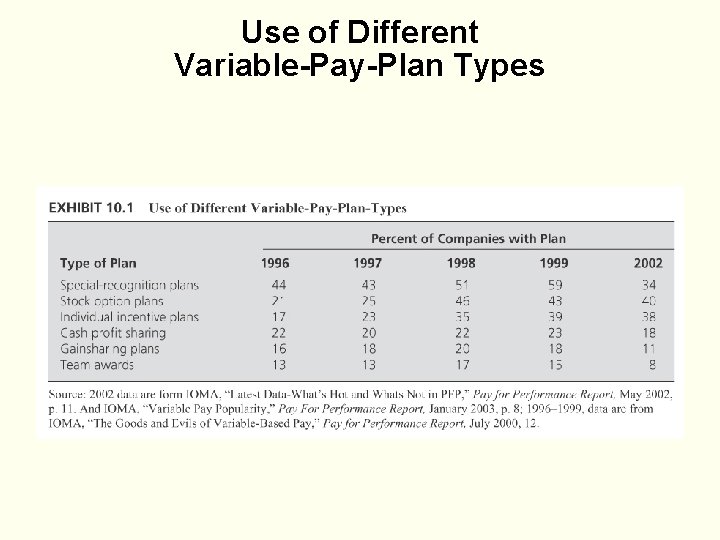
Use of Different Variable-Pay-Plan Types
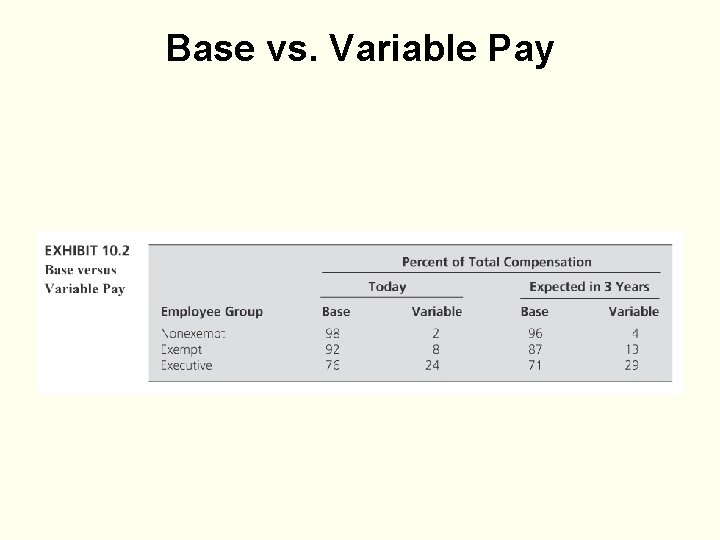
Base vs. Variable Pay
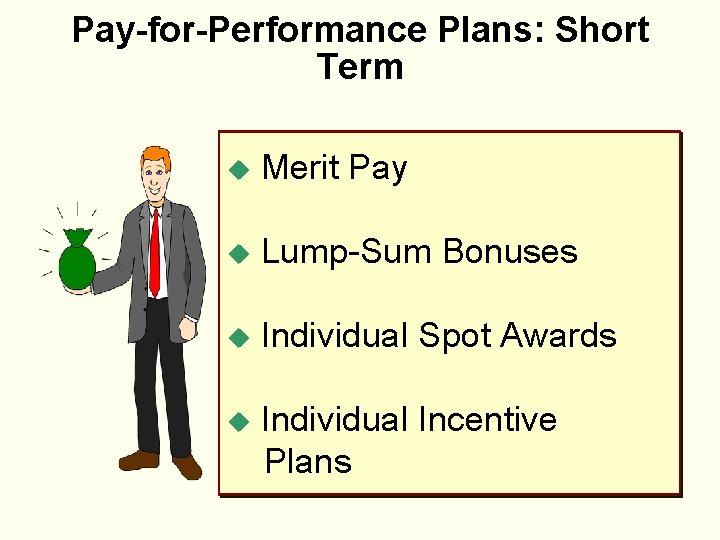
Pay-for-Performance Plans: Short Term u Merit Pay u Lump-Sum Bonuses u Individual Spot Awards u Individual Incentive Plans
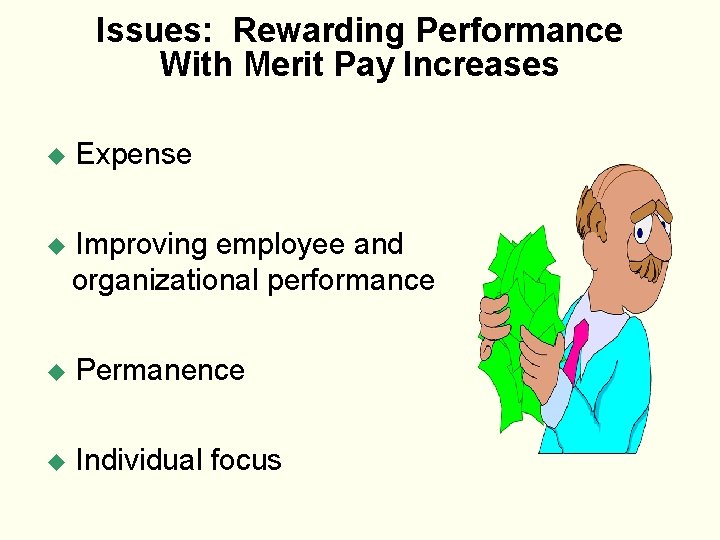
Issues: Rewarding Performance With Merit Pay Increases u Expense u Improving employee and organizational performance u Permanence u Individual focus
Managing Merit Pay u. Improve accuracy of performance ratings u. Allocate enough money to truly reward performance u. Make sure size of merit increase differentiates across performance levels
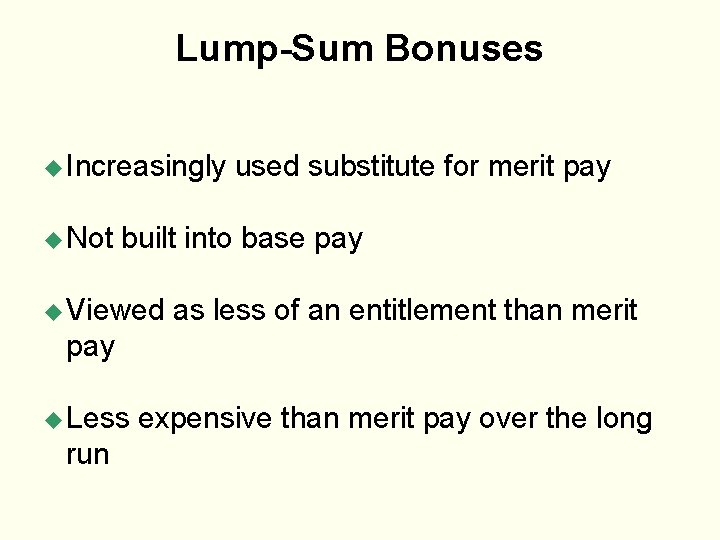
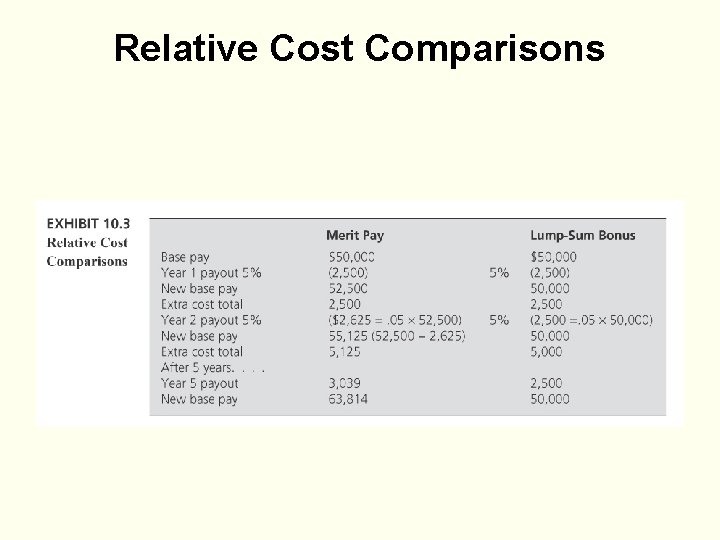
Lump-Sum Bonuses u Increasingly u Not used substitute for merit pay built into base pay u Viewed as less of an entitlement than merit pay u Less run expensive than merit pay over the long
Relative Cost Comparisons
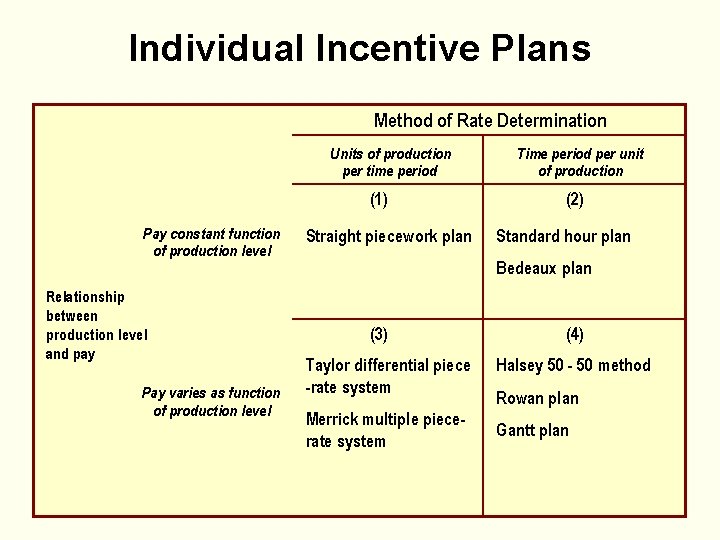
Individual Incentive Plans Method of Rate Determination Units of production per time period (1) Pay constant function of production level Relationship between production level and pay Pay varies as function of production level Straight piecework plan Time period per unit of production (2) Standard hour plan Bedeaux plan (3) Taylor differential piece -rate system Merrick multiple piecerate system (4) Halsey 50 - 50 method Rowan plan Gantt plan
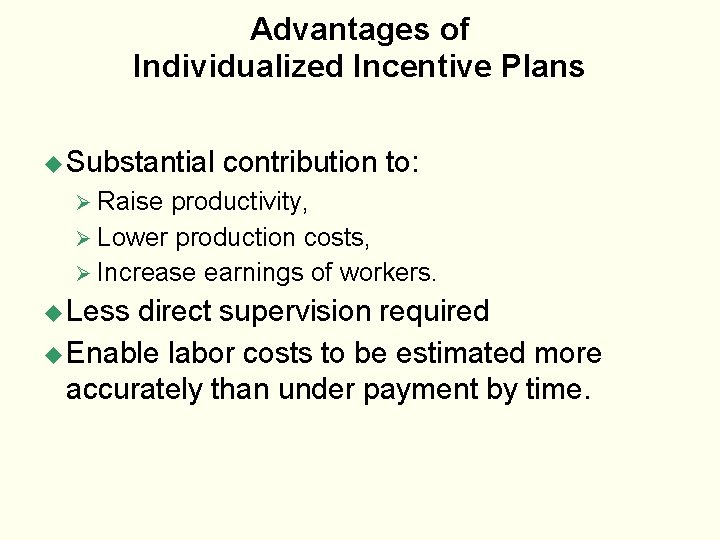
Advantages of Individualized Incentive Plans u Substantial contribution to: Ø Raise productivity, Ø Lower production costs, Ø Increase earnings of workers. u Less direct supervision required u Enable labor costs to be estimated more accurately than under payment by time.
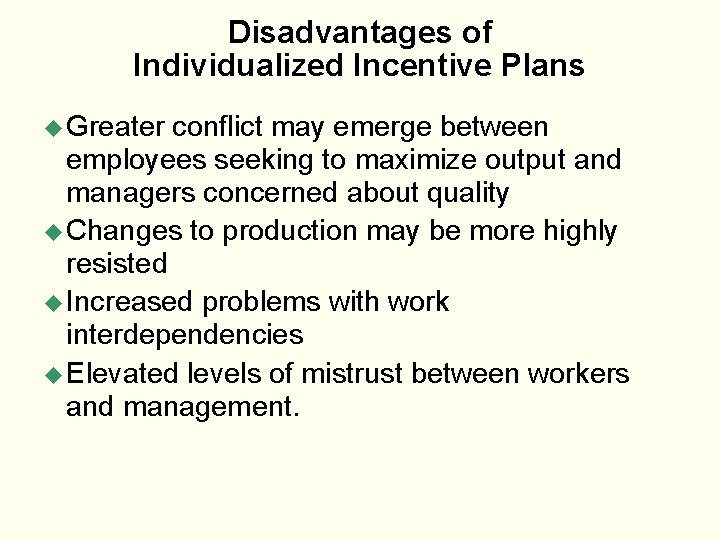
Disadvantages of Individualized Incentive Plans u Greater conflict may emerge between employees seeking to maximize output and managers concerned about quality u Changes to production may be more highly resisted u Increased problems with work interdependencies u Elevated levels of mistrust between workers and management.
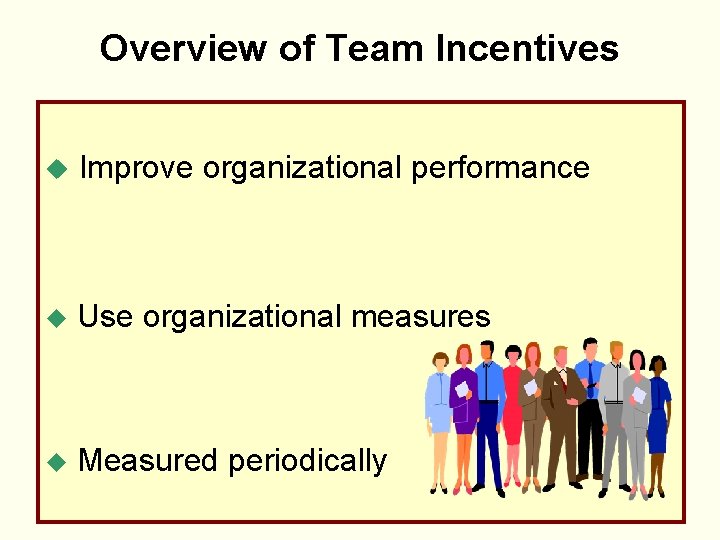
Overview of Team Incentives u Improve organizational performance u Use organizational measures u Measured periodically
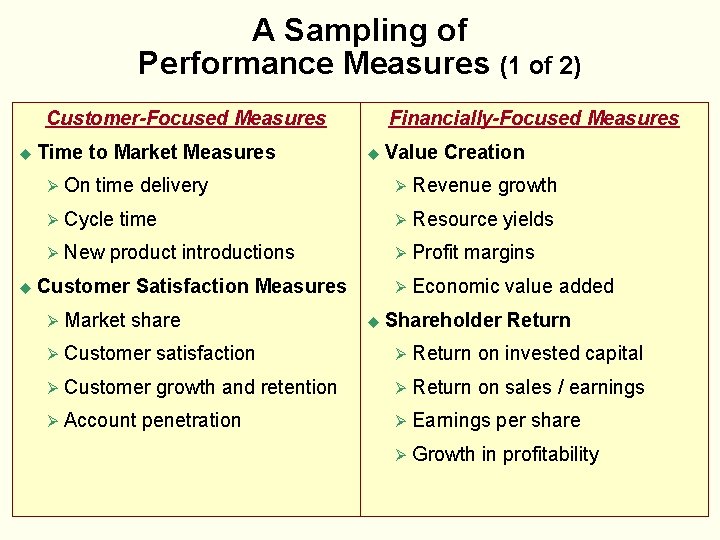
A Sampling of Performance Measures (1 of 2) Customer-Focused Measures u Time to Market Measures Ø On time delivery Ø Cycle Ø New time product introductions u Customer Ø Market Satisfaction Measures share Financially-Focused Measures u Value Creation Ø Revenue growth Ø Resource Ø Profit yields margins Ø Economic u Shareholder value added Return Ø Customer satisfaction Ø Return on invested capital Ø Customer growth and retention Ø Return on sales / earnings Ø Account penetration Ø Earnings Ø Growth per share in profitability
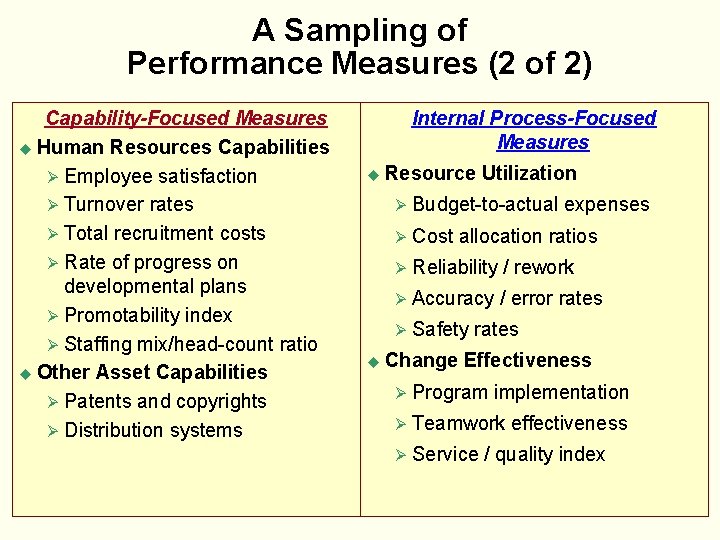
A Sampling of Performance Measures (2 of 2) Capability-Focused Measures u Human Resources Capabilities Ø Employee satisfaction Ø Turnover rates Ø Total recruitment costs Ø Rate of progress on developmental plans Ø Promotability index Ø Staffing mix/head-count ratio u Other Asset Capabilities Ø Patents and copyrights Ø Distribution systems Internal Process-Focused Measures u Resource Utilization Ø Budget-to-actual Ø Cost expenses allocation ratios Ø Reliability / rework Ø Accuracy / error rates Ø Safety u Change rates Effectiveness Ø Program implementation Ø Teamwork Ø Service effectiveness / quality index
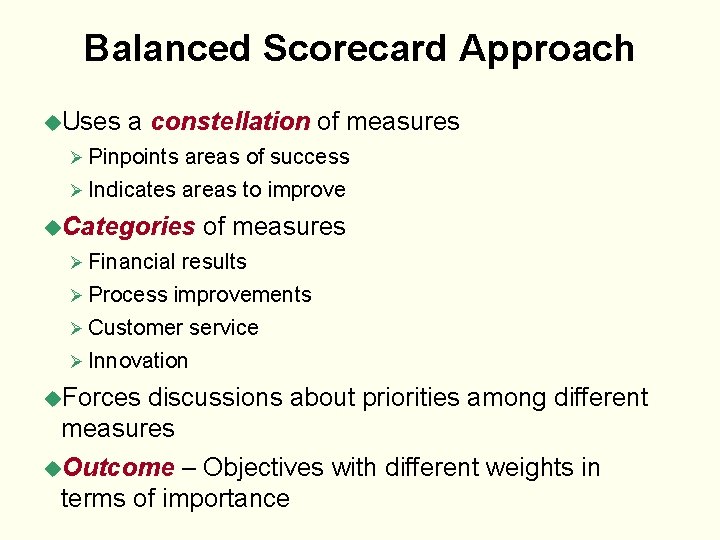
Balanced Scorecard Approach u. Uses a constellation of measures Ø Pinpoints areas of success Ø Indicates areas to improve u. Categories of measures Ø Financial results Ø Process improvements Ø Customer service Ø Innovation u. Forces discussions about priorities among different measures u. Outcome – Objectives with different weights in terms of importance
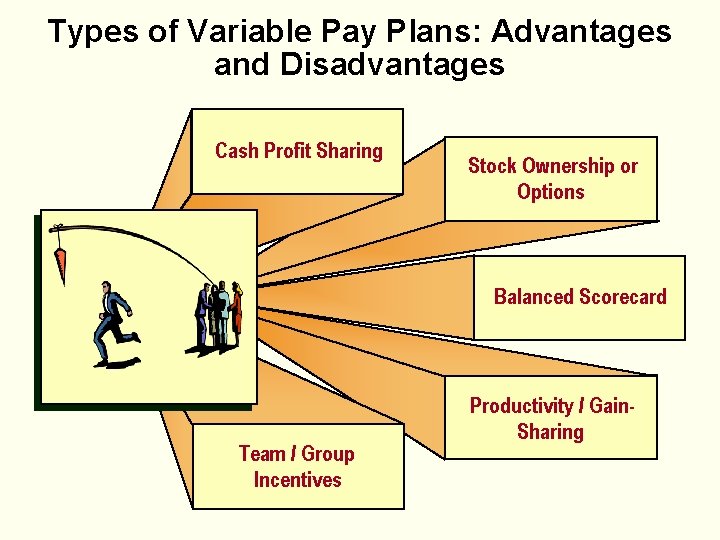
Types of Variable Pay Plans: Advantages and Disadvantages Cash Profit Sharing Stock Ownership or Options Balanced Scorecard Team / Group Incentives Productivity / Gain. Sharing
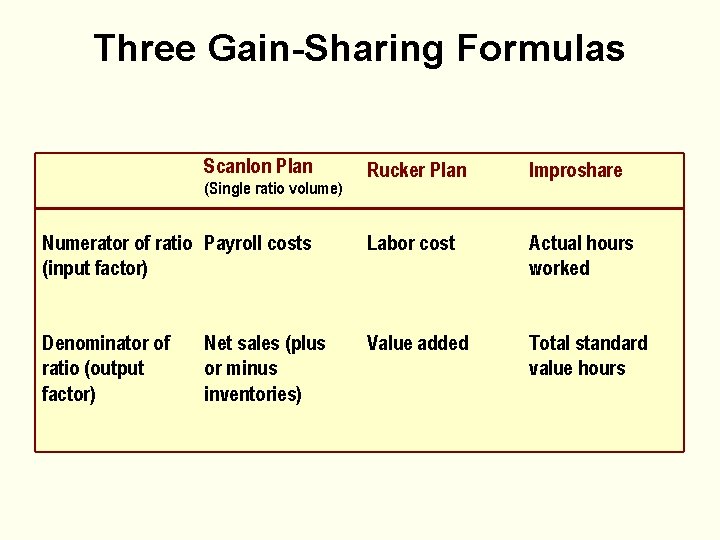
Three Gain-Sharing Formulas Scanlon Plan Rucker Plan Improshare Numerator of ratio Payroll costs (input factor) Labor cost Actual hours worked Denominator of ratio (output factor) Value added Total standard value hours (Single ratio volume) Net sales (plus or minus inventories)
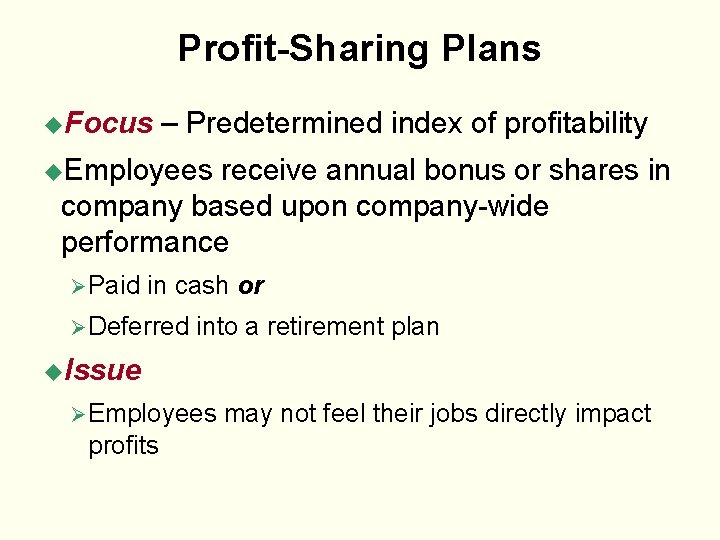
Profit-Sharing Plans u. Focus – Predetermined index of profitability u. Employees receive annual bonus or shares in company based upon company-wide performance Ø Paid in cash or Ø Deferred into a retirement plan u. Issue Ø Employees profits may not feel their jobs directly impact
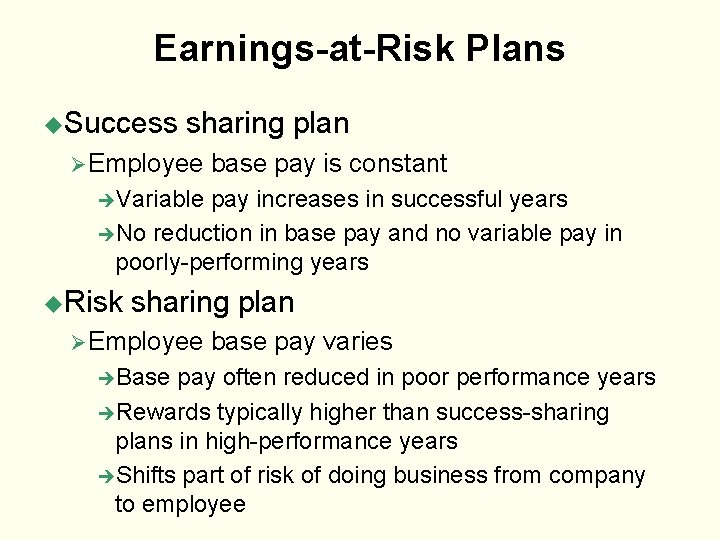
Earnings-at-Risk Plans u. Success sharing plan Ø Employee base pay is constant èVariable pay increases in successful years èNo reduction in base pay and no variable pay in poorly-performing years u. Risk sharing plan Ø Employee èBase base pay varies pay often reduced in poor performance years èRewards typically higher than success-sharing plans in high-performance years èShifts part of risk of doing business from company to employee
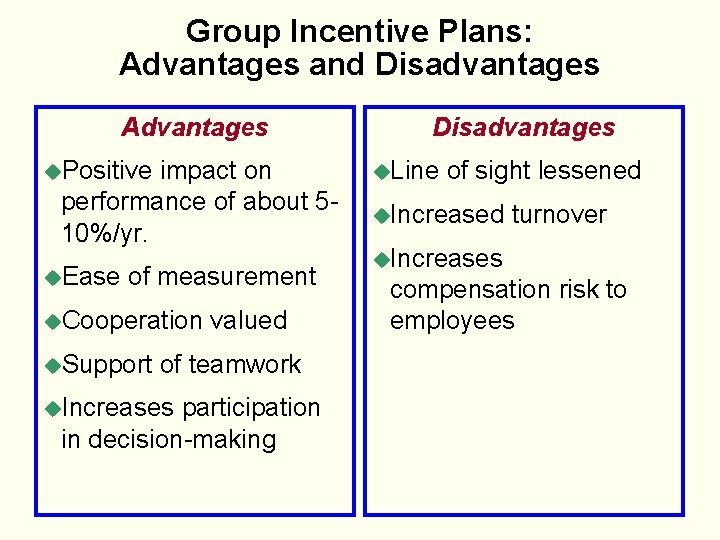
Group Incentive Plans: Advantages and Disadvantages Advantages u. Positive impact on performance of about 510%/yr. u. Ease of measurement u. Cooperation u. Support valued of teamwork u. Increases participation in decision-making Disadvantages u. Line of sight lessened u. Increased turnover u. Increases compensation risk to employees
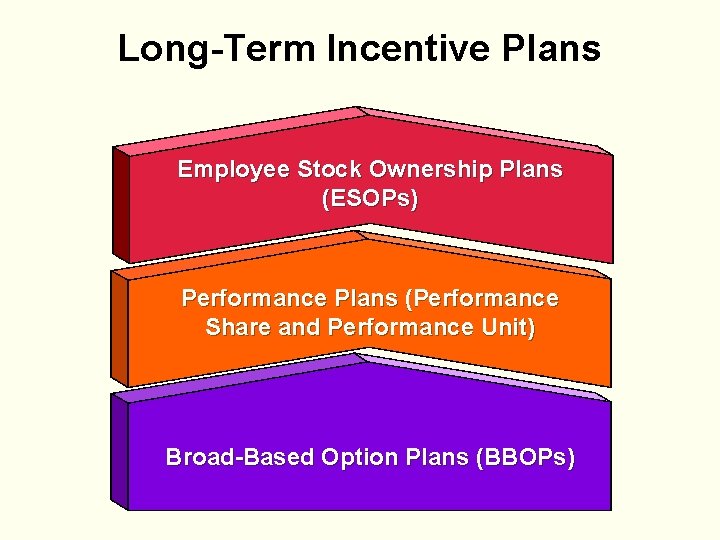
Long-Term Incentive Plans Employee Stock Ownership Plans (ESOPs) Performance Plans (Performance Share and Performance Unit) Broad-Based Option Plans (BBOPs)
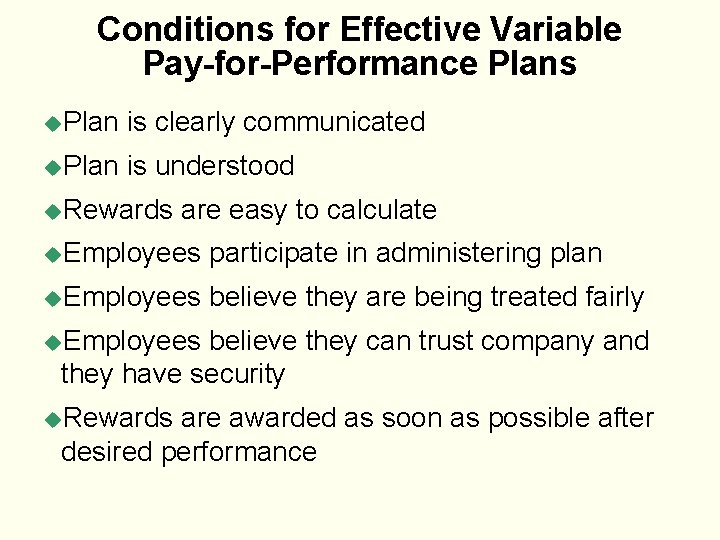
Conditions for Effective Variable Pay-for-Performance Plans u. Plan is clearly communicated u. Plan is understood u. Rewards are easy to calculate u. Employees participate in administering plan u. Employees believe they are being treated fairly u. Employees believe they can trust company and they have security u. Rewards are awarded as soon as possible after desired performance