
What is Past Tense The past tense tell

- Slides: 9
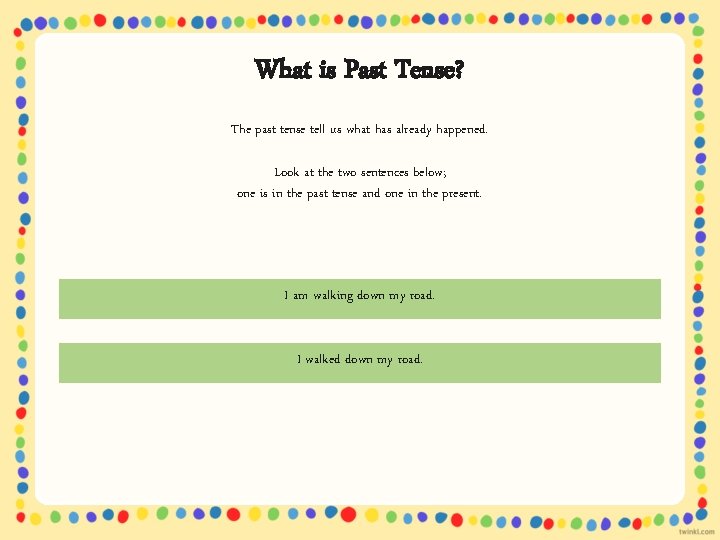
What is Past Tense? The past tense tell us what has already happened. Look at the two sentences below; one is in the past tense and one in the present. I am walking down my road. I walked down my road.
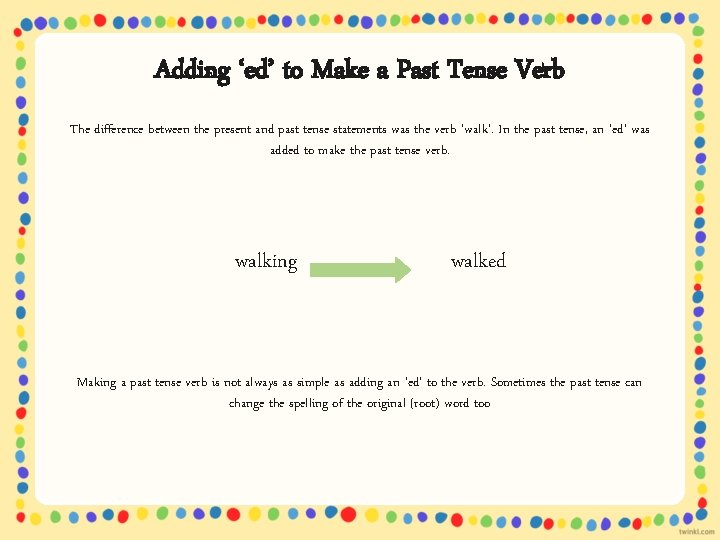
Adding ‘ed’ to Make a Past Tense Verb The difference between the present and past tense statements was the verb ‘walk’. In the past tense, an ‘ed’ was added to make the past tense verb. walking walked Making a past tense verb is not always as simple as adding an ‘ed’ to the verb. Sometimes the past tense can change the spelling of the original (root) word too
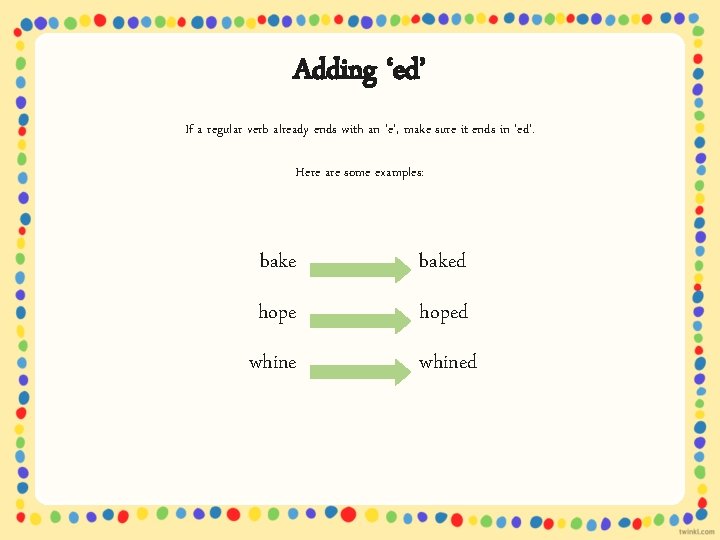
Adding ‘ed’ If a regular verb already ends with an ‘e’, make sure it ends in ‘ed’. Here are some examples: baked hoped whined
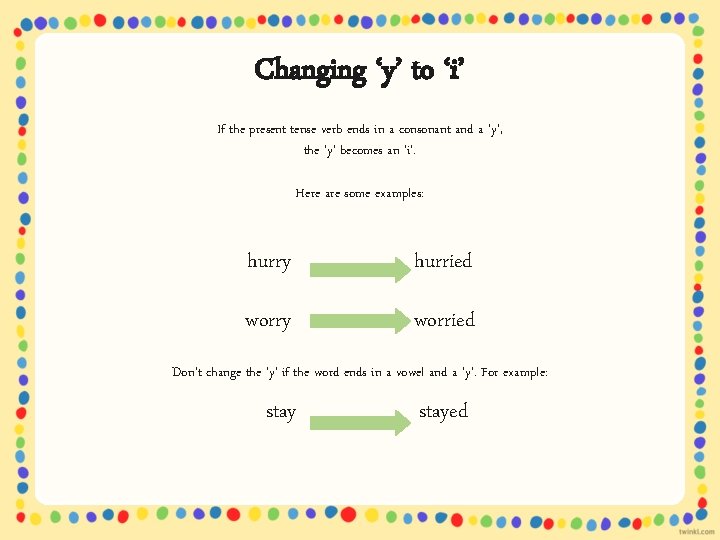
Changing ‘y’ to ‘i’ If the present tense verb ends in a consonant and a ‘y’, the ‘y’ becomes an ‘i’. Here are some examples: hurry hurried worry worried Don’t change the ‘y’ if the word ends in a vowel and a ‘y’. For example: stayed
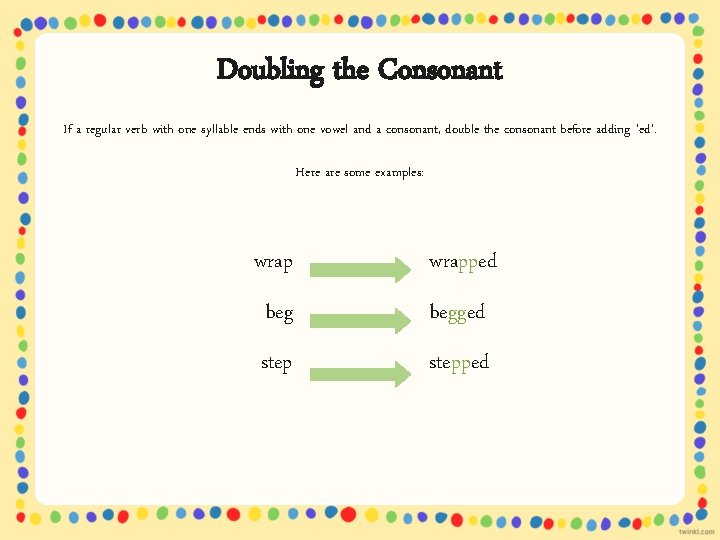
Doubling the Consonant If a regular verb with one syllable ends with one vowel and a consonant, double the consonant before adding ‘ed’. Here are some examples: wrapped begged stepped
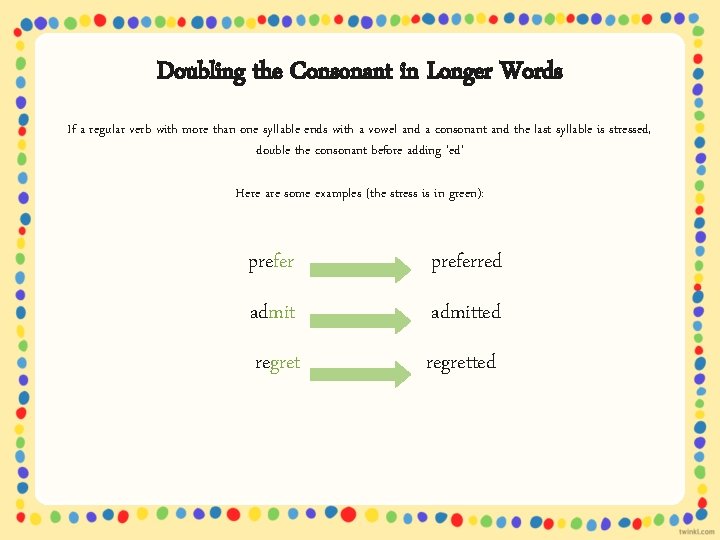
Doubling the Consonant in Longer Words If a regular verb with more than one syllable ends with a vowel and a consonant and the last syllable is stressed, double the consonant before adding ‘ed’ Here are some examples (the stress is in green): preferred admitted regretted
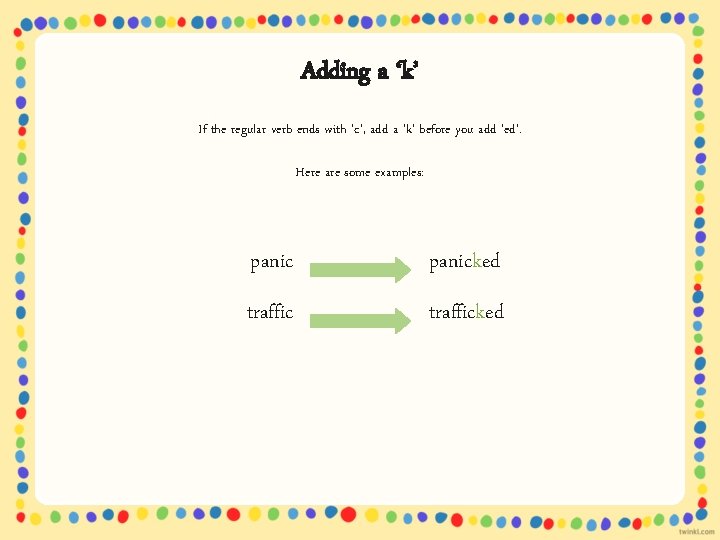
Adding a ‘k’ If the regular verb ends with ‘c’, add a ‘k’ before you add ‘ed’. Here are some examples: panicked trafficked