
What is Passivhaus by Piers Sadler t i
What is Passivhaus? by Piers Sadler
t i H P r e En P r e n E t i H
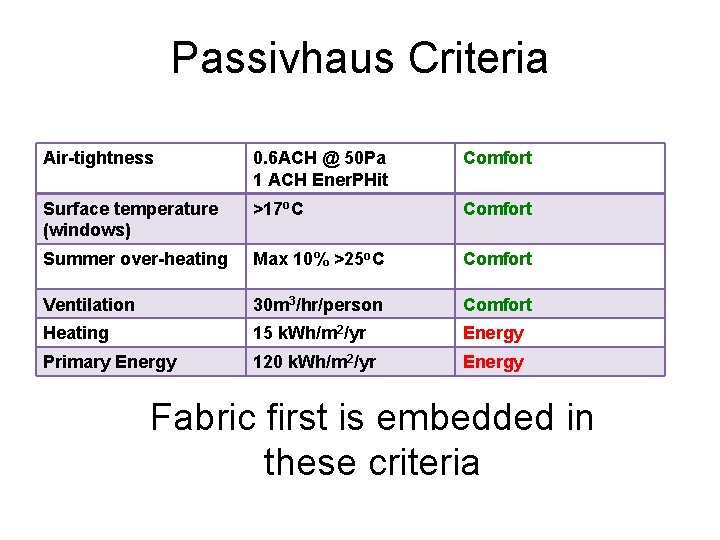
Passivhaus Criteria Air-tightness 0. 6 ACH @ 50 Pa 1 ACH Ener. PHit Comfort Surface temperature (windows) >17 o. C Comfort Summer over-heating Max 10% >25 o. C Comfort Ventilation 30 m 3/hr/person Comfort Heating 15 k. Wh/m 2/yr Energy Primary Energy 120 k. Wh/m 2/yr Energy Fabric first is embedded in these criteria
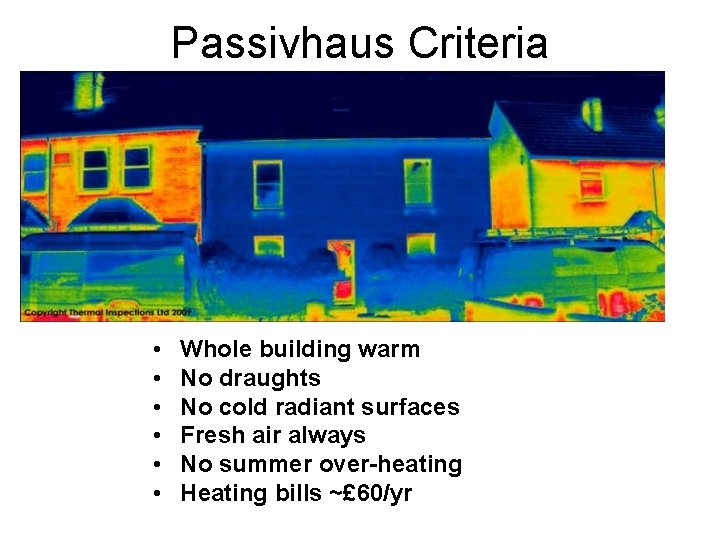
Passivhaus Criteria • • • Whole building warm No draughts No cold radiant surfaces Fresh air always No summer over-heating Heating bills ~£ 60/yr
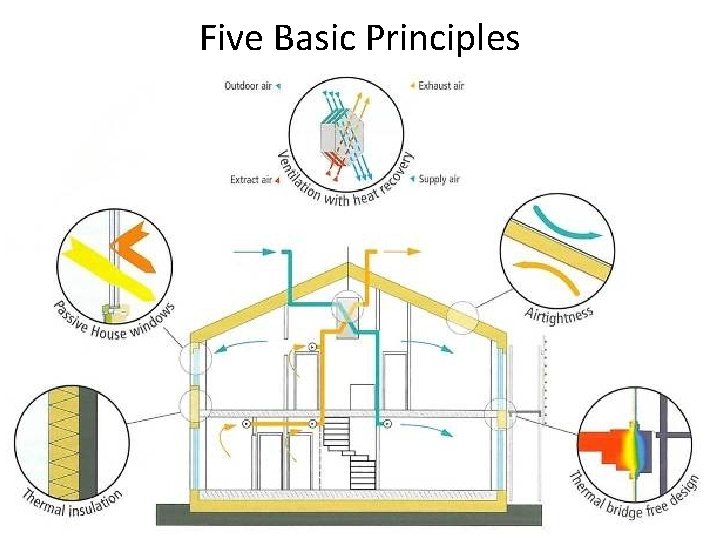
Five Basic Principles
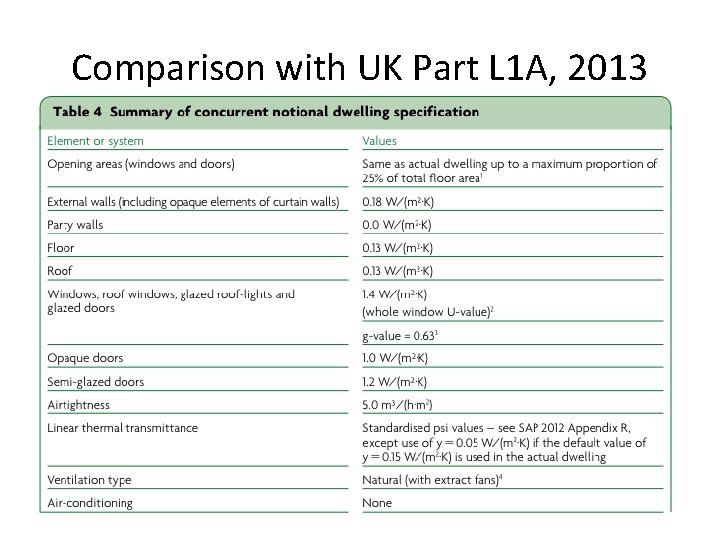
Comparison with UK Part L 1 A, 2013
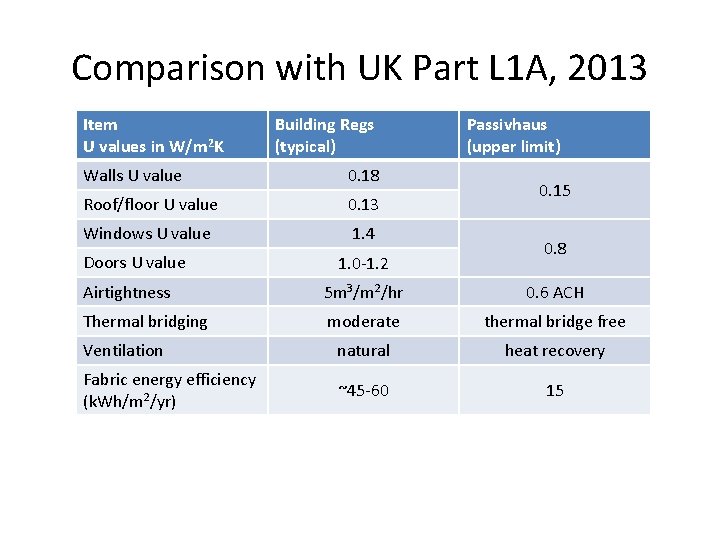
Comparison with UK Part L 1 A, 2013 Item U values in W/m 2 K Building Regs (typical) Walls U value 0. 18 Roof/floor U value 0. 13 Windows U value 1. 4 Doors U value 1. 0 -1. 2 Passivhaus (upper limit) 0. 15 0. 8 Airtightness 5 m 3/m 2/hr 0. 6 ACH Thermal bridging moderate thermal bridge free Ventilation natural heat recovery Fabric energy efficiency (k. Wh/m 2/yr) ~45 -60 15
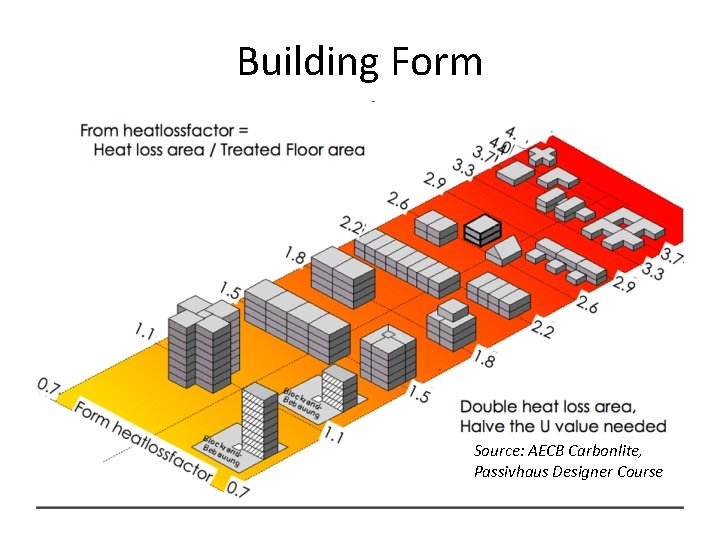
Building Form Source: AECB Carbonlite, Passivhaus Designer Course
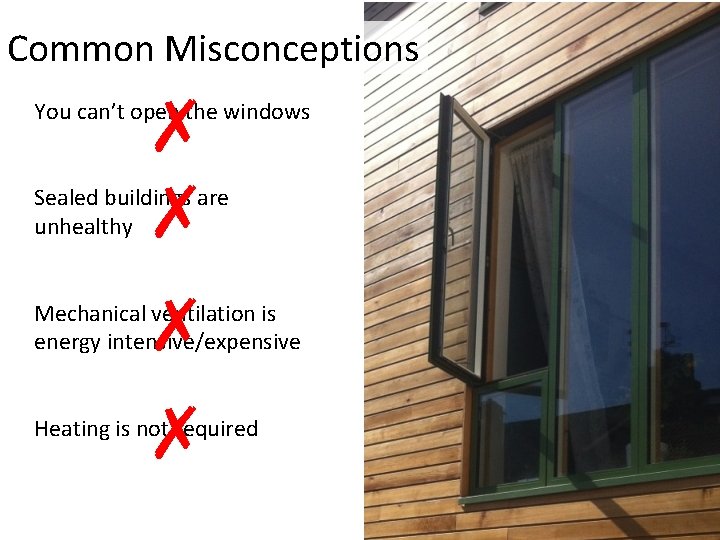
Common Misconceptions ✗ ✗ You can’t open the windows Sealed buildings are unhealthy ✗ ✗ Mechanical ventilation is energy intensive/expensive Heating is not required
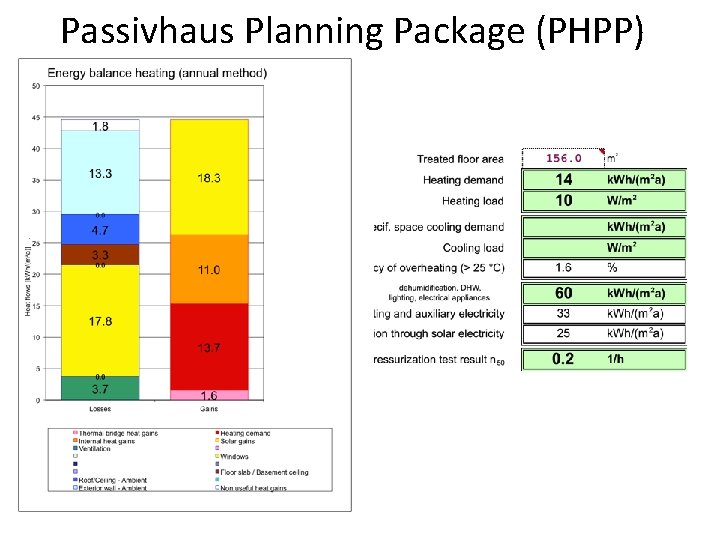
Passivhaus Planning Package (PHPP)
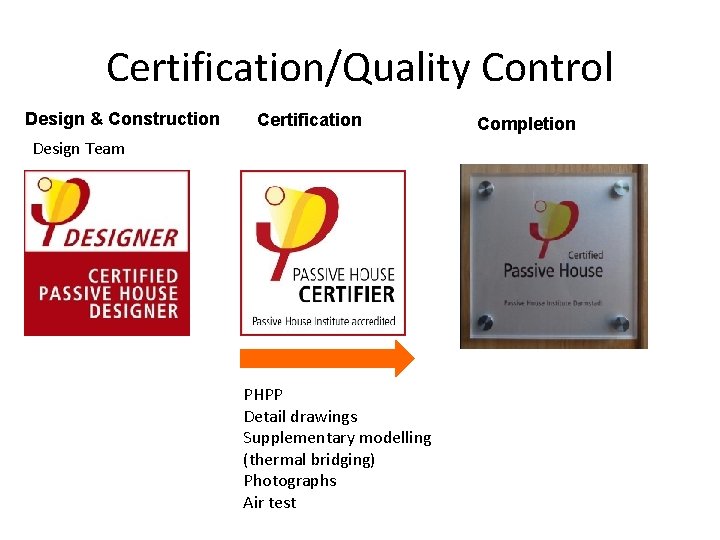
Certification/Quality Control Design & Construction Certification Design Team PHPP Detail drawings Supplementary modelling (thermal bridging) Photographs Air test Completion
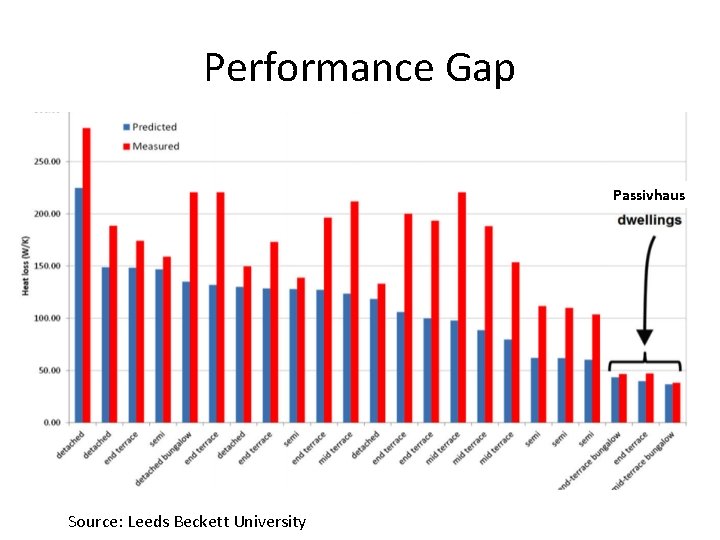
Performance Gap Passivhaus Source: Leeds Beckett University
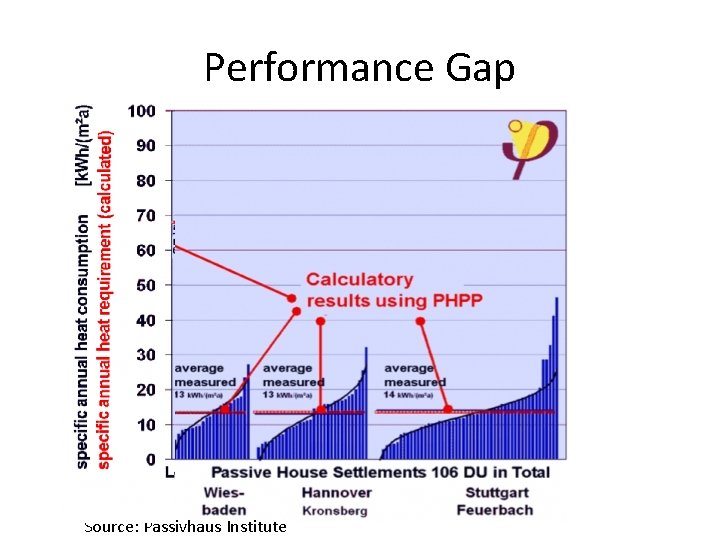
Performance Gap Source: Passivhaus Institute
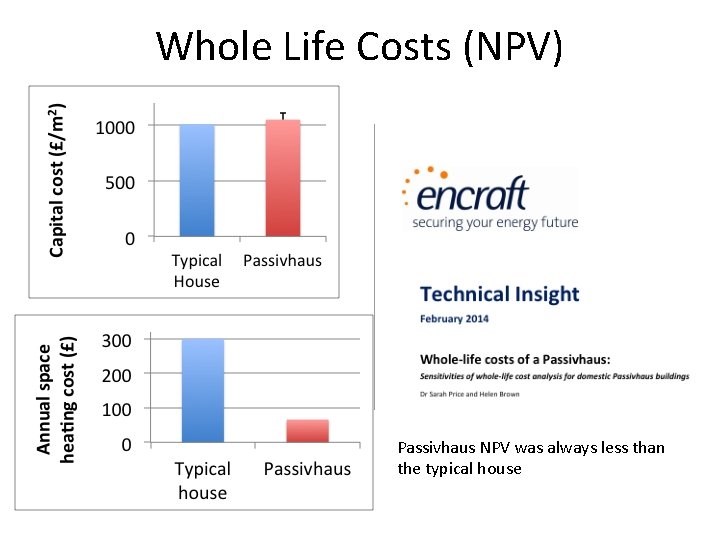
Whole Life Costs (NPV) Passivhaus NPV was always less than the typical house
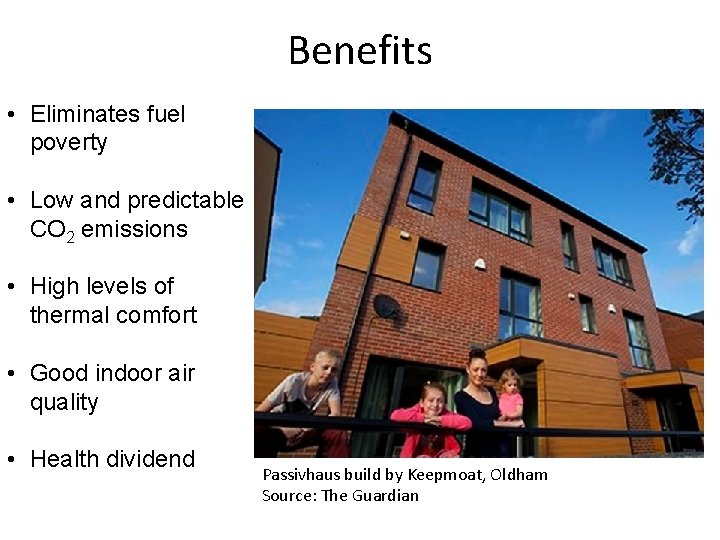
Benefits • Eliminates fuel poverty • Low and predictable CO 2 emissions • High levels of thermal comfort • Good indoor air quality • Health dividend Passivhaus build by Keepmoat, Oldham Source: The Guardian
So: What is Passivhaus? • • First rate thermal comfort Exceptional energy performance Excellent air quality Delivers on design intent Thank you www. piers-sadler. co. uk
- Slides: 16