
What Is Organizational Behavior ORGANIZATIONAL BEHAVIOR Compiled By
What Is Organizational Behavior ORGANIZATIONAL BEHAVIOR Compiled By: Dr. Asma Khizar S T E P H E N P. R O B B I N S E L E V E N T H © 2005 Prentice Hall Inc. All rights reserved. E D I T I O N WWW. PRENHALL. COM/ROBBINS Power. Point Presentation by Charlie Cook
Outline v Basic OB Model v Why to study OB v What is an Organizations v Types of Organizations v Components of Organization v The Basic System View of an Organization v Factors Affecting Organizations © 2005 Prentice Hall Inc. All rights reserved. 1– 1
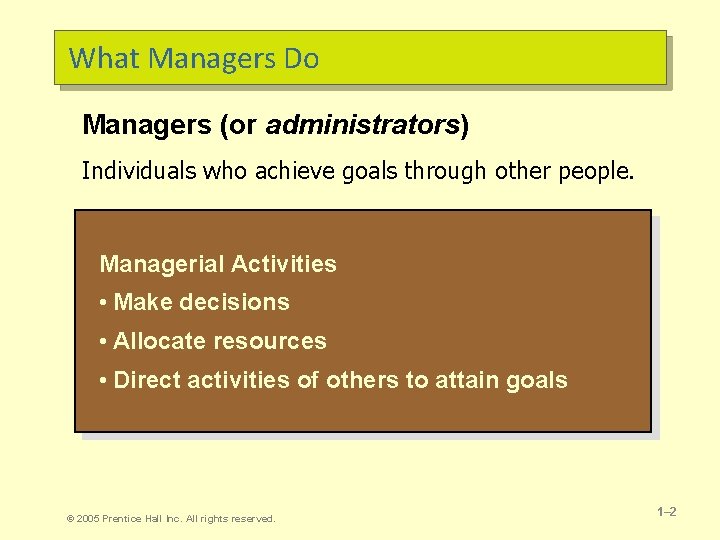
What Managers Do Managers (or administrators) Individuals who achieve goals through other people. Managerial Activities • Make decisions • Allocate resources • Direct activities of others to attain goals © 2005 Prentice Hall Inc. All rights reserved. 1– 2
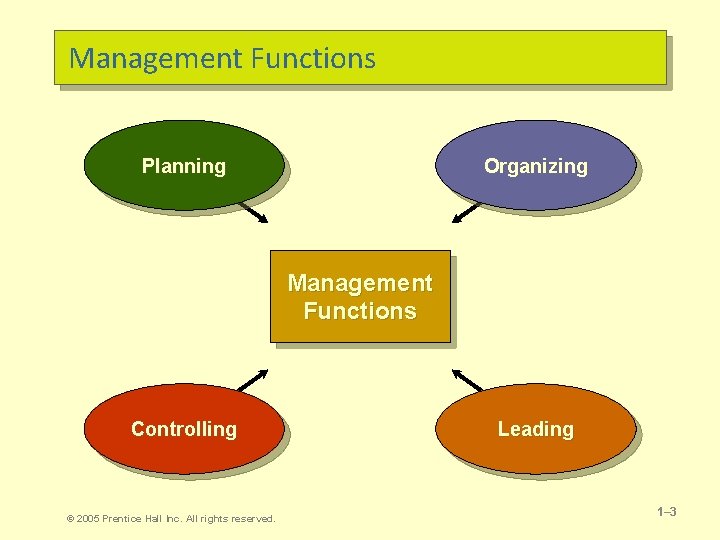
Management Functions Planning Organizing Management Functions Controlling © 2005 Prentice Hall Inc. All rights reserved. Leading 1– 3
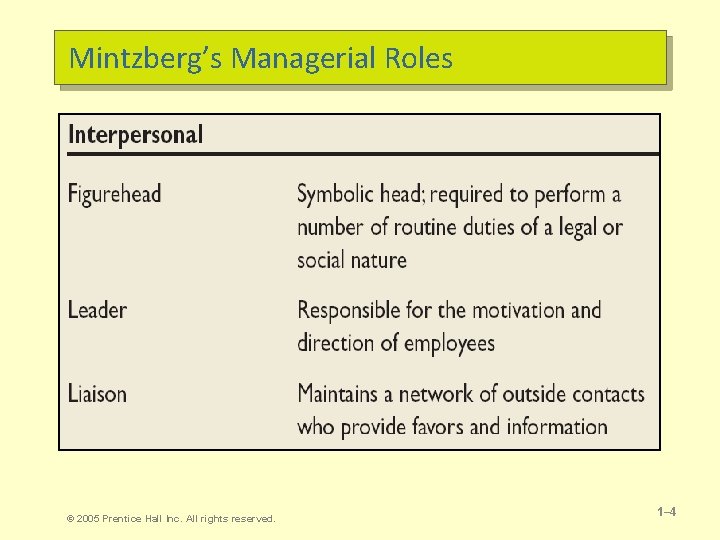
Mintzberg’s Managerial Roles © 2005 Prentice Hall Inc. All rights reserved. 1– 4
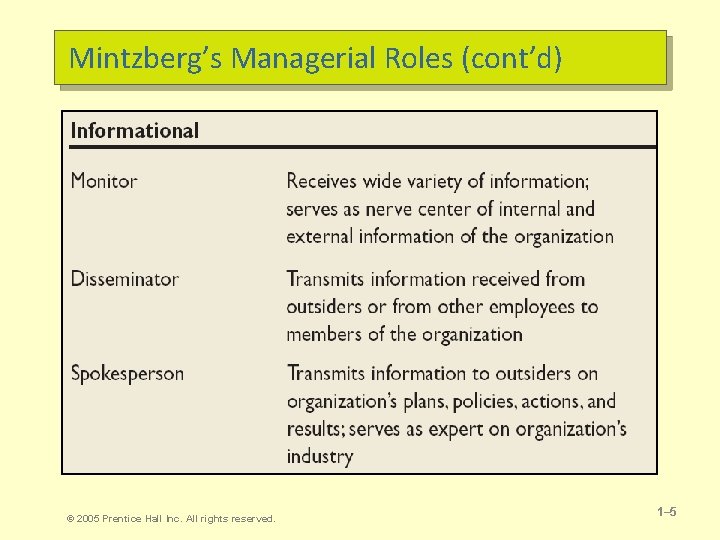
Mintzberg’s Managerial Roles (cont’d) © 2005 Prentice Hall Inc. All rights reserved. 1– 5
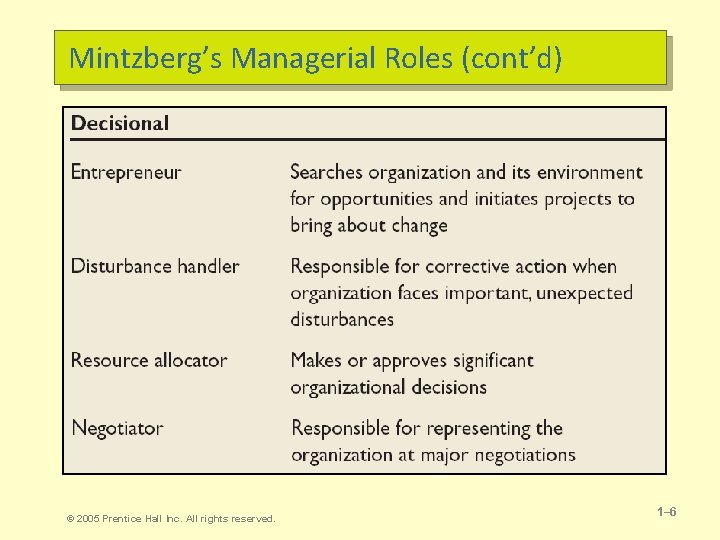
Mintzberg’s Managerial Roles (cont’d) © 2005 Prentice Hall Inc. All rights reserved. 1– 6
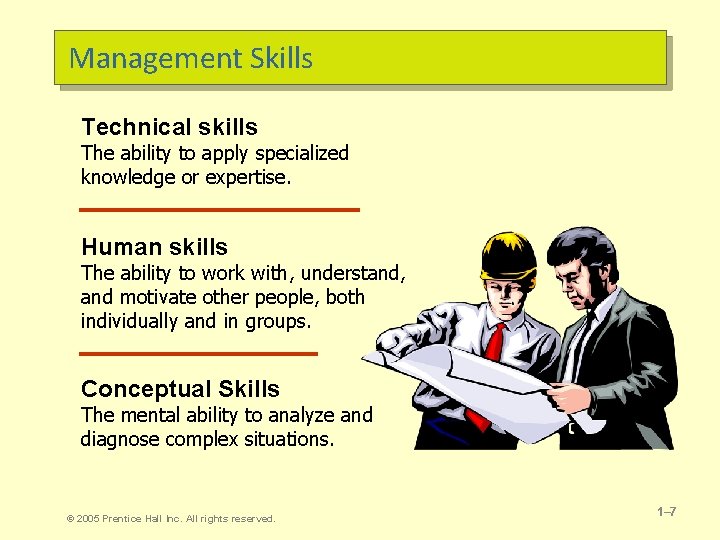
Management Skills Technical skills The ability to apply specialized knowledge or expertise. Human skills The ability to work with, understand, and motivate other people, both individually and in groups. Conceptual Skills The mental ability to analyze and diagnose complex situations. © 2005 Prentice Hall Inc. All rights reserved. 1– 7
Behavioral/Human Relation Management Emerged from 1920 Ø Focused on the notion that work was done by people Ø Need to focus on human element Ø people are the most important asset of an organization Ø Organizational Behavior (OB) – The study of the actions of people at work. – It was a movement started from Hawthorne Studies 2– 8
Organizational Course ØThis course is a study of human and work behavior in the workplace and within society ØHow People behave in organizations ØHow Organizations use human resources to achieve goals
Organizational Behavior The study of individual behavior and group dynamics in organizational settings © 2005 Prentice Hall Inc. All rights reserved. 1– 10
Organizational Behavior A field of study that investigates the impact that individuals, groups, and structure have on behavior within organizations, for the purpose of applying such knowledge toward improving an organization’s effectiveness. © 2005 Prentice Hall Inc. All rights reserved. 1– 11
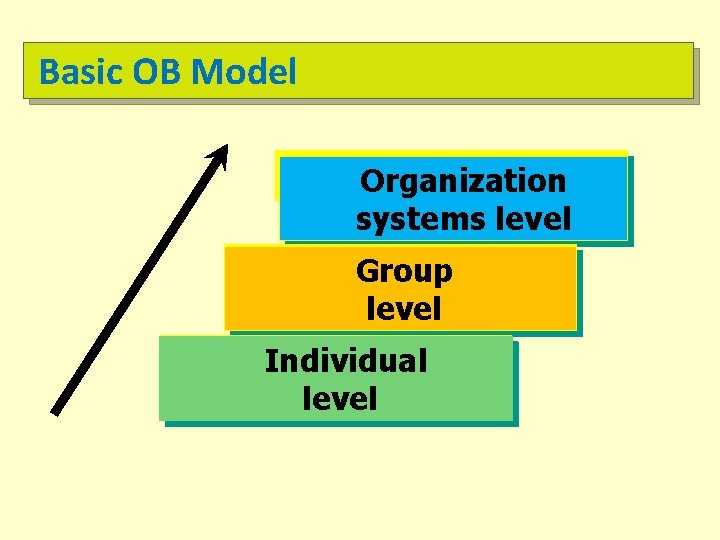
Basic OB Model Organization systems level Group level Individual level
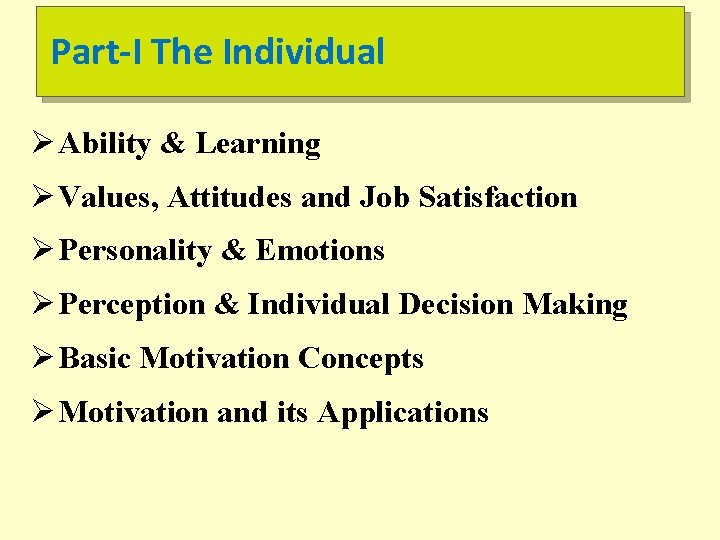
Part-I The Individual Ø Ability & Learning Ø Values, Attitudes and Job Satisfaction Ø Personality & Emotions Ø Perception & Individual Decision Making Ø Basic Motivation Concepts Ø Motivation and its Applications
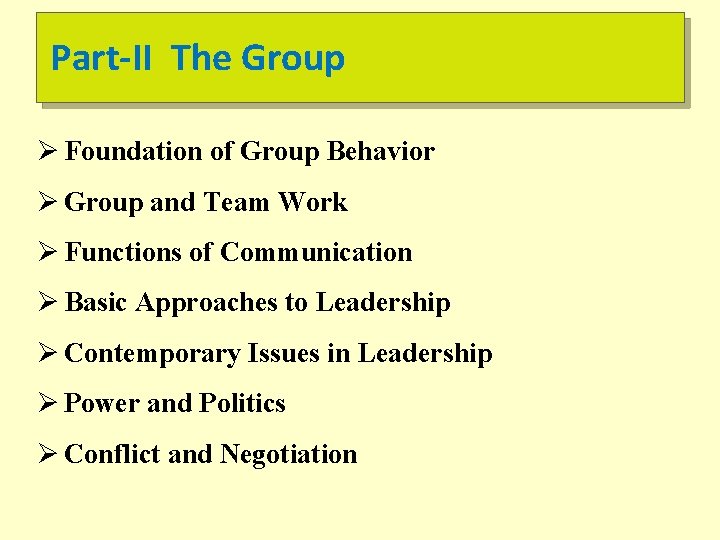
Part-II The Group Ø Foundation of Group Behavior Ø Group and Team Work Ø Functions of Communication Ø Basic Approaches to Leadership Ø Contemporary Issues in Leadership Ø Power and Politics Ø Conflict and Negotiation
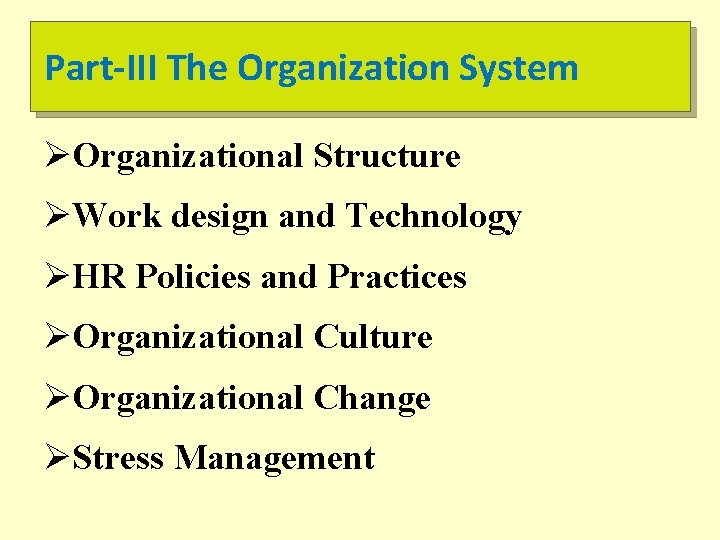
Part-III The Organization System ØOrganizational Structure ØWork design and Technology ØHR Policies and Practices ØOrganizational Culture ØOrganizational Change ØStress Management
Recommended Books Organizational Behavior by Stephen P. Robbins OR Behavior in Organizations by J. Greenberg and R. A. Baron OR Organizational Behavior by Fred Luthans OR Understanding Organizational Behavior , by Debra L. Nelson and James Campbell Quick. OR Any book on this subject available in the market.
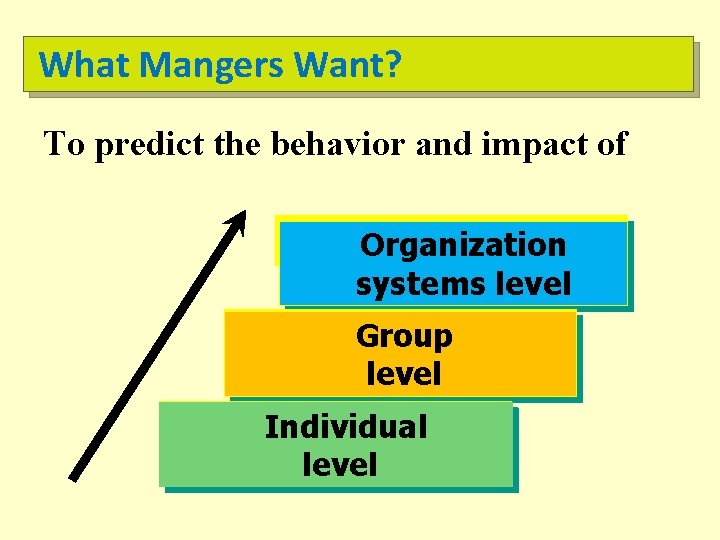
What Mangers Want? To predict the behavior and impact of Organization systems level Group level Individual level
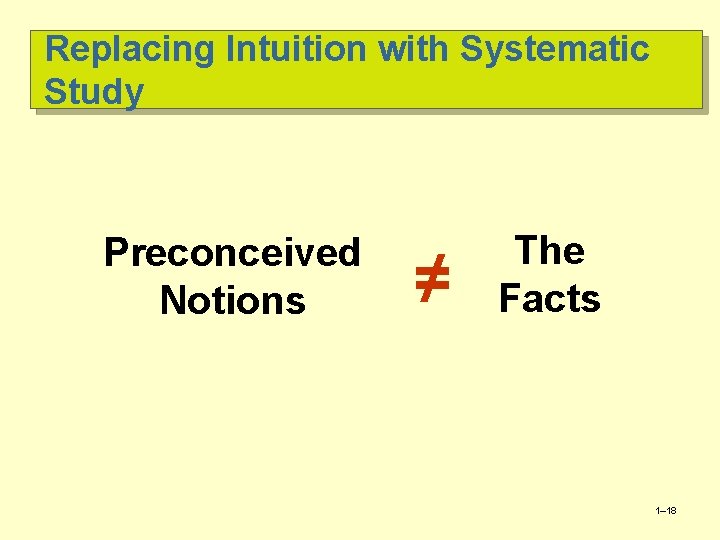
Replacing Intuition with Systematic Study Preconceived Notions ≠ The Facts 1– 18
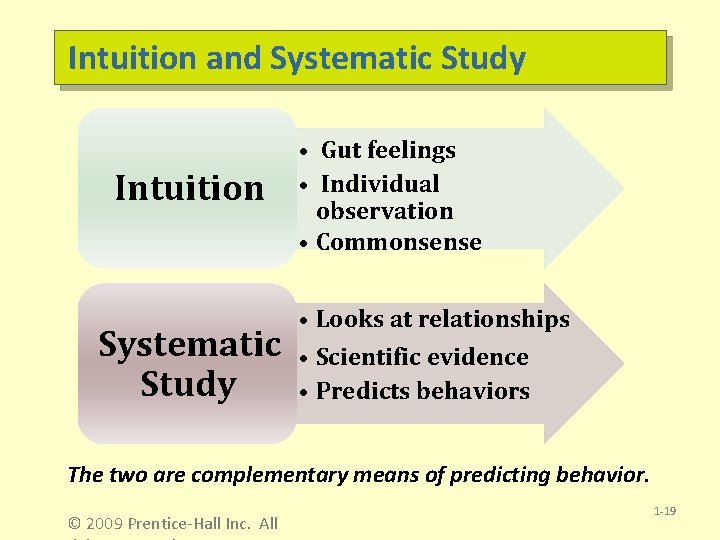
Intuition and Systematic Study Intuition Systematic Study • Gut feelings • Individual observation • Commonsense • Looks at relationships • Scientific evidence • Predicts behaviors The two are complementary means of predicting behavior. © 2009 Prentice-Hall Inc. All 1 -19
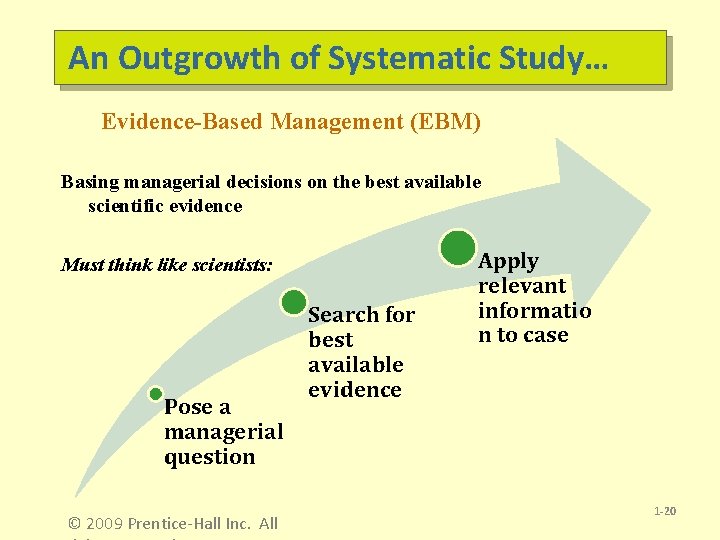
An Outgrowth of Systematic Study… Evidence-Based Management (EBM) Basing managerial decisions on the best available scientific evidence Must think like scientists: Pose a managerial question © 2009 Prentice-Hall Inc. All Search for best available evidence Apply relevant informatio n to case 1 -20
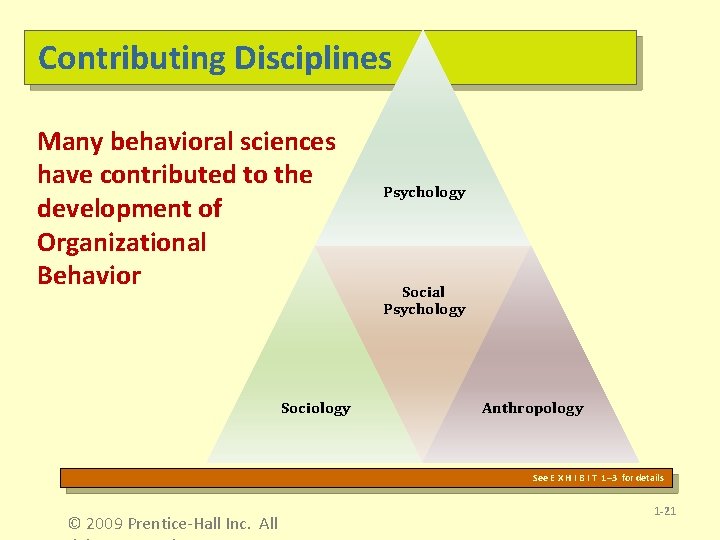
Contributing Disciplines Many behavioral sciences have contributed to the development of Organizational Behavior Sociology Psychology Social Psychology Anthropology See E X H I B I T 1– 3 for details © 2009 Prentice-Hall Inc. All 1 -21
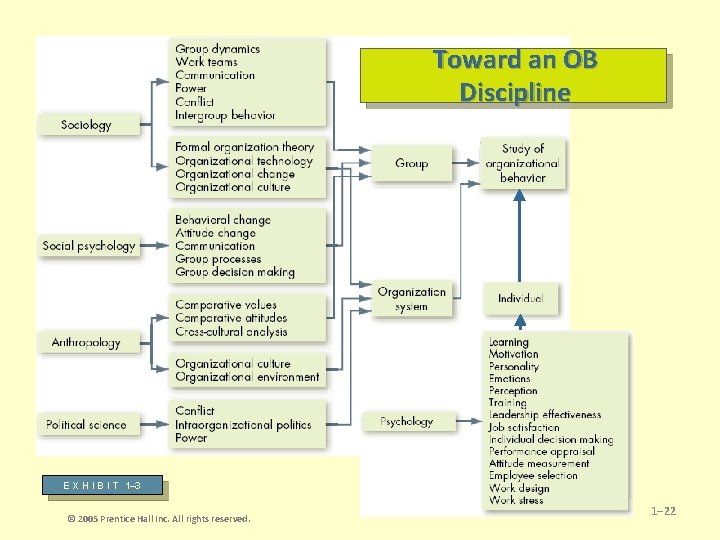
Toward an OB Discipline E X H I B I T 1– 3 © 2005 Prentice Hall Inc. All rights reserved. 1– 22
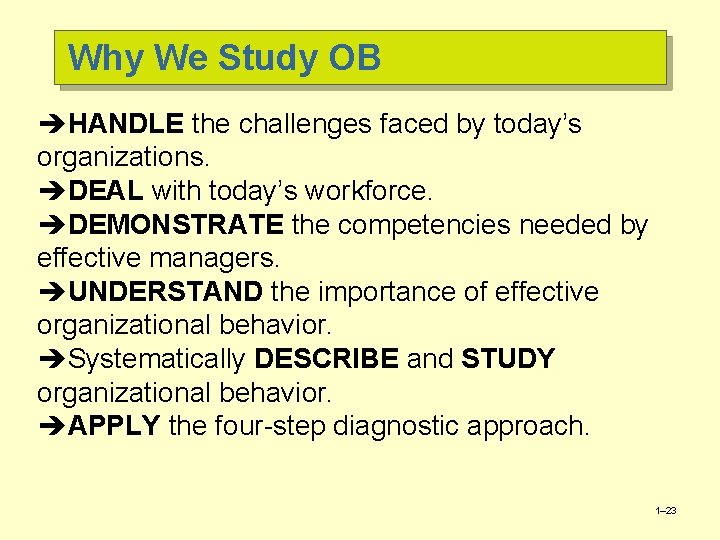
Why We Study OB èHANDLE the challenges faced by today’s organizations. èDEAL with today’s workforce. èDEMONSTRATE the competencies needed by effective managers. èUNDERSTAND the importance of effective organizational behavior. èSystematically DESCRIBE and STUDY organizational behavior. èAPPLY the four-step diagnostic approach. 1– 23
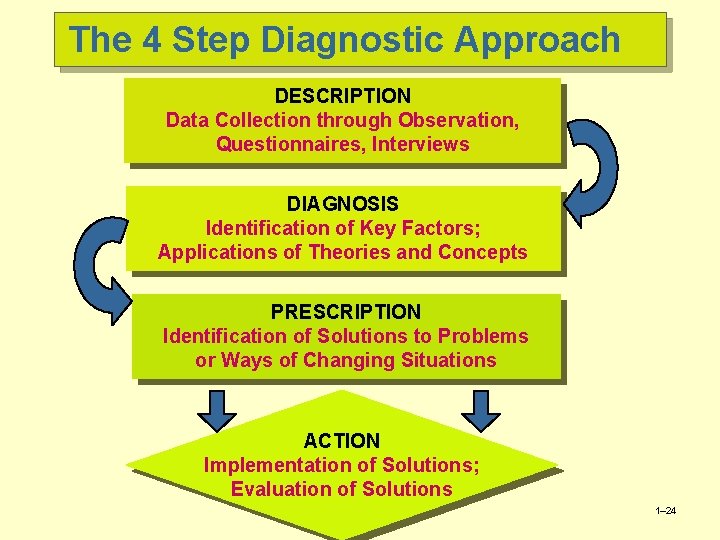
The 4 Step Diagnostic Approach DESCRIPTION Data Collection through Observation, Questionnaires, Interviews DIAGNOSIS Identification of Key Factors; Applications of Theories and Concepts PRESCRIPTION Identification of Solutions to Problems or Ways of Changing Situations ACTION Implementation of Solutions; Evaluation of Solutions 1– 24
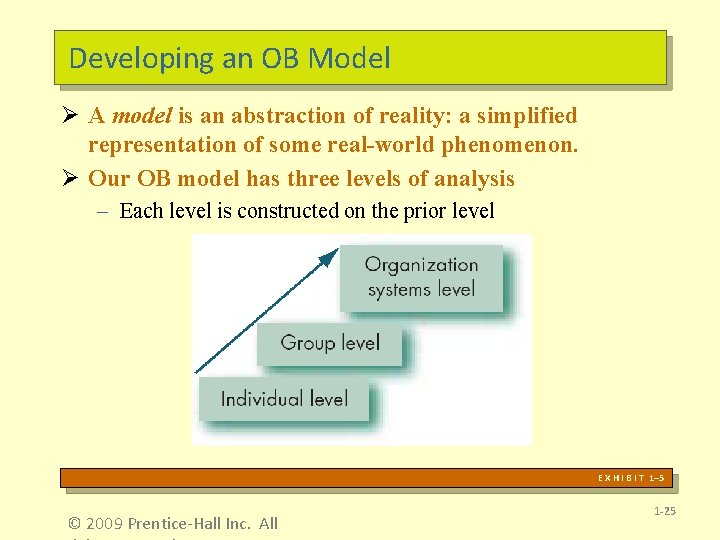
Developing an OB Model Ø A model is an abstraction of reality: a simplified representation of some real-world phenomenon. Ø Our OB model has three levels of analysis – Each level is constructed on the prior level E X H I B I T 1– 5 © 2009 Prentice-Hall Inc. All 1 -25
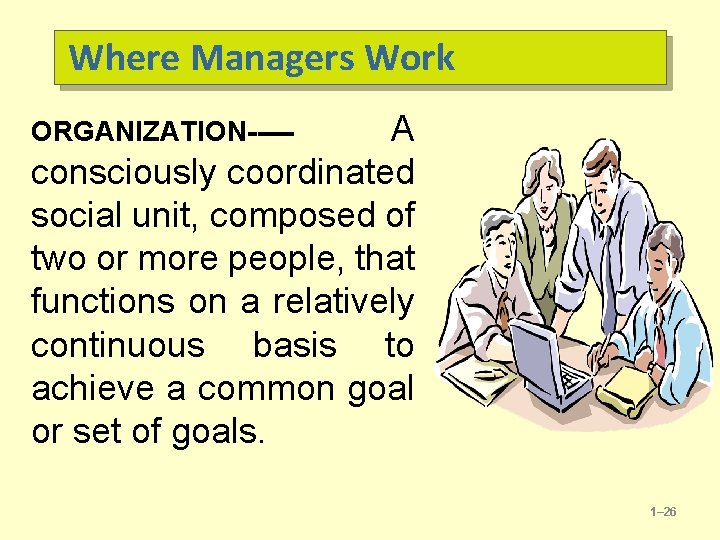
Where Managers Work A consciously coordinated social unit, composed of two or more people, that functions on a relatively continuous basis to achieve a common goal or set of goals. ORGANIZATION----- 1– 26
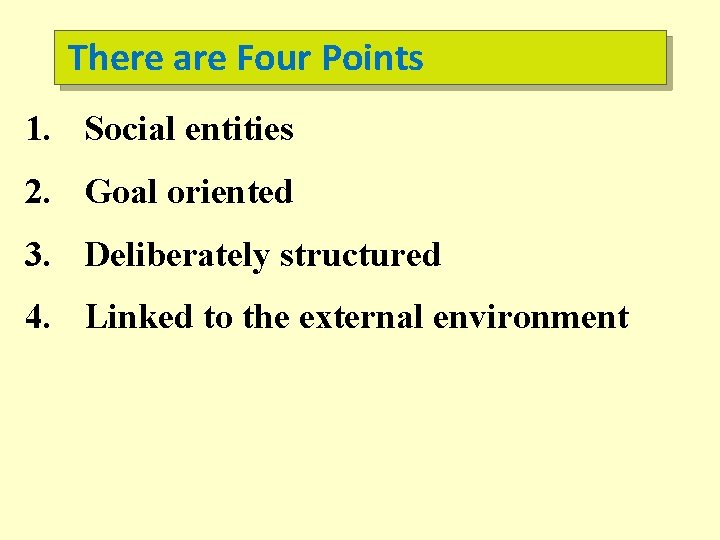
There are Four Points 1. Social entities 2. Goal oriented 3. Deliberately structured 4. Linked to the external environment
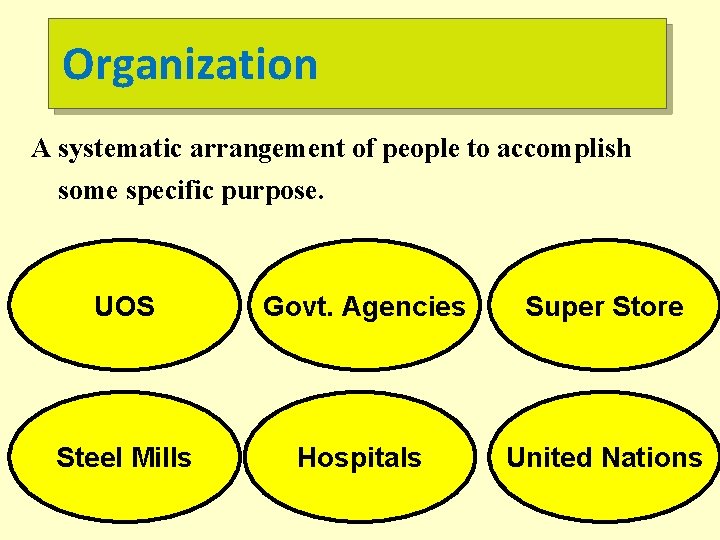
Organization A systematic arrangement of people to accomplish some specific purpose. UOS Govt. Agencies Super Store Steel Mills Hospitals United Nations
Components of Organization Task - an organization’s mission, purpose, or goal for existing People - the human resources of the organization Structure - the manner in which an organization’s work is designed at the micro level; how departments, divisions, & the overall organization are designed at the macro level Technology - the intellectual and mechanical processes used by an organization to transform inputs into products or services that meet organizational goals
Types of Organization Ø Formal Organization - the part of the organization that has legitimacy and official recognition Ø Informal Organization - the unofficial part of the organization
Why do we have Organizations? They are more efficient than individuals acting independently Synergy means 1+1=11
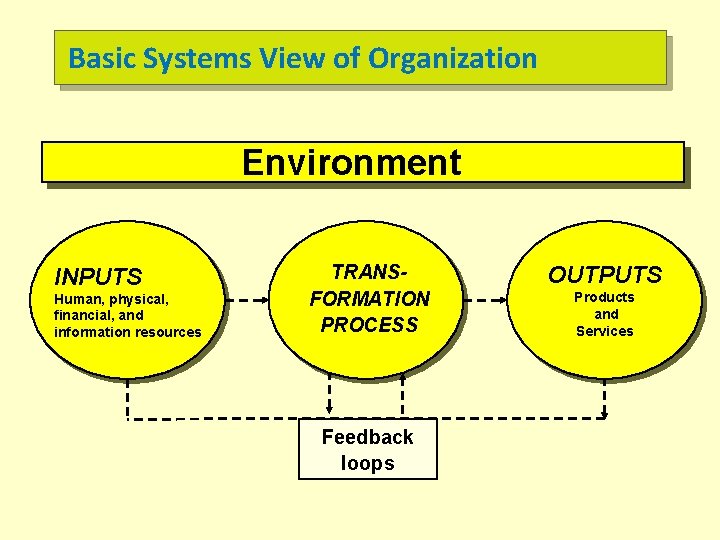
Basic Systems View of Organization Environment INPUTS Human, physical, financial, and information resources TRANSFORMATION PROCESS Feedback loops OUTPUTS Products and Services
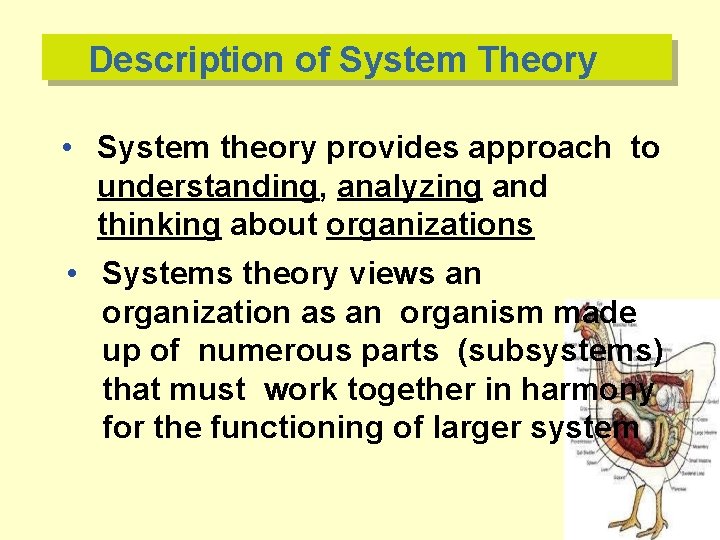
Description of System Theory • System theory provides approach to understanding, analyzing and thinking about organizations • Systems theory views an organization as an organism made up of numerous parts (subsystems) that must work together in harmony for the functioning of larger system

System Theory? A group of interrelated components working together towards a common goal by accepting input and producing output in an organized transformation process
Elements of System Theory Input: Input is what data the system receives to produce a certain output. Output: What goes out from the system after being processed is known as Output. Processing: The process involved to transform input into output is known as Processing. Control: In order to get the desired results it is essential to monitor and control the input, Processing and the output of the system. This job is done by the control.
Elements of System Theory Feedback: The Output is checked with the desired standards of the output set and the necessary steps are taken for achieving the output as per the standards, this process is called as Feedback. It helps to achieve a much better control in the system. Boundaries: The boundaries are nothing but the limit of the system. Setting up boundaries helps for better concentration of the actives carried in the system.
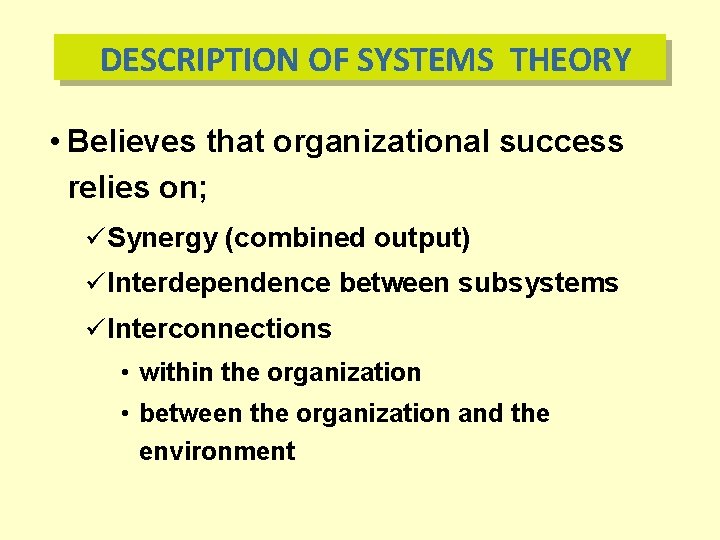
DESCRIPTION OF SYSTEMS THEORY • Believes that organizational success relies on; Synergy (combined output) Interdependence between subsystems Interconnections • within the organization • between the organization and the environment
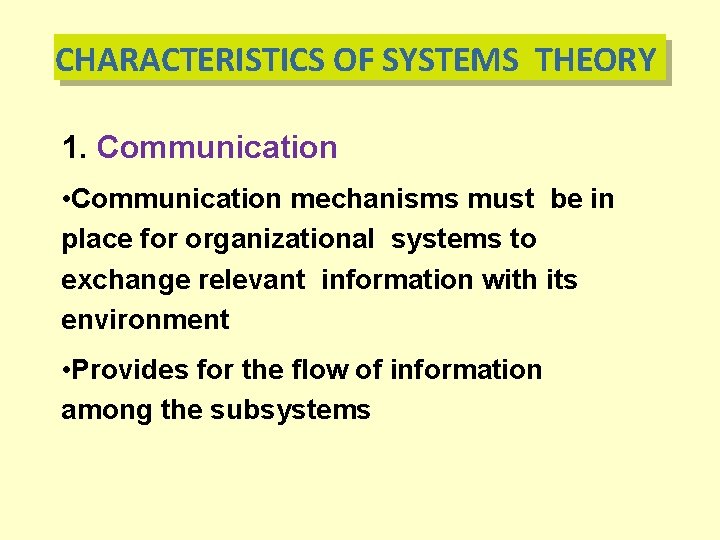
CHARACTERISTICS OF SYSTEMS THEORY 1. Communication • Communication mechanisms must be in place for organizational systems to exchange relevant information with its environment • Provides for the flow of information among the subsystems
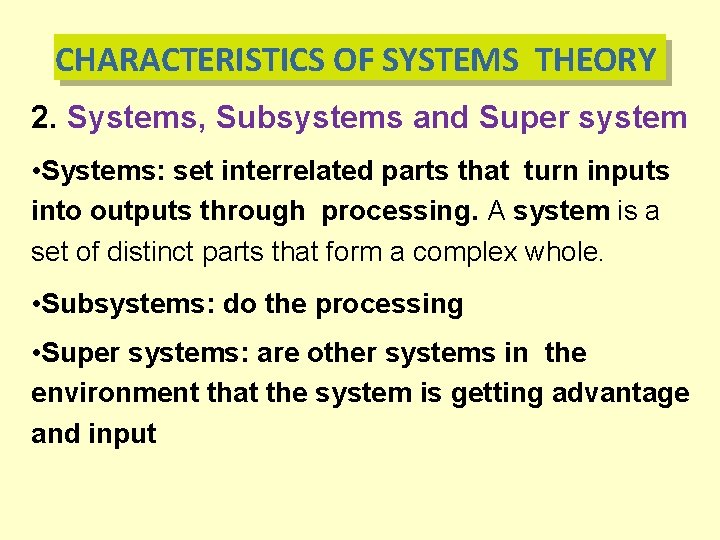
CHARACTERISTICS OF SYSTEMS THEORY 2. Systems, Subsystems and Super system • Systems: set interrelated parts that turn inputs into outputs through processing. A system is a set of distinct parts that form a complex whole. • Subsystems: do the processing • Super systems: are other systems in the environment that the system is getting advantage and input
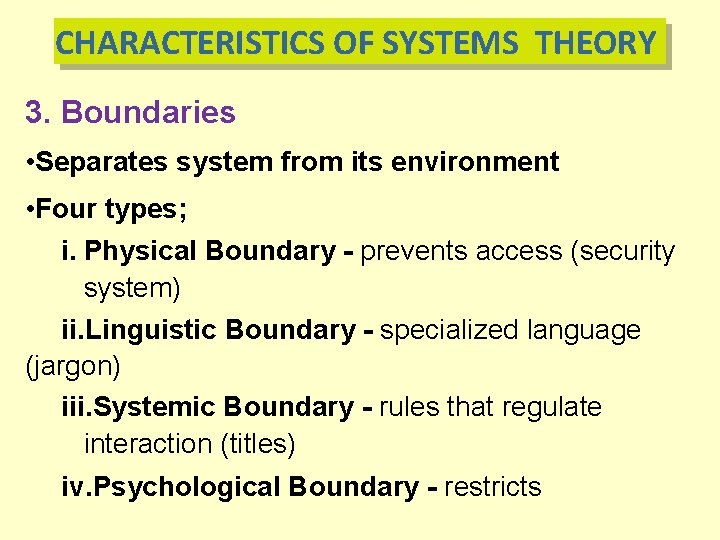
CHARACTERISTICS OF SYSTEMS THEORY 3. Boundaries • Separates system from its environment • Four types; i. Physical Boundary - prevents access (security system) ii. Linguistic Boundary - specialized language (jargon) iii. Systemic Boundary - rules that regulate interaction (titles) iv. Psychological Boundary - restricts
CHARACTERISTICS OF SYSTEMS THEORY 4. Goal-directedness • Systems are goal oriented and engage in feedback in order to meet the goals of the organisation
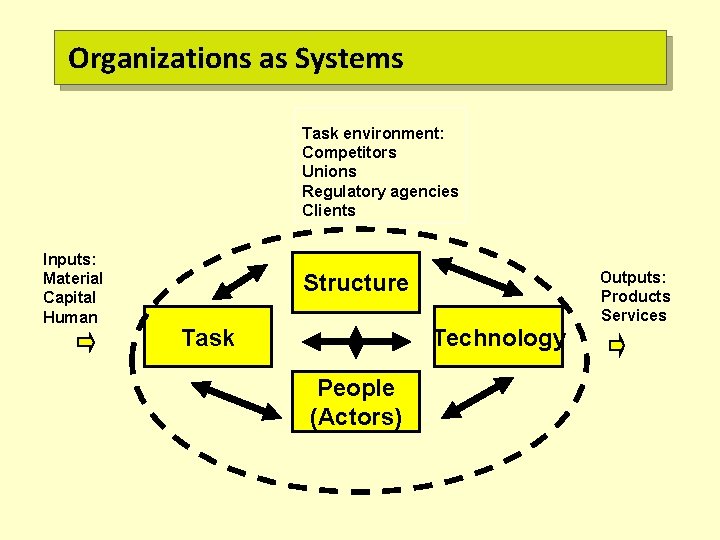
Organizations as Systems Task environment: Competitors Unions Regulatory agencies Clients Inputs: Material Capital Human Structure Task Technology People (Actors) Organizational Boundary Outputs: Products Services
Factors Affecting Organizations Open vs Closed system ØOrganizational Environment ØTechnological Environment ØOrganizational Process
Watchwords for Organizations in These Changing Times
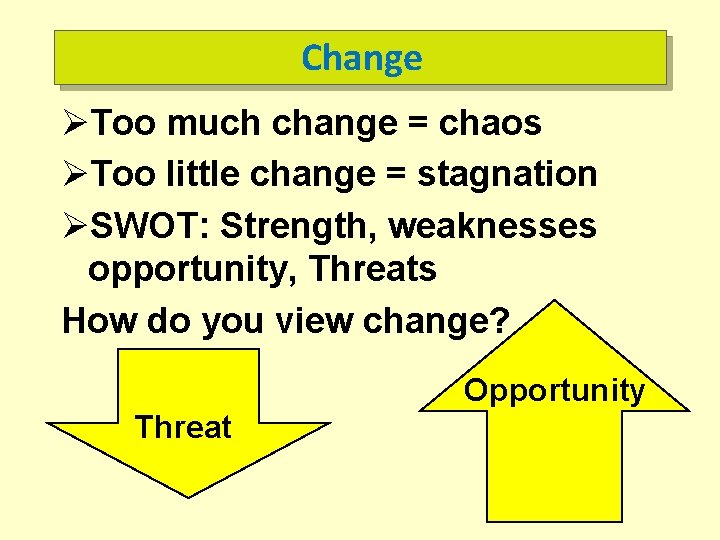
Change ØToo much change = chaos ØToo little change = stagnation ØSWOT: Strength, weaknesses opportunity, Threats How do you view change? Opportunity Threat
- Slides: 46