
WHAT IS NEW IN THE 2018 SPHERE HANDBOOK

WHAT IS NEW IN THE 2018 SPHERE HANDBOOK? NOVEMBER 2018
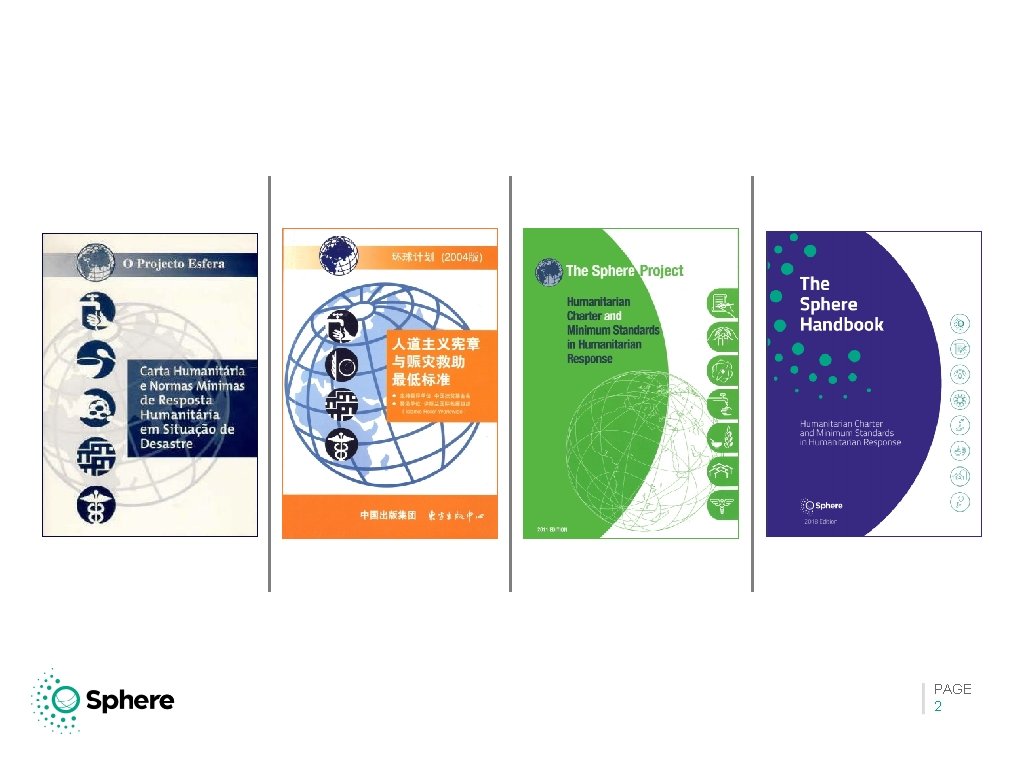
PAGE 2
Learning objectives By the end of this session, you will be able to recall: • the challenges in the sector which became the drivers of the Handbook revision, • the approach to and results of the revision process, Knowledge • the key changes between the 2011 and 2018 editions, • how Sphere has evolved and what new products are on offer; and you will be able to discuss: • how the 2018 edition is adapted to the current contexts in which its users operate. Comprehension PAGE 3
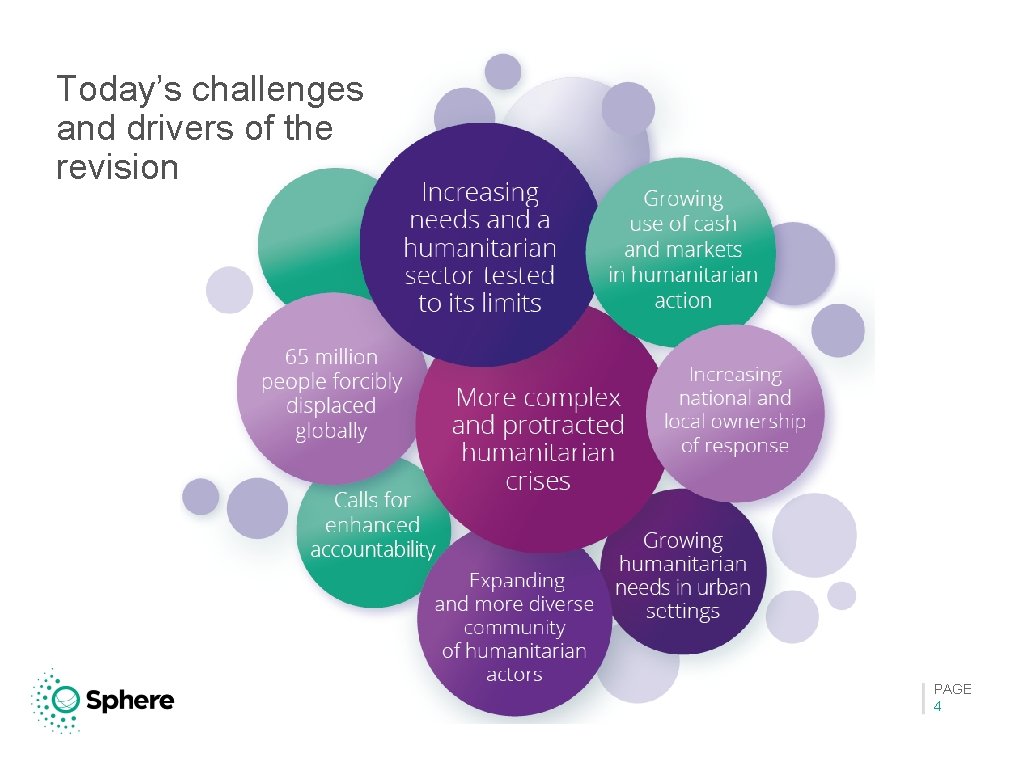
Today’s challenges and drivers of the revision PAGE 4
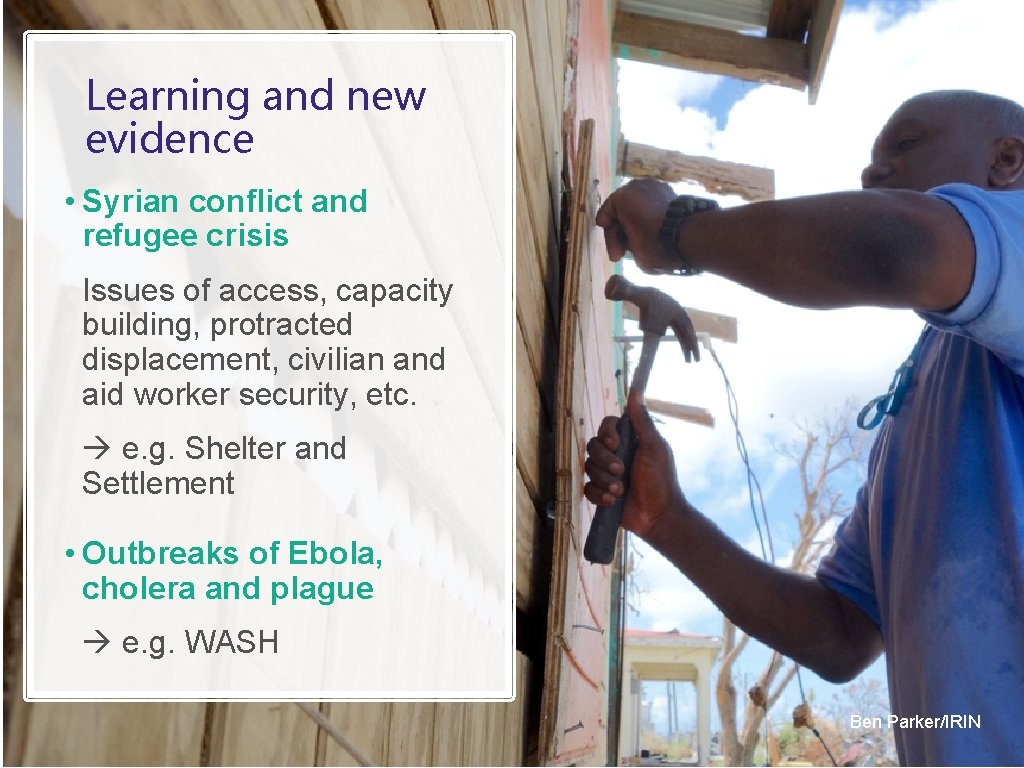
Learning and new evidence • Syrian conflict and refugee crisis Issues of access, capacity building, protracted displacement, civilian and aid worker security, etc. e. g. Shelter and Settlement • Outbreaks of Ebola, cholera and plague e. g. WASH PAGE Ben Parker/IRIN
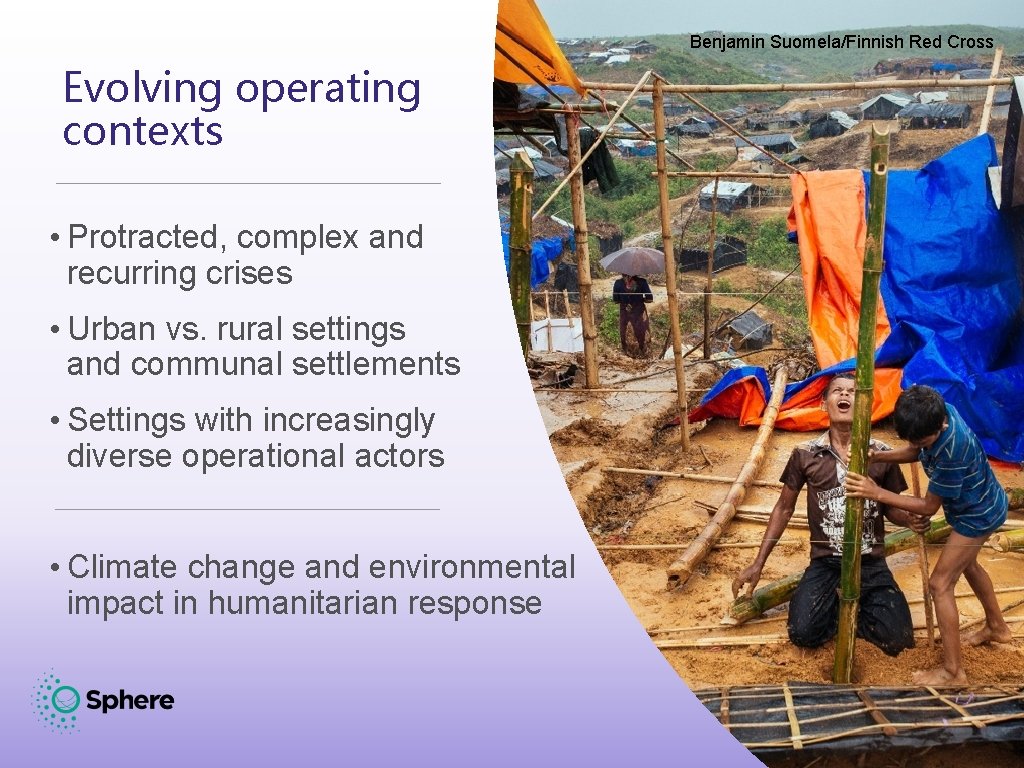
Benjamin Suomela/Finnish Red Cross Evolving operating contexts • Protracted, complex and recurring crises • Urban vs. rural settings and communal settlements • Settings with increasingly diverse operational actors • Climate change and environmental impact in humanitarian response PAGE
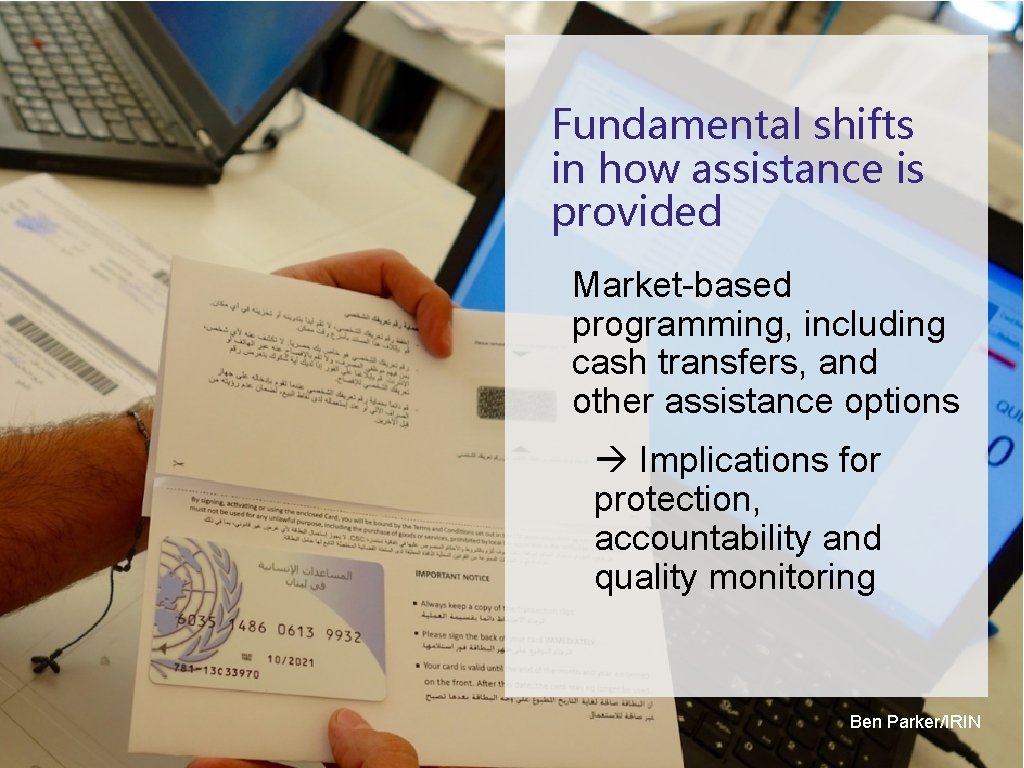
Fundamental shifts in how assistance is provided Market-based programming, including cash transfers, and other assistance options Implications for protection, accountability and quality monitoring PAGE Ben Parker/IRIN
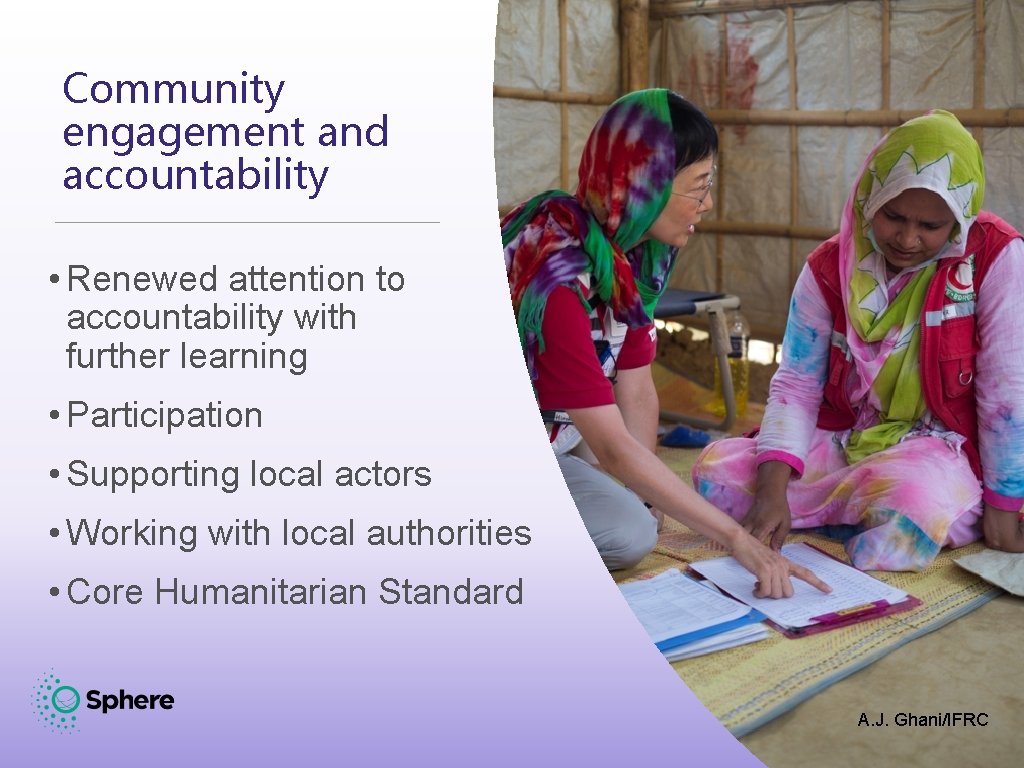
Community engagement and accountability • Renewed attention to accountability with further learning • Participation • Supporting local actors • Working with local authorities • Core Humanitarian Standard PAGE A. J. Ghani/IFRC
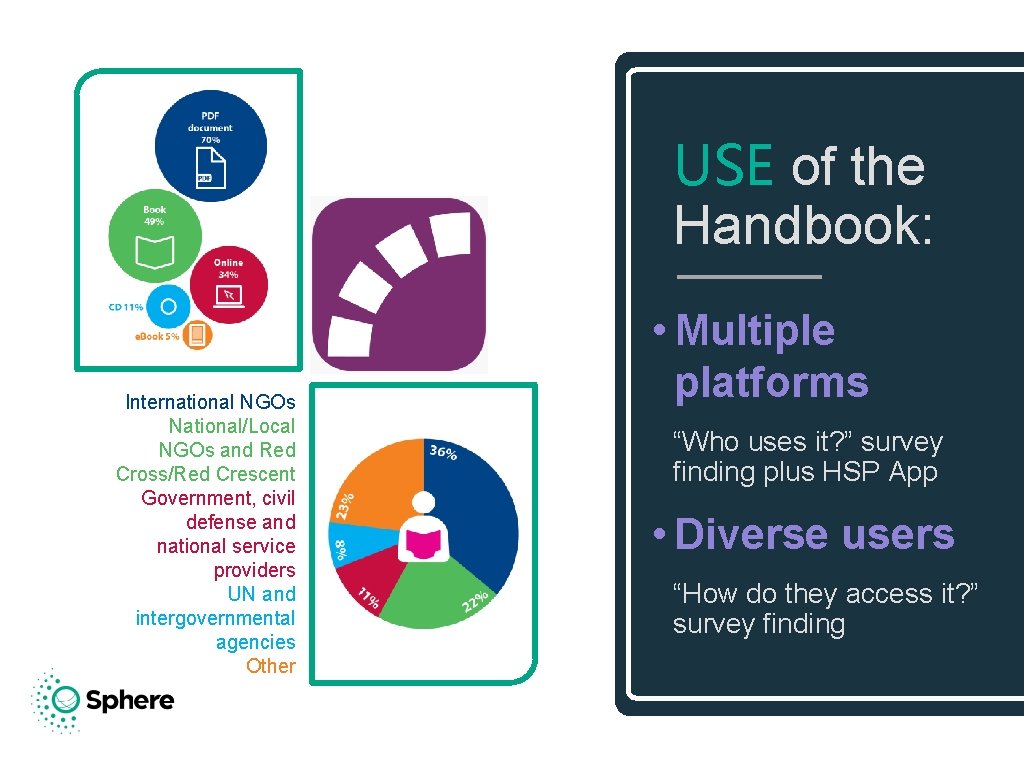
USE of the Handbook: International NGOs National/Local NGOs and Red Cross/Red Crescent Government, civil defense and national service providers UN and intergovernmental agencies Other • Multiple platforms “Who uses it? ” survey finding plus HSP App • Diverse users “How do they access it? ” survey finding PAGE
Discussion: TODAY’S CHALLENGES AND DRIVERS OF CHANGE • From what crises and situations have you drawn expertise over the last 7 to 10 years? • How do the challenges presented above compare with your own observations and recent experiences? • What factors may drive the next revision? PAGE 10

Handbook REVISION Consultations The most far-reaching and inclusive process in Sphere’s 20 -year history PAGE
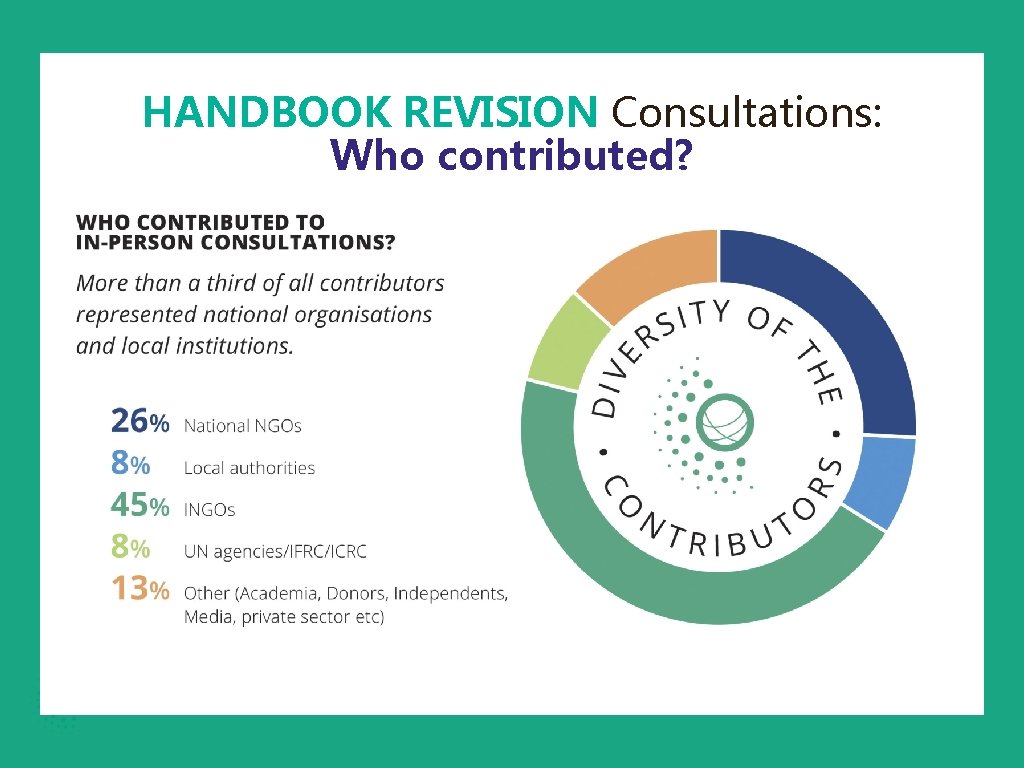
HANDBOOK REVISION Consultations: Who contributed? PAGE
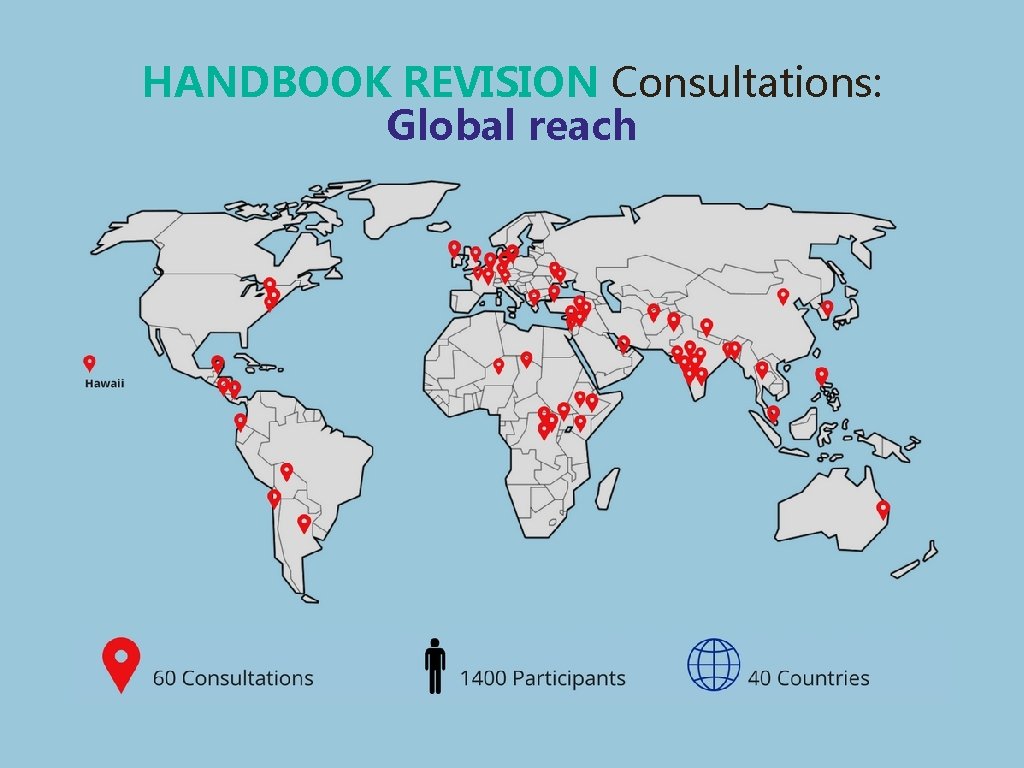
HANDBOOK REVISION Consultations: Global reach PAGE
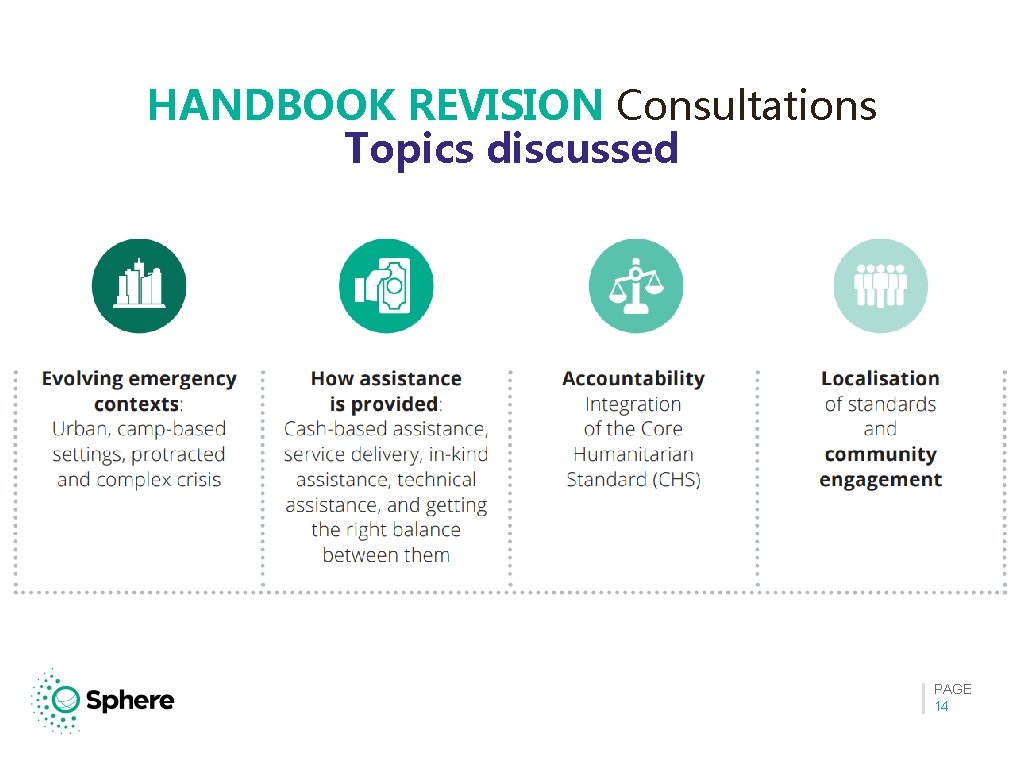
HANDBOOK REVISION Consultations Topics discussed PAGE 14
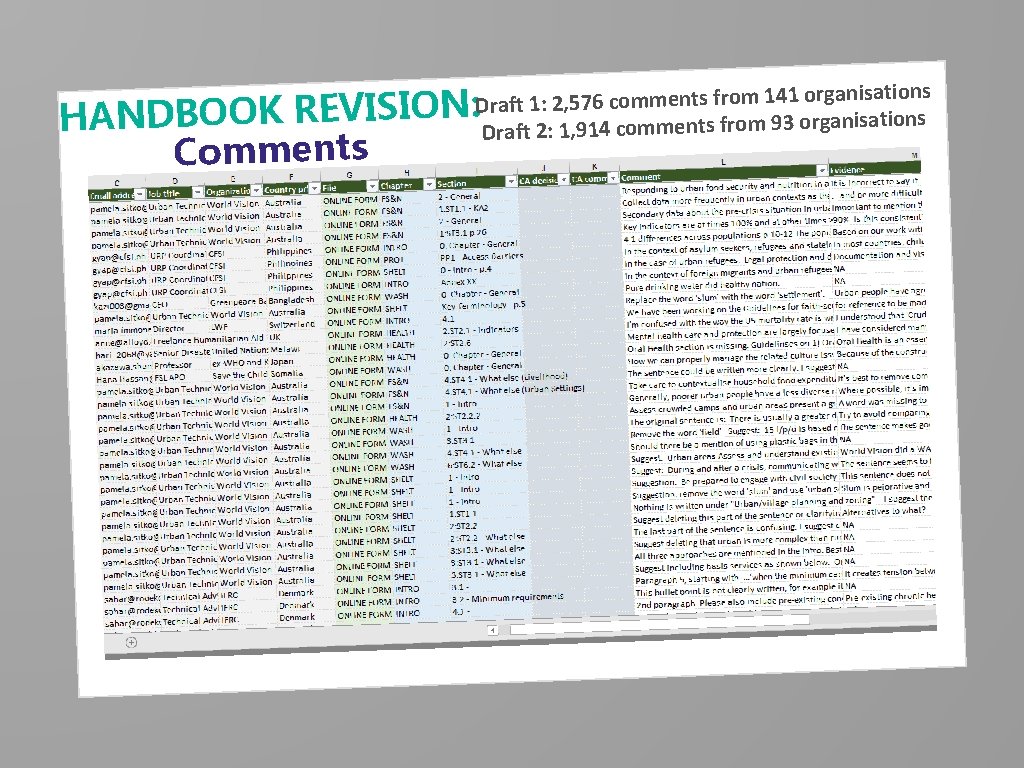
ganisations or 1 14 om fr ts en m m co 6 57 2, 1: ft REVISION: DDraraft 2: 1, 914 comments from 93 organisations HANDBOOK Comments PAGE
Discussion: HANDBOOK REVISION CONSULTATIONS AND COMMENTS • Did you organize or attend a revision consultation? • What topics did you discuss? • Did you submit comments as an individual or group? • How can we keep the conversation going between now and the next revision? PAGE 16
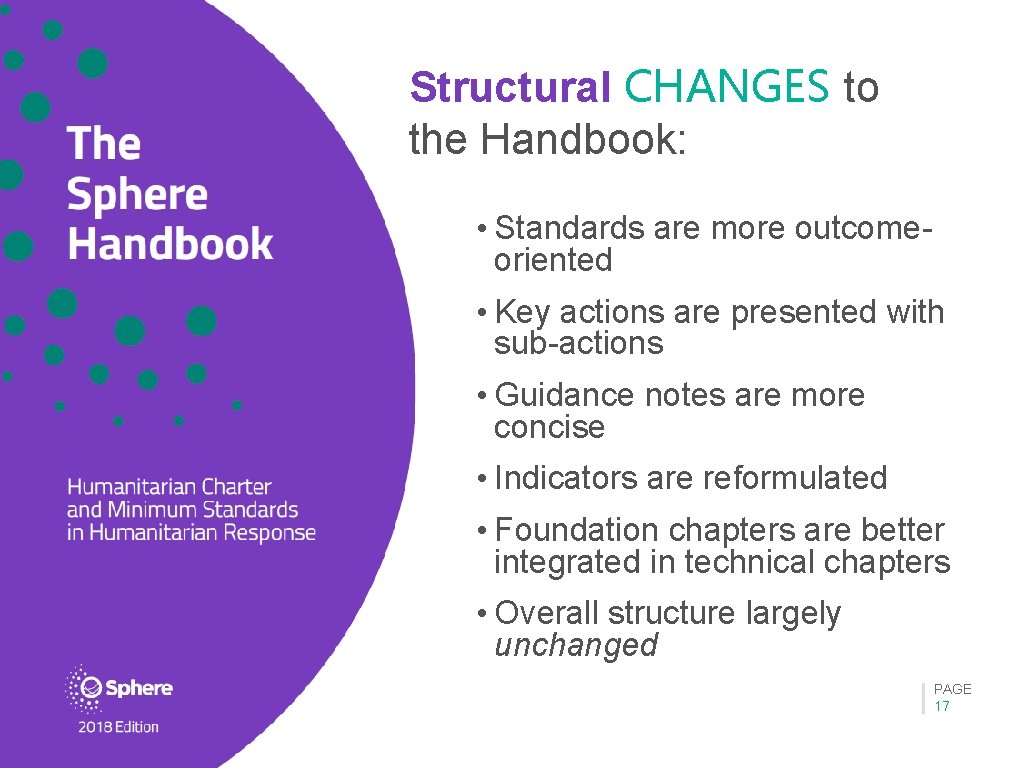
Structural CHANGES to the Handbook: • Standards are more outcomeoriented • Key actions are presented with sub-actions • Guidance notes are more concise • Indicators are reformulated • Foundation chapters are better integrated in technical chapters • Overall structure largely unchanged PAGE 17
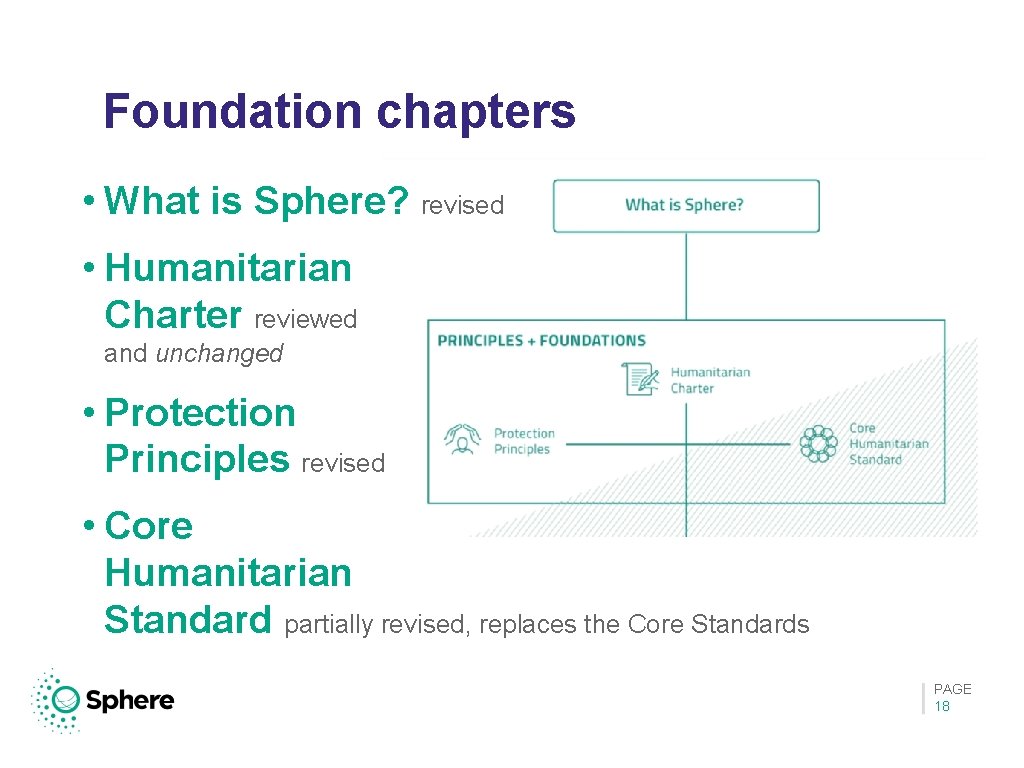
Foundation chapters • What is Sphere? revised • Humanitarian Charter reviewed and unchanged • Protection Principles revised • Core Humanitarian Standard partially revised, replaces the Core Standards PAGE 18

What is Sphere? • Two sections: The Handbook and Using the standards in context • New flowchart: Understanding context to apply the standards (pictured) • New data disaggregation table • Sections for programme cycle, vulnerabilities and capacities and operational settings • New Appendix: Delivering assistance through markets • Focus on community engagement • Summary of Code of Conduct included PAGE 19
The Humanitarian Charter • Reviewed • No changes: Still valid and relevant following revision in 2010 to 2011 • Resources section updated (Annex 1: Legal foundation to Sphere) PAGE
Protection Principles • Four principles maintained • Conceptual re-alignment: 1. Do no harm by own interventions expanded to preventing harm more generally 2. Impartial access includes deliberate denial of access and discrimination in access 3. Support to recovery from violations 4. Legal redress and strengthening the protection environment • Simplified language and diverse examples for general practitioners • Short appendix on the ICRC Professional Protection standards PAGE 21
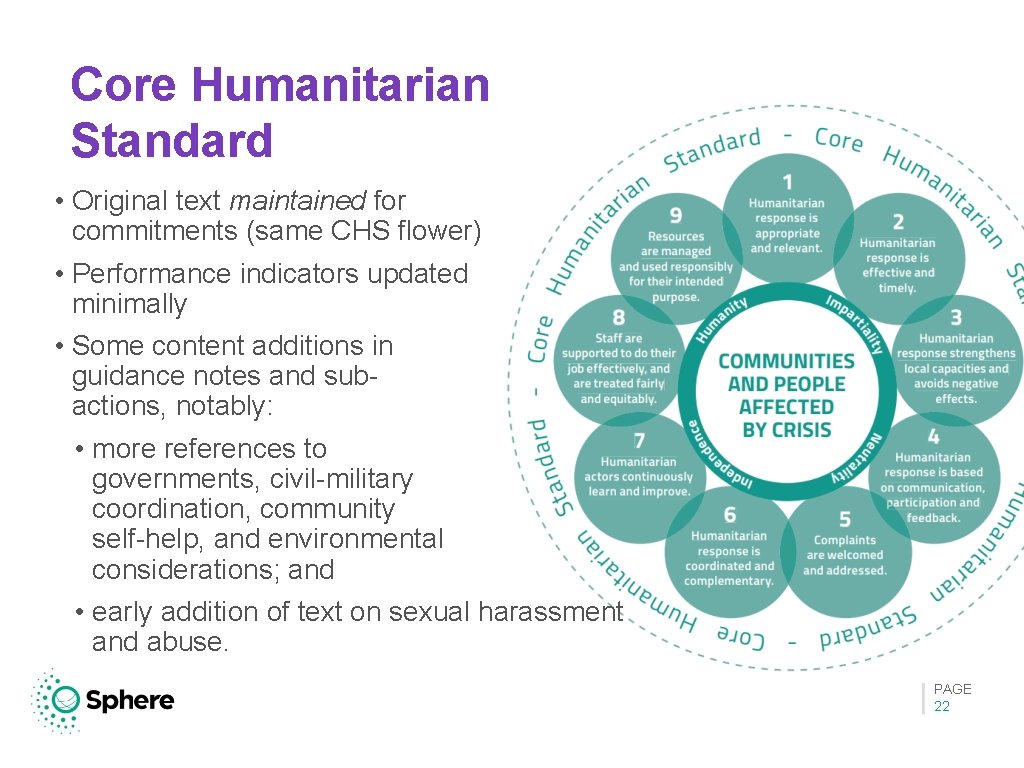
Core Humanitarian Standard • Original text maintained for commitments (same CHS flower) • Performance indicators updated minimally • Some content additions in guidance notes and subactions, notably: • more references to governments, civil-military coordination, community self-help, and environmental considerations; and • early addition of text on sexual harassment and abuse. PAGE 22
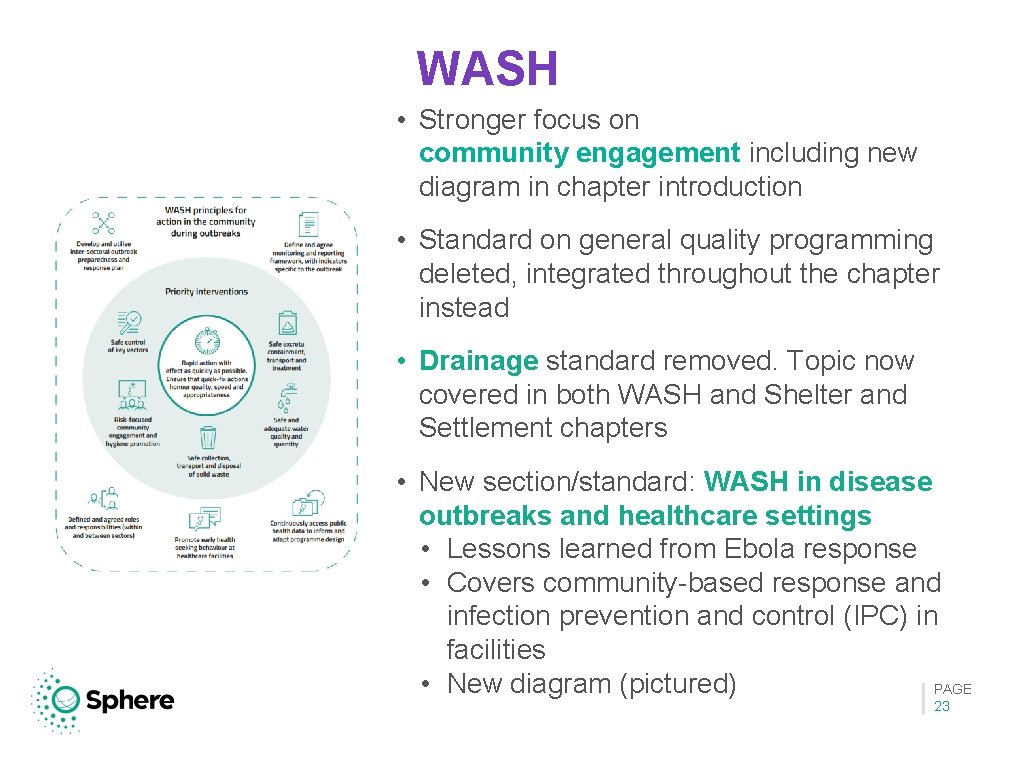
WASH • Stronger focus on community engagement including new diagram in chapter introduction • Standard on general quality programming deleted, integrated throughout the chapter instead • Drainage standard removed. Topic now covered in both WASH and Shelter and Settlement chapters • New section/standard: WASH in disease outbreaks and healthcare settings • Lessons learned from Ebola response • Covers community-based response and infection prevention and control (IPC) in facilities • New diagram (pictured) PAGE 23
Food Security and Nutrition • Slightly simplified structure which emphasizes interrelated food security and nutrition assessments, analysis and complementary programming. • Cash and vouchers, Supply chain management and Markets standards removed from the chapter, replaced with a new Appendix in What is Sphere and integrated throughout the Handbook. • Assessments section including two distinct assessment standards (remains) PAGE 24
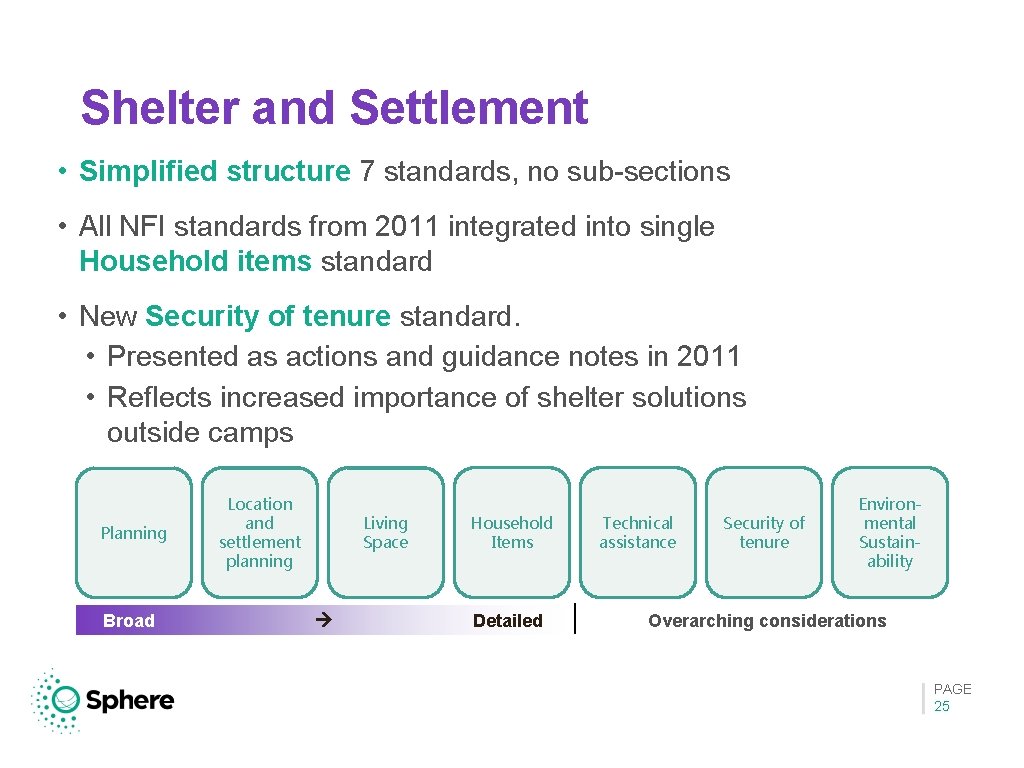
Shelter and Settlement • Simplified structure 7 standards, no sub-sections • All NFI standards from 2011 integrated into single Household items standard • New Security of tenure standard. • Presented as actions and guidance notes in 2011 • Reflects increased importance of shelter solutions outside camps Planning Broad Location and settlement planning Living Space Household Items Detailed Technical assistance Security of tenure Environmental Sustainability Overarching considerations PAGE 25
Health • Simplified chapter title • New section in introduction: Special considerations to protect healthcare • Health systems - Leadership and coordination 2011 standard removed, content integrated • Prioritising health services 2011 standard removed, content integrated • Sexual and reproductive health section restructured to 3 standards, including an updated introduction and a new standard: Sexual violence and clinical management of rape • New standard: Palliative care, reflects an ageing population and protracted situations. (The Non-communicable diseases section was new in 2011) PAGE Arie Kievit/Netherlands Red Cross
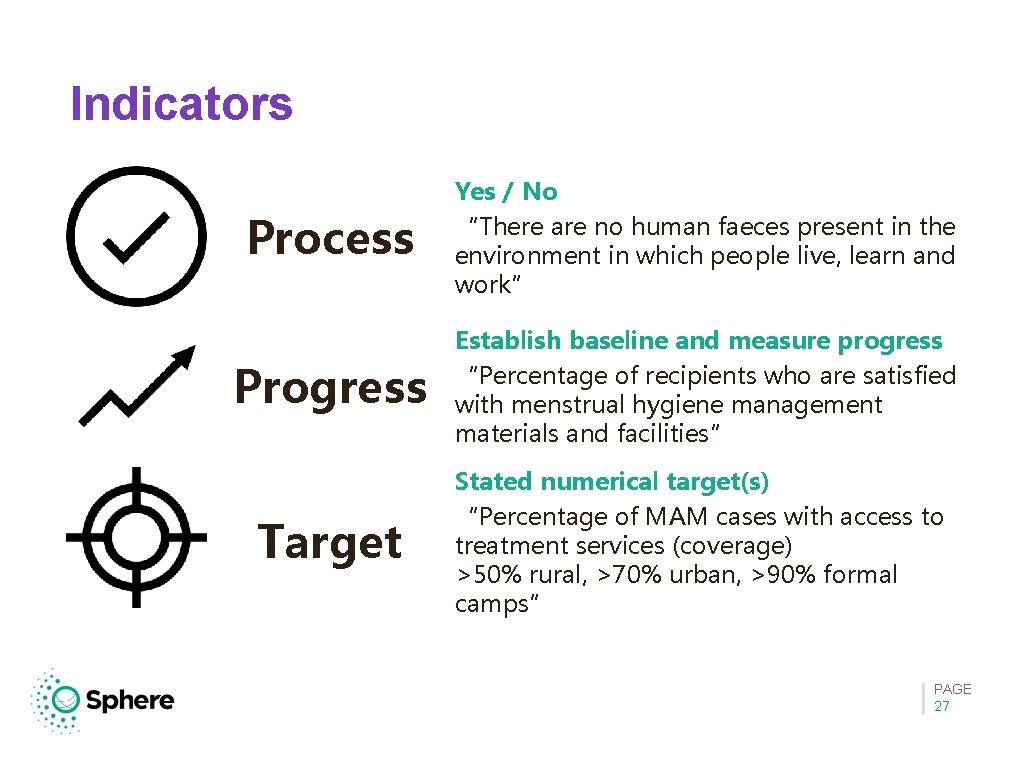
Indicators Process Yes / No “There are no human faeces present in the environment in which people live, learn and work” Progress Establish baseline and measure progress “Percentage of recipients who are satisfied with menstrual hygiene management materials and facilities” Target Stated numerical target(s) “Percentage of MAM cases with access to treatment services (coverage) >50% rural, >70% urban, >90% formal camps” PAGE 27
Where we are now ü Focus on people, community engagement and supporting local action ü Great attention to use in context ü Simplified language and presentation ü Decisions tracked and documented PAGE 28

Discussion: CHANGES TO THE HANDBOOK • Which changes in the 2018 edition will have the greatest impact on your work and the ways you use the Handbook? • What new content do you expect to see in the next edition of the Handbook? PAGE 29
Discover the Sphere Standards Sphere offers an extensive library of materials and tools to expand your knowledge and understanding of humanitarian standards. Share your experience Join a vibrant global community, committed to improving quality and accountability across the humanitarian sector. Put standards into practice Sphere strengthens your advocacy for improvements on the ground. A NEW IDENTITY spherestandards. org PAGE
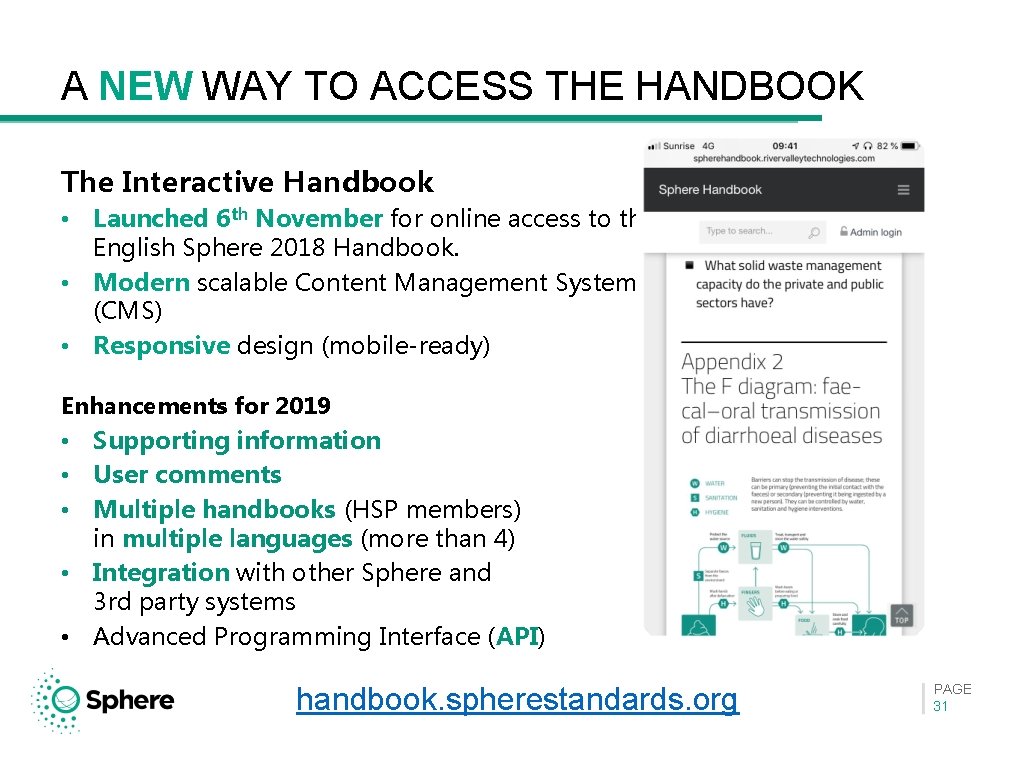
A NEW WAY TO ACCESS THE HANDBOOK The Interactive Handbook • Launched 6 th November for online access to the English Sphere 2018 Handbook. • Modern scalable Content Management System (CMS) • Responsive design (mobile-ready) Enhancements for 2019 • Supporting information • User comments • Multiple handbooks (HSP members) in multiple languages (more than 4) • Integration with other Sphere and 3 rd party systems • Advanced Programming Interface (API) handbook. spherestandards. org PAGE 31
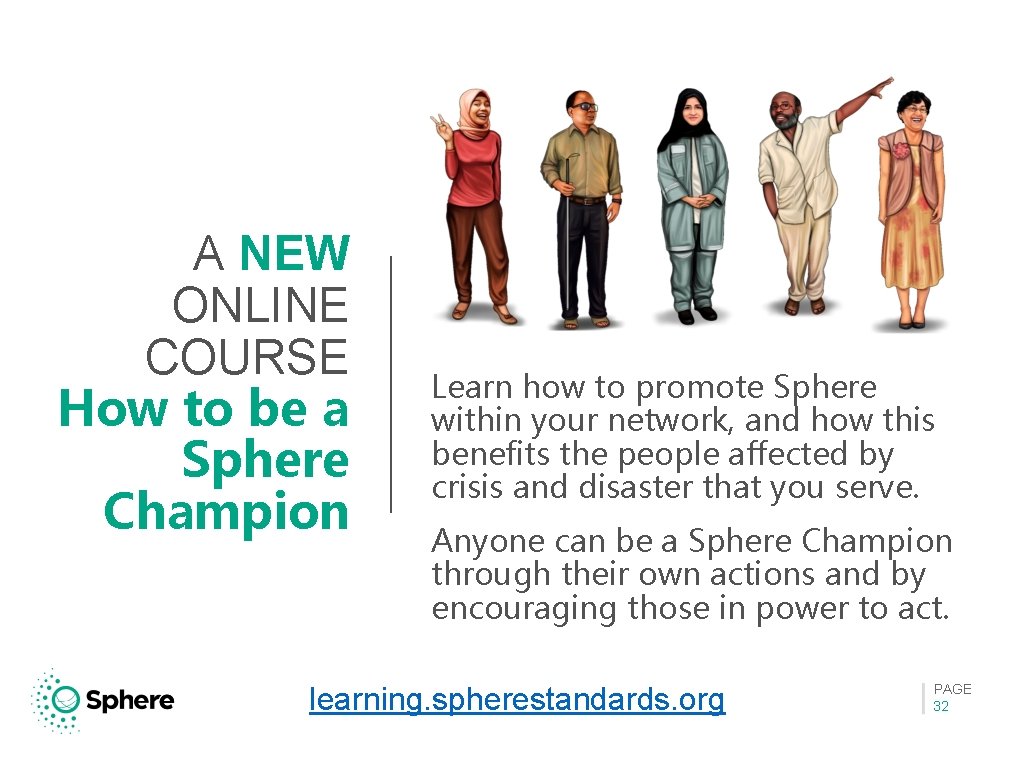
A NEW ONLINE COURSE How to be a Sphere Champion Learn how to promote Sphere within your network, and how this benefits the people affected by crisis and disaster that you serve. Anyone can be a Sphere Champion through their own actions and by encouraging those in power to act. learning. spherestandards. org PAGE 32
Discussion 4: THE EVOLUTION OF SPHERE AND ITS PRODUCTS • How can Sphere help you to LEARN? • How can Sphere help you to ACT? • How can Sphere help you to CONNECT? • In which ways do you access the Handbook? • How will you help Sphere to keep evolving and to meet the challenges of the future? PAGE 33
CONTACTS Your Name Sphere Office YOUR JOB ROLE PLEASE STAY IN TOUCH your. name@organisation. org info@spherestandards. org PAGE 34
THANK YOU
- Slides: 35