
What is Nanotechnology The capability to observe measure
What is Nanotechnology? • The capability to observe, measure, model, and manipulate matter at the length scale between approximately 1 and 100 nanometers, where unusual phenomena permits innovative applications. • “Suddenly, it’s like the periodic table projects out into a new dimension. It’s not just that we have the list of elements, but we can change their sizes and each size is a little bit different than every other when it’s very small” (Paul Alivisatos)

• Matter displays unique physical, chemical, and biological properties at the nanoscale: • It is considerable different from the properties of bulk materials, single atoms, or molecules. • In some cases nanoparticles can be stronger, or have distinct magnetic properties in comparison with other forms or sizes of the exact material. • It can conduct heat or electricity more effectively • It can develop into a more chemically reactive material, or reflect light in a different way, or change color as its size or structure is altered.
Text The Drawbacks Tampering at nanolevel can be devastating for humanity and the environment.
Environmental Impacts of Nanotechnology • One major problem with nanotechnology is its impact on water • Many of these particles can be made water soluble and be absorbed into biological tissues • Which in turn cause tissue damage • Another harm is that we do not know how to quantify the environmental toxicity of these materials. • Its difficult due to their unique physical and chemical properties. • These particles are very different from their macro counterparts
• Some particles change color: for example Nano-gold is red instead of gold. • Nano materials in general appear to behave in ways contrary to our common sense understanding of everyday macro-materials. • Meaning these materials should be classified differently even though they share the same name as their counterparts.
Buckyballs • First discovered in 1985 at the University of Sussex and Rice University • Eventually led to a Nobel Prize for the researchers • Named after American architect Richard Buckminster Fuller, the inventor of the geodesic dome. • In recent years, much research has focused on the potential health and environmental impacts of buckyballs and carbon nanotubes. Fullerenes have been shown to cause brain damage in fish and inhaling carbon nanotubes results in lung damage similar to that caused by asbestos.
• Now scientists have found that a certain buckyball configuration can put human skin cells into a sort of suspended animation where they don't die, divide, or grow -- a toxic condition for the human body that might also lead to possible treatments. • Three types of buckyballs were being tested • Tris configuration of buckyballs had three molecular branches coming off the main structural body in one hemisphere • Hexa configuration had six branches arranged in a symmetrical pattern • Plain buckyball.
• The cells exposed to the tris buckyballs entered the suspended animation state, which could lead to problems with normal organ development and possibly disease in a living organism. The tris configuration may also interfere with the body's normal immune response against viruses. • "Buckyballs commonly form into clumps that could easily be inhaled by a person as dust particles, " Tieleman said. "How they enter cells and cause damage is still poorly understood but our model shows a possible mechanism for how this might occur. "
Markets • The possible loss of jobs in the traditional farming and manufacturing industry. • You will also find that the development of nanotechnology can also bring about the crash of certain markets due to the lowering of the value of oil and diamonds due to the possibility of developing alternative sources of energy that are more efficient and won’t require the use of fossil fuels. This can also mean that since people can now develop products at the molecular level, diamonds will also lose its value since it can now be mass produced.
Other consequences… • Atomic weapons can now be more accessible and made to be more powerful and more destructive. These can also become more accessible with nanotechnology. • Since these particles are very small, problems can actually arise from the inhalation of these minute particles, much like the problems a person gets from inhaling minute asbestos particles. • Presently, nanotechnology is very expensive and developing it can cost you a lot of money. It is also pretty difficult to manufacture, which is probably why products made with nanotechnology are more expensive.
Potential risks associated with nanomedicine: • Numerous studies determined that the introduction of fine or coarse particles into the human body by inhalation or other methods can result in higher mortality rates leading to increase in cardio vascular events such as ventricular tachyarrhythmias, cardiac arrhythmias, and myocardial infractions. • Can lead to lung damage and potentially lung cancer. • Increase in plasma viscosity can lead to vital organ damage.
Since nanoparticles will be treated as foreign particles by the human immune system, they will get destroyed in the bloodstream by the cellular process know as phagocytosis, thus proven ineffective. The use of nano particles in the aerosol form, becoming airborne, potential contamination will extend to other people that are not undergoing any sort of treatment.
More cons… • Lack of financial resources to continue research • Lack of a viable market which would open investment opportunities • Miss-informing the public leads to loose of trust, thus lack of interest in technology • Incomplete research and data - safety of nanotechnology never fully accounted for • Can be devastating to humans and environment • Inadequate regulations associated with nanotechnology • Nanotechnology is not patented
The benefits of The Dawn of nanobots
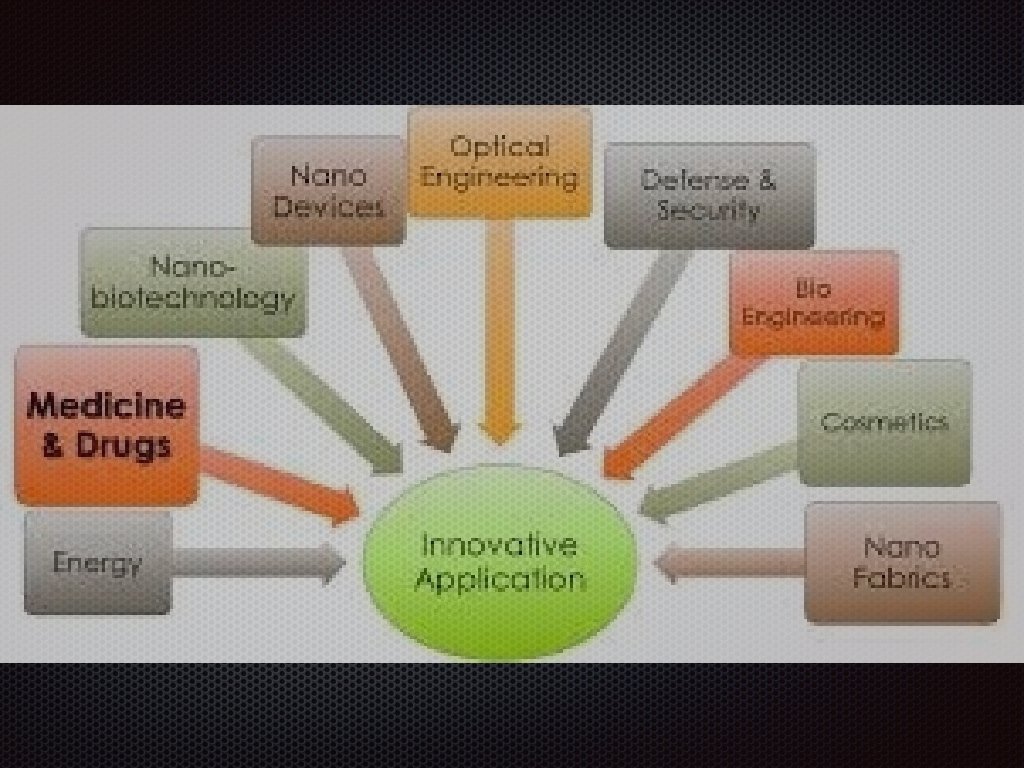
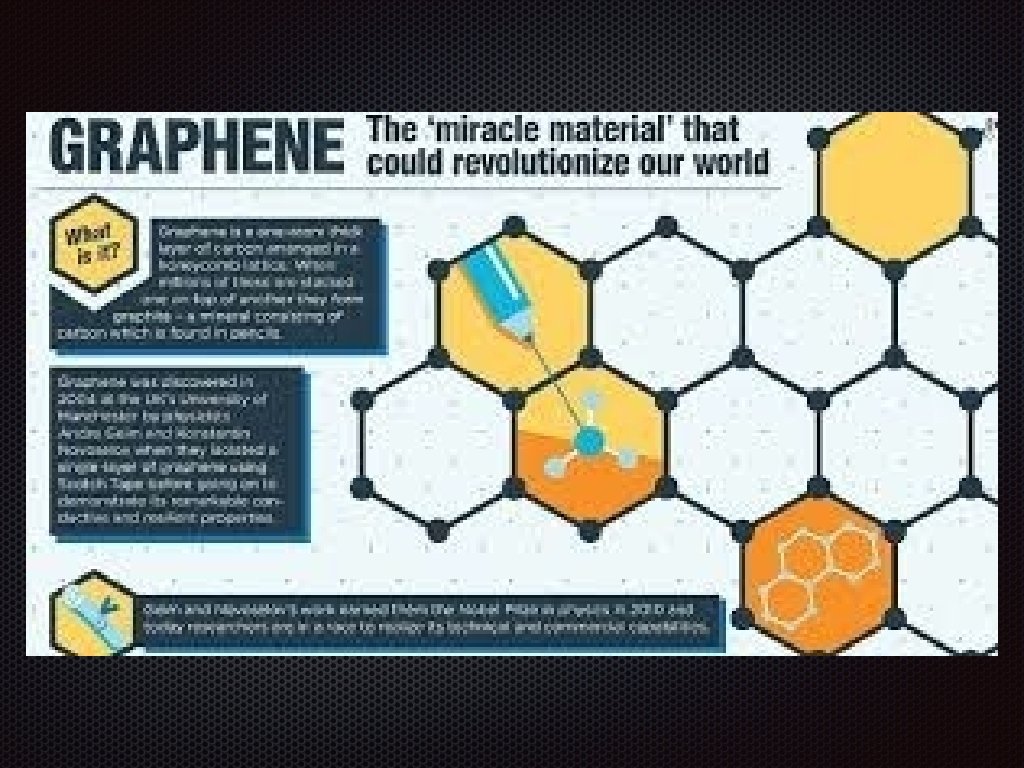
Nanotechnology in everyday life • One of the most useful nanoparticle is Graphene • Graphene is the most conductive material known • Its also the strongest material • Its flexible • Its biodegradable
• Graphene can be used as a transistor as well as a display screen • It can be used to deliver electricity more efficiently than any other known material • It can also be used as a battery and as a superconductor allowing flexible batteries and high charge and discharge rate. • It is also the best membrane for reverse osmosis know to man
Nanotechnology in Medicine • Nanoparticles can be used to deliver medicine or even cell protein and enzymes. • Gold nanoparticles are being used to to target cancer cell offering an option of treatment with very little side effect. • Nanoparticles are theorized to be able to take some cell function “artificial blood cells”
Nanotechnology Is beneficial to humanity • Nanotechnology can extend human life and enchant human abilities • It can increase efficiently in medicine, manufacturing and energy transport • it can improve computing and processing power. • Since most nanoparticles are carbon based a lot of them are biodegradable • Most nanoparticle product are cheap due to abundance and the need for a very small amount
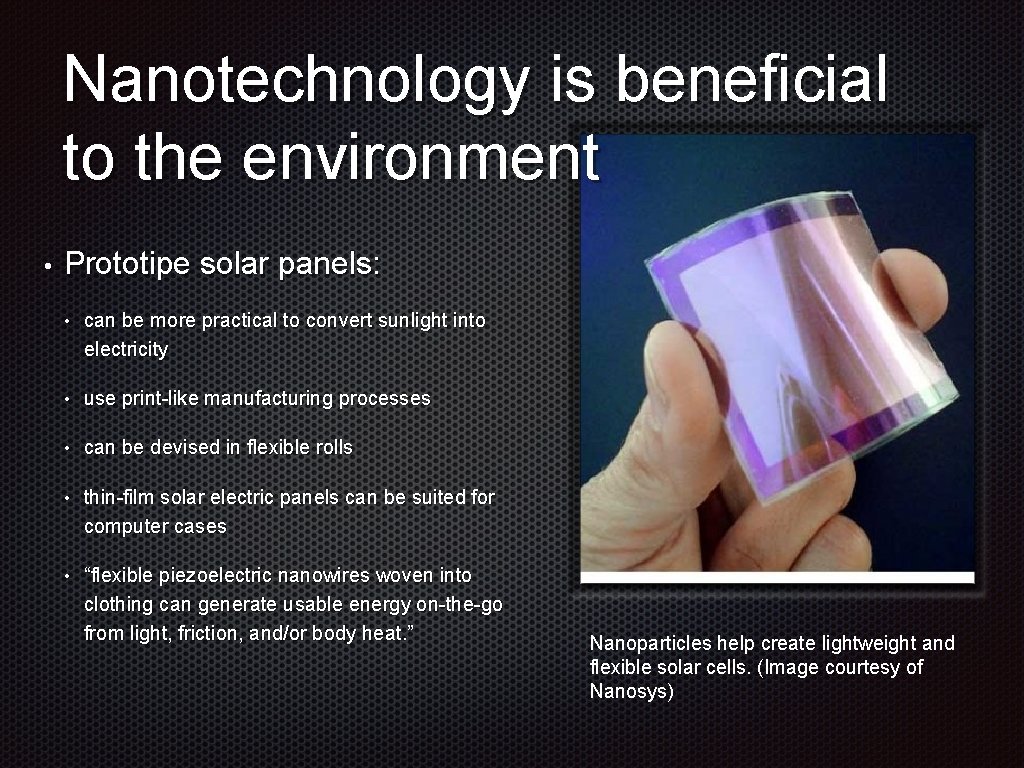
Nanotechnology is beneficial to the environment • Prototipe solar panels: • can be more practical to convert sunlight into electricity • use print-like manufacturing processes • can be devised in flexible rolls • thin-film solar electric panels can be suited for computer cases • “flexible piezoelectric nanowires woven into clothing can generate usable energy on-the-go from light, friction, and/or body heat. ” Nanoparticles help create lightweight and flexible solar cells. (Image courtesy of Nanosys)
More benefits… • With the use of enzymes, nano-bioengineering aims to convert cellulose into ethanol for fuel using wood chips, corn stalks, unfertilized perennial grasses, etc. • The need for affordable, clean drinking water could be attained with the use of Nanotechnology. “Unexpected magnetic interactions between ultrasmall specks of rust, […] can help remove arsenic or carbon tetrachloride from water. ” • Nanostructured filters can potentially eliminate virus cells from water. • A deionization method proposed by scientists using nanosized fiber electrodes can help cut down on the cost and energy demand for eliminating salts from water.

What is Ultra-Ever Dry? http: //www. youtube. com/watch? v=i 4 J 6 u. C 22 Hwo
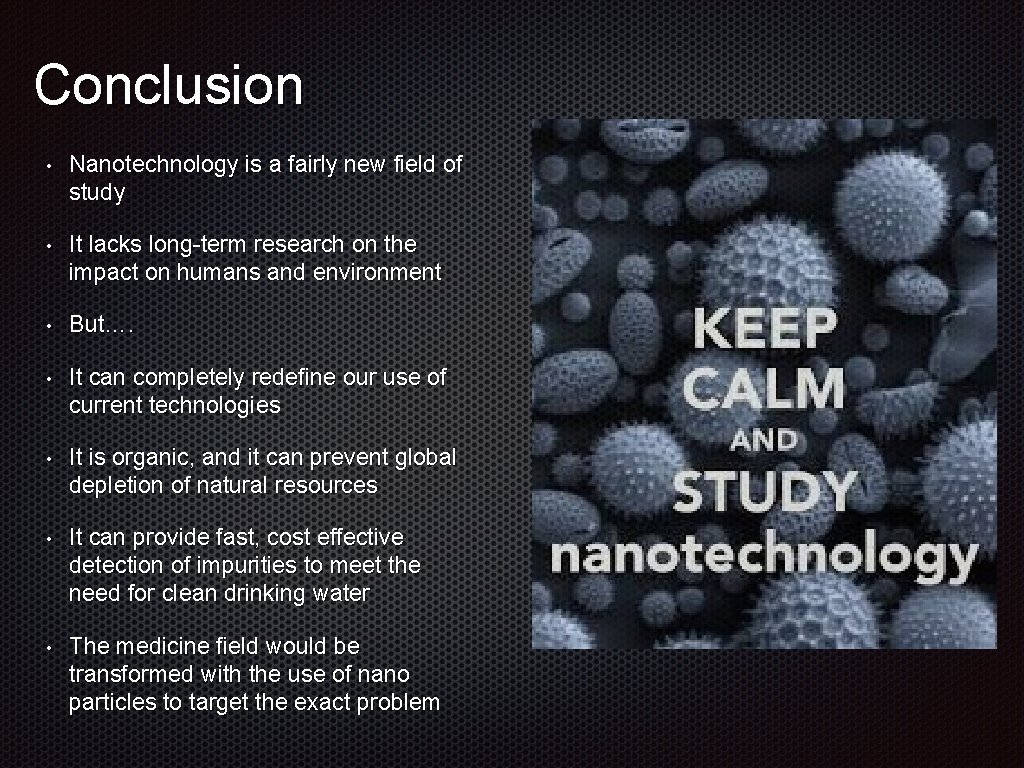
Conclusion • Nanotechnology is a fairly new field of study • It lacks long-term research on the impact on humans and environment • But…. • It can completely redefine our use of current technologies • It is organic, and it can prevent global depletion of natural resources • It can provide fast, cost effective detection of impurities to meet the need for clean drinking water • The medicine field would be transformed with the use of nano particles to target the exact problem
Reference http: //www. nano. gov/you/nanotechnology-benefits • http: //nanogloss. com/nanotechnology/advantages-and-disadvantages-ofnanotechnology/#axzz 31 MFuw. Pyb • http: //www. sciencedaily. com/releases/2008/05/080527091910. htm • http: //www. waterworld. com/articles/iww/print/volume-8/issue-5/features/nanotechnologyamp-nanoscale-materials-the-good-the-bad-and-the-ugly. html http: //www. scu. edu/ethics/publications/submitted/chen/nanotechnology. html • • http: //gizmodo. com/5882725/the-miraculous-nasa-breakthrough-that-could-save-millions -of-lives
- Slides: 27