
What is Mood Grade 6 Unit 4 Text

- Slides: 18
What is Mood? Grade 6, Unit 4 - Text used by permission of unit author, C. Webb
What is mood? Mood is one of the many literary devices used by writers to create a literary work.
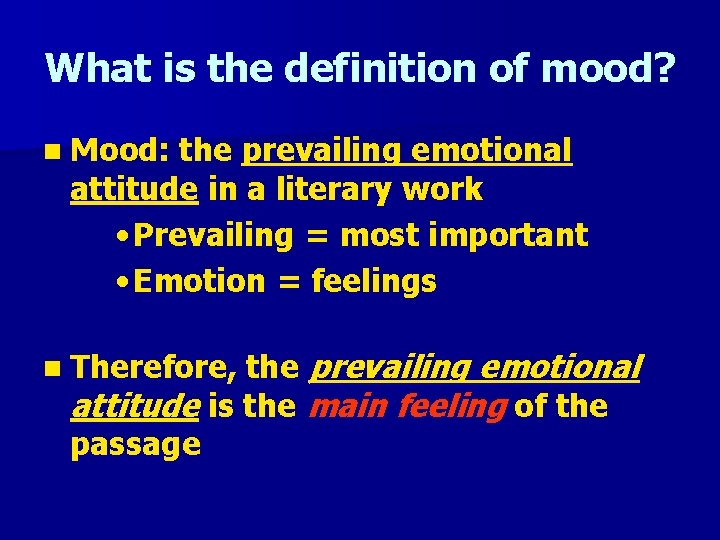
What is the definition of mood? n Mood: the prevailing emotional attitude in a literary work • Prevailing = most important • Emotion = feelings the prevailing emotional attitude is the main feeling of the passage n Therefore,
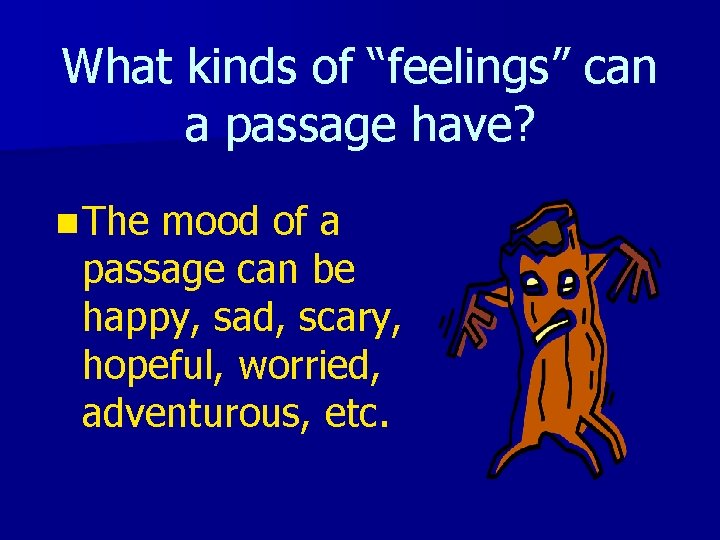
What kinds of “feelings” can a passage have? n The mood of a passage can be happy, sad, scary, hopeful, worried, adventurous, etc.
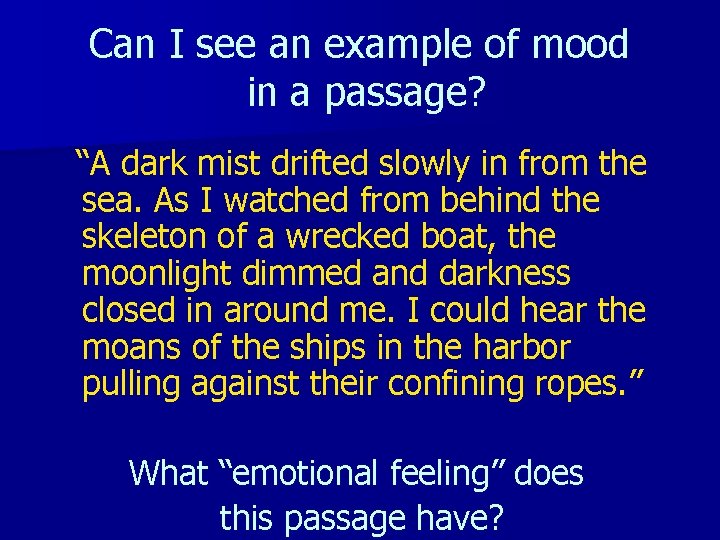
Can I see an example of mood in a passage? “A dark mist drifted slowly in from the sea. As I watched from behind the skeleton of a wrecked boat, the moonlight dimmed and darkness closed in around me. I could hear the moans of the ships in the harbor pulling against their confining ropes. ” What “emotional feeling” does this passage have?
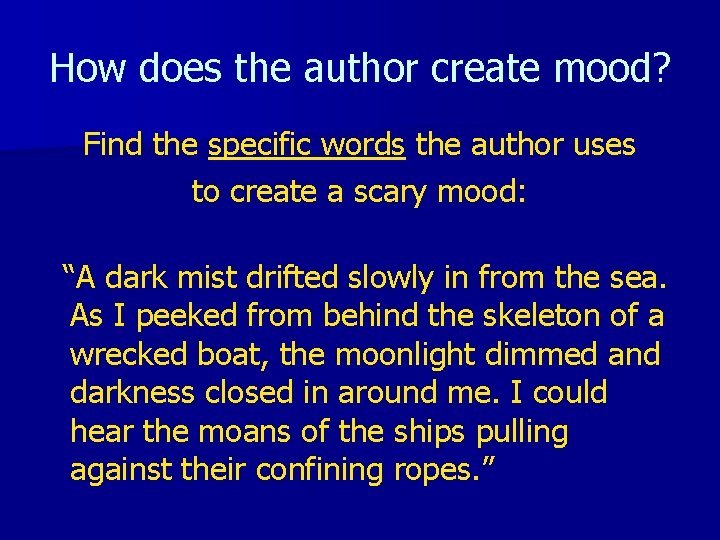
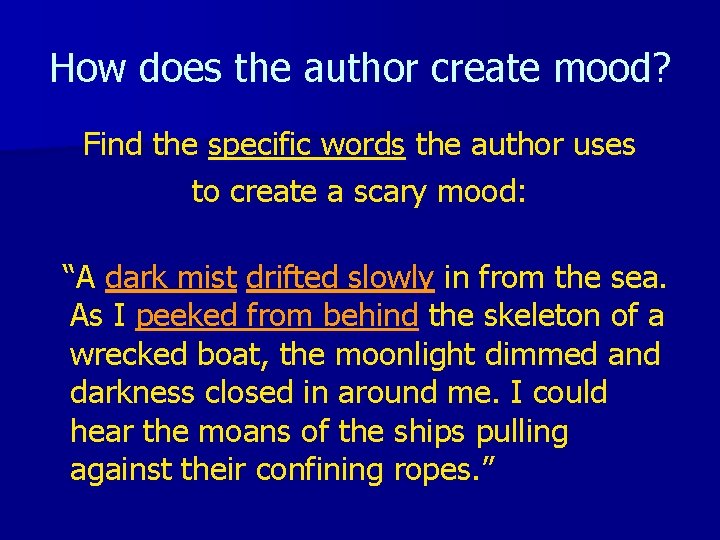
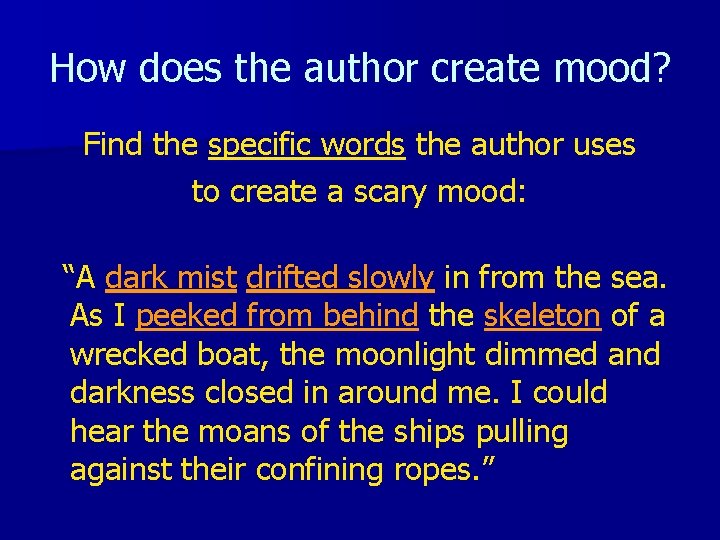
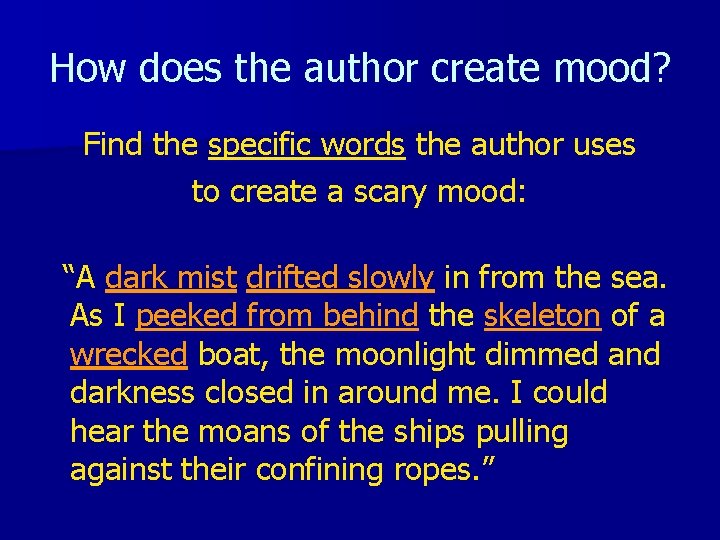
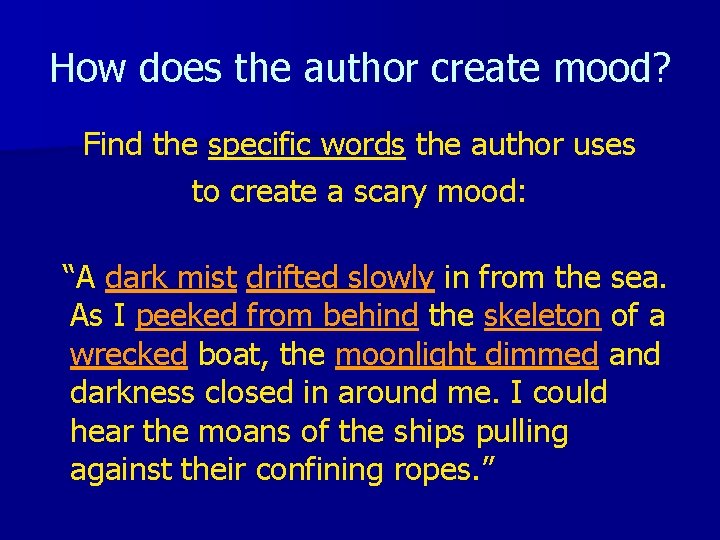
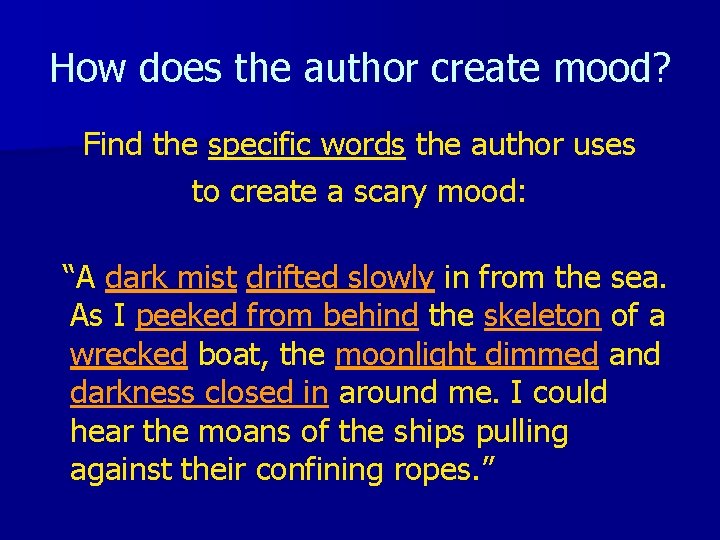
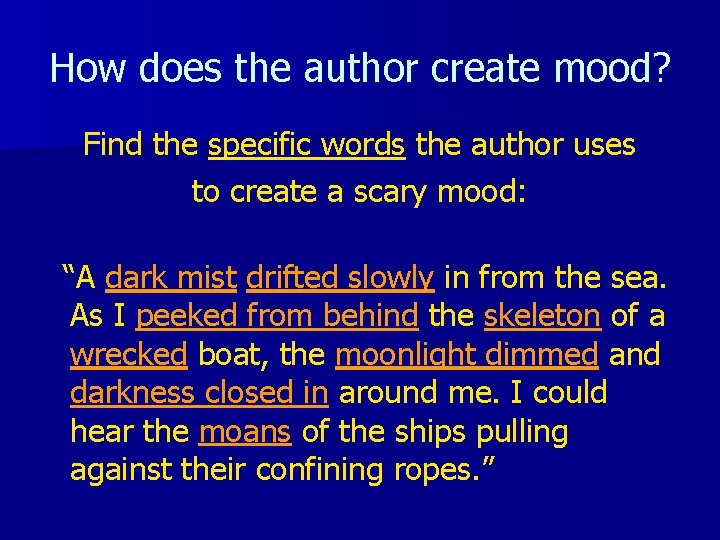
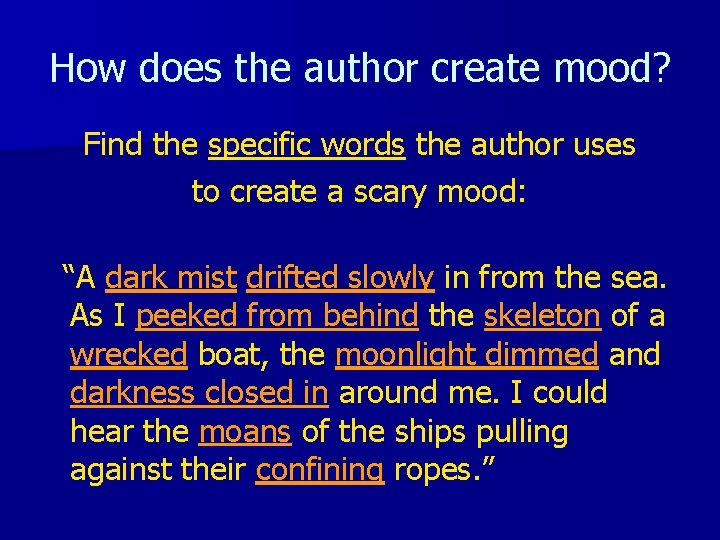
How does the author create mood? Find the specific words the author uses to create a scary mood: “A dark mist drifted slowly in from the sea. As I peeked from behind the skeleton of a wrecked boat, the moonlight dimmed and darkness closed in around me. I could hear the moans of the ships pulling against their confining ropes. ”
How does the author create mood? Find the specific words the author uses to create a scary mood: “A dark mist drifted slowly in from the sea. As I peeked from behind the skeleton of a wrecked boat, the moonlight dimmed and darkness closed in around me. I could hear the moans of the ships pulling against their confining ropes. ”
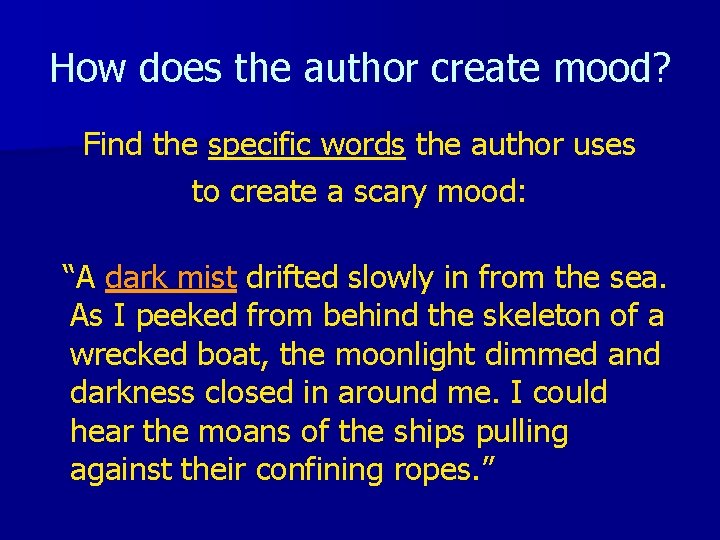
How does the author create mood? Find the specific words the author uses to create a scary mood: “A dark mist drifted slowly in from the sea. As I peeked from behind the skeleton of a wrecked boat, the moonlight dimmed and darkness closed in around me. I could hear the moans of the ships pulling against their confining ropes. ”
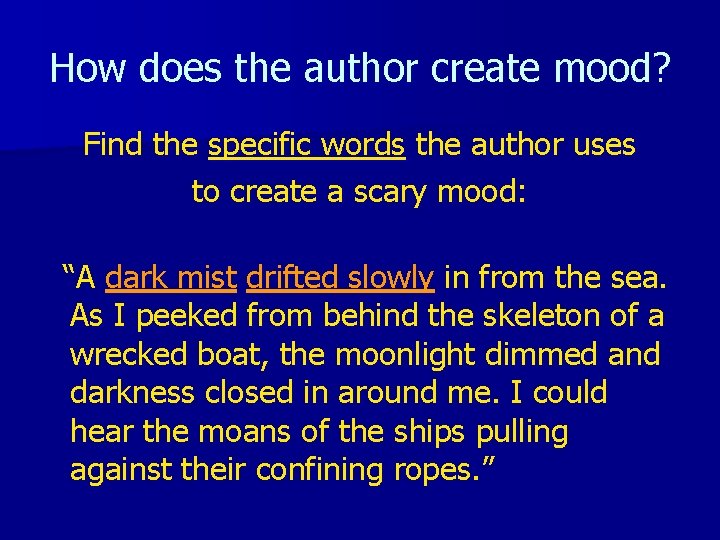
How does the author create mood? Find the specific words the author uses to create a scary mood: “A dark mist drifted slowly in from the sea. As I peeked from behind the skeleton of a wrecked boat, the moonlight dimmed and darkness closed in around me. I could hear the moans of the ships pulling against their confining ropes. ”
How does the author create mood? Find the specific words the author uses to create a scary mood: “A dark mist drifted slowly in from the sea. As I peeked from behind the skeleton of a wrecked boat, the moonlight dimmed and darkness closed in around me. I could hear the moans of the ships pulling against their confining ropes. ”
How does the author create mood? Find the specific words the author uses to create a scary mood: “A dark mist drifted slowly in from the sea. As I peeked from behind the skeleton of a wrecked boat, the moonlight dimmed and darkness closed in around me. I could hear the moans of the ships pulling against their confining ropes. ”
How does the author create mood? Find the specific words the author uses to create a scary mood: “A dark mist drifted slowly in from the sea. As I peeked from behind the skeleton of a wrecked boat, the moonlight dimmed and darkness closed in around me. I could hear the moans of the ships pulling against their confining ropes. ”
How does the author create mood? Find the specific words the author uses to create a scary mood: “A dark mist drifted slowly in from the sea. As I peeked from behind the skeleton of a wrecked boat, the moonlight dimmed and darkness closed in around me. I could hear the moans of the ships pulling against their confining ropes. ”
How does the author create mood? Find the specific words the author uses to create a scary mood: “A dark mist drifted slowly in from the sea. As I peeked from behind the skeleton of a wrecked boat, the moonlight dimmed and darkness closed in around me. I could hear the moans of the ships pulling against their confining ropes. ”
How does the author create mood? Find the specific words the author uses to create a scary mood: “A dark mist drifted slowly in from the sea. As I peeked from behind the skeleton of a wrecked boat, the moonlight dimmed and darkness closed in around me. I could hear the moans of the ships pulling against their confining ropes. ”
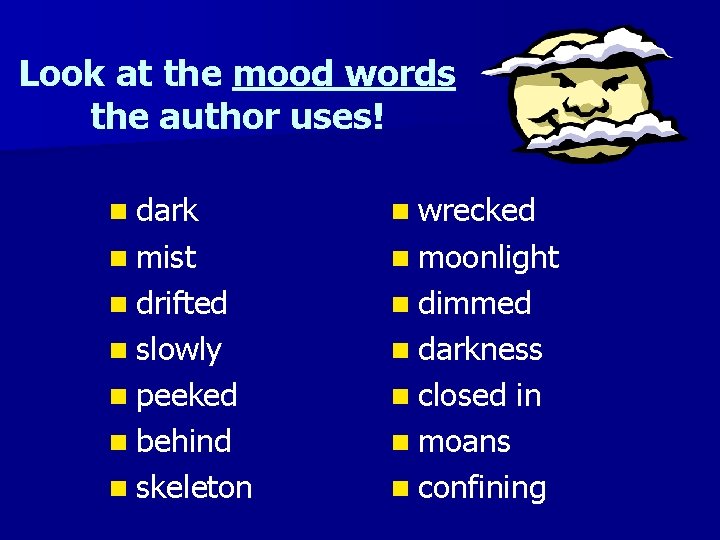
Look at the mood words the author uses! n dark n wrecked n mist n moonlight n drifted n dimmed n slowly n darkness n peeked n closed n behind n moans n skeleton n confining in
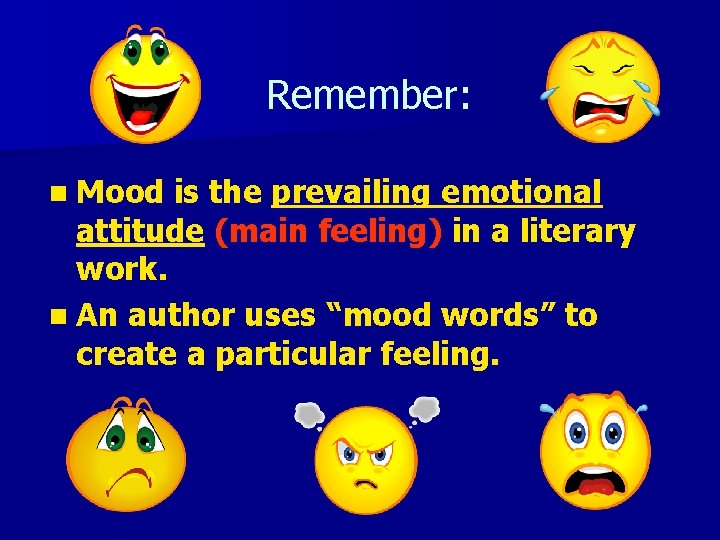
Remember: n Mood is the prevailing emotional attitude (main feeling) in a literary work. n An author uses “mood words” to create a particular feeling.
Copyright © 2006, TESCCC The content of this multimedia presentation is intended for use by TESCCC subscribers for intra-district professional development ONLY; and may not be used for other purposes, in whole or part, without the expressed written permission of their ESC-TESCCC coordinator for the region handling your subscription. TESCCC grants subscribers the right to edit this multimedia presentation for intra-district professional development ONLY.