
What is metacognition What would your students look





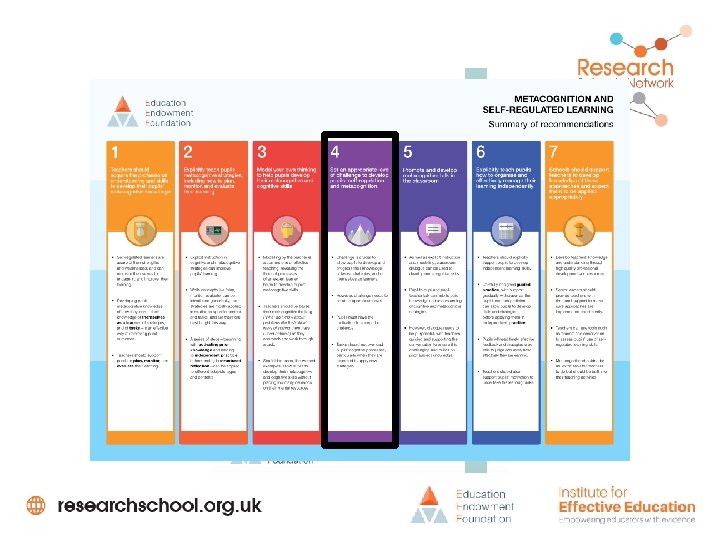
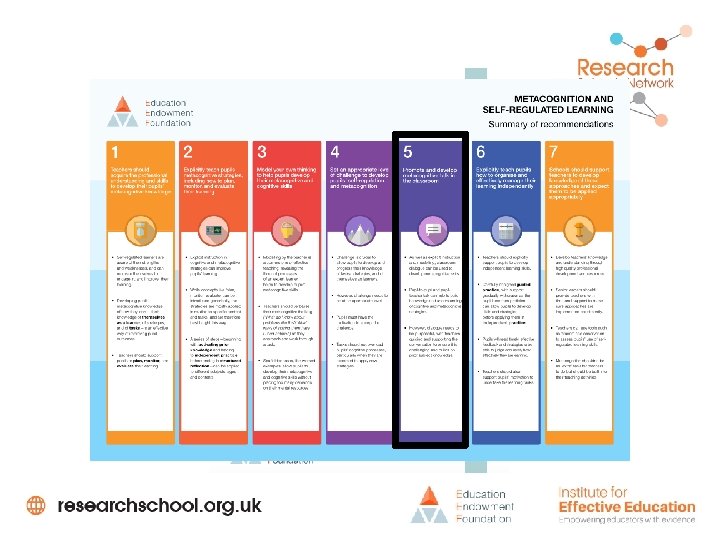
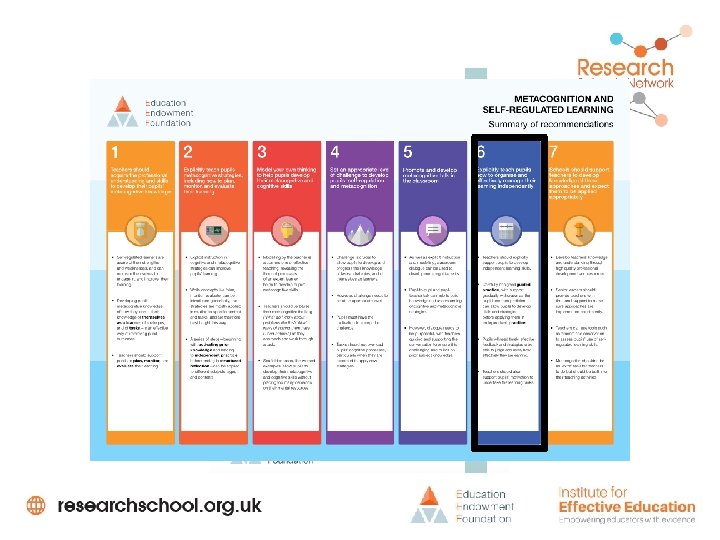
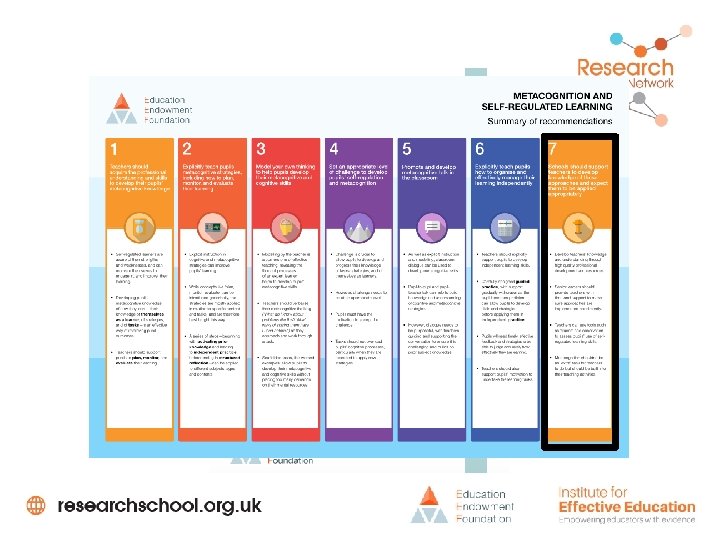





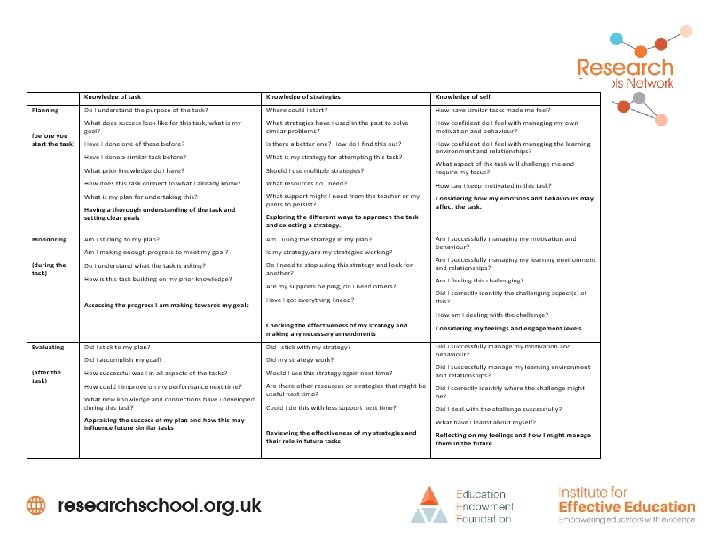

- Slides: 59
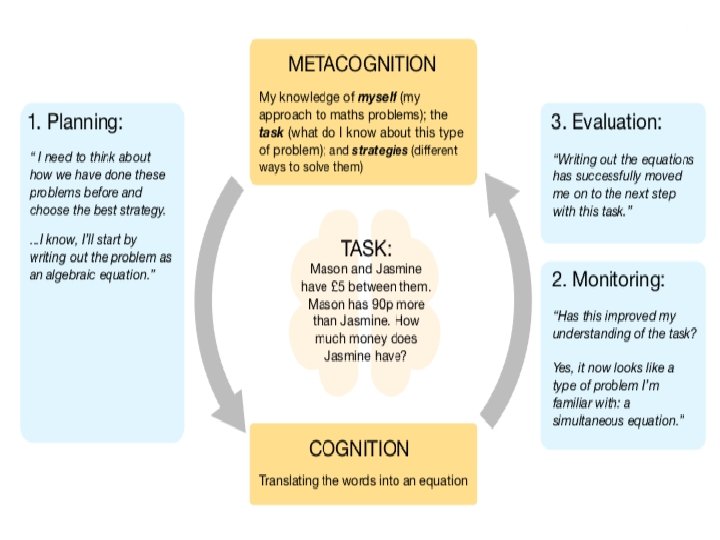
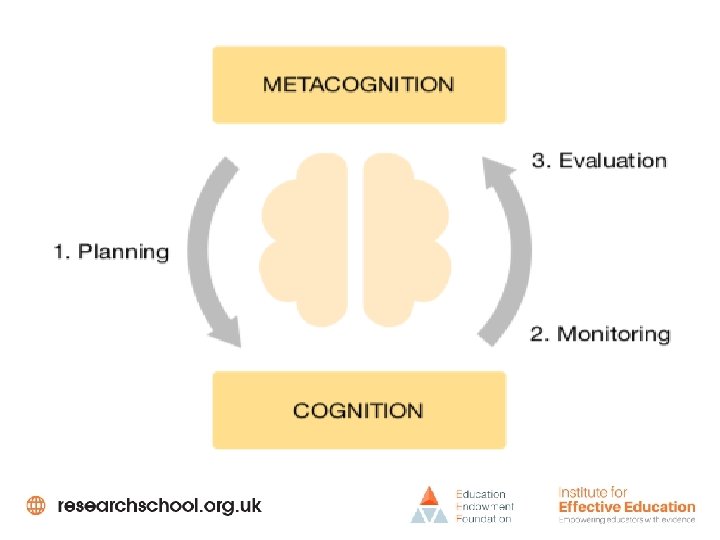
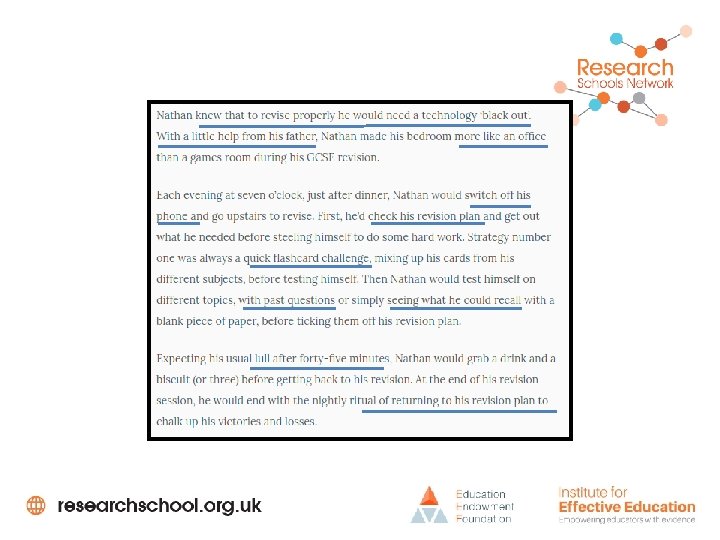
What is metacognition? What would your students look like if they were acting metacognitively?
Unlocking the evidence: Mobilising Metacognition Jane Elsworth Director - Huntington Research School huntresearchsch@gmail. com
Effect Size (months gain) The EEF Teaching & learning Toolkit 10 Feedback Metacognition Homework Peer tutoring (Secondary) Parental engagement Homework (Primary) 0 £ 0 1 -to-1 tuition Setting or streaming Cost per pupil Teaching assistants £ 1000
What is metacognition?
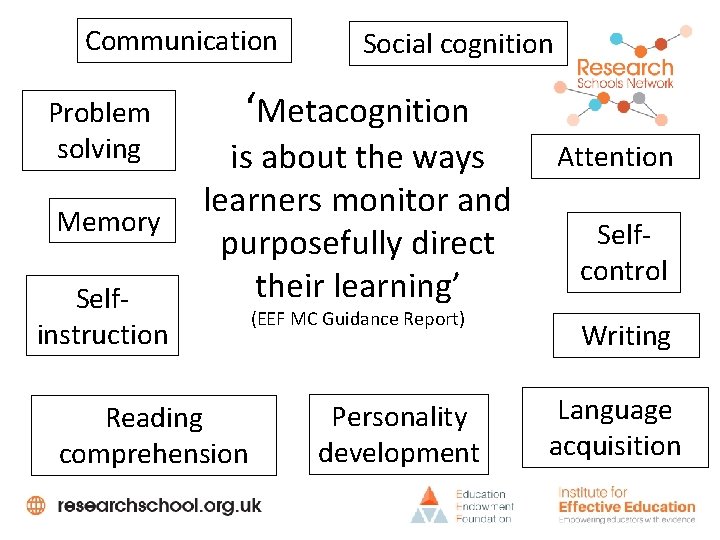
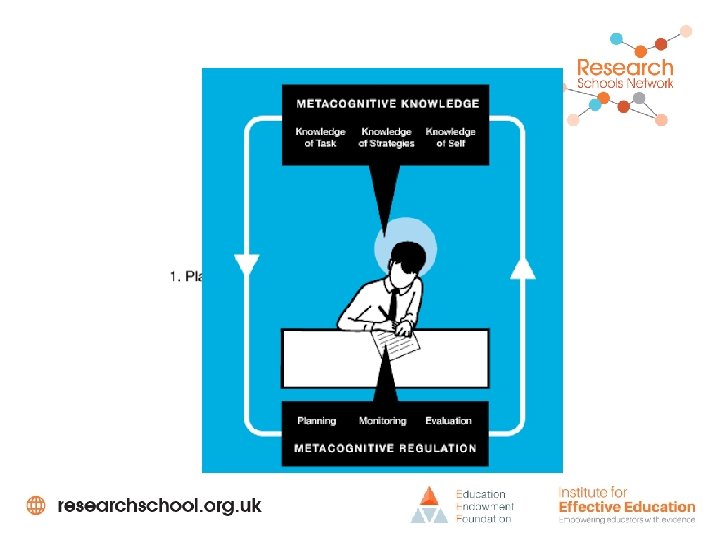
Communication Problem solving Memory Selfinstruction Social cognition ‘Metacognition is about the ways learners monitor and purposefully direct their learning’ Reading comprehension (EEF MC Guidance Report) Personality development Attention Selfcontrol Writing Language acquisition
. . . t c a mp i f o s ge l a e r v e e l v a …high aking on onal ti m i s d l i d p a ‘ f pu o s h t 7 mon rogress’. p ‘… tea ching these strate g ies ca partic n be ularly effect low-a ive fo chievi r ng pu pils. ’
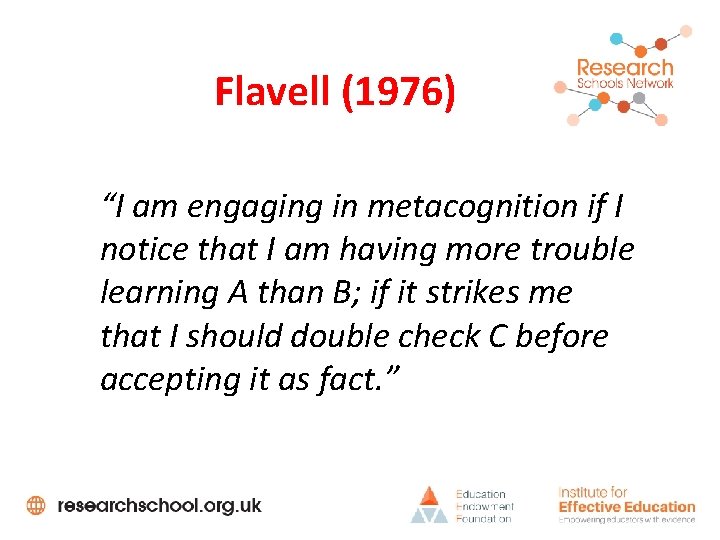
Flavell (1976) “I am engaging in metacognition if I notice that I am having more trouble learning A than B; if it strikes me that I should double check C before accepting it as fact. ”
Teresa Diaz “Using metacognition supports the concept of ‘working smarter not harder’ from two perspectives: the teacher who is not doing the thinking for the student, and as a result, the student does the heavy lifting of deeper learning without realising it. ”
John Hattie “Metacognition is one of the most effective teaching interventions. Teaching our students how to think about their own thinking and to go beyond the textbook content improves their learning outcomes.
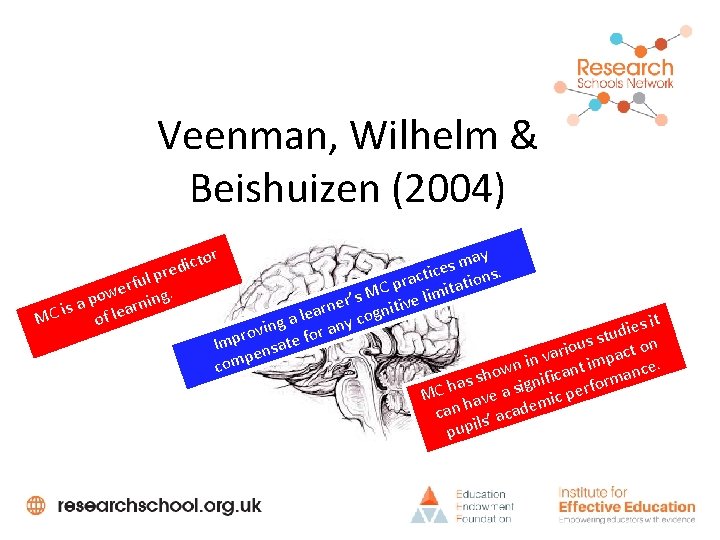
Veenman, Wilhelm & Beishuizen (2004) ay m s tice ions. c a r C p limitat M s r’ e e v i n t i r lea y cogn a it g s n n e i i a v or ro stud on s Imp nsate f u ct ario e a v p p n m i co wn ficant im ance. o h s as a signi orm f h r e C p M ave demic h n ca aca ’ s l i pup or t c i red ful p r e ow ning. p a is ar MC of le
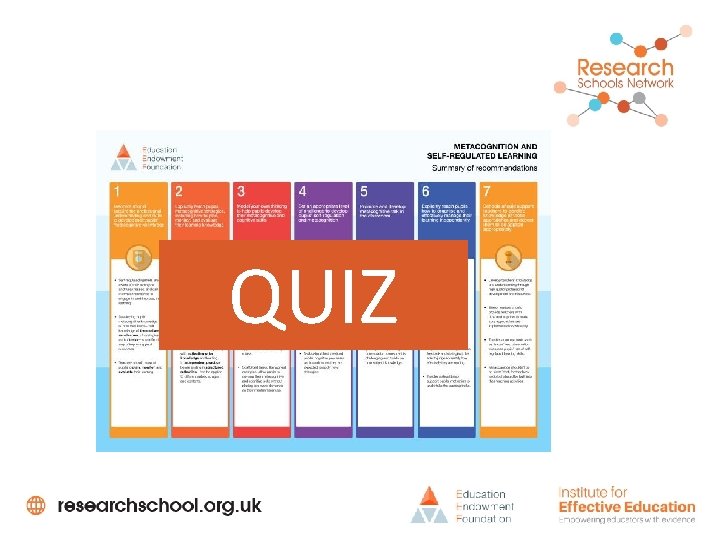
QUIZ
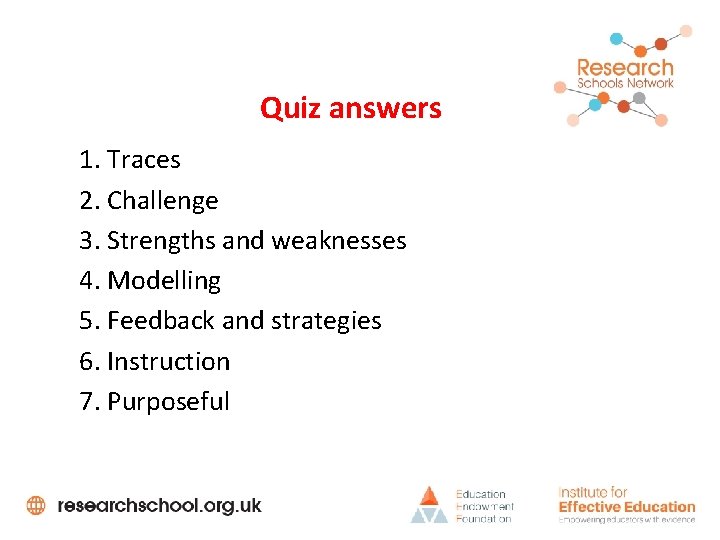
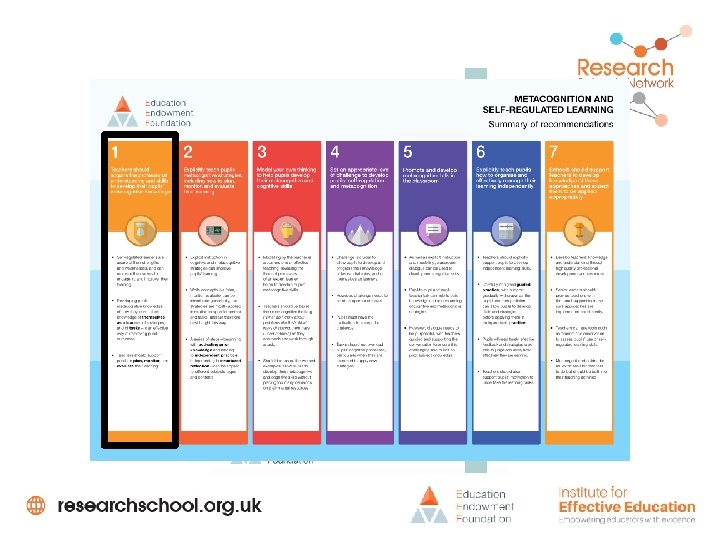
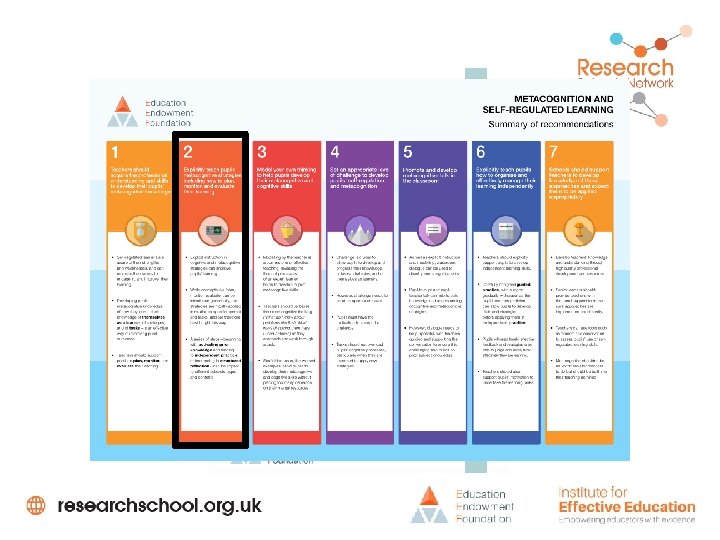
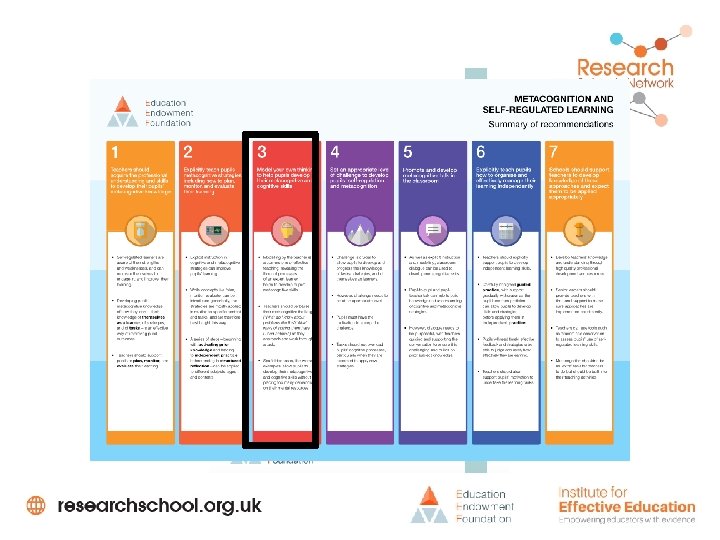
Quiz answers 1. Traces 2. Challenge 3. Strengths and weaknesses 4. Modelling 5. Feedback and strategies 6. Instruction 7. Purposeful
How do people in the following high performing occupations think metacognitively in their daily work?
Zimmerman: ‘These learners are proactive in their efforts to learn because they are aware of their strengths and limitations and because they are guided by personally set goals and task-related strategies. These learners monitor their behaviour in terms of their goals and self-reflect on their increasing effectiveness. This enhances their self-satisfaction and motivation to continue to improve their methods of learning. ’
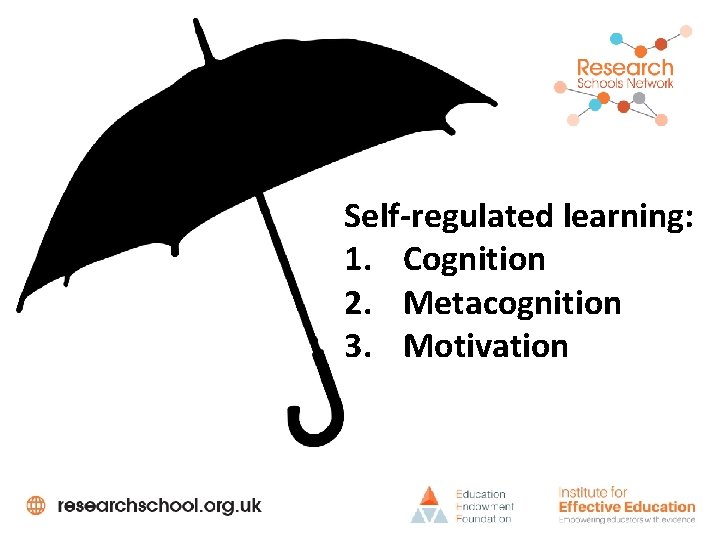
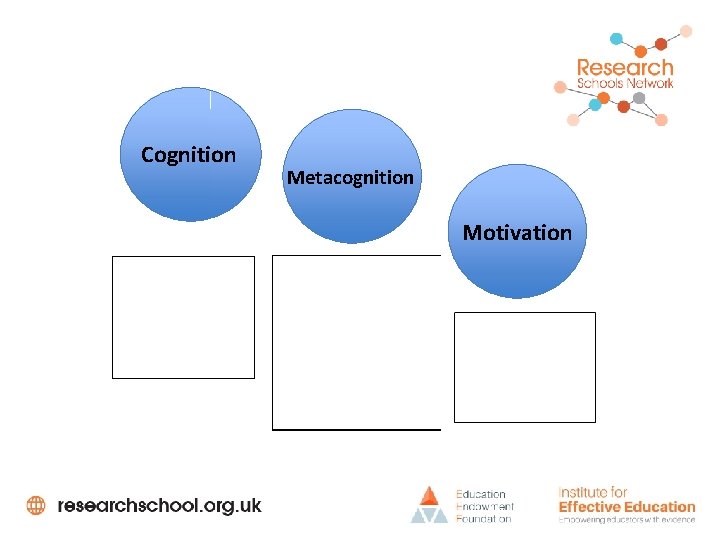
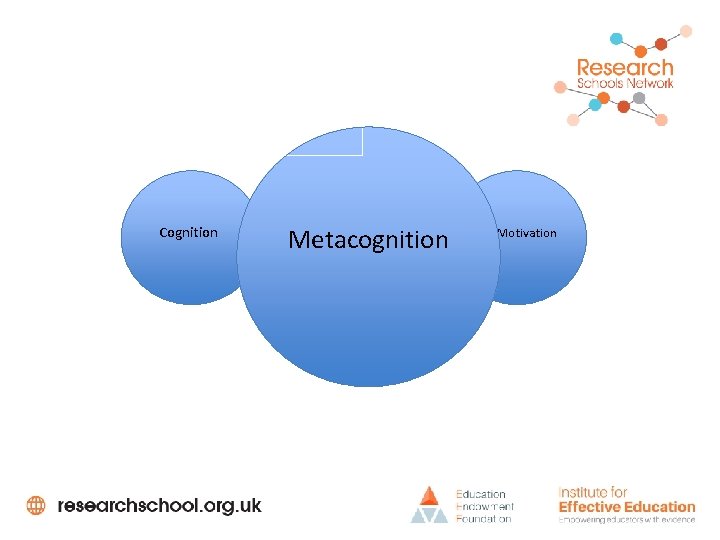
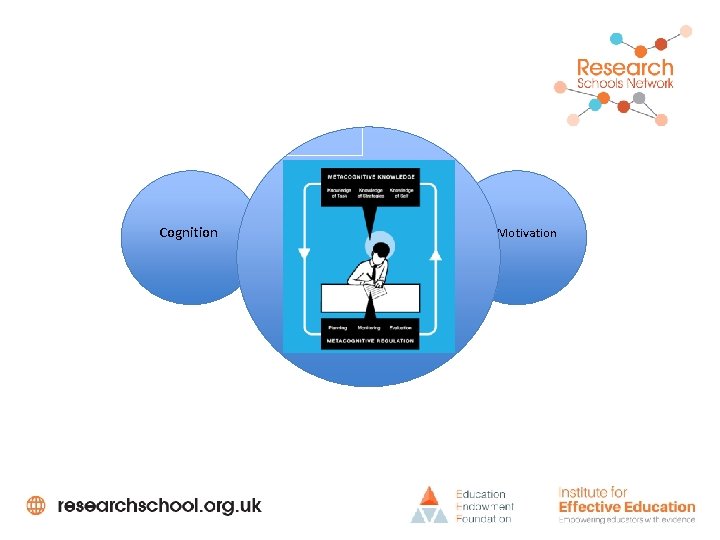
Self-regulated learning: 1. Cognition 2. Metacognition 3. Motivation
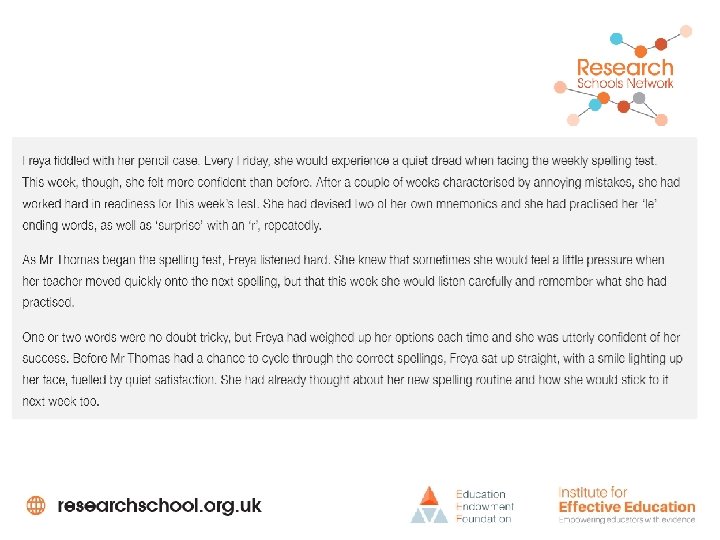
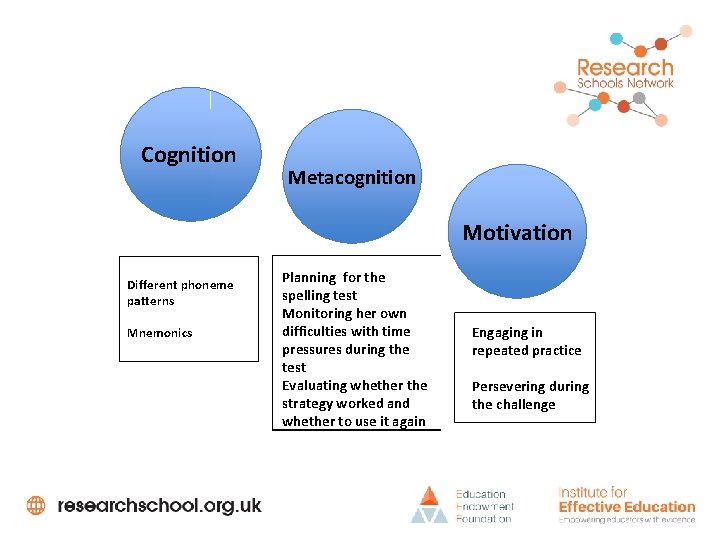
Cognition Metacognition Motivation Different phoneme patterns Mnemonics Planning for the spelling test Monitoring her own difficulties with time pressures during the test Evaluating whether the strategy worked and whether to use it again Engaging in repeated practice Persevering during the challenge
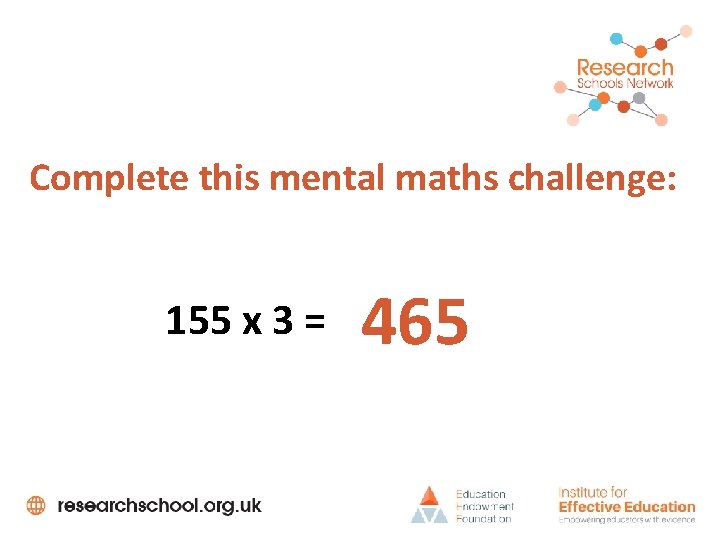
Complete this mental maths challenge: 155 x 3 = 465
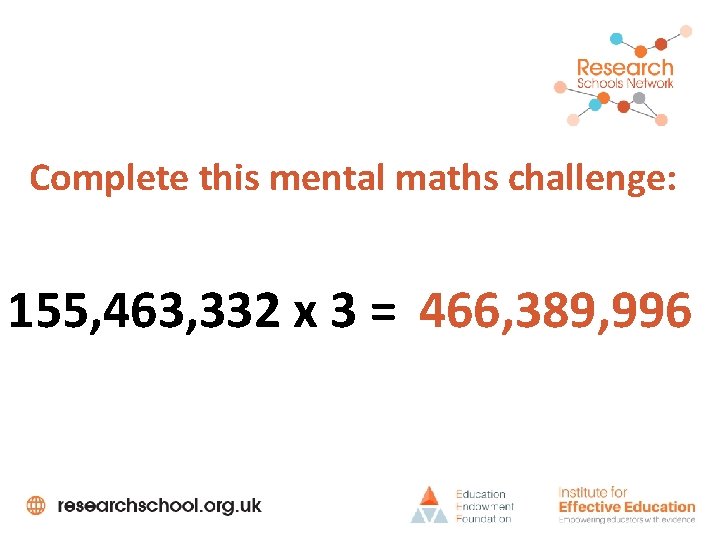
Complete this mental maths challenge: 155, 463, 332 x 3 = 466, 389, 996
Callan et al. (2016) ‘Metacognition, Strategies, Achievement and Demographics: Relationships Across Countries’.
Then they need to their APPLY METACOGNITIVE KNOWLEDGE
Cognition Metacognition Motivation
Cognition Metacognition Motivation
Cognition Metacognition Motivation
First… Let’s make it real. Translate the following…
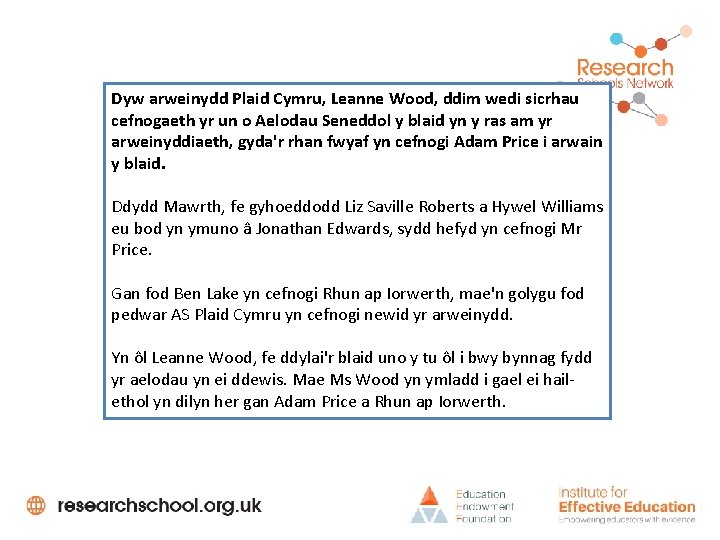
Dyw arweinydd Plaid Cymru, Leanne Wood, ddim wedi sicrhau cefnogaeth yr un o Aelodau Seneddol y blaid yn y ras am yr arweinyddiaeth, gyda'r rhan fwyaf yn cefnogi Adam Price i arwain y blaid. Ddydd Mawrth, fe gyhoeddodd Liz Saville Roberts a Hywel Williams eu bod yn ymuno â Jonathan Edwards, sydd hefyd yn cefnogi Mr Price. Gan fod Ben Lake yn cefnogi Rhun ap Iorwerth, mae'n golygu fod pedwar AS Plaid Cymru yn cefnogi newid yr arweinydd. Yn ôl Leanne Wood, fe ddylai'r blaid uno y tu ôl i bwy bynnag fydd yr aelodau yn ei ddewis. Mae Ms Wood yn ymladd i gael ei hailethol yn dilyn her gan Adam Price a Rhun ap Iorwerth.
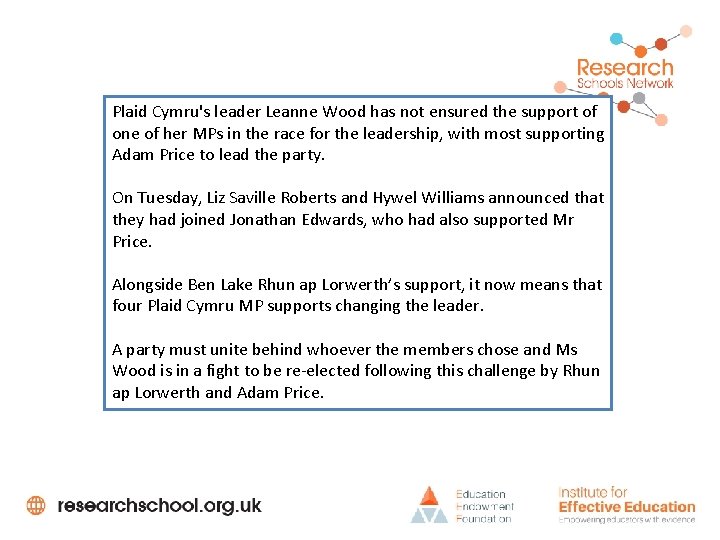
Plaid Cymru's leader Leanne Wood has not ensured the support of one of her MPs in the race for the leadership, with most supporting Adam Price to lead the party. On Tuesday, Liz Saville Roberts and Hywel Williams announced that they had joined Jonathan Edwards, who had also supported Mr Price. Alongside Ben Lake Rhun ap Lorwerth’s support, it now means that four Plaid Cymru MP supports changing the leader. A party must unite behind whoever the members chose and Ms Wood is in a fight to be re-elected following this challenge by Rhun ap Lorwerth and Adam Price.
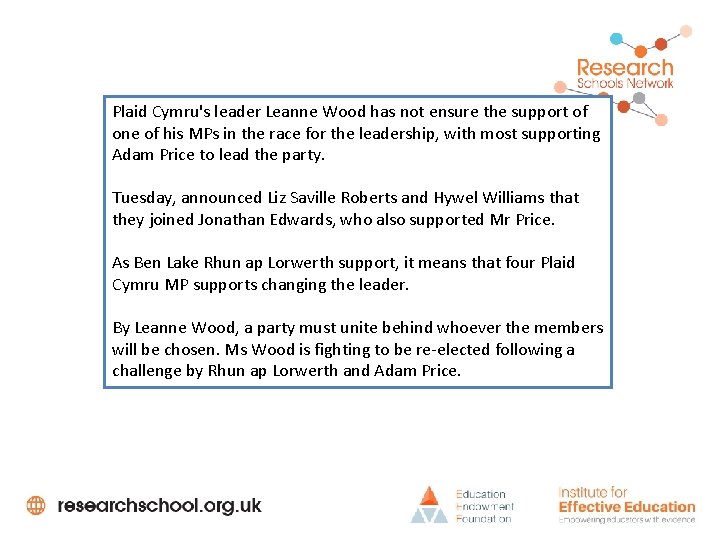
Plaid Cymru's leader Leanne Wood has not ensure the support of one of his MPs in the race for the leadership, with most supporting Adam Price to lead the party. Tuesday, announced Liz Saville Roberts and Hywel Williams that they joined Jonathan Edwards, who also supported Mr Price. As Ben Lake Rhun ap Lorwerth support, it means that four Plaid Cymru MP supports changing the leader. By Leanne Wood, a party must unite behind whoever the members will be chosen. Ms Wood is fighting to be re-elected following a challenge by Rhun ap Lorwerth and Adam Price.
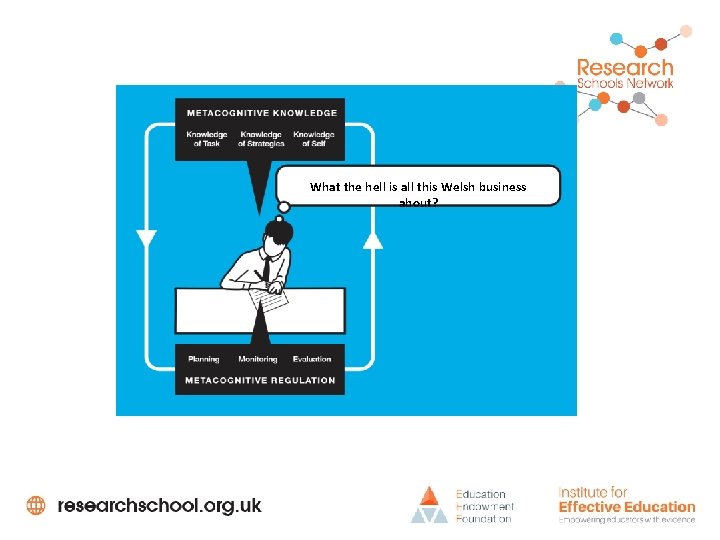
What the hell is all this Welsh business about?
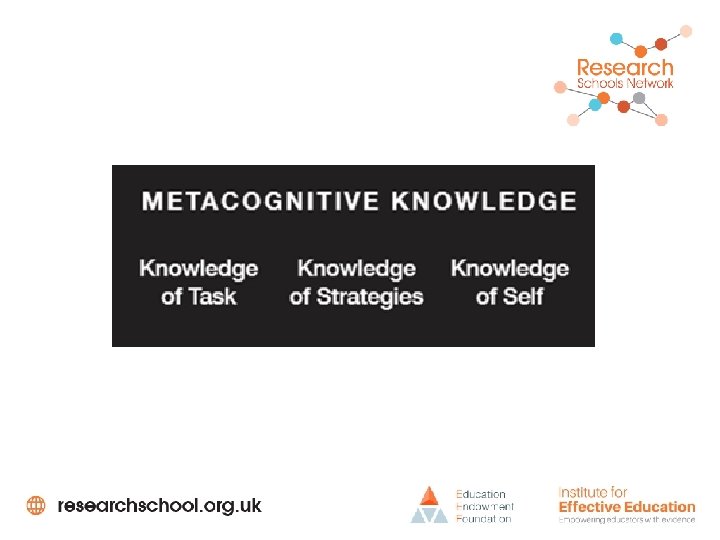
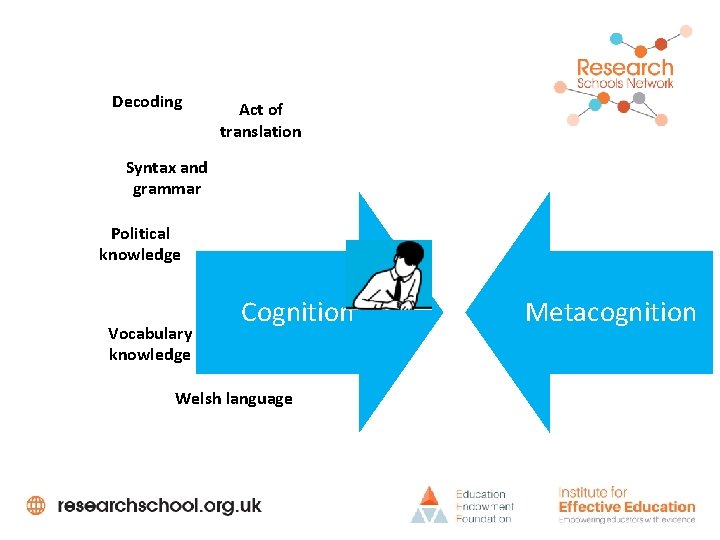
Decoding Act of translation Syntax and grammar Political knowledge Vocabulary knowledge Cognition Welsh language Metacognition
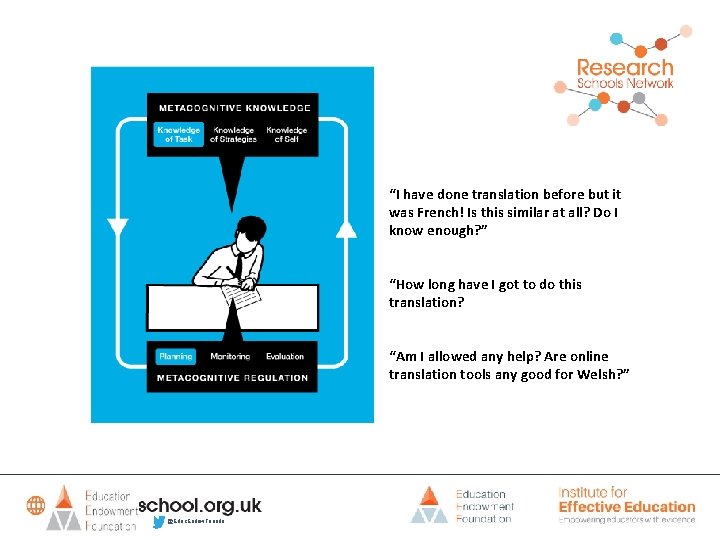
“I have done translation before but it was French! Is this similar at all? Do I know enough? ” “How long have I got to do this translation? “Am I allowed any help? Are online translation tools any good for Welsh? ” @Educ. Endow. Foundn
“First, I need to identify the topic. Then I’ll write down the names in the article. Do I know these people? ” “That’s it…an online translation tool it is!” “How accurate are these online translations? I could always check afterwards. ” @Educ. Endow. Foundn
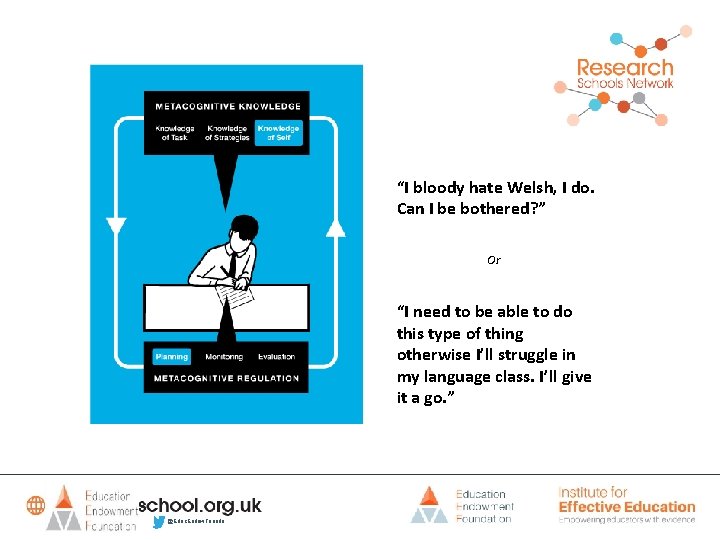
“I bloody hate Welsh, I do. Can I be bothered? ” Or “I need to be able to do this type of thing otherwise I’ll struggle in my language class. I’ll give it a go. ” @Educ. Endow. Foundn
Rank these to reflect which you are currently doing in your school
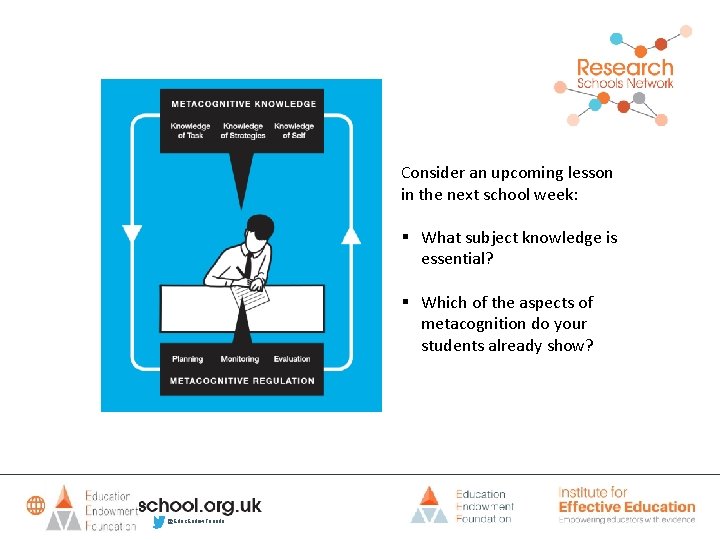
Consider an upcoming lesson in the next school week: § What subject knowledge is essential? § Which of the aspects of metacognition do your students already show? @Educ. Endow. Foundn
Mobilising Metacognition
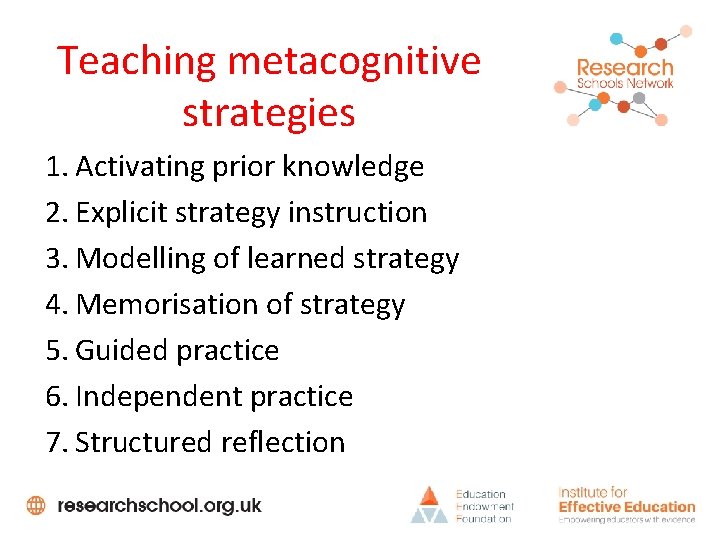
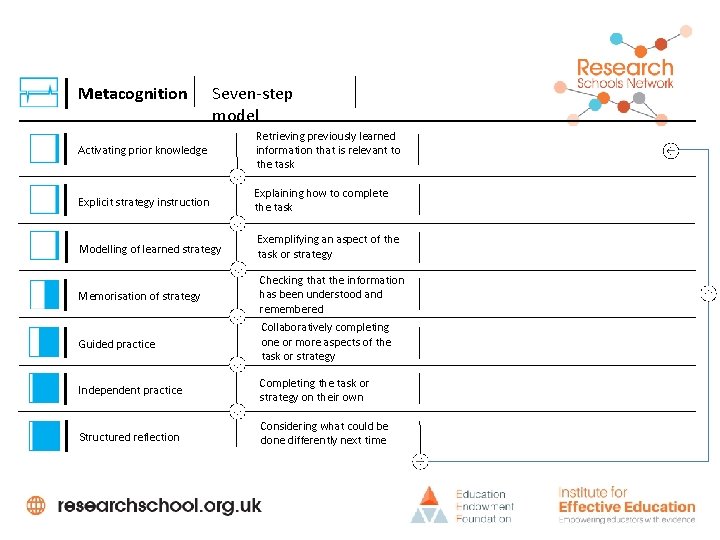
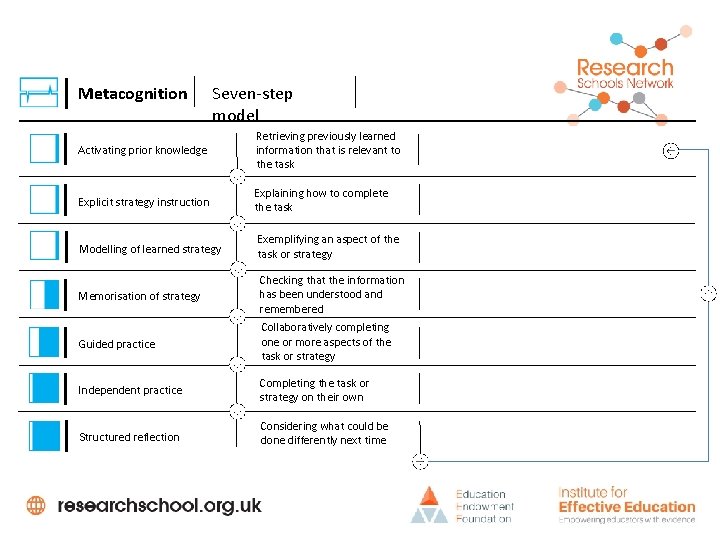
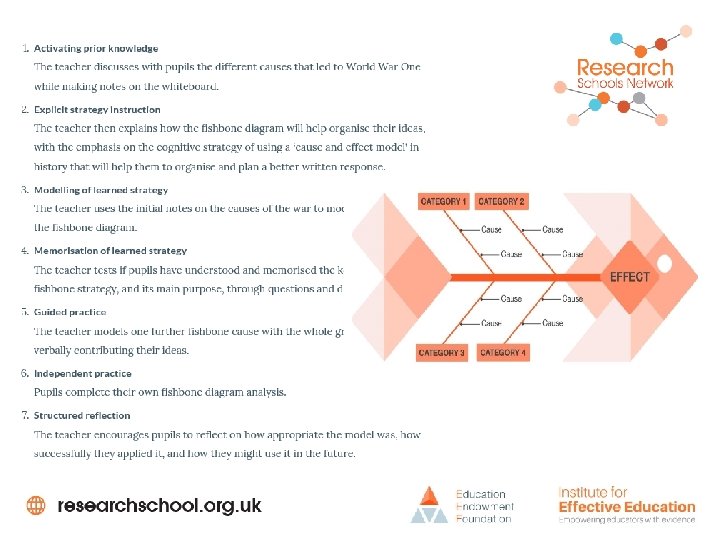
Teaching metacognitive strategies 1. Activating prior knowledge 2. Explicit strategy instruction 3. Modelling of learned strategy 4. Memorisation of strategy 5. Guided practice 6. Independent practice 7. Structured reflection
Metacognition Seven-step model Activating prior knowledge Retrieving previously learned information that is relevant to the task Explicit strategy instruction Explaining how to complete the task Modelling of learned strategy Exemplifying an aspect of the task or strategy Memorisation of strategy Checking that the information has been understood and remembered Guided practice Collaboratively completing one or more aspects of the task or strategy Independent practice Completing the task or strategy on their own Structured reflection Considering what could be done differently next time
Metacognition Seven-step model Activating prior knowledge Retrieving previously learned information that is relevant to the task Explicit strategy instruction Explaining how to complete the task Modelling of learned strategy Exemplifying an aspect of the task or strategy Memorisation of strategy Checking that the information has been understood and remembered Guided practice Collaboratively completing one or more aspects of the task or strategy Independent practice Completing the task or strategy on their own Structured reflection Considering what could be done differently next time
jl. elsworth@huntington –ed. org. uk