
WHAT IS MEDICAL DOSIMETRY MEDICAL DOSIMETRY DEFINED The





- Slides: 22
WHAT IS MEDICAL DOSIMETRY?
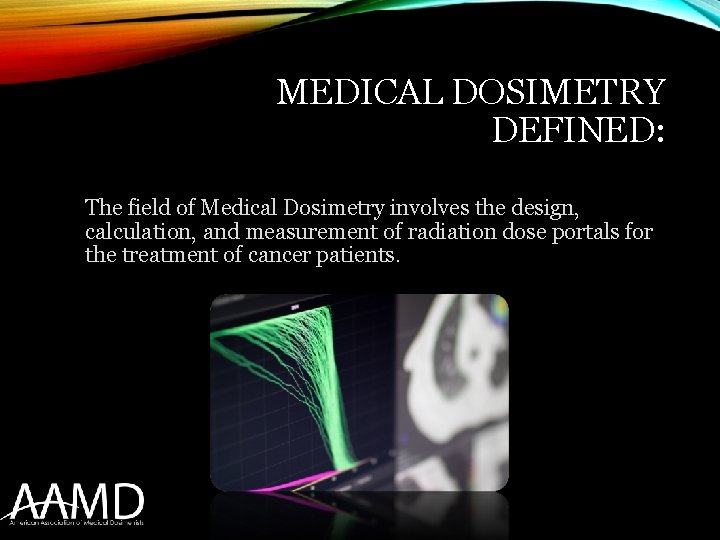
MEDICAL DOSIMETRY DEFINED: The field of Medical Dosimetry involves the design, calculation, and measurement of radiation dose portals for the treatment of cancer patients.
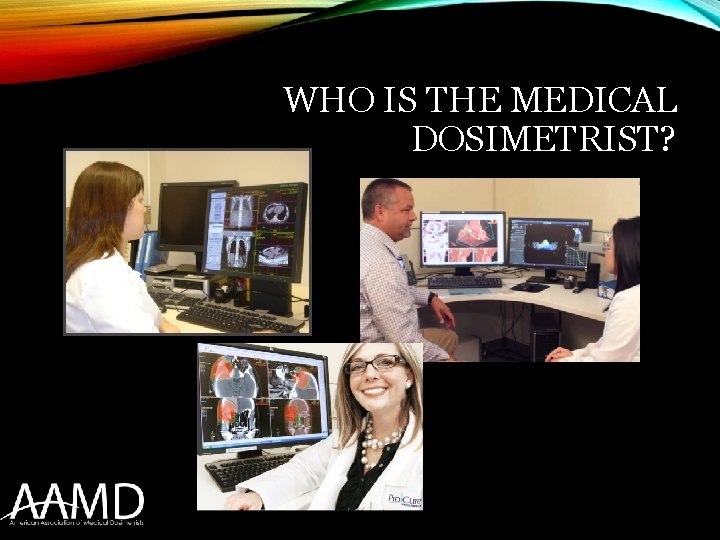
WHO IS THE MEDICAL DOSIMETRIST?
A MEDICAL DOSIMETRIST: § has the education and expertise necessary to generate radiation dose distributions and dose calculations. § has knowledge of the overall equipment and treatment machines. § has knowledge in radioactive isotopes and the application and procedures involved in using these sources. § is a member of the radiation oncology team who works closely in collaboration with radiation therapists, medical physicists and radiation oncologist. § will use their knowledge of physics, math, anatomy & physiology, and radiobiology to develop an optimal arrangement of radiation portals to spare normal tissues while applying a prescribed dose to the targeted disease volume.
WHAT SKILLS ARE NEEDED? § Knowledge in the area of anatomy, physiology, clinical oncology, radiobiology, and radiation physics § An understanding of the technical aspects of radiation oncology and medical physics § Software competency in programs such as as Word, Excel, and Powerpoint as well as communications systems. § Good oral and written communication skills § Excellent analytical skills and problem-solving skills. § Working knowledge of radiation safety and regulations § Skills to interpret and execute treatment plan as defined in relevant treatment protocols § Good math and anatomy skills, while able to visualize in threedimensional concepts for the planning process
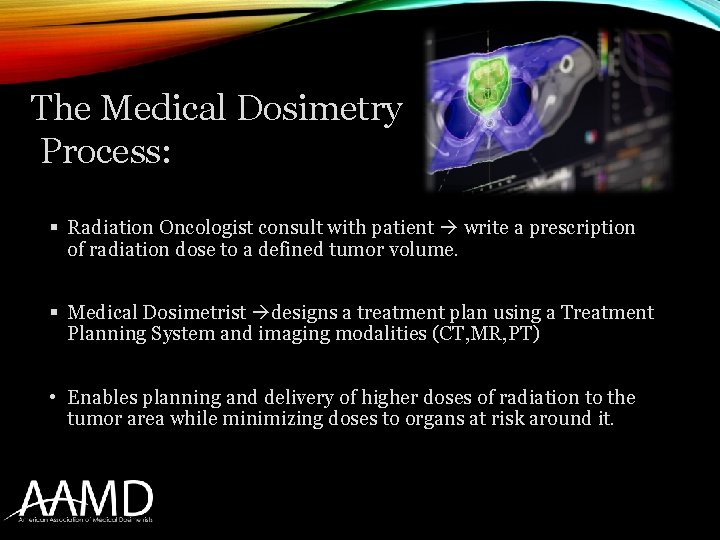
The Medical Dosimetry Process: § Radiation Oncologist consult with patient write a prescription of radiation dose to a defined tumor volume. § Medical Dosimetrist designs a treatment plan using a Treatment Planning System and imaging modalities (CT, MR, PT) • Enables planning and delivery of higher doses of radiation to the tumor area while minimizing doses to organs at risk around it.
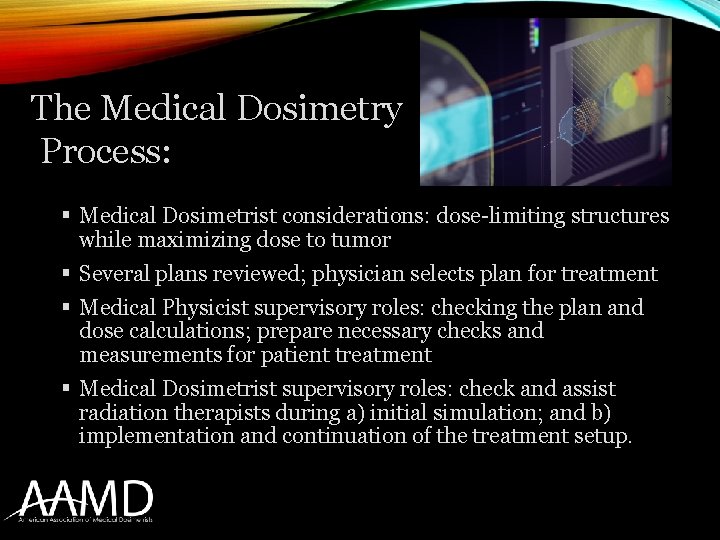
The Medical Dosimetry Process: § Medical Dosimetrist considerations: dose-limiting structures while maximizing dose to tumor § Several plans reviewed; physician selects plan for treatment § Medical Physicist supervisory roles: checking the plan and dose calculations; prepare necessary checks and measurements for patient treatment § Medical Dosimetrist supervisory roles: check and assist radiation therapists during a) initial simulation; and b) implementation and continuation of the treatment setup.
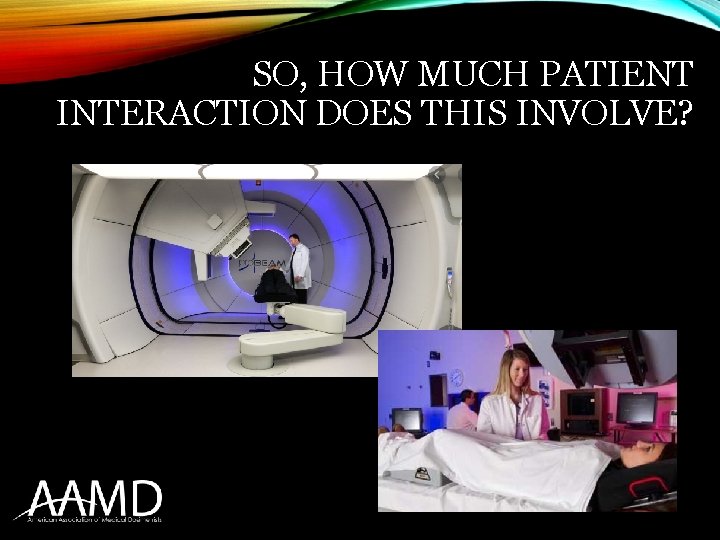
SO, HOW MUCH PATIENT INTERACTION DOES THIS INVOLVE?
Interaction with the patient: § During the planning stages as well as at various times during the patient treatment. § The interaction is not daily, rather specific to simulation setup, treatment planning scans, treatment setup, troubleshooting issues, and additional calculation and measurement issues. § A Dosimetrist must be knowledgeable in-patient care, as well as in ethical and moral issues in the profession. § Dosimetry has a major impact factor on patient care by carefully designing the treatment plan which is the best chance for survival and decreasing the side effects from the radiation treatments.
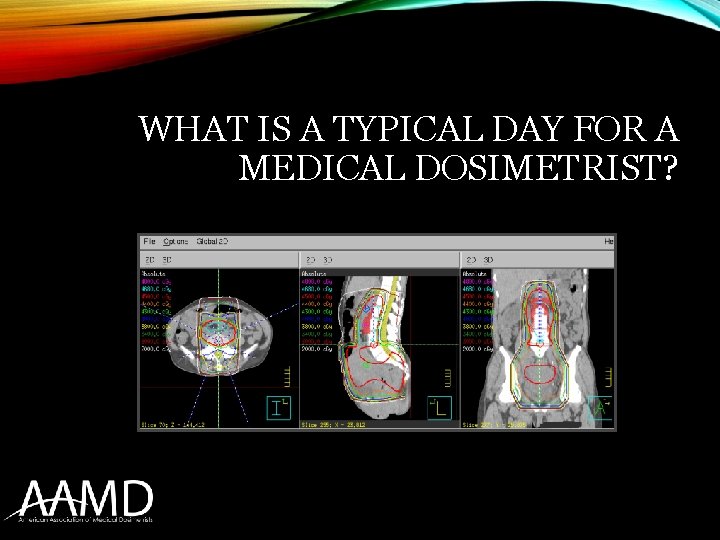
WHAT IS A TYPICAL DAY FOR A MEDICAL DOSIMETRIST?
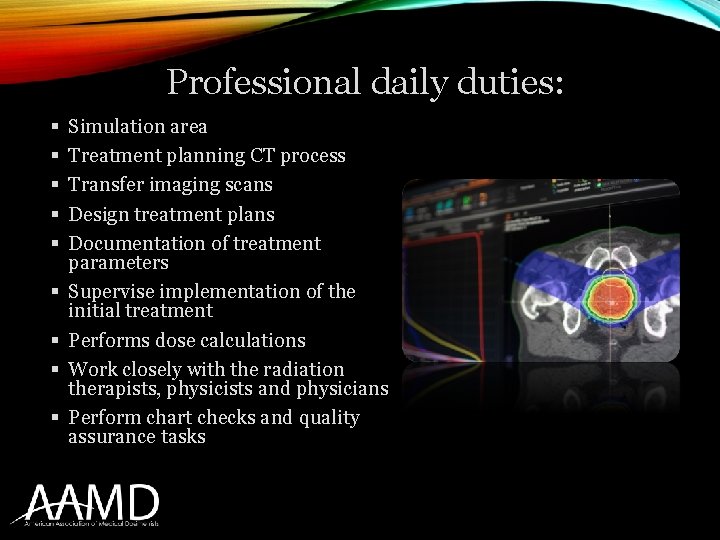
Professional daily duties: § § § § § Simulation area Treatment planning CT process Transfer imaging scans Design treatment plans Documentation of treatment parameters Supervise implementation of the initial treatment Performs dose calculations Work closely with the radiation therapists, physicists and physicians Perform chart checks and quality assurance tasks
WHAT ARE THE EDUCATIONAL REQUIREMENTS?
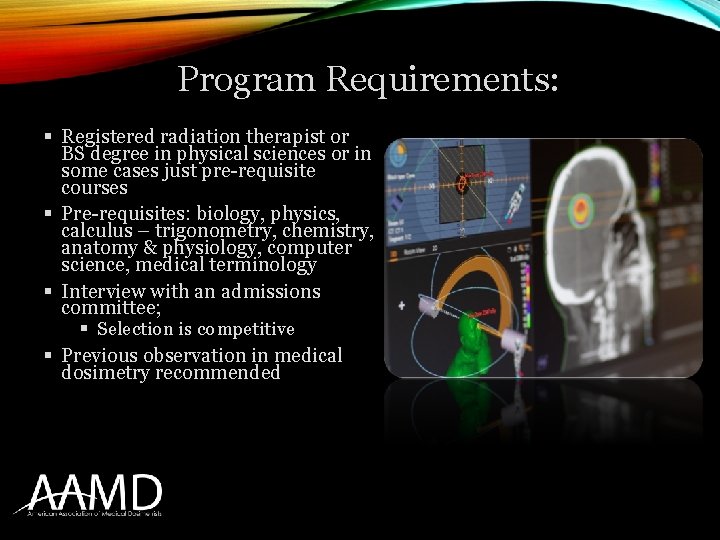
Program Requirements: § Registered radiation therapist or BS degree in physical sciences or in some cases just pre-requisite courses § Pre-requisites: biology, physics, calculus – trigonometry, chemistry, anatomy & physiology, computer science, medical terminology § Interview with an admissions committee; § Selection is competitive § Previous observation in medical dosimetry recommended
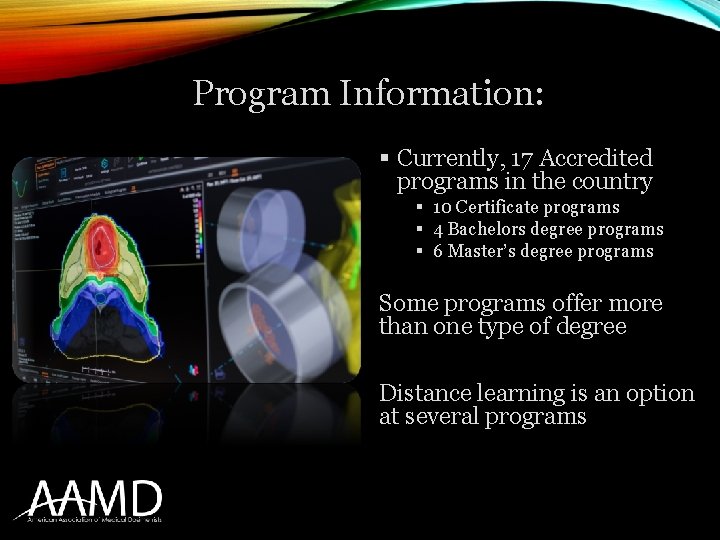
Program Information: § Currently, 17 Accredited programs in the country § 10 Certificate programs § 4 Bachelors degree programs § 6 Master’s degree programs Some programs offer more than one type of degree Distance learning is an option at several programs
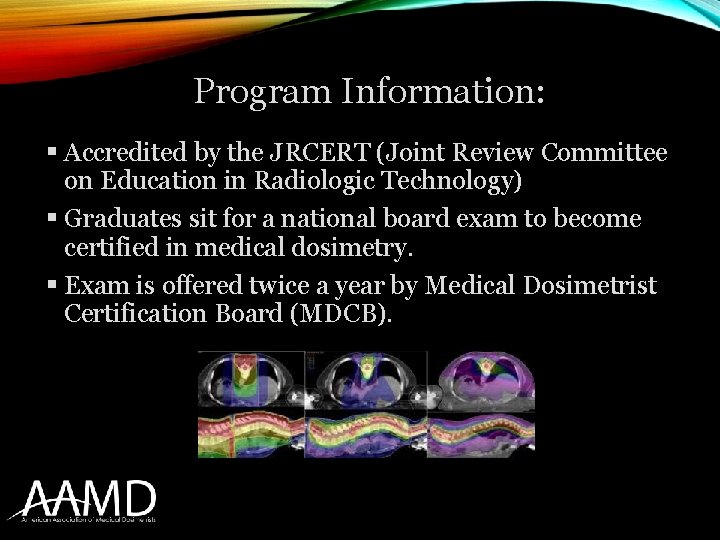
Program Information: § Accredited by the JRCERT (Joint Review Committee on Education in Radiologic Technology) § Graduates sit for a national board exam to become certified in medical dosimetry. § Exam is offered twice a year by Medical Dosimetrist Certification Board (MDCB).
Employment Outlook: § The future job market is strong § There is an overall shortage within the profession but is greater in certain regions of the country § Jobs are available in rural and urban settings § Advancement in technology has increased the demand for medical dosimetrists
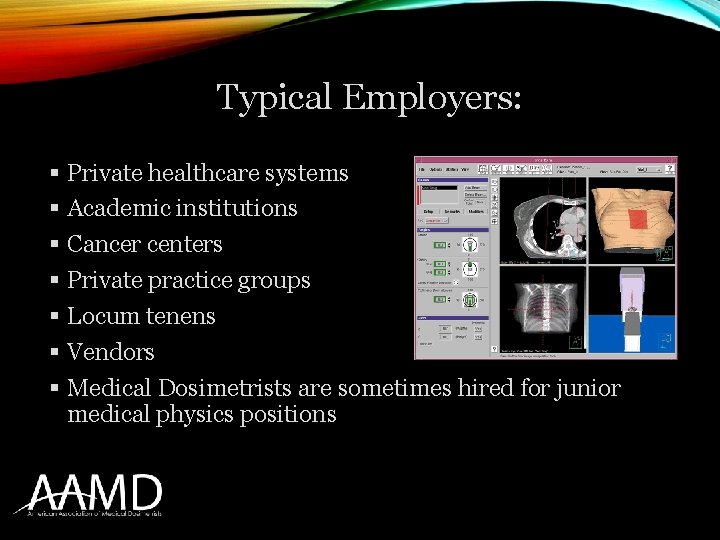
Typical Employers: § Private healthcare systems § Academic institutions § Cancer centers § Private practice groups § Locum tenens § Vendors § Medical Dosimetrists are sometimes hired for junior medical physics positions
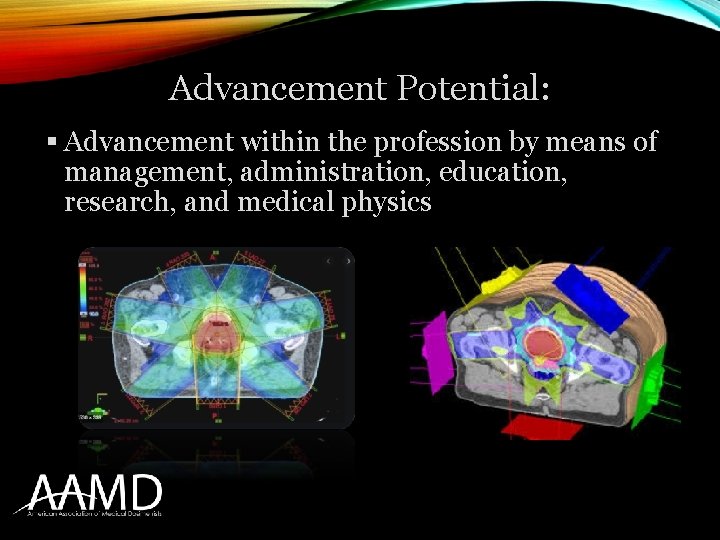
Advancement Potential: § Advancement within the profession by means of management, administration, education, research, and medical physics
Typical salary ranges: § The salary ranges vary throughout the country. § According to the 2017 AAMD Salary Survey Report, annual salary ranges reported: Starting salaries: National average: Higher Range: $80, 000 -$115, 000 $116, 636 $120, 000 -$200, 000 • Salary can vary greatly across regions
Personal-Professional Information: § Managing personal life while working: typically the same as any job § For some, there are many hours of overtime § For others, it is a M-F daytime job with no extra hours § FT and PT employment opportunities; only about 5 -10% are PT employees § Liability is covered by employers usually; but many medical dosimetrists take out additional liability insurance
Important Links AMERICAN ASSOCIATION OF MEDICAL DOSIMETRISTS (AAMD) WWW. MEDICALDOSIMETRY. ORG MEDICAL DOSIMETRIST CERTIFICATION BOARD (MDCB) WWW. MDCB. ORG JOINT REVIEW COMMITTEE ON EDUCATION IN RADIOLOGIC TECHNOLOGY WWW. JRCERT. ORG
Questions?