
What is Media Essential Questions n n n
















- Slides: 48
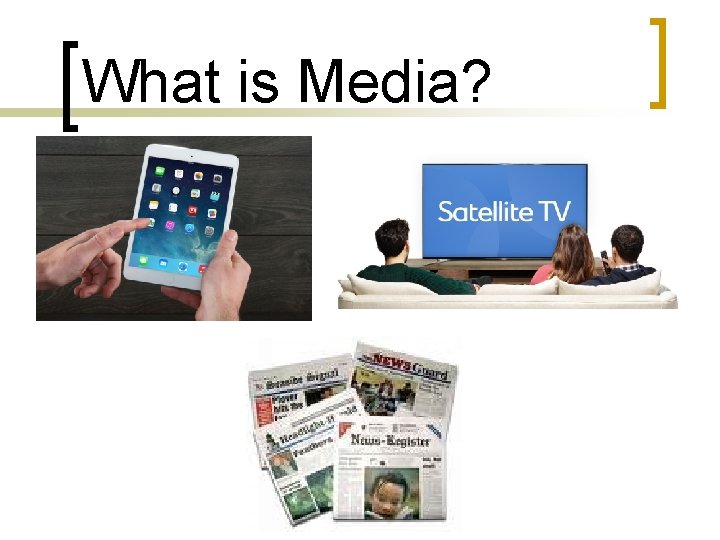
What is Media?
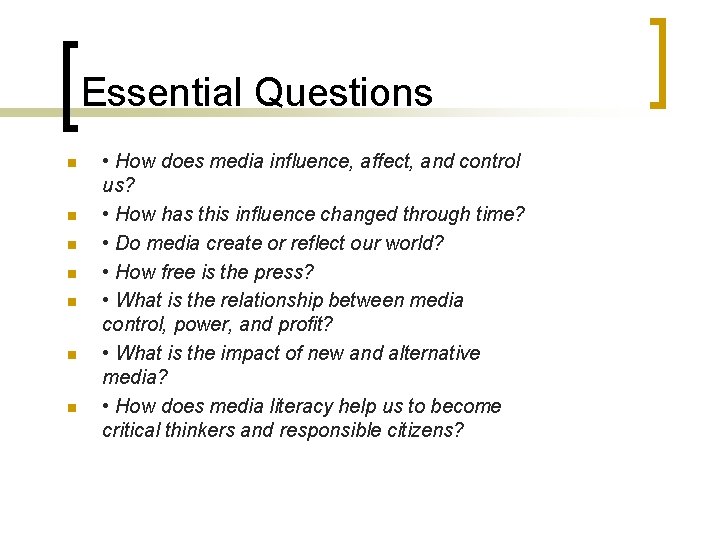
Essential Questions n n n n • How does media influence, affect, and control us? • How has this influence changed through time? • Do media create or reflect our world? • How free is the press? • What is the relationship between media control, power, and profit? • What is the impact of new and alternative media? • How does media literacy help us to become critical thinkers and responsible citizens?
Definitions n Media is the way in which a message is communicated n Media can also refer to the people that create the message n Media also describes the entity or force it has come to hold in society
Types of Media n Make a list of 15 different types of media used in society.
Types of Media n In groups of 4, make a chart listing the advantages and disadvantages of the following: n Newspapers Television Radio The Internet n n n
Roles of the Media n n Information Entertainment Education Advertising
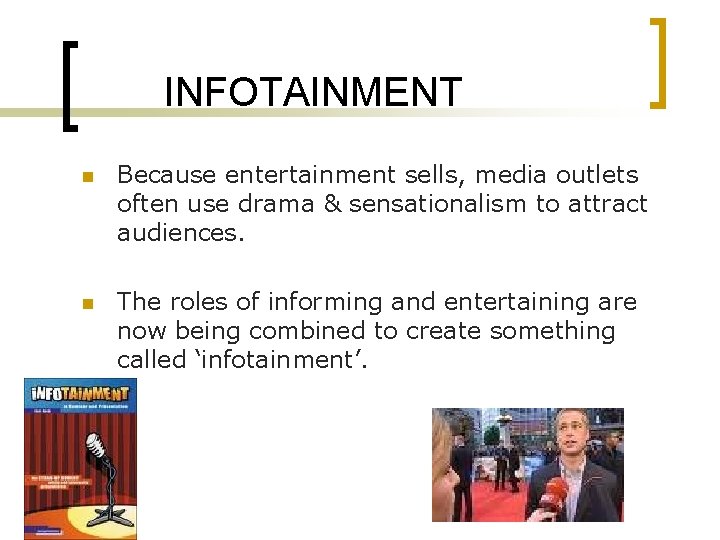
INFOTAINMENT n Because entertainment sells, media outlets often use drama & sensationalism to attract audiences. n The roles of informing and entertaining are now being combined to create something called ‘infotainment’.
Advertising in the Media
Sources of Advertising n n n n Television Magazines Billboards Radio Internet E-mail Flyers / Newsletters Infomercials
Advertising • Ads for Children's Tylenol were placed in pediatricians' examination rooms.
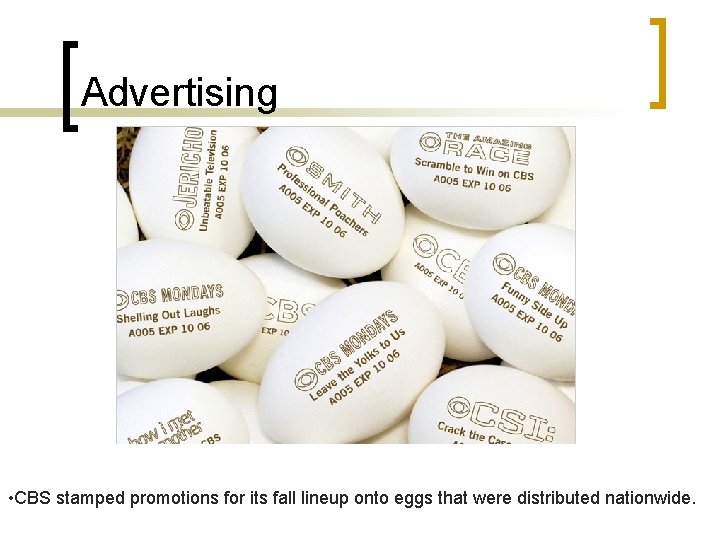
Advertising • CBS stamped promotions for its fall lineup onto eggs that were distributed nationwide.
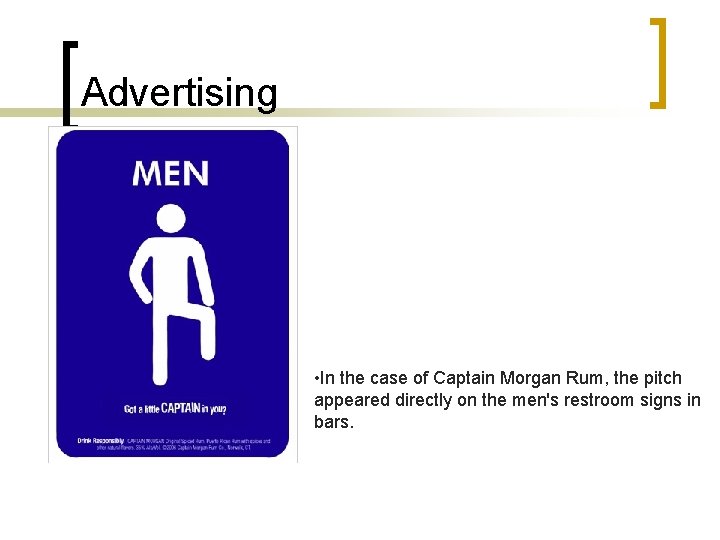
Advertising • In the case of Captain Morgan Rum, the pitch appeared directly on the men's restroom signs in bars.
Advertising • Airline passengers may see ads like this one for Rolodex in trays used for baggage screening. Marketers say that the best way to reach time-pressed consumers is to place messages where they cannot avoid them.
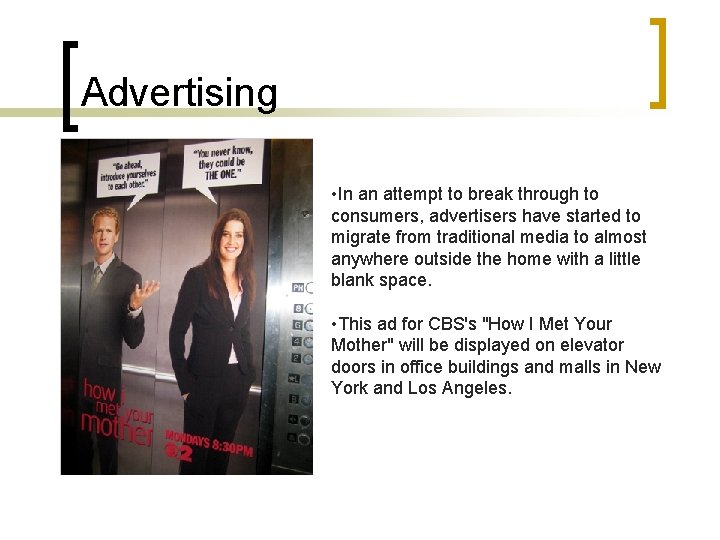
Advertising • In an attempt to break through to consumers, advertisers have started to migrate from traditional media to almost anywhere outside the home with a little blank space. • This ad for CBS's "How I Met Your Mother" will be displayed on elevator doors in office buildings and malls in New York and Los Angeles.
Ads: Yesterday and Today n Check out the following websites: n Yesterday: http: //www. classictvads. com/classicindex. shtml Today: http: //www. funnyplace. org n n Compare several classic ads with more recent ones and make a list of the changes you notice over the years.
Limits on Advertising n Boston Advertising Scare n What restrictions should be placed on companies when dealing with product promotion? n Shark Week Promo
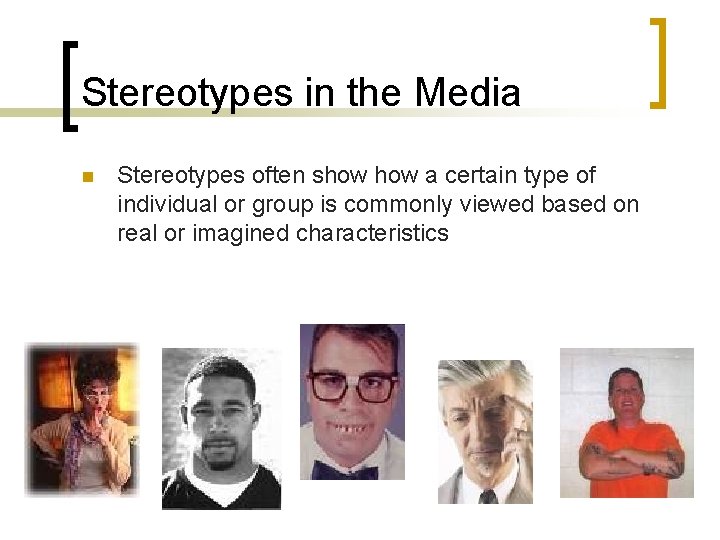
Stereotypes in the Media n Stereotypes often show a certain type of individual or group is commonly viewed based on real or imagined characteristics
Media Stereotyping n n n Ethnic & Visible Minorities Aboriginal People Girls & Women Men & Masculinity Gays & Lesbians Whiteness & White Privilege
Media Bias: Believe Everything or Nothing At All
What is Bias? n Bias is manipulating information, intentionally or unintentionally, in a way that influences how it is interpreted n Every news story is influenced by the attitudes/background of interviewers, writers, photographers, & editors
Bias Tactics n n n n Photos, captions, camera angles Choice & tone Selection & Omission Placement Headline Names and titles Stats & crowd counts Source
Bias Tactic: Omission of Information n Leaving information out intentionally can alter how a situation is perceived.
Bias Tactic: Omission of Information n An editor can express a bias by choosing to use or not to use a specific news item n Within a given story, some details can be ignored, and others included, to give readers or viewers a different opinion about the events reported n difficult to detect n Can be observed by comparing various news reports
Bias Tactic: Placement n Are first page stories more important than those located at the back? n TV & radio newscast run the most important earlier & less significant later n Placement influences what a viewer will think of a story
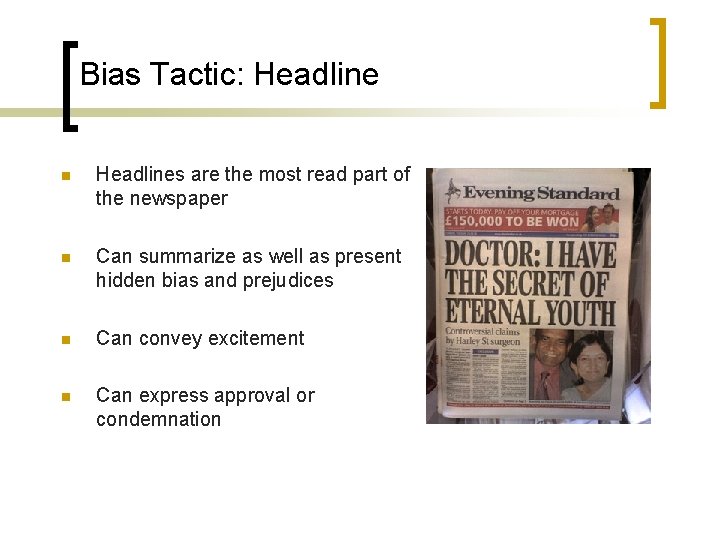
Bias Tactic: Headline n Headlines are the most read part of the newspaper n Can summarize as well as present hidden bias and prejudices n Can convey excitement n Can express approval or condemnation
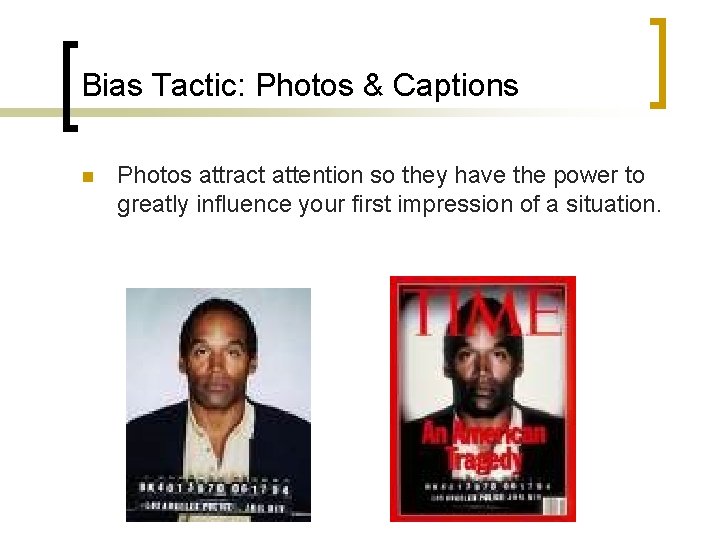
Bias Tactic: Photos & Captions n Photos attract attention so they have the power to greatly influence your first impression of a situation.
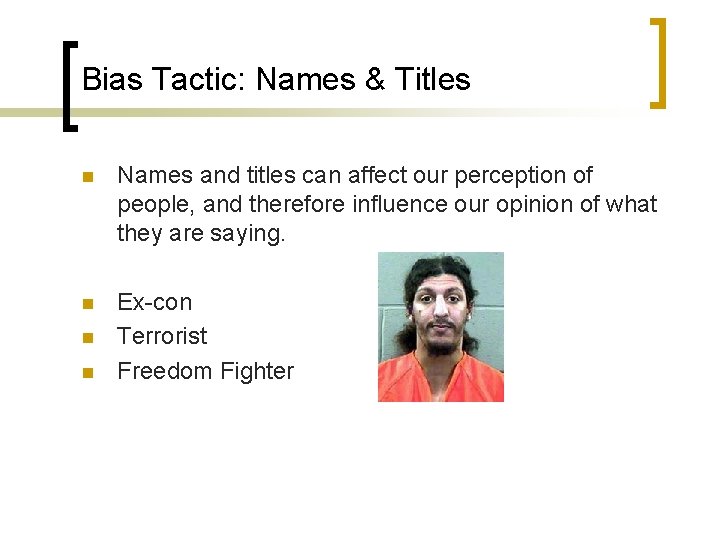
Bias Tactic: Names & Titles n Names and titles can affect our perception of people, and therefore influence our opinion of what they are saying. n Ex-con Terrorist Freedom Fighter n n
Bias Tactic: Choice & Tone n Words can imply different meanings, even when describing the same situation. n positive or negative words or words with particular connotation can influence the reader n This tactic is often used in headlines to grab attention.
Bias Tactic: Statistics n Using numbers to influence opinion, such as percentages. n Numbers may be used in some stories to make them more spectacular.
Bias Tactic: Source Control n Always consider where a news item originates n Different people may have a different bias to the story n What sources are used to make a news story?
Media Convergence n an economic strategy in which communications companies seek financial benefit by making the various media properties they own work together
Media Convergence n Involves three main components 1. corporate concentration, whereby fewer large companies own more and more media properties 2. digitization, whereby media content produced in a universal computer language can be easily adapted for use in any medium 3. government deregulation
Canadian Media Convergence n In Canada, media concentration – ownership of the media by a small group of people – is a type of censorship because it limits the choice and variety of media available to citizens. n Canadian Media Conglomerates
Media Censorship n Censorship is the control of speech and other forms of expression. n Severe cases exist where the government controls the media. n Tank Man
Media Censorship n Top 10 Most Censored Countries (2015)
Media Censorship n Top 10 Most Censored Countries (2015) n Use the world map to locate the top 10 most censored countries. n Describe the censorship that the government uses for each.
PROPAGANDA: A Good Word Gone Bad?
PROPAGANDA n Propaganda is nothing more than a process of persuasive communication between a sender and recipient. n Propaganda is usually designed to benefit the sender more than the receiver.
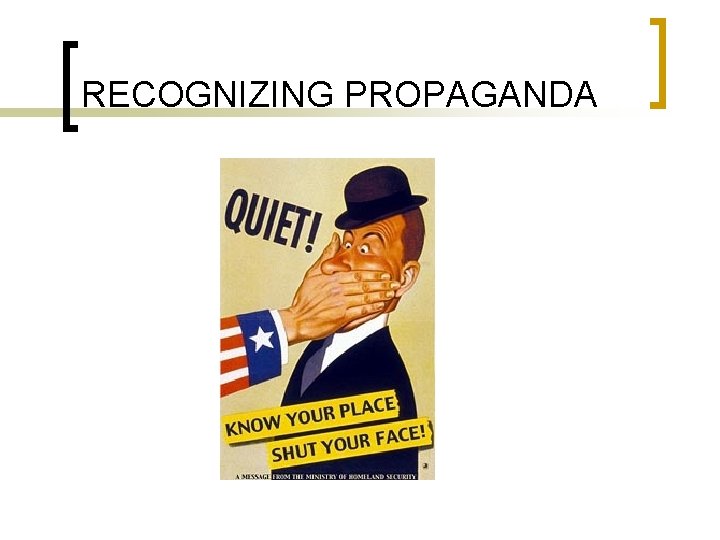
RECOGNIZING PROPAGANDA
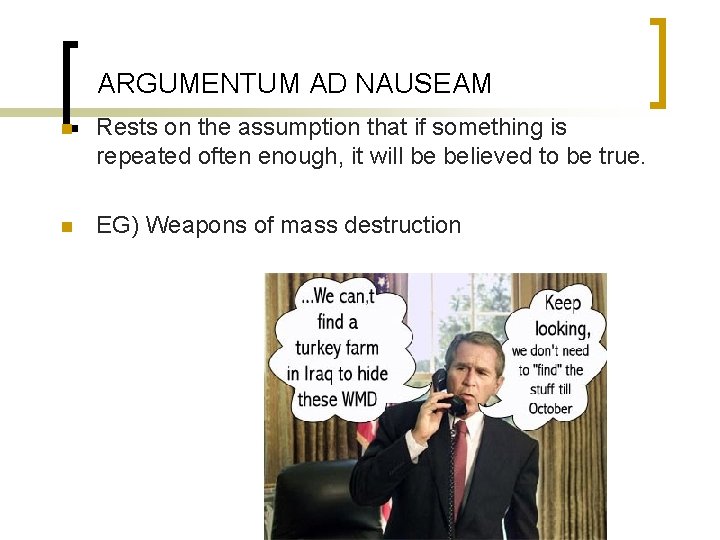
ARGUMENTUM AD NAUSEAM n Rests on the assumption that if something is repeated often enough, it will be believed to be true. n EG) Weapons of mass destruction
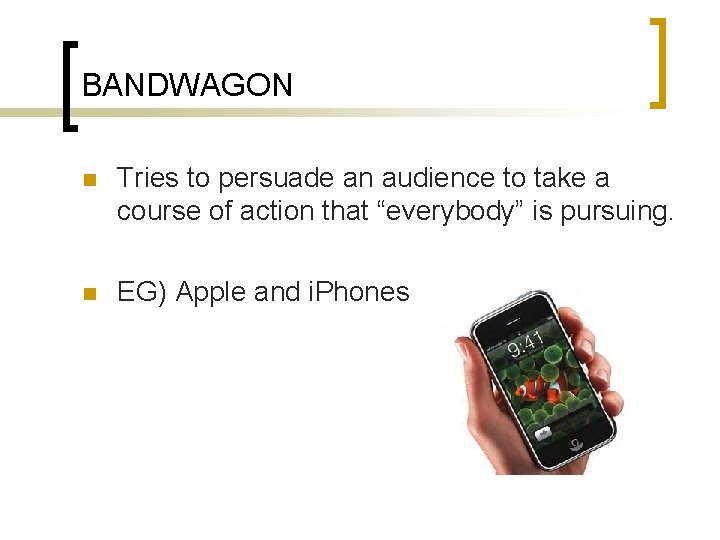
BANDWAGON n Tries to persuade an audience to take a course of action that “everybody” is pursuing. n EG) Apple and i. Phones
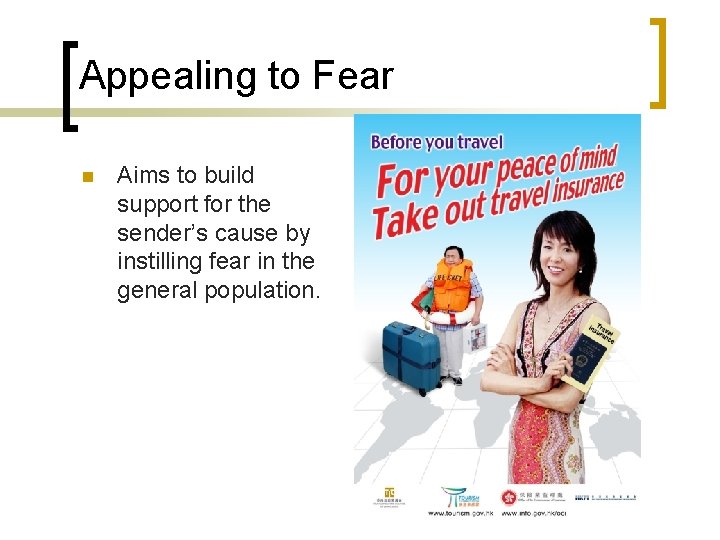
Appealing to Fear n Aims to build support for the sender’s cause by instilling fear in the general population.
ASSOCIATION/TRANSFER n Links symbols, values, objects, people, etc. together to project positive or negative qualities.
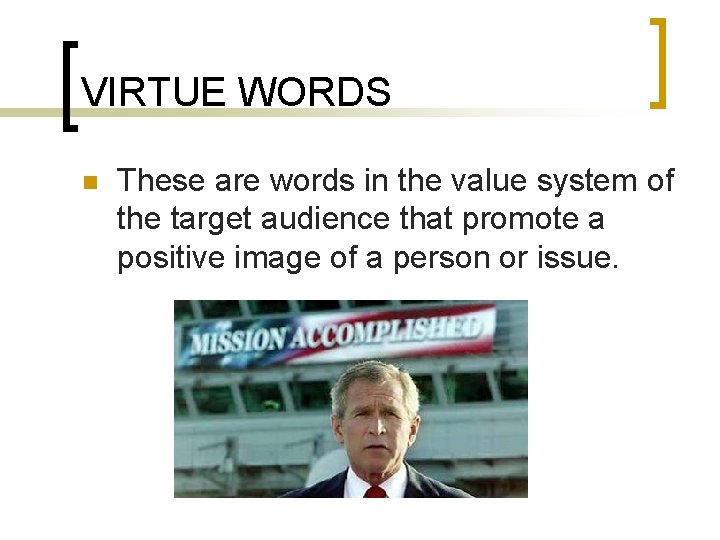
VIRTUE WORDS n These are words in the value system of the target audience that promote a positive image of a person or issue.
Propaganda Examples n n WW 2 Power of Persuasion Ducktators
Propaganda Examples n Middle East Propaganda Children Cartoons