
What is Matter Matter is anything that takes
- Slides: 22
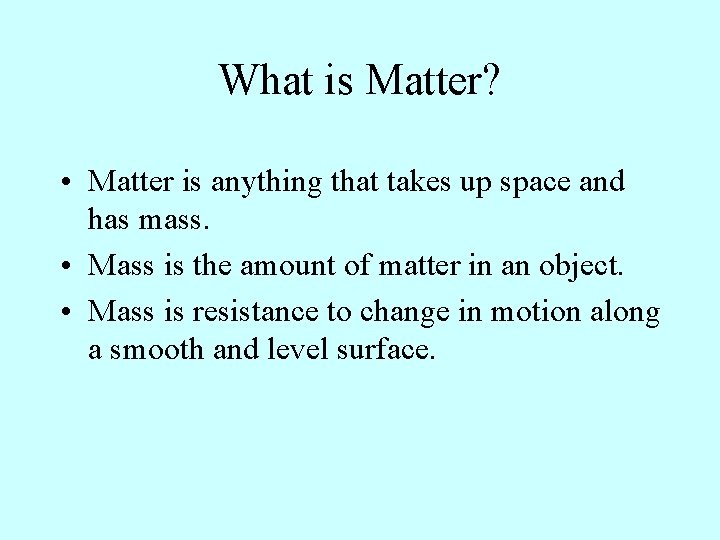
What is Matter? • Matter is anything that takes up space and has mass. • Mass is the amount of matter in an object. • Mass is resistance to change in motion along a smooth and level surface.
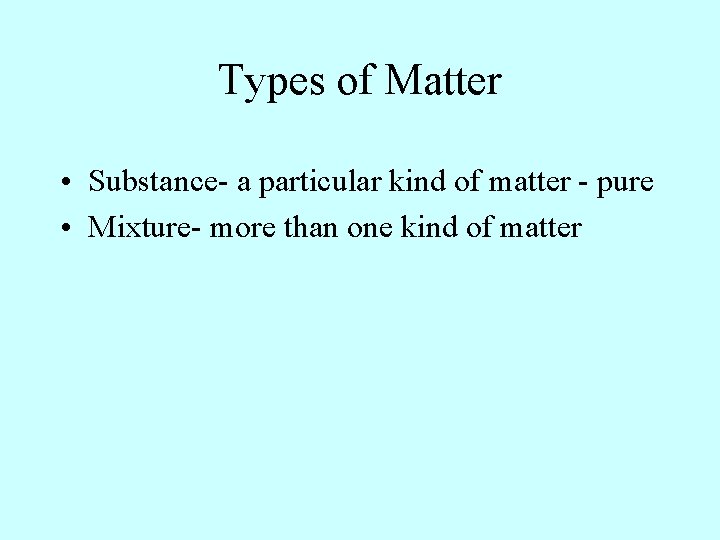
Types of Matter • Substance- a particular kind of matter - pure • Mixture- more than one kind of matter
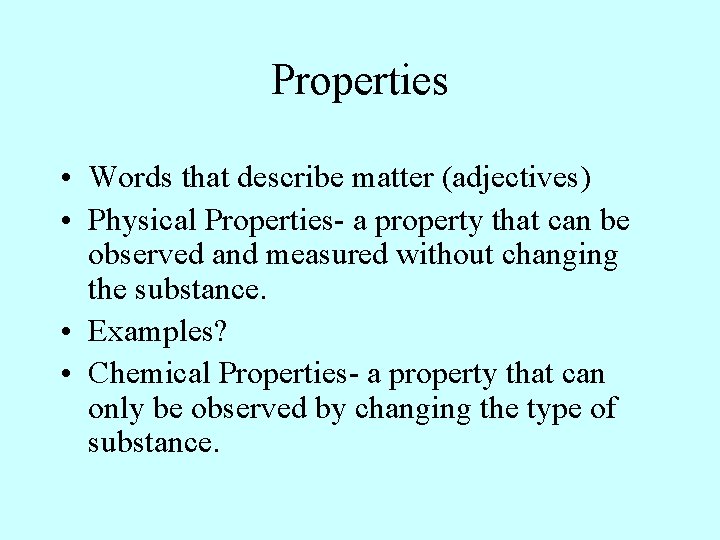
Properties • Words that describe matter (adjectives) • Physical Properties- a property that can be observed and measured without changing the substance. • Examples? • Chemical Properties- a property that can only be observed by changing the type of substance.
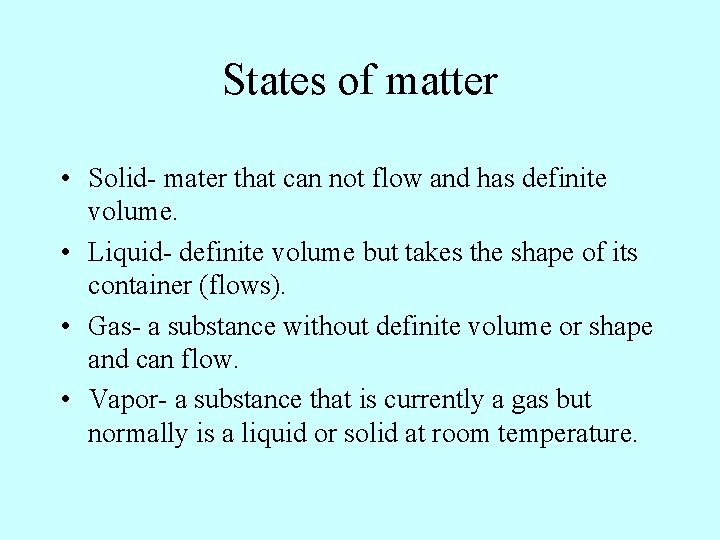
States of matter • Solid- mater that can not flow and has definite volume. • Liquid- definite volume but takes the shape of its container (flows). • Gas- a substance without definite volume or shape and can flow. • Vapor- a substance that is currently a gas but normally is a liquid or solid at room temperature.
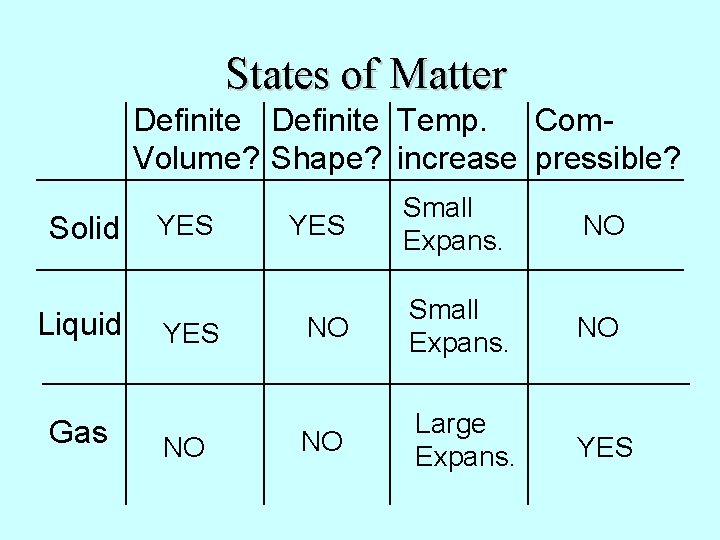
States of Matter Definite Temp. Com. Volume? Shape? increase pressible? Solid Liquid Gas YES NO YES Small Expans. NO NO Large Expans. YES
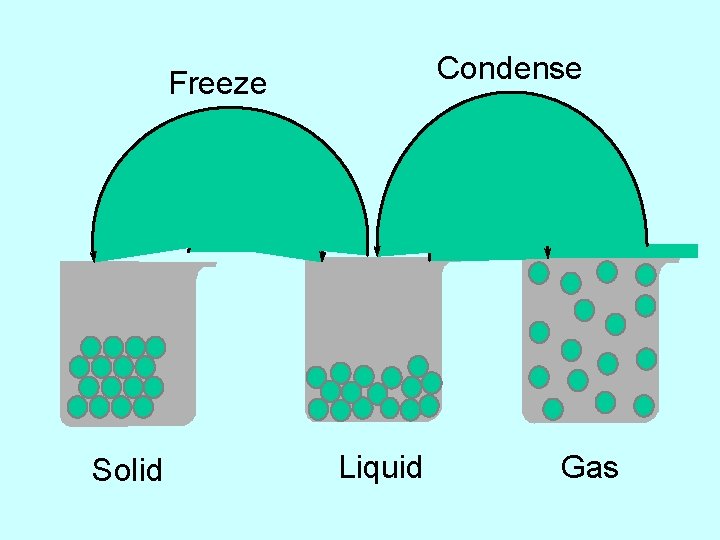
Condense Freeze Evaporate Melt Solid Liquid Gas
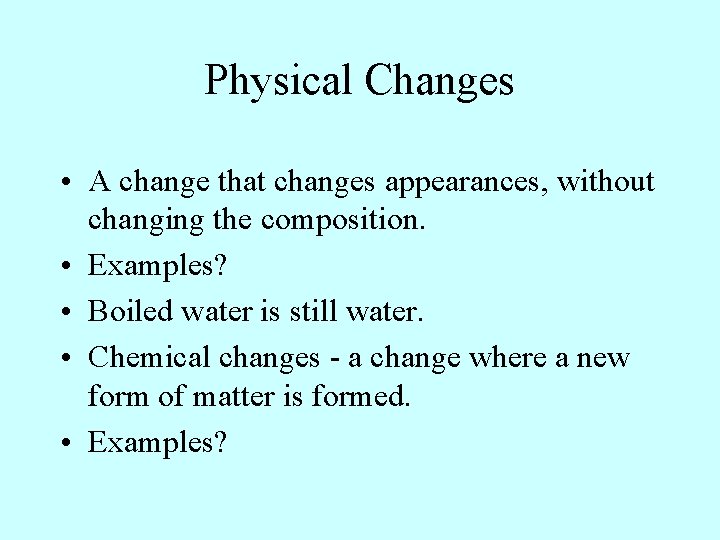
Physical Changes • A change that changes appearances, without changing the composition. • Examples? • Boiled water is still water. • Chemical changes - a change where a new form of matter is formed. • Examples?
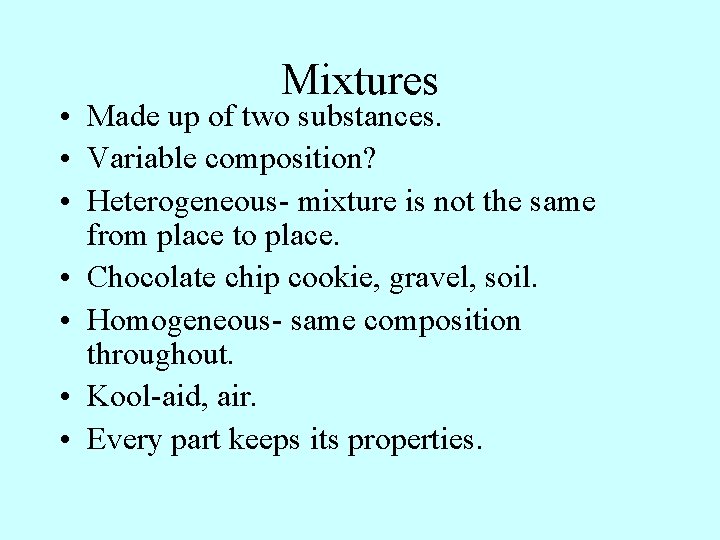
Mixtures • Made up of two substances. • Variable composition? • Heterogeneous- mixture is not the same from place to place. • Chocolate chip cookie, gravel, soil. • Homogeneous- same composition throughout. • Kool-aid, air. • Every part keeps its properties.
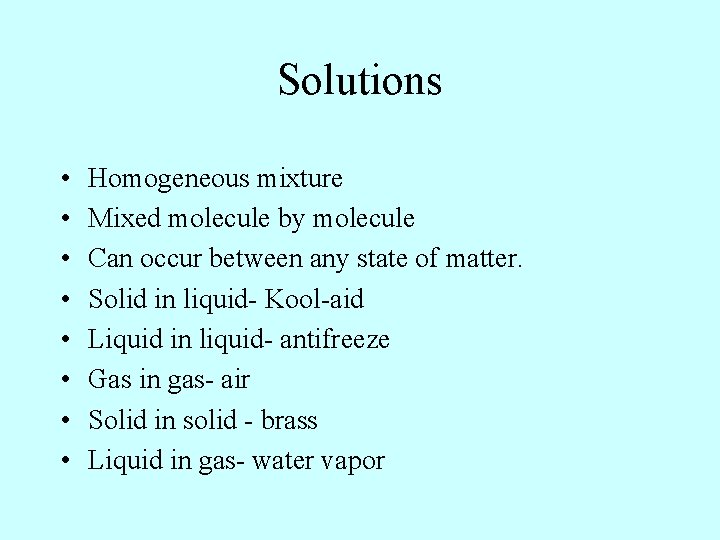
Solutions • • Homogeneous mixture Mixed molecule by molecule Can occur between any state of matter. Solid in liquid- Kool-aid Liquid in liquid- antifreeze Gas in gas- air Solid in solid - brass Liquid in gas- water vapor
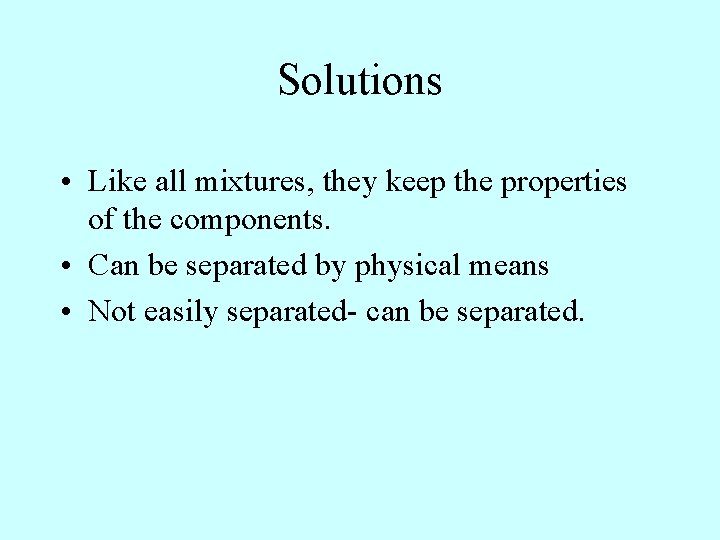
Solutions • Like all mixtures, they keep the properties of the components. • Can be separated by physical means • Not easily separated- can be separated.
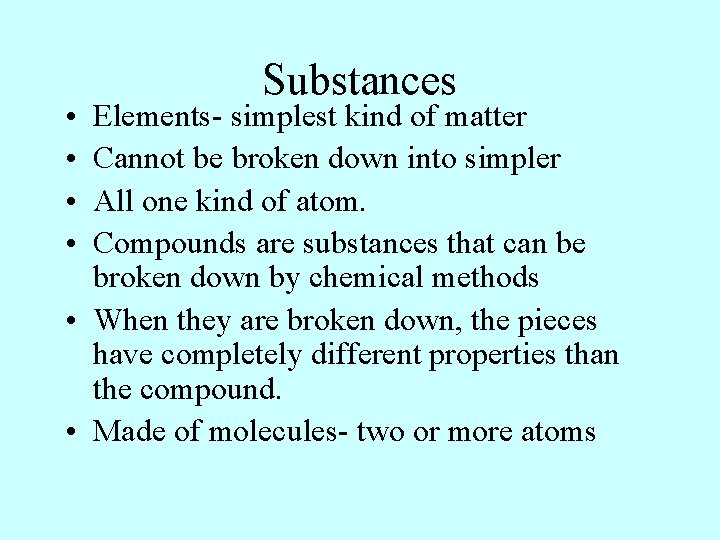
• • Substances Elements- simplest kind of matter Cannot be broken down into simpler All one kind of atom. Compounds are substances that can be broken down by chemical methods • When they are broken down, the pieces have completely different properties than the compound. • Made of molecules- two or more atoms
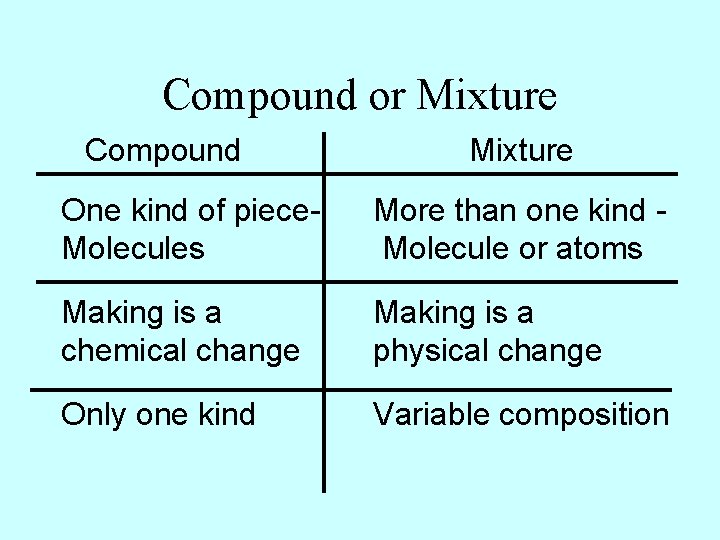
Compound or Mixture Compound Mixture One kind of piece. Molecules More than one kind Molecule or atoms Making is a chemical change Making is a physical change Only one kind Variable composition
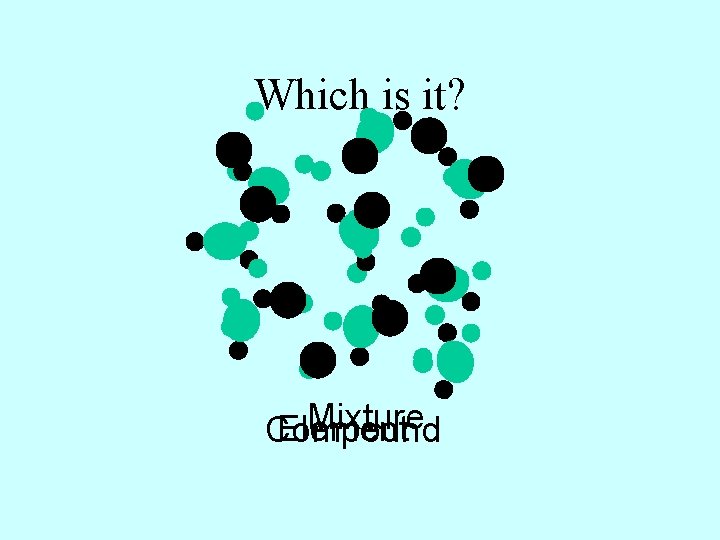
Which is it? Mixture Element Compound
Chemical symbols • • • There are 109 elements Each has a 1 or two letter symbol First letter always capitalized second never Don’t need to memorize Some from Latin of other languages
Energy • The ability to do work. • Work - cause a change or move an object. • Many types- all can be changed into the other.
Types of energy • Potential- stored energy • Kinetic Energy- energy something has because its moving • Heat- the energy that moves because of a temperature difference. • Chemical energy- energy released or absorbed in a chemical change. • Electrical energy - energy of moving charges
Types of Energy • Radiant Energy- energy that can travel through empty space (light, UV, infrared, radio) • All types of energy can be converted into others. • If you trace the source far enough back, you will end up at nuclear energy.
Conservation of Energy • Energy can be neither created or destroyed in ordinary changes (not nuclear), it can only change form. • Its not just a good idea, its the law.
Chemical Reactions • When one or more substances are changed into new substances. • Reactants- stuff you start with • Products- What you make • NEW PROPERTIES • Not easily reversed
Indications of a chemical reaction • • Energy absorbed or released Color change odor change Precipitate- solid that separates from solution • Not easily reversed
Conservation of Mass • Mass can not be created or destroyed in ordinary (not nuclear) changes. • All the mass can be accounted for.
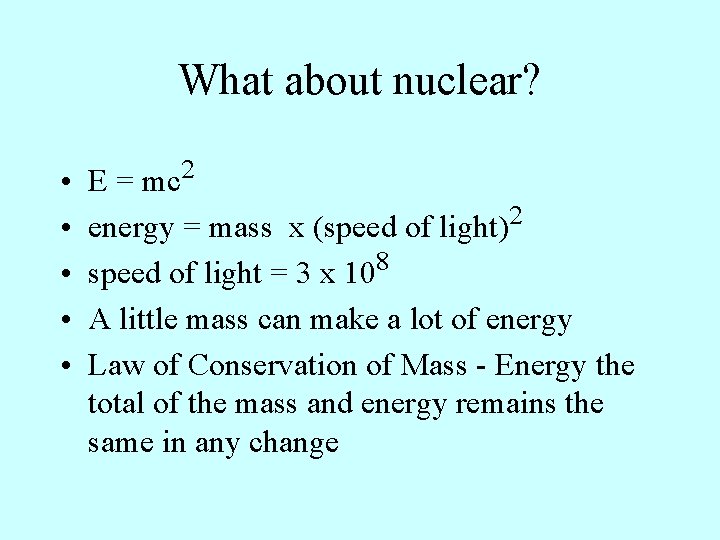
What about nuclear? • • • E = mc 2 energy = mass x (speed of light)2 speed of light = 3 x 10⁸ A little mass can make a lot of energy Law of Conservation of Mass - Energy the total of the mass and energy remains the same in any change