
What is matter made up of All matter
- Slides: 26
What is matter made up of? All matter is made up of atoms. An atom is the smallest unit of an element that still maintains the characteristics of that element.
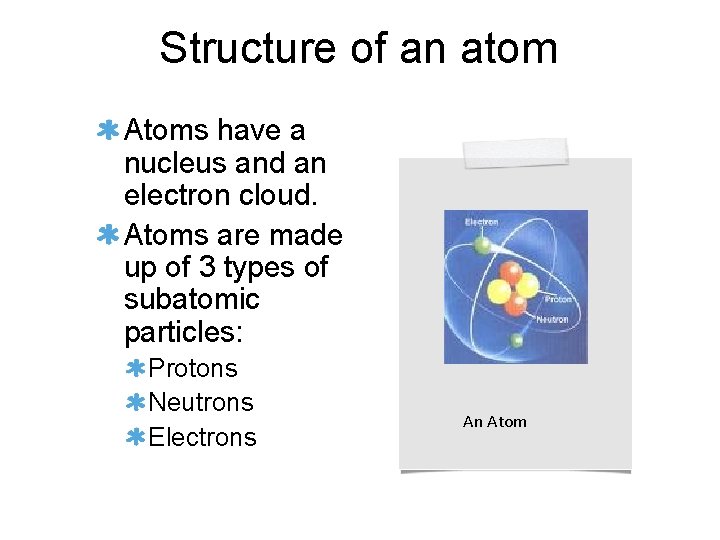
Structure of an atom Atoms have a nucleus and an electron cloud. Atoms are made up of 3 types of subatomic particles: Protons Neutrons Electrons An Atom
Subatomic Particles Protons have a positive charge (+1) Neutrons have no charge Electrons have a negative charge (-1)
Subatomic Particles The number of protons (positive charges) will equal the number of electrons (negative charges) in an atom. This means the atom has no overall charge.
What is chemical bonding? Chemical bonding refers to the attraction between atoms or molecules. There are 3 types of chemical bonding.
Chemical Bonding Chemical bonding is when atoms interact with other atoms to form molecules and compounds. If atoms were not able to attract one another, life could not exist.
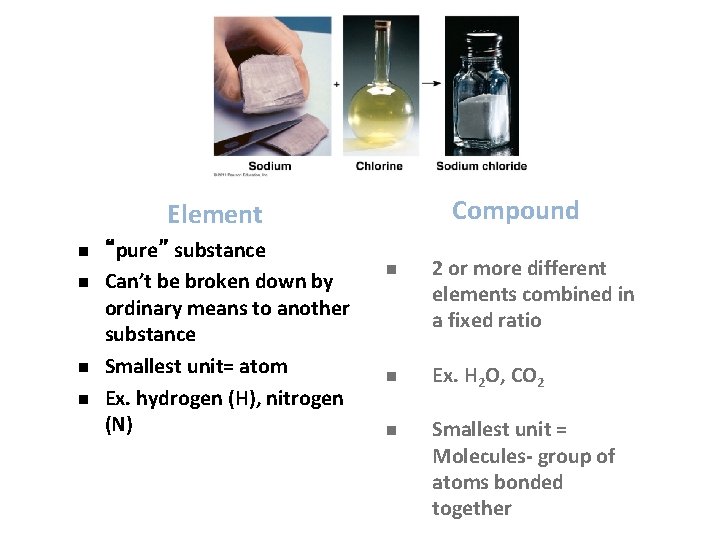
Compound Element n n “pure” substance Can’t be broken down by ordinary means to another substance Smallest unit= atom Ex. hydrogen (H), nitrogen (N) n 2 or more different elements combined in a fixed ratio n Ex. H 2 O, CO 2 n Smallest unit = Molecules- group of atoms bonded together
Remember. . . It is important to remember that atoms are always trying to become stable. They become stable by having a full outer electron orbital.
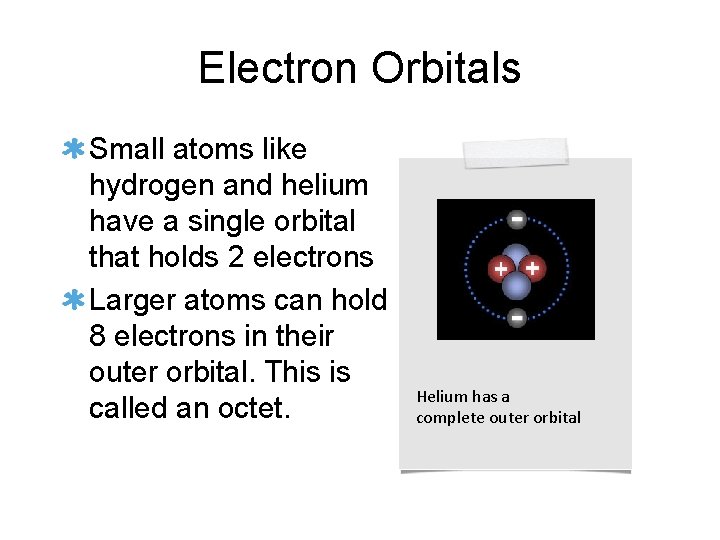
Electron Orbitals Small atoms like hydrogen and helium have a single orbital that holds 2 electrons Larger atoms can hold 8 electrons in their outer orbital. This is called an octet. Helium has a complete outer orbital
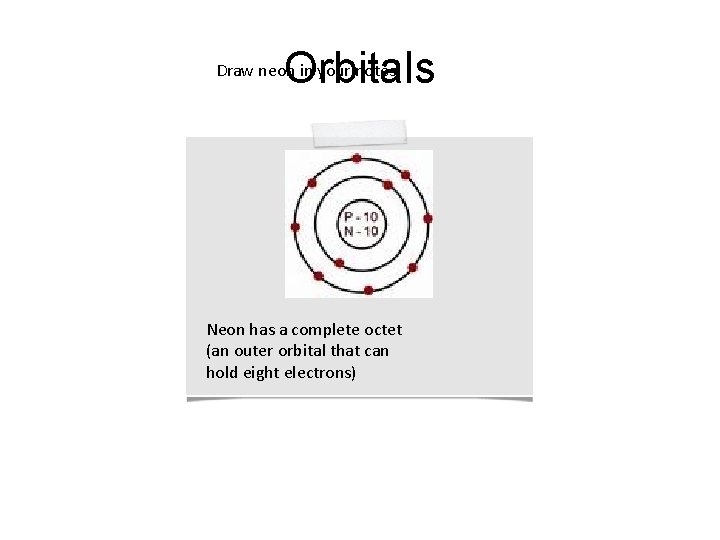
Orbitals Draw neon in your notes: Neon has a complete octet (an outer orbital that can hold eight electrons)
Misconceptions • Orbitals are typically depicted as rings surrounding the nucleus – but it would be more accurate to think about a cloud of ewith no set pattern or course.
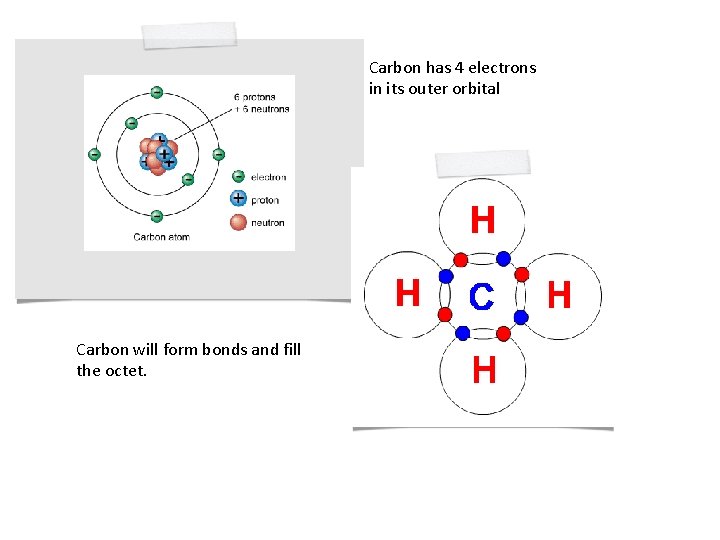
Carbon has 4 electrons in its outer orbital Carbon will form bonds and fill the octet.
3 Types of Bonding Ionic bonding Covalent Bonding Hydrogen Bonding Van der Waals interactions Each type of bonding is very specific.
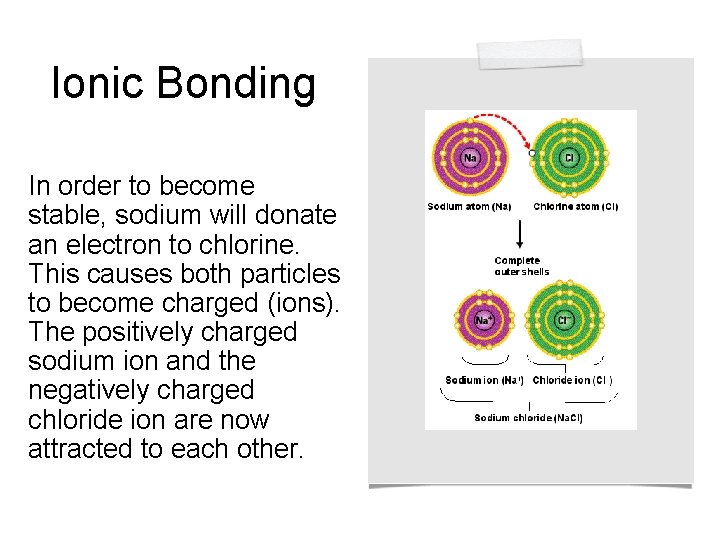
Ionic Bonding Ionic bonding occurs between charged particles. An ion is a charged particle. Typically, atoms do not have a charge because the positive charge of the nucleus (protons) and the negative charge surrounding the nucleus (electrons) cancel each other out. Atoms become charged when they gain or lose an electron.
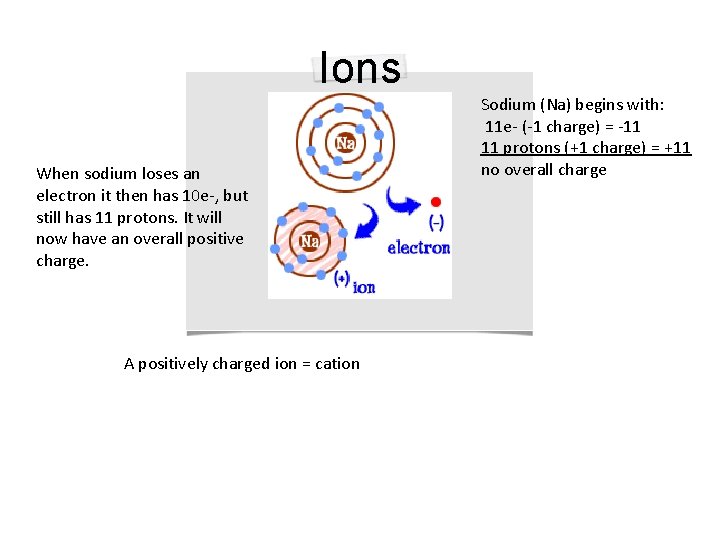
Ions When sodium loses an electron it then has 10 e-, but still has 11 protons. It will now have an overall positive charge. A positively charged ion = cation Sodium (Na) begins with: 11 e- (-1 charge) = -11 11 protons (+1 charge) = +11 no overall charge
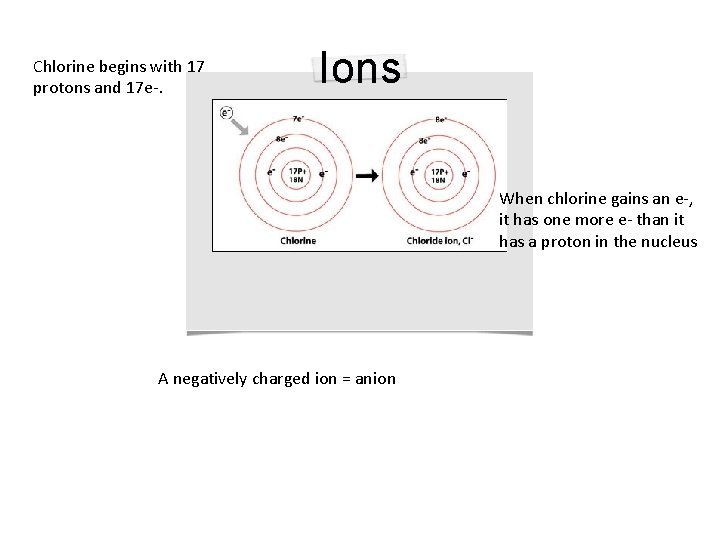
Chlorine begins with 17 protons and 17 e-. Ions When chlorine gains an e-, it has one more e- than it has a proton in the nucleus A negatively charged ion = anion
Ionic Bonding In order to become stable, sodium will donate an electron to chlorine. This causes both particles to become charged (ions). The positively charged sodium ion and the negatively charged chloride ion are now attracted to each other.
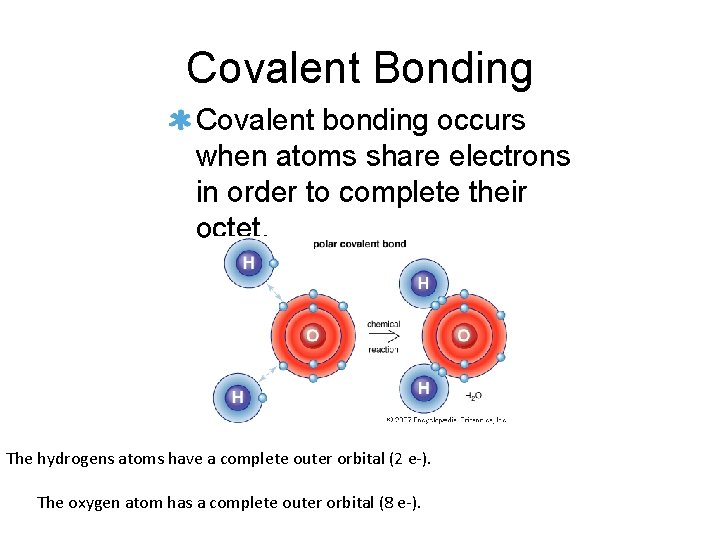
Covalent Bonding Covalent bonding occurs when atoms share electrons in order to complete their octet. The hydrogens atoms have a complete outer orbital (2 e-). The oxygen atom has a complete outer orbital (8 e-).
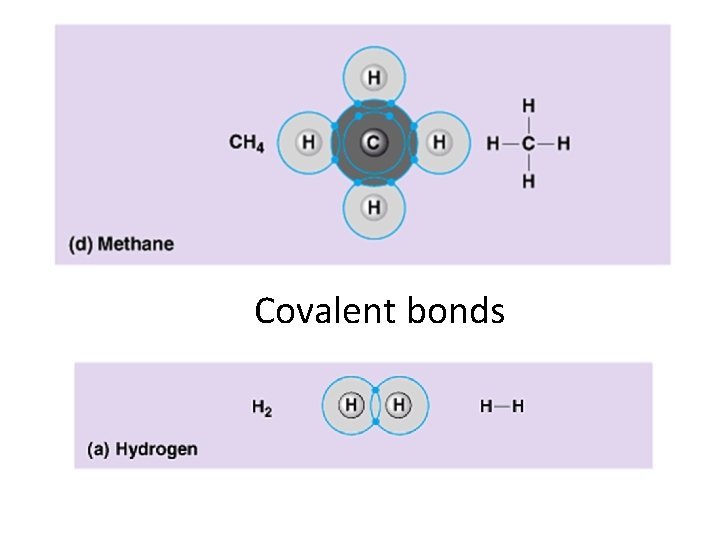
Covalent bonds
Electronegativity • Electrons spend more time with larger atoms • O-H • N-H • Uneven distribution of charge = polar • Slight negative charge for larger atoms ( O and N)
Polarity • Polar covalent bonds create regions of slight positive and negative charge in the molecule, want to interact with other charged substances • Non-polar covalent bonds do not have a significant difference in charge, don’t want to interact with other charged substances
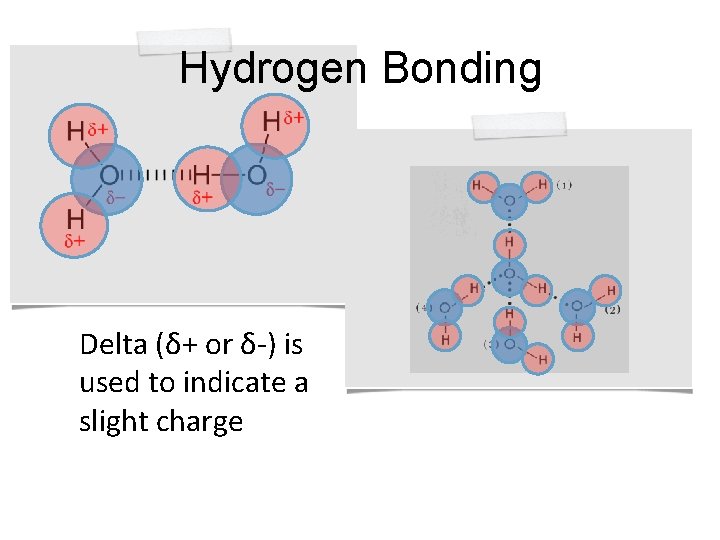
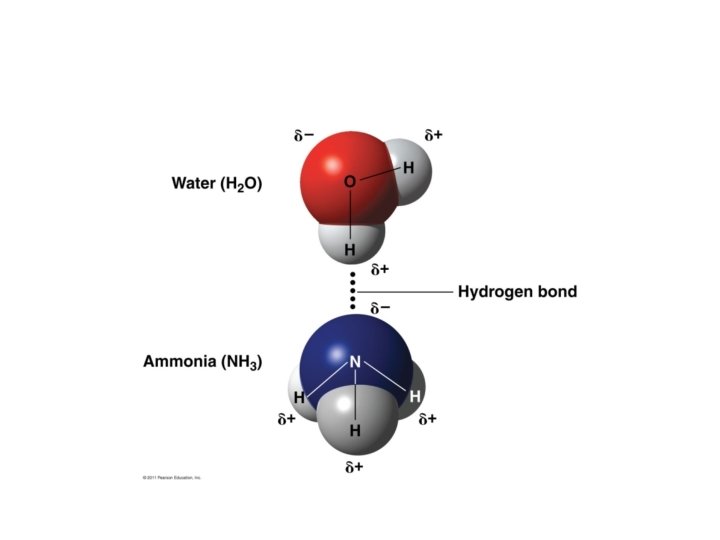
Hydrogen Bonding Certain molecules like water form weak bonds called hydrogen bonds. Hydrogen bonds occur when molecules have partial electrical charges. The partial negative charge of the oxygen atom in water attracts the hydrogen atoms of other water molecules
Hydrogen Bonding Delta (δ+ or δ-) is used to indicate a slight charge
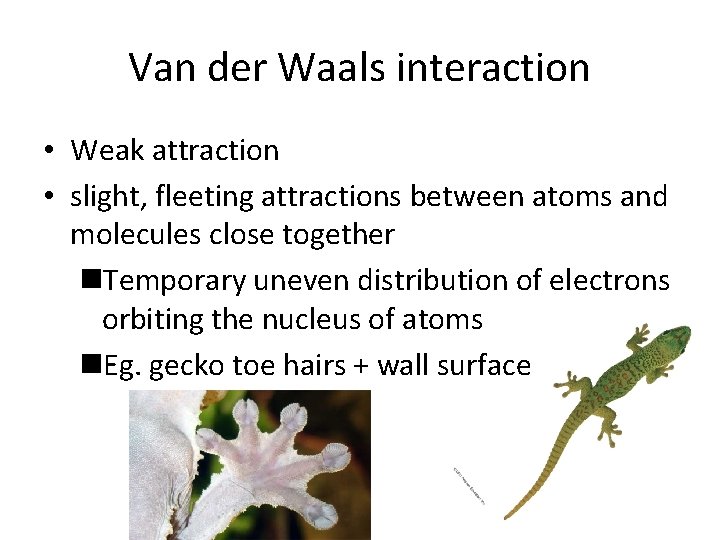
Van der Waals interaction • Weak attraction • slight, fleeting attractions between atoms and molecules close together n. Temporary uneven distribution of electrons orbiting the nucleus of atoms n. Eg. gecko toe hairs + wall surface
Quick review. . . In an atom, the number of protons equal the number of what? Indicate the type of bonding. Sharing of electrons Temporary imbalances in charge resulting in weak attraction Attraction between partial charges Attraction between charged particles