
What is light Light Visible light is a
What is light?
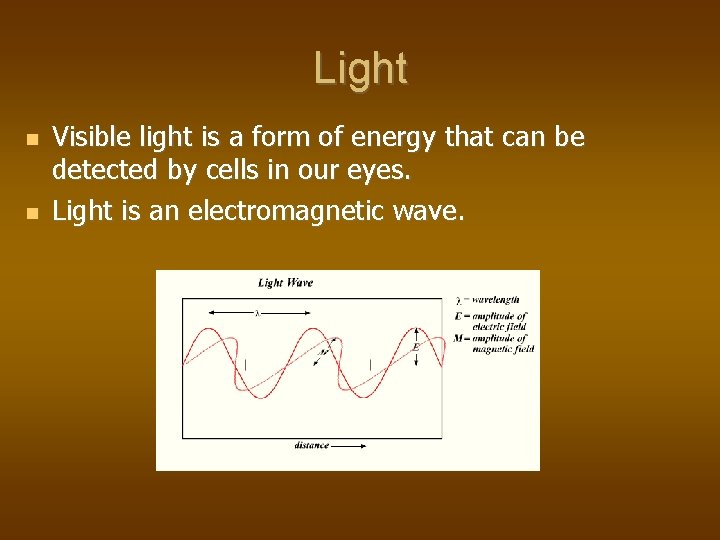
Light Visible light is a form of energy that can be detected by cells in our eyes. Light is an electromagnetic wave.
Light Electromagnetic waves are a form of energy that travel as far as a wave at the speed of light (3. 0 x 10 8 m/s) and do not need a medium to travel in (ie. They can go through space.
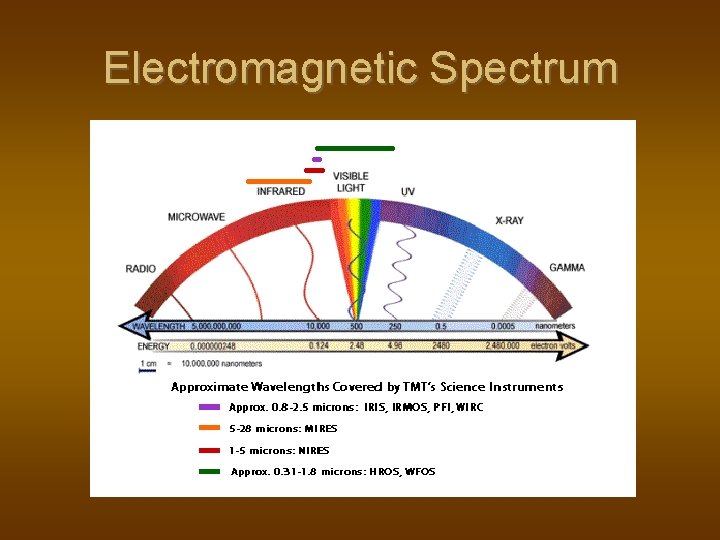
Electromagnetic Spectrum
Production of Light Luminous produces its own light. Non-luminous Only reflects light. We see things by detecting this reflected light.
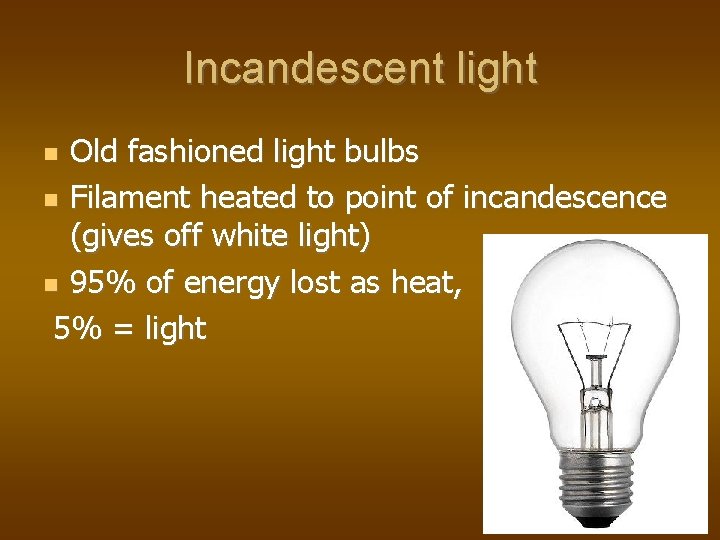
Incandescent light Old fashioned light bulbs Filament heated to point of incandescence (gives off white light) 95% of energy lost as heat, 5% = light
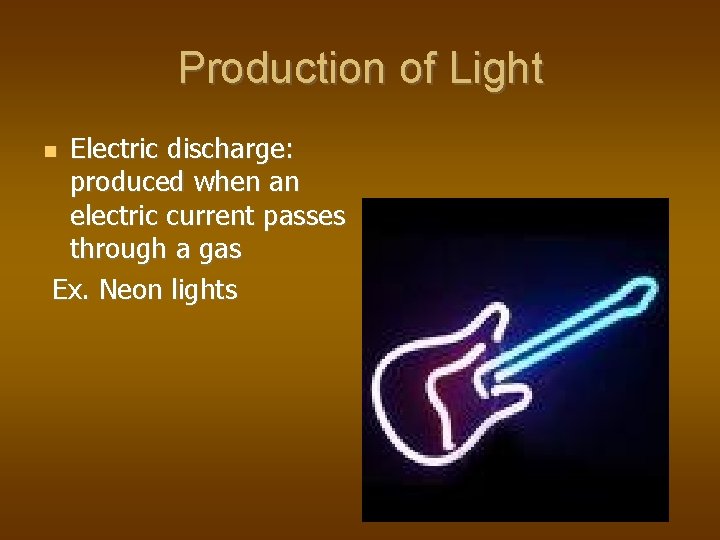
Production of Light Electric discharge: produced when an electric current passes through a gas Ex. Neon lights
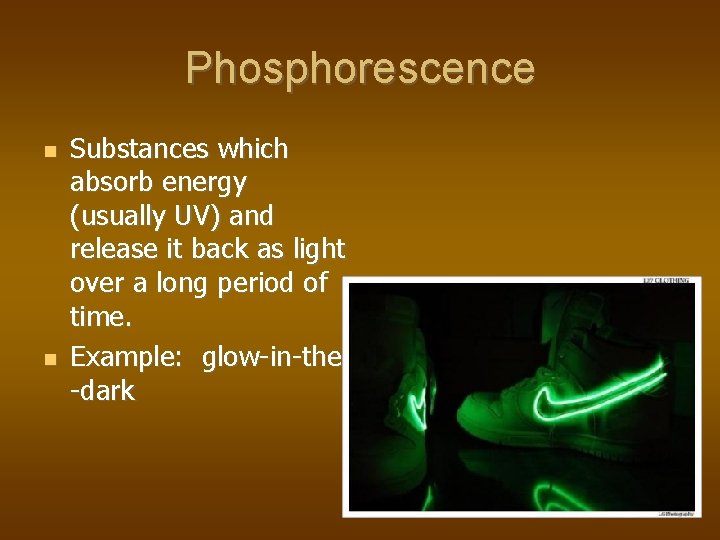
Phosphorescence Substances which absorb energy (usually UV) and release it back as light over a long period of time. Example: glow-in-the -dark
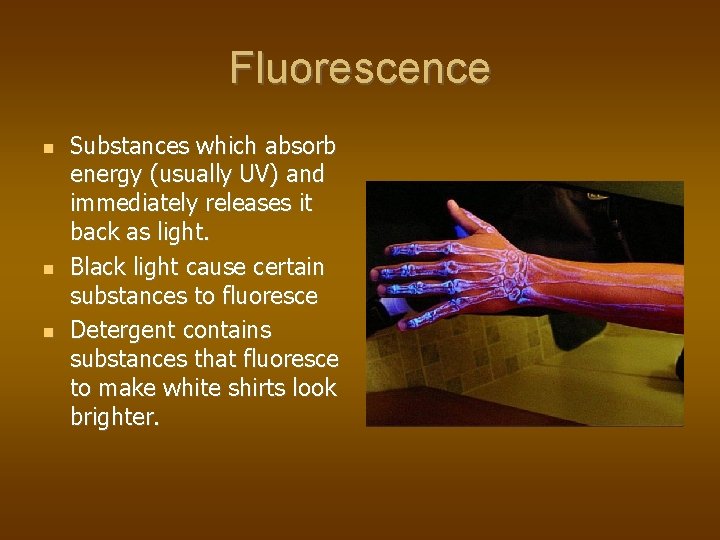
Fluorescence Substances which absorb energy (usually UV) and immediately releases it back as light. Black light cause certain substances to fluoresce Detergent contains substances that fluoresce to make white shirts look brighter.
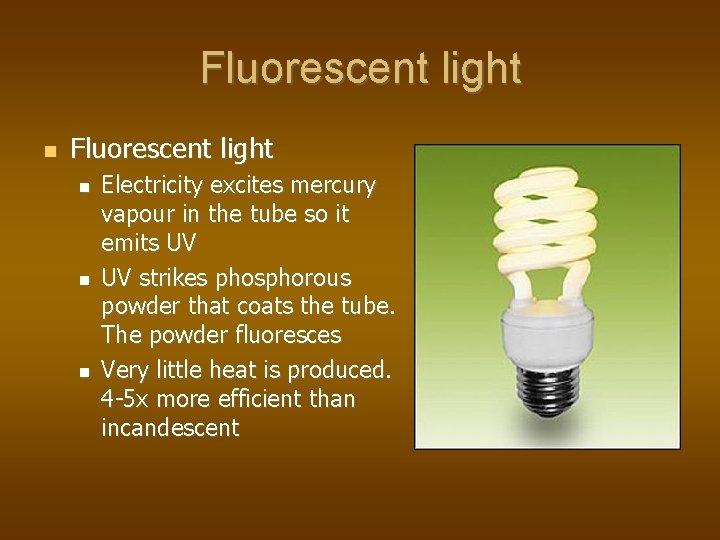
Fluorescent light Electricity excites mercury vapour in the tube so it emits UV UV strikes phosphorous powder that coats the tube. The powder fluoresces Very little heat is produced. 4 -5 x more efficient than incandescent
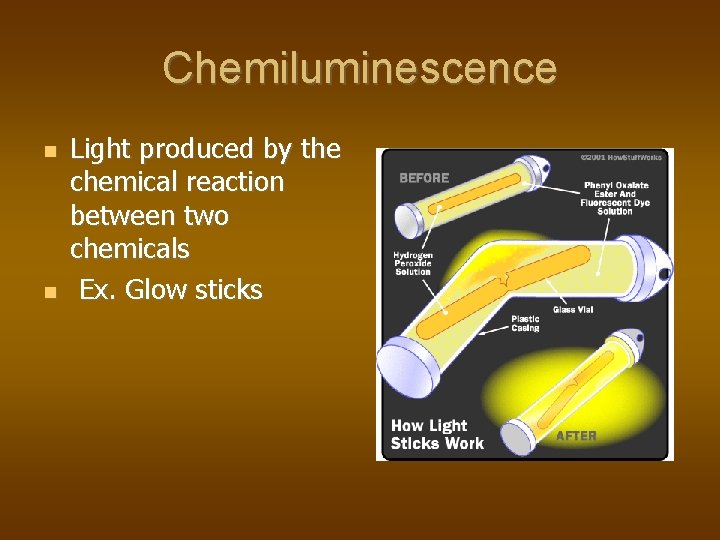
Chemiluminescence Light produced by the chemical reaction between two chemicals Ex. Glow sticks
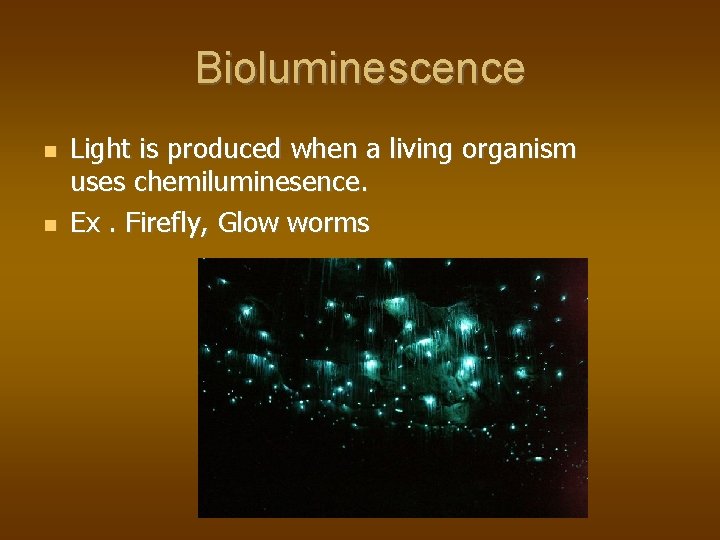
Bioluminescence Light is produced when a living organism uses chemiluminesence. Ex. Firefly, Glow worms
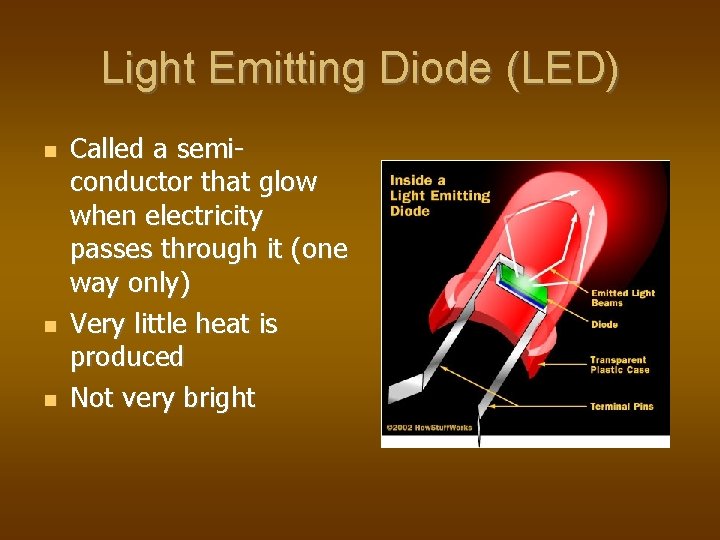
Light Emitting Diode (LED) Called a semiconductor that glow when electricity passes through it (one way only) Very little heat is produced Not very bright
- Slides: 13