
What is Light and How is it Produced
- Slides: 10
What is Light? and How is it Produced?
Light Emitting Technologies Light is a form of energy which we use for a variety of purpose including illumination and communication. Many technologies produce light by converting other forms of energy. These technologies produce light by either incandescence or luminescence.
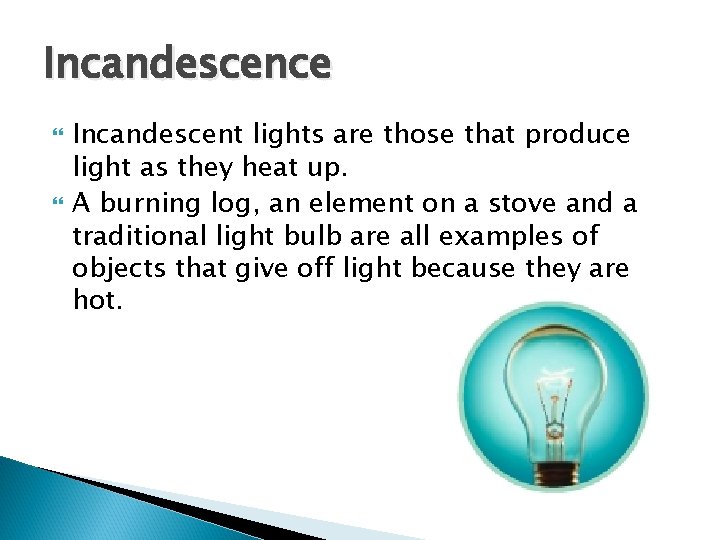
Incandescence Incandescent lights are those that produce light as they heat up. A burning log, an element on a stove and a traditional light bulb are all examples of objects that give off light because they are hot.
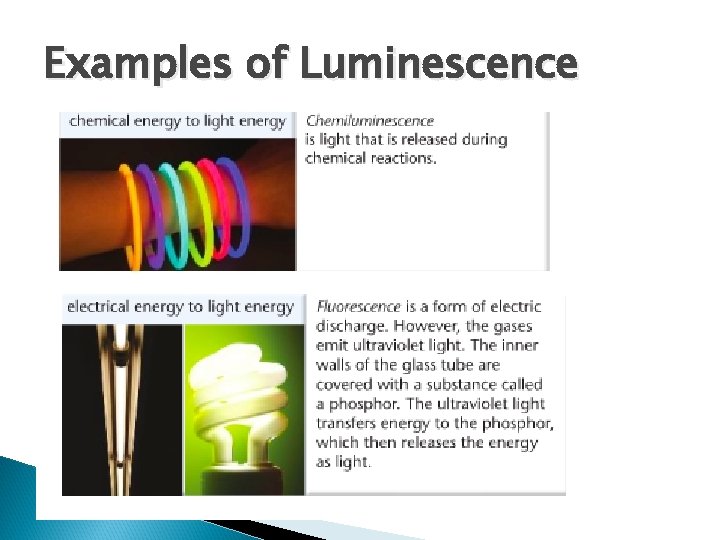
Luminescence refers to light which is produced without giving off heat. Some examples of luminescent objects include neon signs, glow sticks and fluorescent light bulbs.
Examples of Luminescence
Electromagnetic Waves Light is an example of one type of energy categorized by electromagnetic waves. Electromagnetic waves carry both electrical and magnetic energy. Some other examples include microwaves, infrared and radio waves.
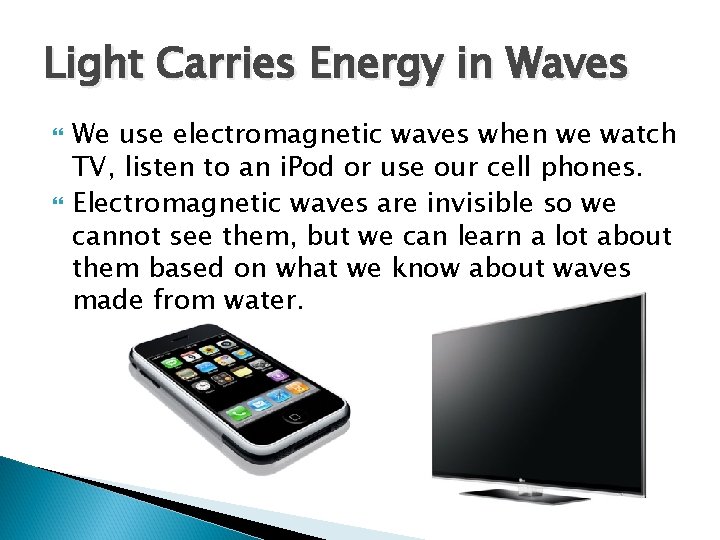
Light Carries Energy in Waves We use electromagnetic waves when we watch TV, listen to an i. Pod or use our cell phones. Electromagnetic waves are invisible so we cannot see them, but we can learn a lot about them based on what we know about waves made from water.
The Electormagnetic Spectrum There are many types of electromagnetic energy. The main difference between the different types is their wave length. In general the shorter the wave length, the higher the energy contained within that wave. View the electromagnetic spectrum seen on page 282 -283 of your textbook and answer questions 1 -3.
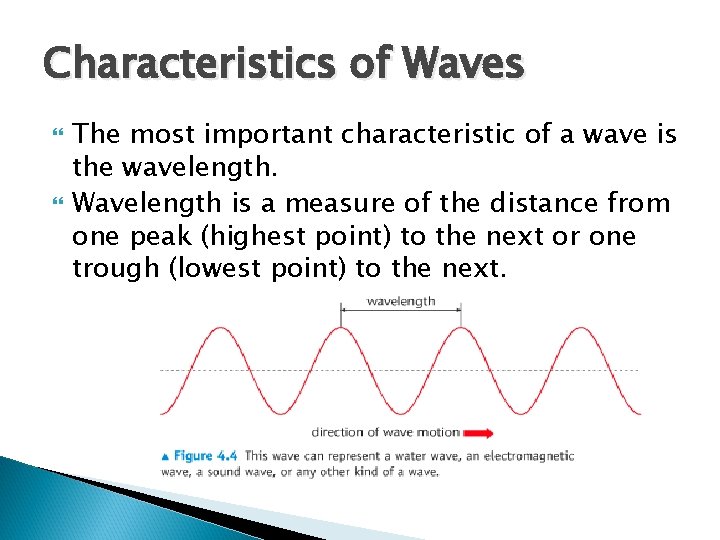
Characteristics of Waves The most important characteristic of a wave is the wavelength. Wavelength is a measure of the distance from one peak (highest point) to the next or one trough (lowest point) to the next.
Colours Every different color corresponds to a different place along the electromagnetic spectrum. The colors follow the order ROY G BIV, where red light has the longest wavelength (least energy) and violet light has the shortest wavelength (greatest energy).