
WHAT IS LIFE Pages 34 40 Organisms living
- Slides: 12
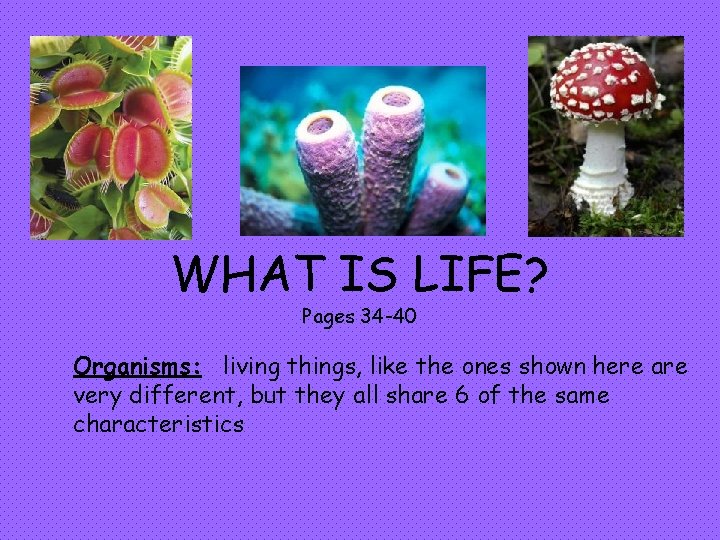
WHAT IS LIFE? Pages 34 -40 Organisms: living things, like the ones shown here are very different, but they all share 6 of the same characteristics
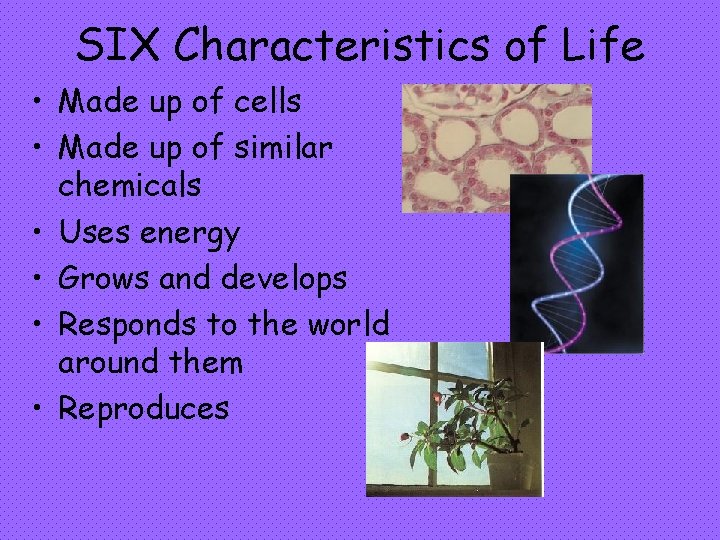
SIX Characteristics of Life • Made up of cells • Made up of similar chemicals • Uses energy • Grows and develops • Responds to the world around them • Reproduces
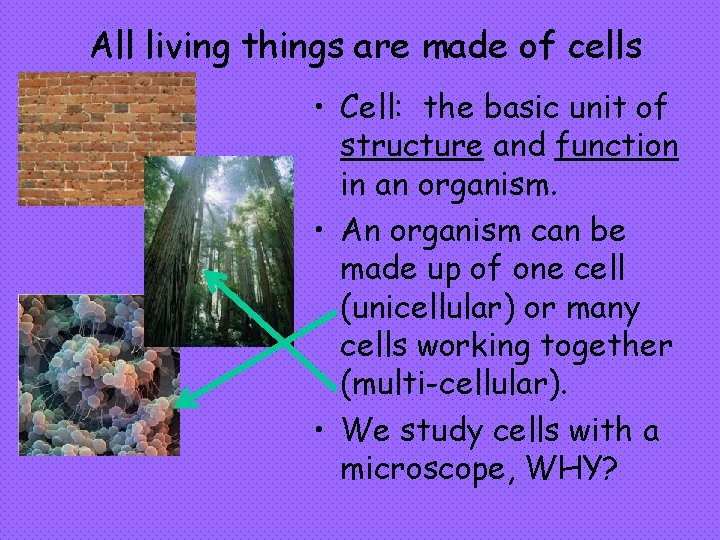
All living things are made of cells • Cell: the basic unit of structure and function in an organism. • An organism can be made up of one cell (unicellular) or many cells working together (multi-cellular). • We study cells with a microscope, WHY?
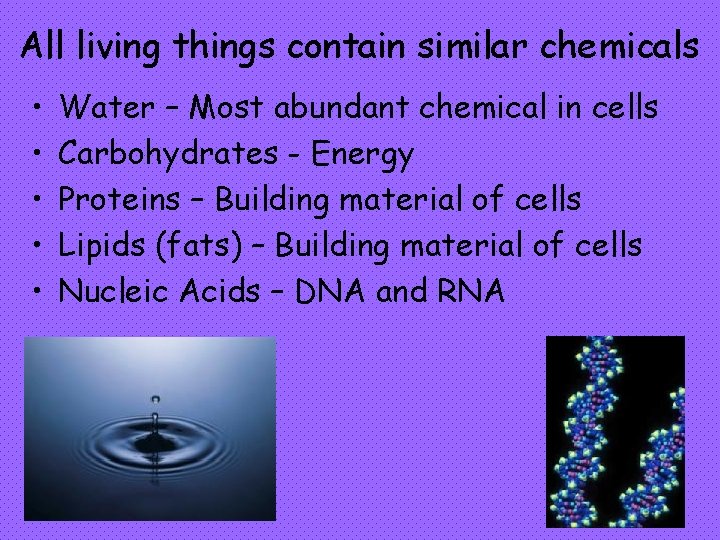
All living things contain similar chemicals • • • Water – Most abundant chemical in cells Carbohydrates - Energy Proteins – Building material of cells Lipids (fats) – Building material of cells Nucleic Acids – DNA and RNA
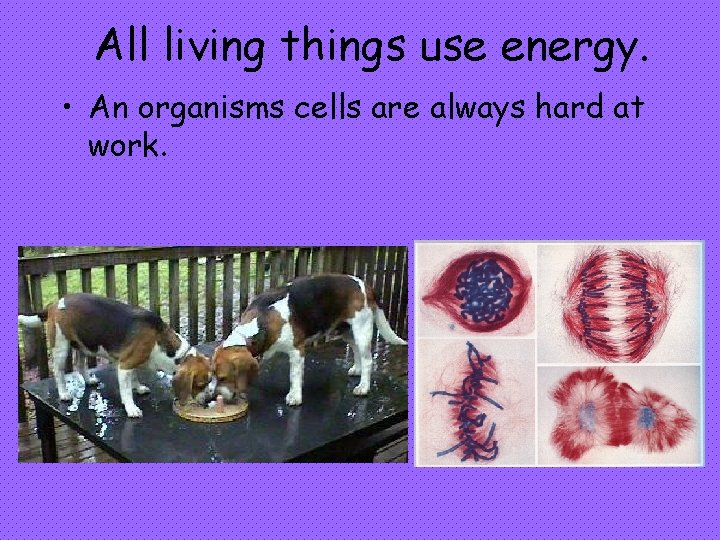
All living things use energy. • An organisms cells are always hard at work.
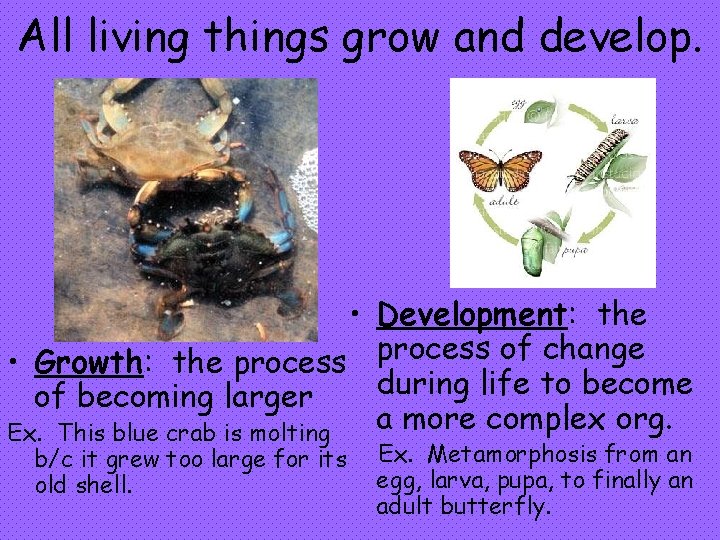
All living things grow and develop. • Development: the process of change • Growth: the process during life to become of becoming larger a more complex org. Ex. This blue crab is molting b/c it grew too large for its old shell. Ex. Metamorphosis from an egg, larva, pupa, to finally an adult butterfly.
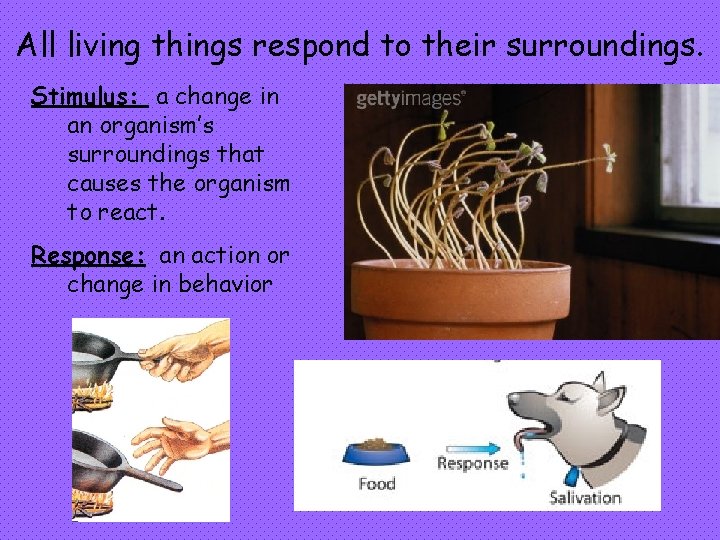
All living things respond to their surroundings. Stimulus: a change in an organism’s surroundings that causes the organism to react. Response: an action or change in behavior
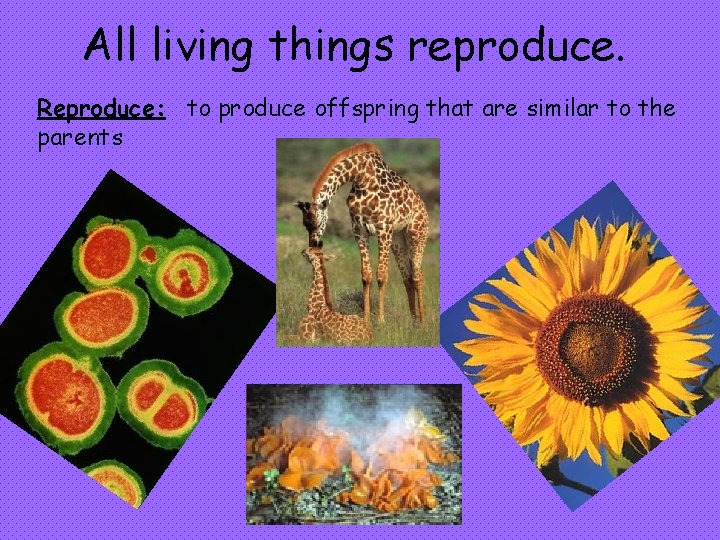
All living things reproduce. Reproduce: to produce offspring that are similar to the parents
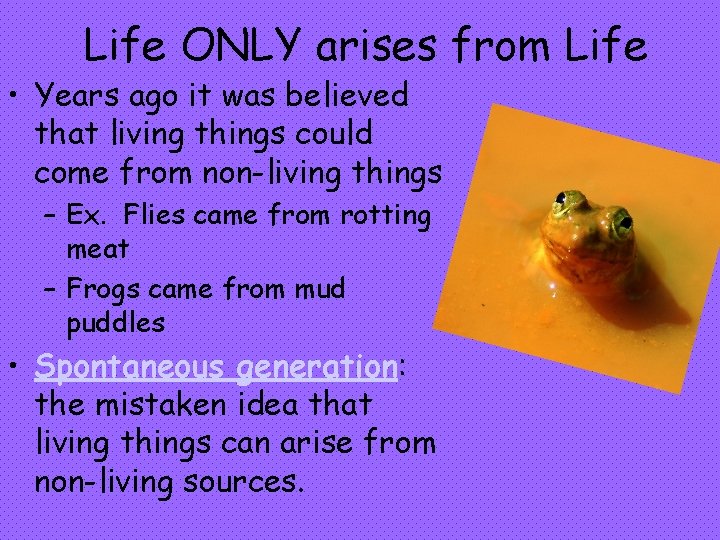
Life ONLY arises from Life • Years ago it was believed that living things could come from non-living things – Ex. Flies came from rotting meat – Frogs came from mud puddles • Spontaneous generation: the mistaken idea that living things can arise from non-living sources.
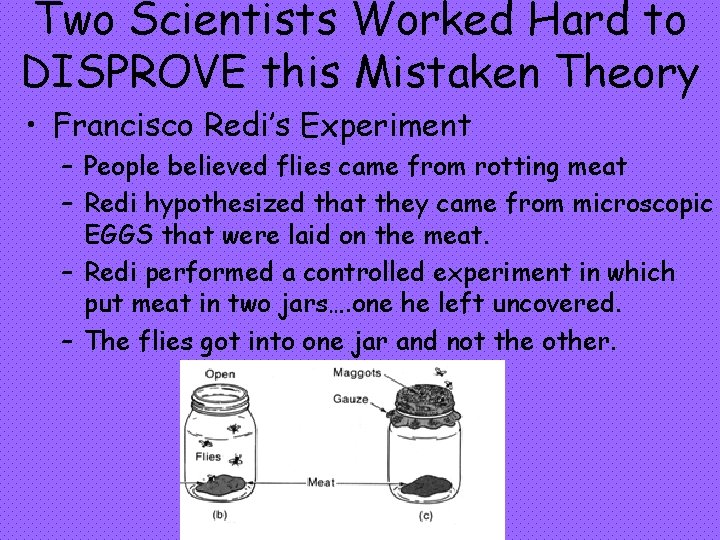
Two Scientists Worked Hard to DISPROVE this Mistaken Theory • Francisco Redi’s Experiment – People believed flies came from rotting meat – Redi hypothesized that they came from microscopic EGGS that were laid on the meat. – Redi performed a controlled experiment in which put meat in two jars…. one he left uncovered. – The flies got into one jar and not the other.
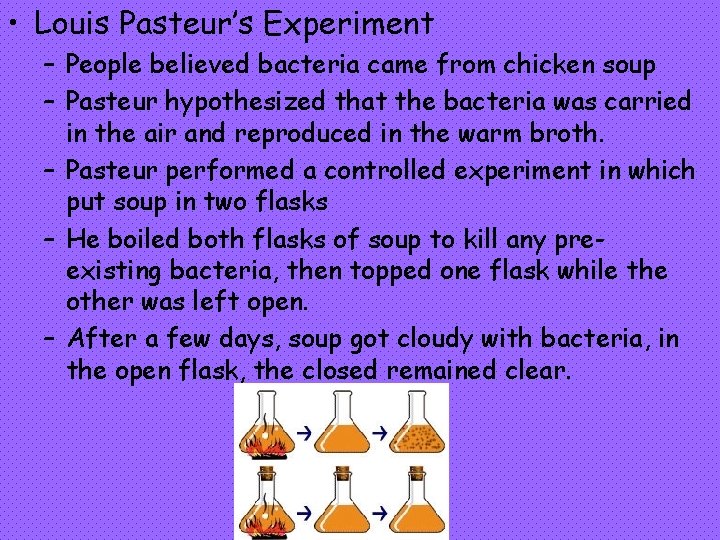
• Louis Pasteur’s Experiment – People believed bacteria came from chicken soup – Pasteur hypothesized that the bacteria was carried in the air and reproduced in the warm broth. – Pasteur performed a controlled experiment in which put soup in two flasks – He boiled both flasks of soup to kill any preexisting bacteria, then topped one flask while the other was left open. – After a few days, soup got cloudy with bacteria, in the open flask, the closed remained clear.
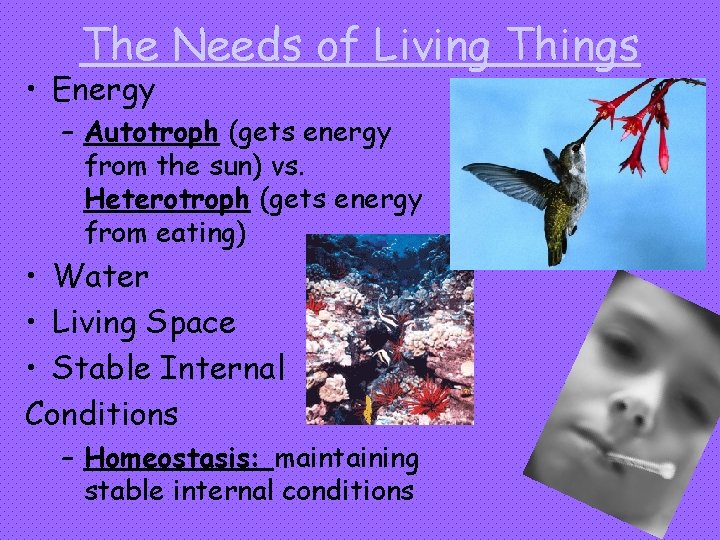
The Needs of Living Things • Energy – Autotroph (gets energy from the sun) vs. Heterotroph (gets energy from eating) • Water • Living Space • Stable Internal Conditions – Homeostasis: maintaining stable internal conditions