
What is it Genes and Variation Presented by
What is it? Genes and Variation Presented by: Mr. Godinez What is it?
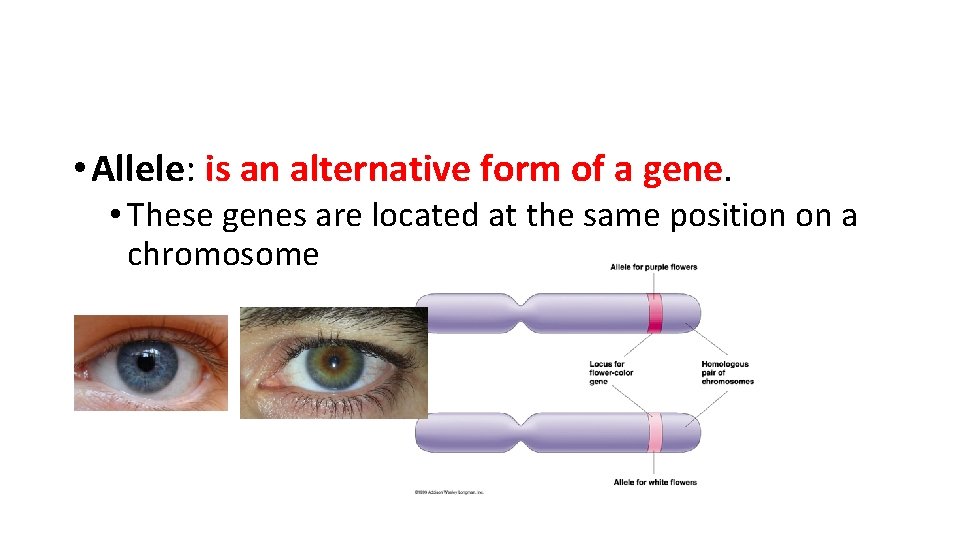
• Allele: is an alternative form of a gene. • These genes are located at the same position on a chromosome
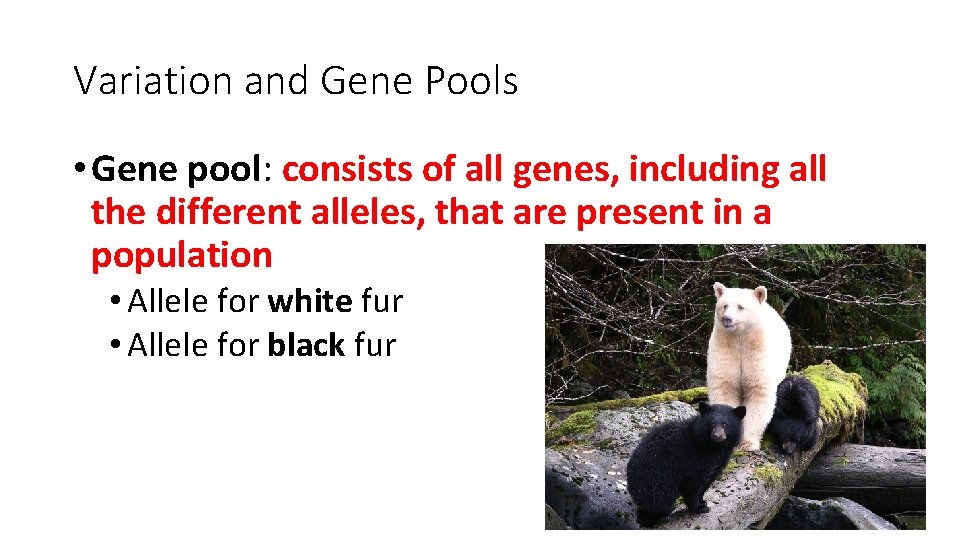
Variation and Gene Pools • Gene pool: consists of all genes, including all the different alleles, that are present in a population • Allele for white fur • Allele for black fur
Variation and Gene Pools • Relative frequency: is the number of times that the allele occurs in a gene pool, compared with the number of times other alleles for the same gene occur • Ex. Dominant B allele = 40% Recessive b allele = 60% • In genetic terms, evolution is any change in the relative frequency of alleles in a population.
Sources of Genetic Variation • The two main sources of genetic variation are mutations and the genetic shuffling that results from sexual reproduction • Mutations: any change in a sequence of DNA. • Occur because of mistatkes in the replication of DNA or radiation and chemicals in the environment
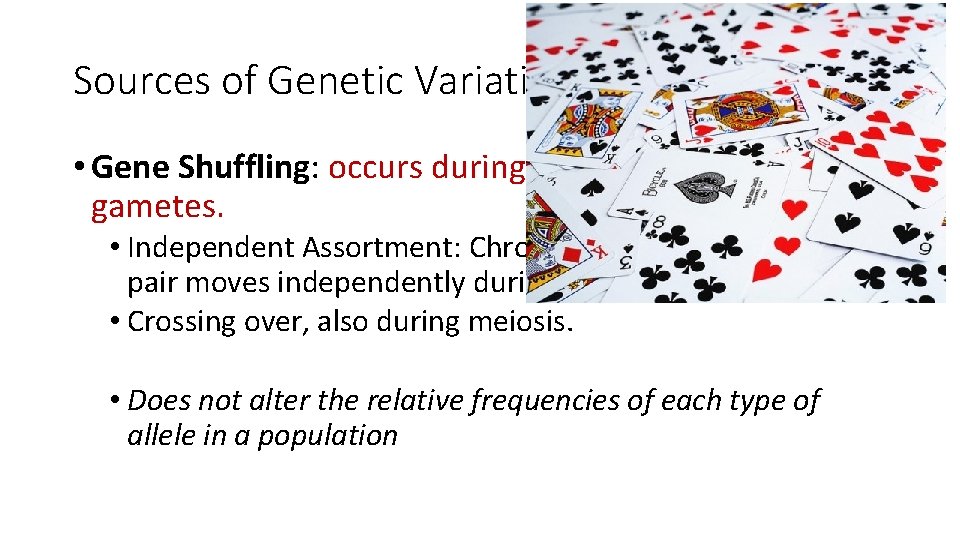
Sources of Genetic Variation • Gene Shuffling: occurs during the production of gametes. • Independent Assortment: Chromosomes of a homologous pair moves independently during meiosis • Crossing over, also during meiosis. • Does not alter the relative frequencies of each type of allele in a population
Single-Gene and Polygenic Traits • The number of phenotype produced for a given trait depends on how many genes control the trait • Single-gene trait: controlled by a single gene that has two alleles • Ex. Widows Peak • Polygenic traits: controlled by two or more genes that has two or more alleles • Ex. Human Height
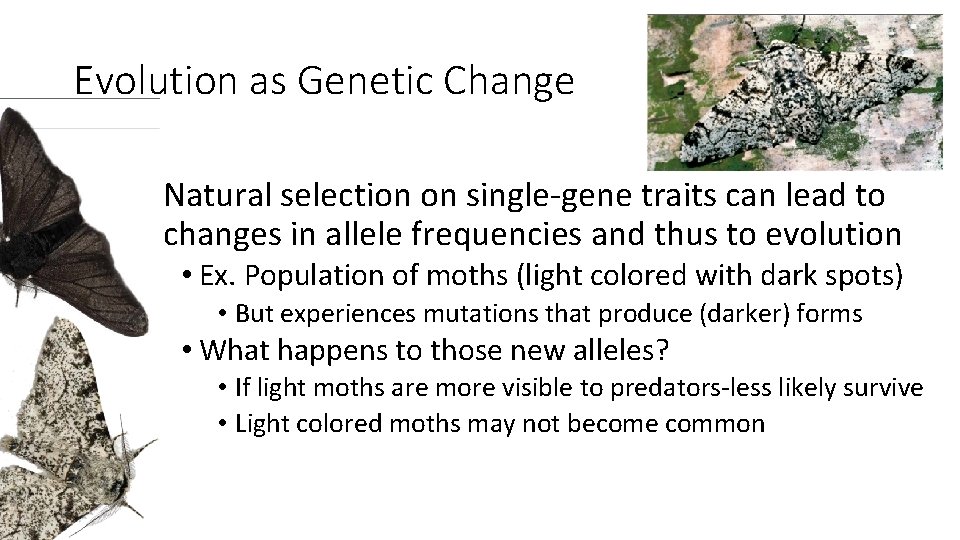
Evolution as Genetic Change • Natural selection on single-gene traits can lead to changes in allele frequencies and thus to evolution • Ex. Population of moths (light colored with dark spots) • But experiences mutations that produce (darker) forms • What happens to those new alleles? • If light moths are more visible to predators-less likely survive • Light colored moths may not become common
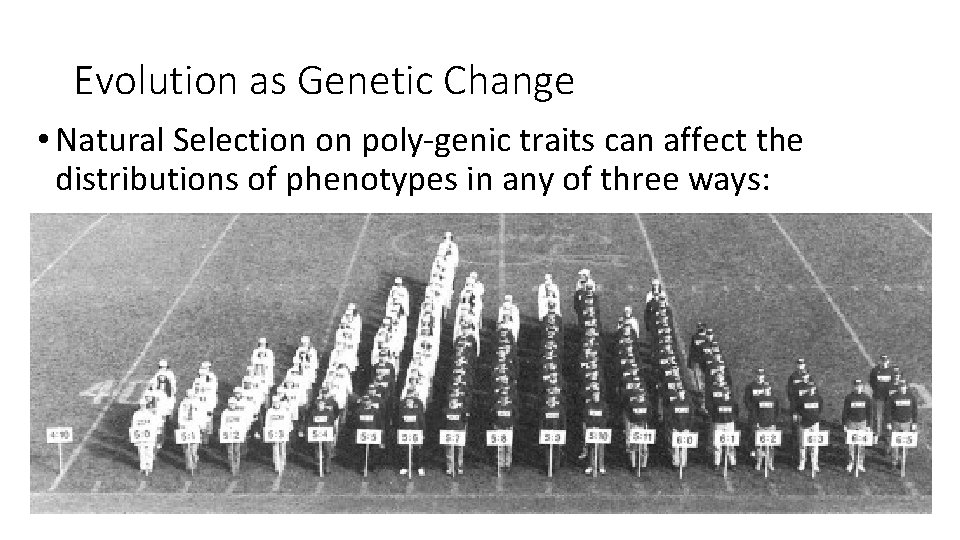
Evolution as Genetic Change • Natural Selection on poly-genic traits can affect the distributions of phenotypes in any of three ways: • directional selection • stabilizing selection • disruptive selection
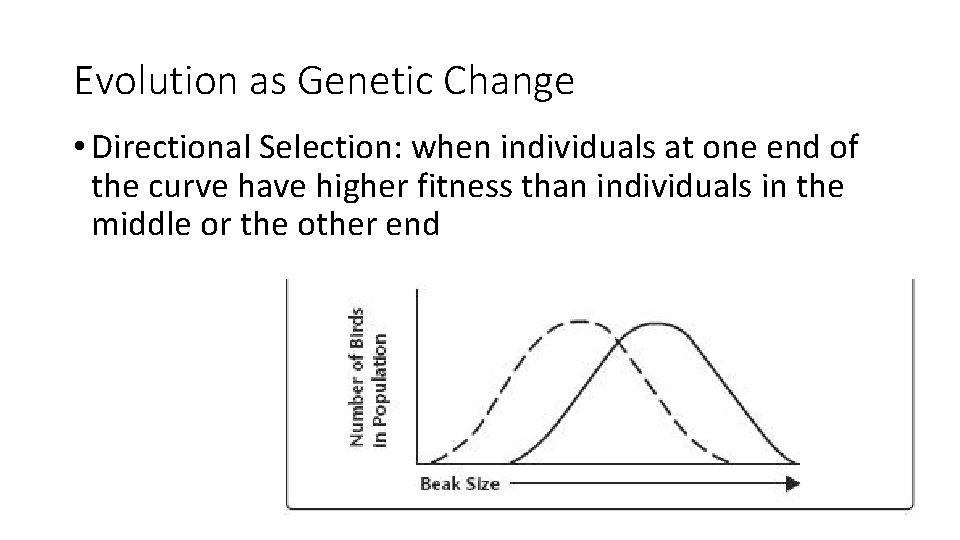
Evolution as Genetic Change • Directional Selection: when individuals at one end of the curve have higher fitness than individuals in the middle or the other end
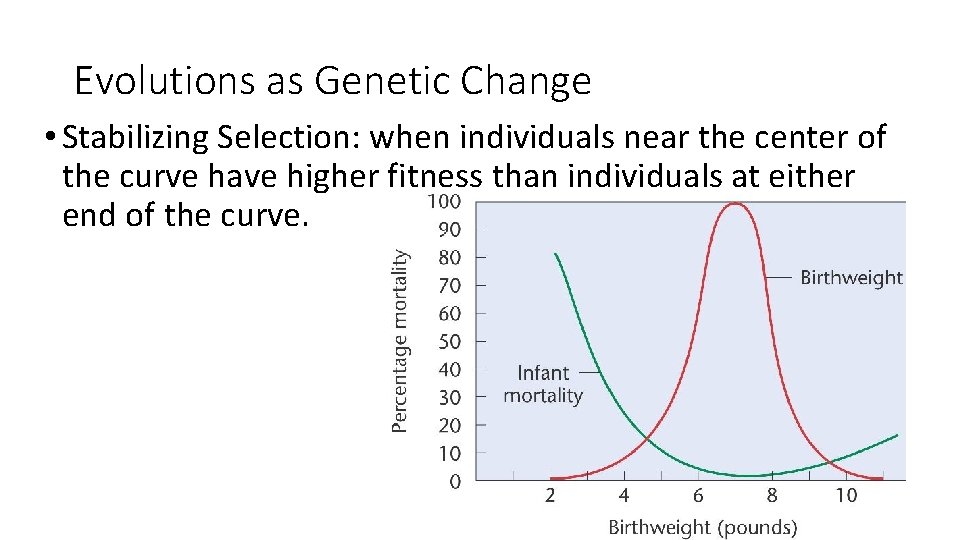
Evolutions as Genetic Change • Stabilizing Selection: when individuals near the center of the curve have higher fitness than individuals at either end of the curve.
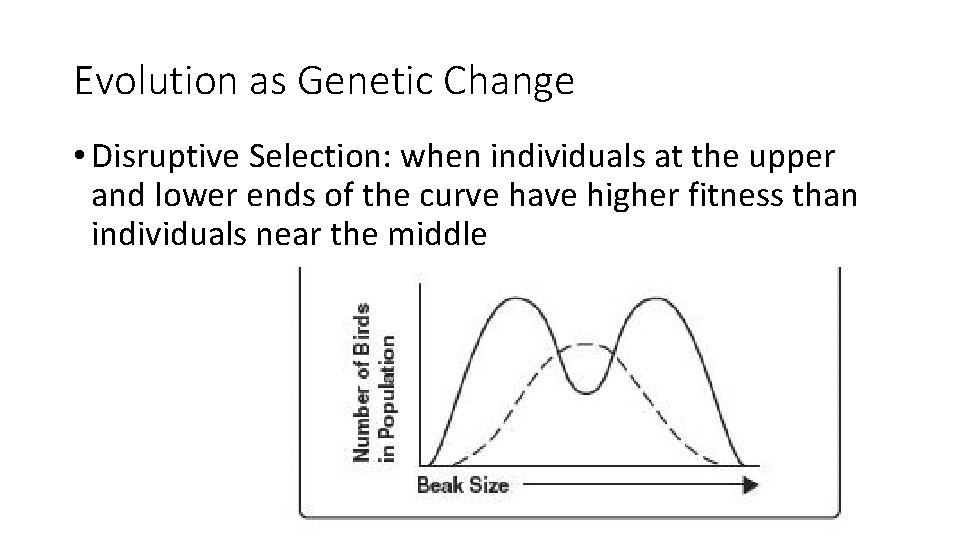
Evolution as Genetic Change • Disruptive Selection: when individuals at the upper and lower ends of the curve have higher fitness than individuals near the middle
Genetic Drift: a random, non-adaptive change in the gene frequencies of a population. • may result in the loss of alleles from the original gene pool.
Genetic Drift Bottleneck Effect: describes a situation where a large population is drastically reduced in size due to some natural disaster.
Genetic Drift Founder Effect: describes the colonization of a new habitat by only a few individuals.
Genetic Drift • Both have likelihood that the new population contains different proportions of alleles than the initial population. • may result in the loss of alleles from the original gene pool.

- Slides: 17