
What is it As 2 or 3 dimensional

- Slides: 6
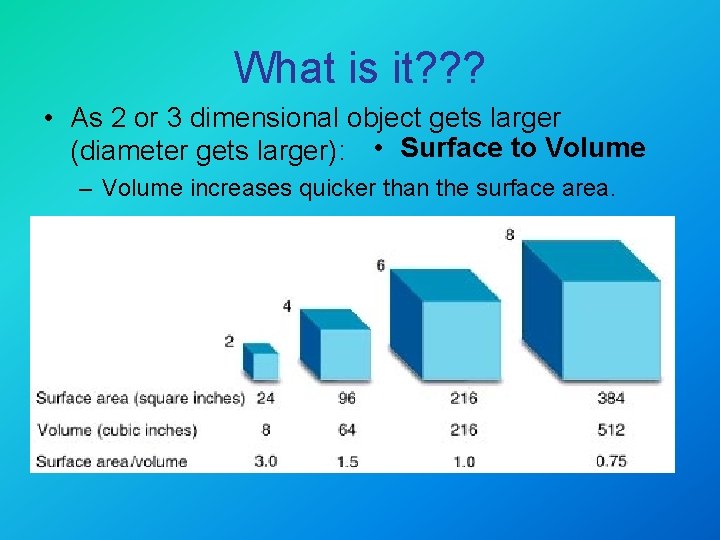
What is it? ? ? • As 2 or 3 dimensional object gets larger (diameter gets larger): • Surface to Volume – Volume increases quicker than the surface area.
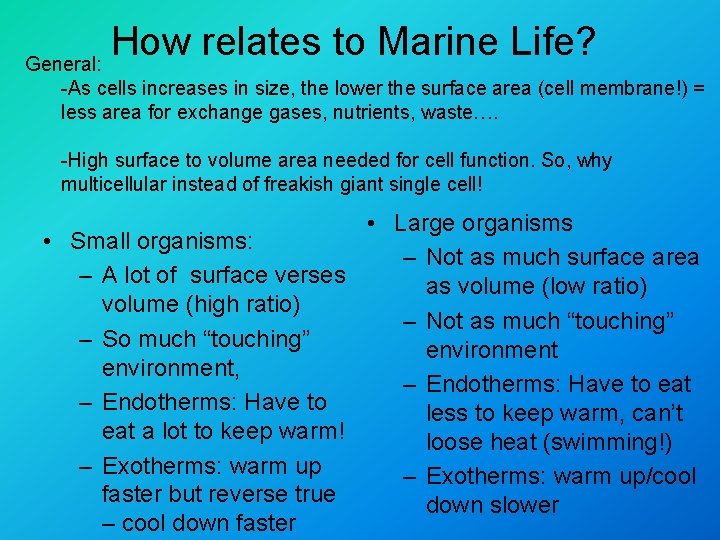
How relates to Marine Life? General: -As cells increases in size, the lower the surface area (cell membrane!) = less area for exchange gases, nutrients, waste…. -High surface to volume area needed for cell function. So, why multicellular instead of freakish giant single cell! • Large organisms • Small organisms: – Not as much surface area – A lot of surface verses as volume (low ratio) volume (high ratio) – Not as much “touching” – So much “touching” environment, – Endotherms: Have to eat – Endotherms: Have to less to keep warm, can’t eat a lot to keep warm! loose heat (swimming!) – Exotherms: warm up/cool faster but reverse true down slower – cool down faster
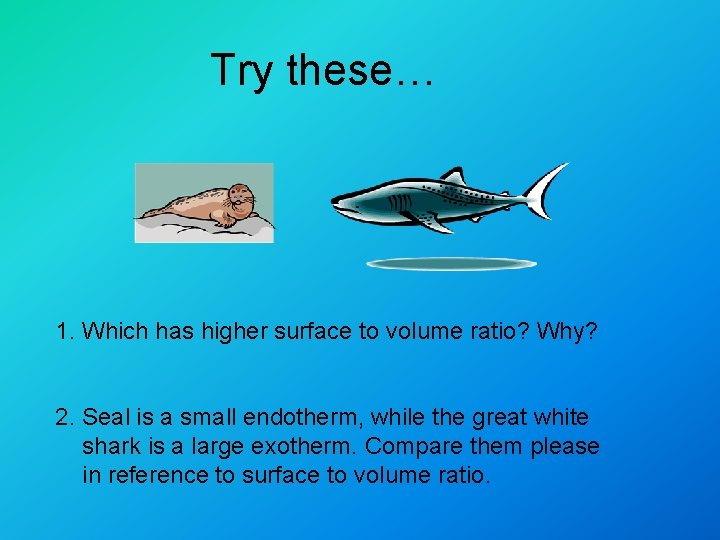
Try these… 1. Which has higher surface to volume ratio? Why? 2. Seal is a small endotherm, while the great white shark is a large exotherm. Compare them please in reference to surface to volume ratio.
Buoyancy Chapter 7 Ms. Poitras
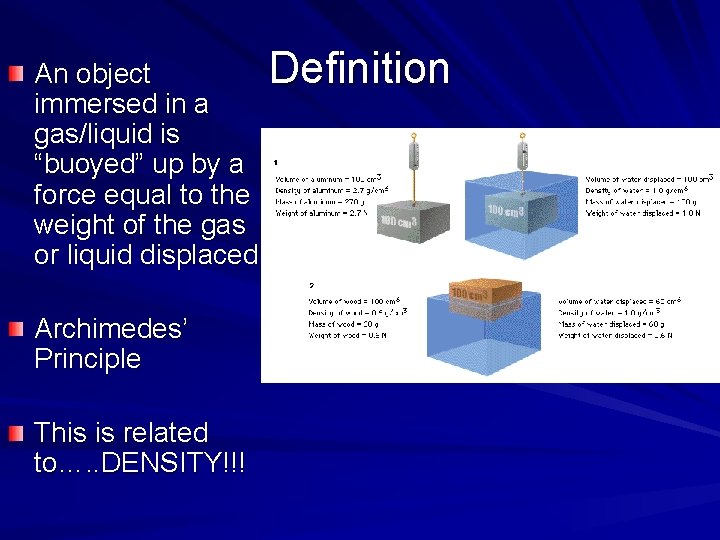
An object immersed in a gas/liquid is “buoyed” up by a force equal to the weight of the gas or liquid displaced Archimedes’ Principle This is related to…. . DENSITY!!! Definition
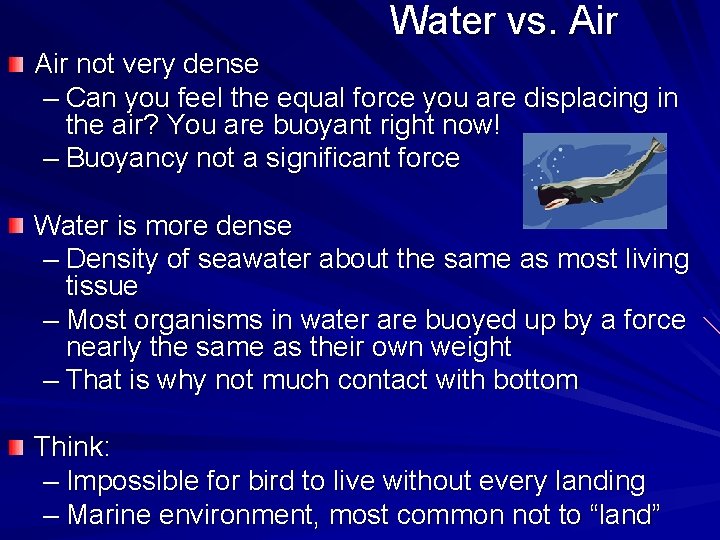
Water vs. Air not very dense – Can you feel the equal force you are displacing in the air? You are buoyant right now! – Buoyancy not a significant force Water is more dense – Density of seawater about the same as most living tissue – Most organisms in water are buoyed up by a force nearly the same as their own weight – That is why not much contact with bottom Think: – Impossible for bird to live without every landing – Marine environment, most common not to “land”