
What is IPM IPM integrated pest management is

- Slides: 27
What is IPM? ? ? IPM (integrated pest management) is a sustainable approach to managing pests by combining biological, chemical, cultural, and physical tools in a way that minimizes economic, health, and environmental risks. From: Anonymous. 1994 Integrated Pest Management Practices in 1991 Fruits and Nuts, RTD Updates: Pest Management, USDA-ERS, 8 pp.
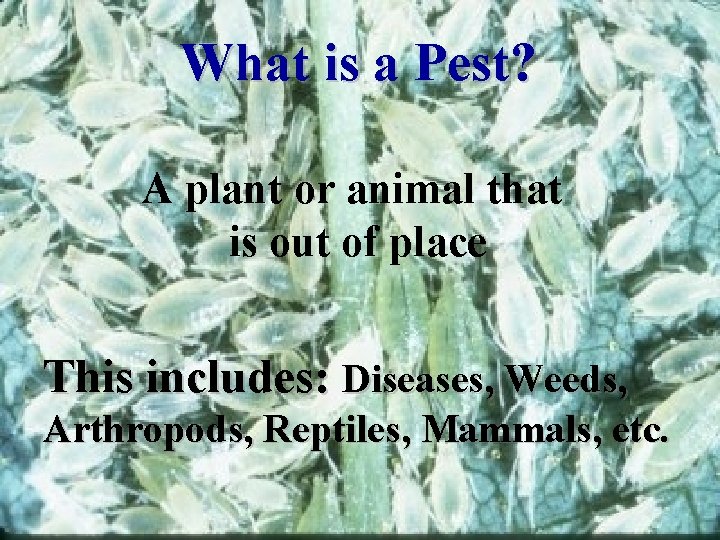
What is a Pest? A plant or animal that is out of place This includes: Diseases, Weeds, Arthropods, Reptiles, Mammals, etc.
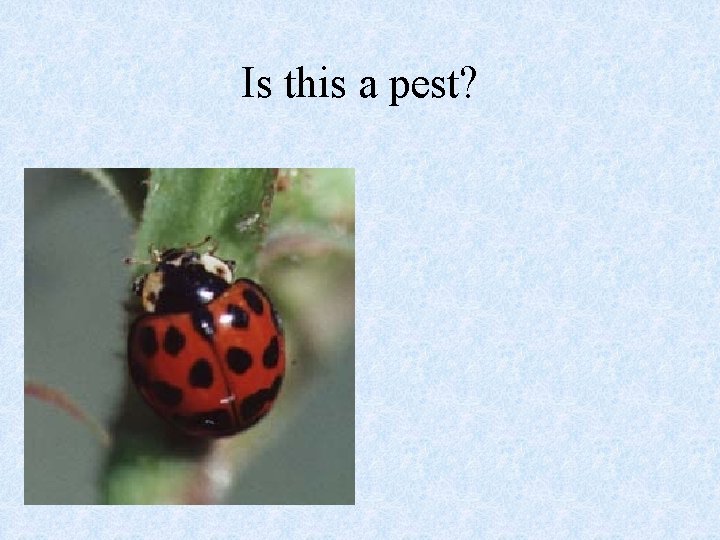
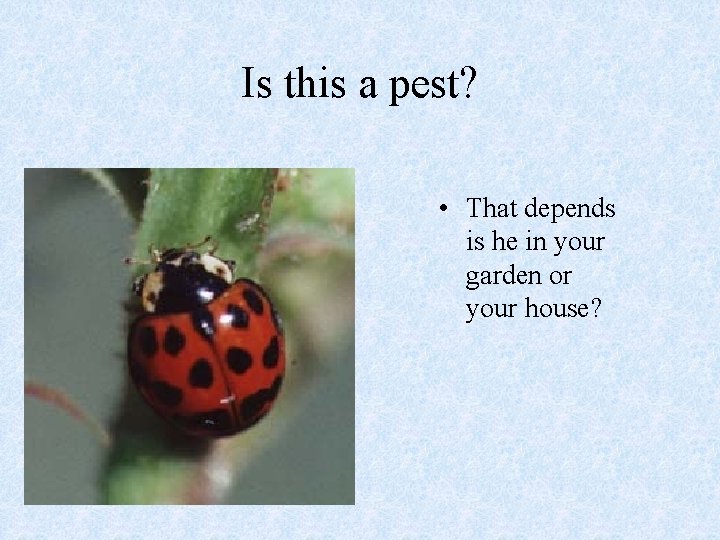
Is this a pest?
Is this a pest? • That depends is he in your garden or your house?
Pest management toolbox Cultural control Physical control Biological control Chemical control
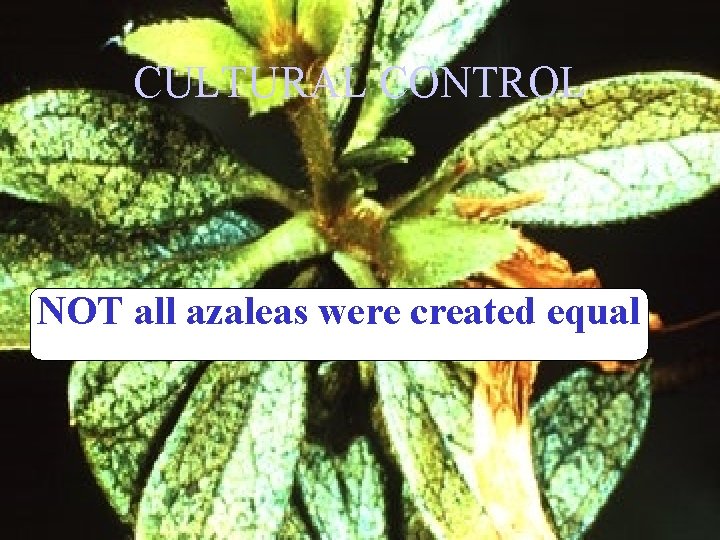
CULTURAL CONTROL NOT all azaleas were created equal
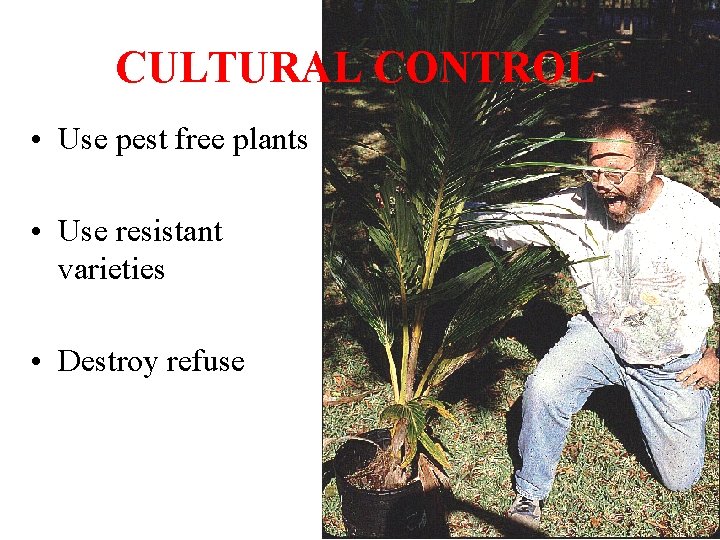
CULTURAL CONTROL • Use pest free plants • Use resistant varieties • Destroy refuse
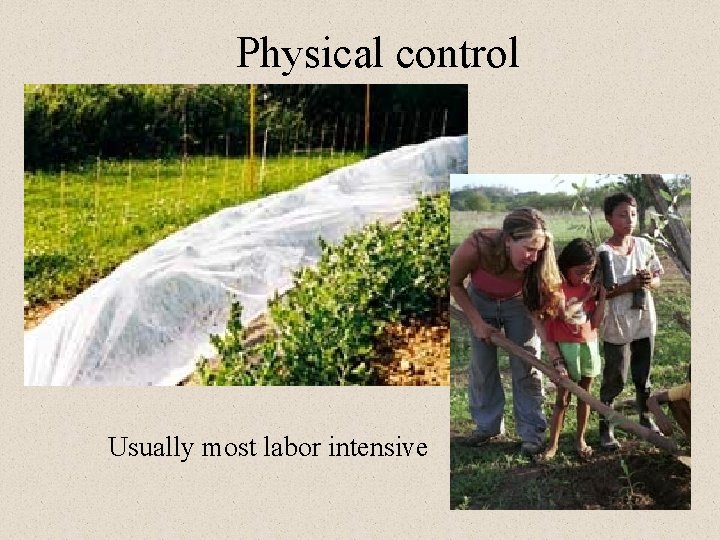
Physical control Usually most labor intensive
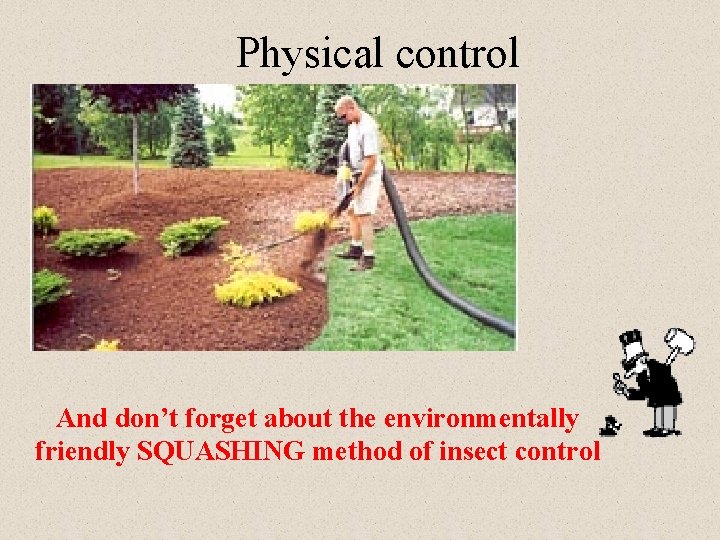
Physical control And don’t forget about the environmentally friendly SQUASHING method of insect control
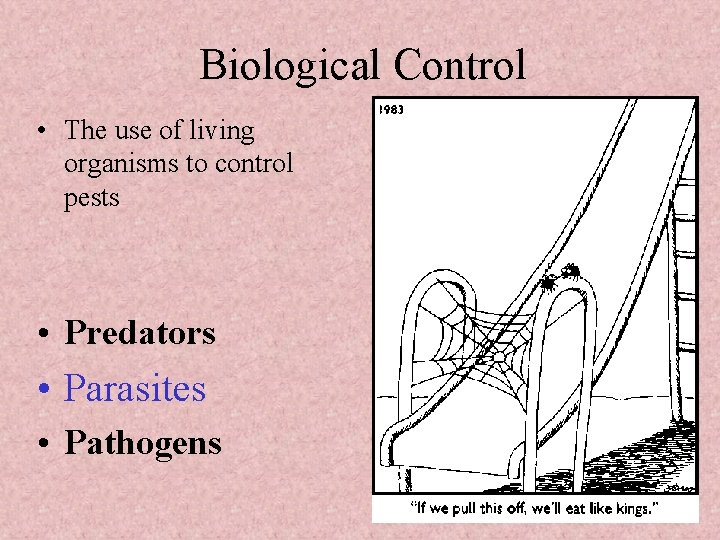
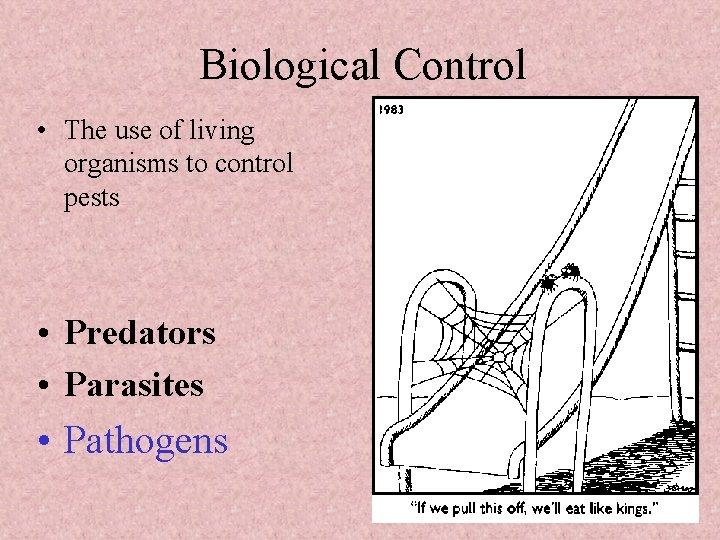
Biological Control • The use of living organisms to control pests • Predators • Parasites • Pathogens
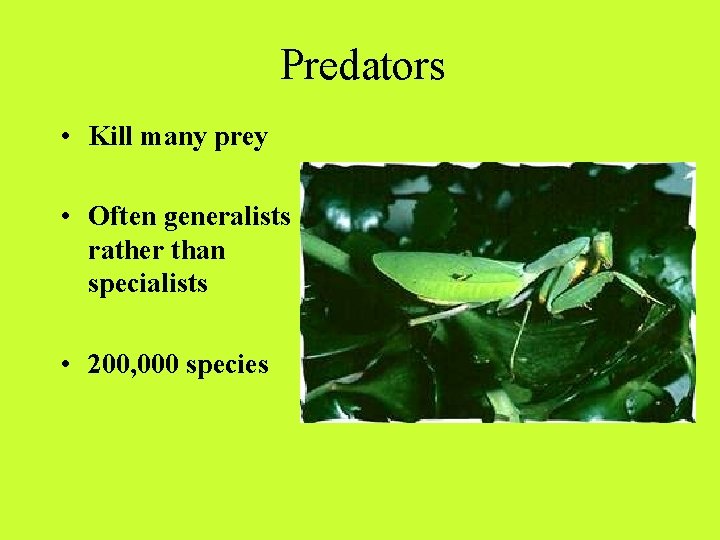
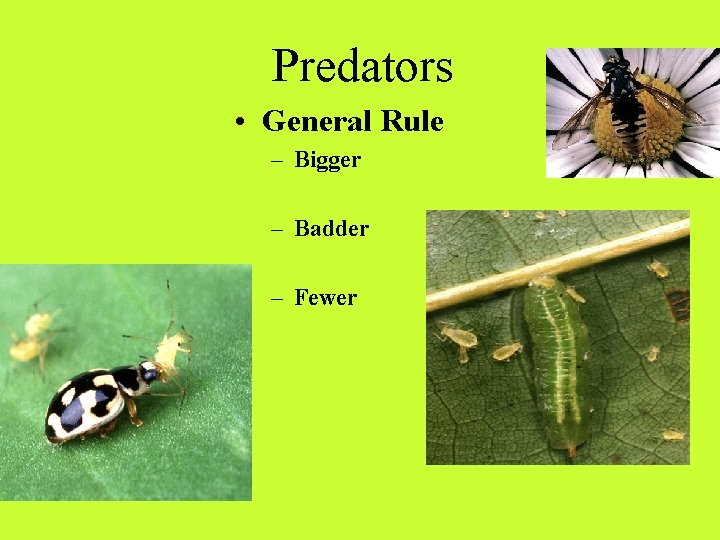
Predators • Kill many prey • Often generalists rather than specialists • 200, 000 species
Predators • General Rule – Bigger – Badder – Fewer
Biological Control • The use of living organisms to control pests • Predators • Parasites • Pathogens
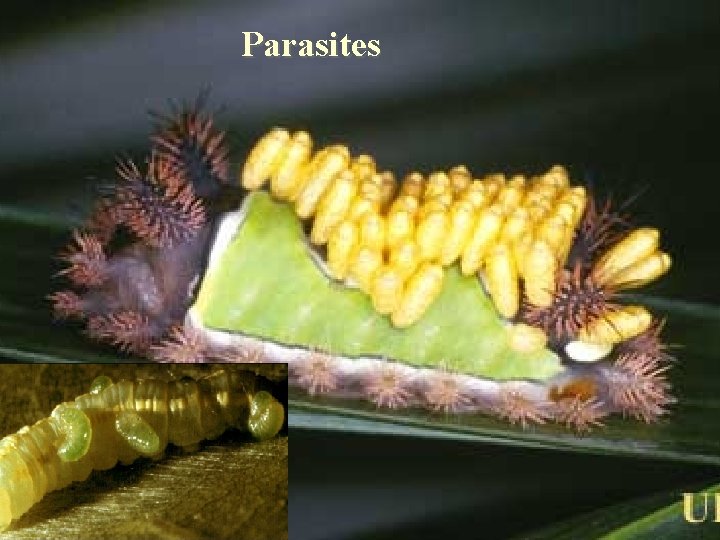
Parasites
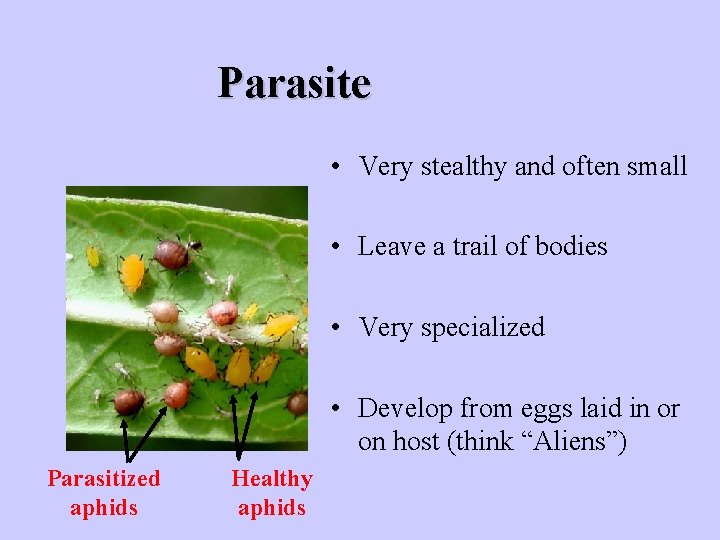
Parasite • Very stealthy and often small • Leave a trail of bodies • Very specialized • Develop from eggs laid in or on host (think “Aliens”) Parasitized aphids Healthy aphids
Biological Control • The use of living organisms to control pests • Predators • Parasites • Pathogens
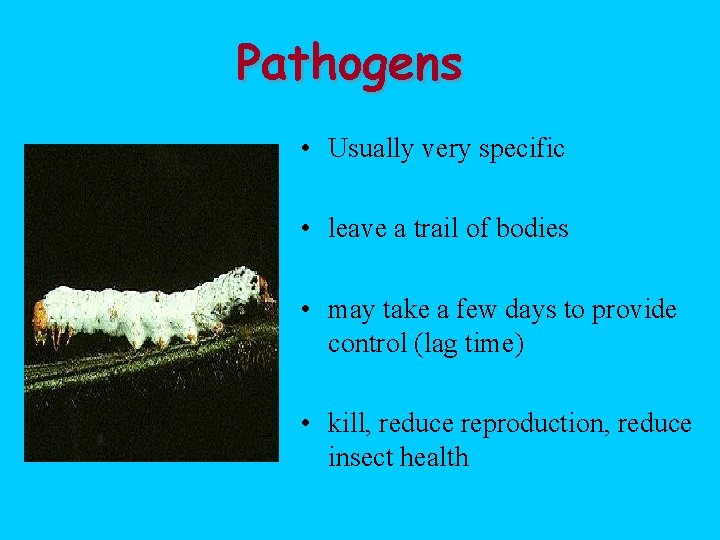
Pathogens • Usually very specific • leave a trail of bodies • may take a few days to provide control (lag time) • kill, reduce reproduction, reduce insect health
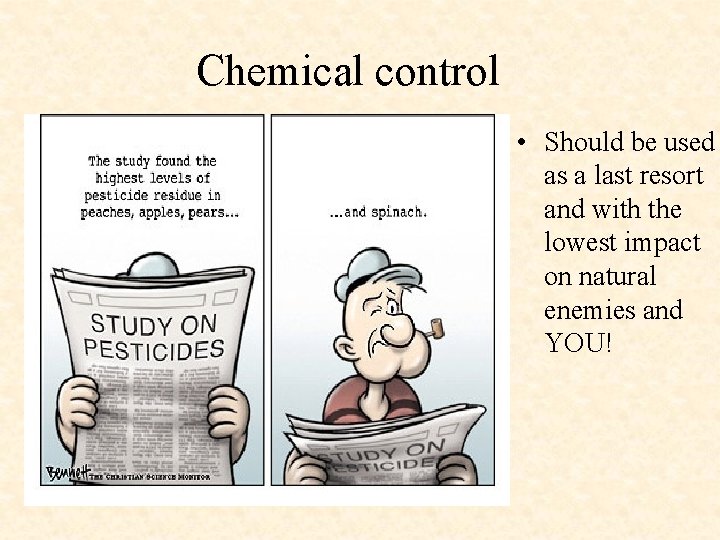
Chemical control • Should be used as a last resort and with the lowest impact on natural enemies and YOU!
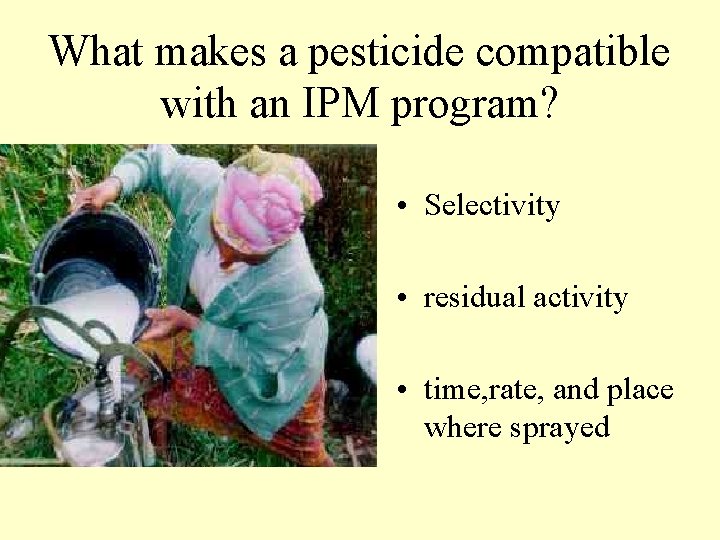
What makes a pesticide compatible with an IPM program? • Selectivity • residual activity • time, rate, and place where sprayed
And Scouting
. SCOUTING • Favorable conditions • Signs of the pests – damage – frass • The actual pest • Signs of natural enemies