
WHAT IS HOMEOSTASIS the maintenance of a constant
- Slides: 9
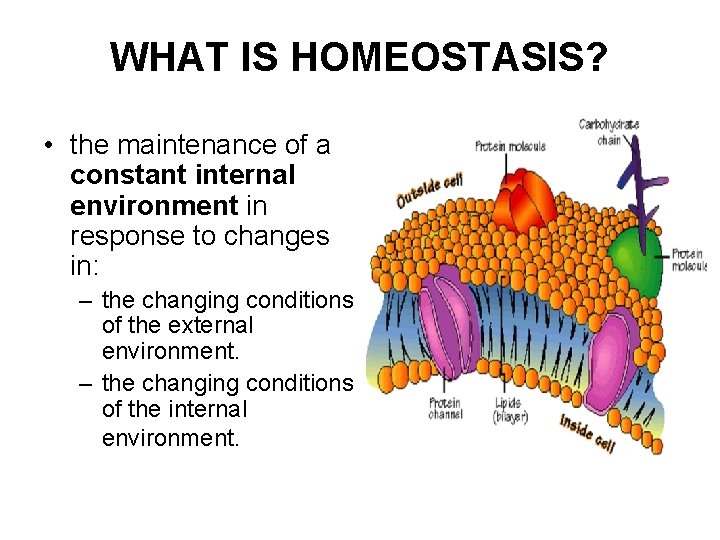
WHAT IS HOMEOSTASIS? • the maintenance of a constant internal environment in response to changes in: – the changing conditions of the external environment. – the changing conditions of the internal environment.
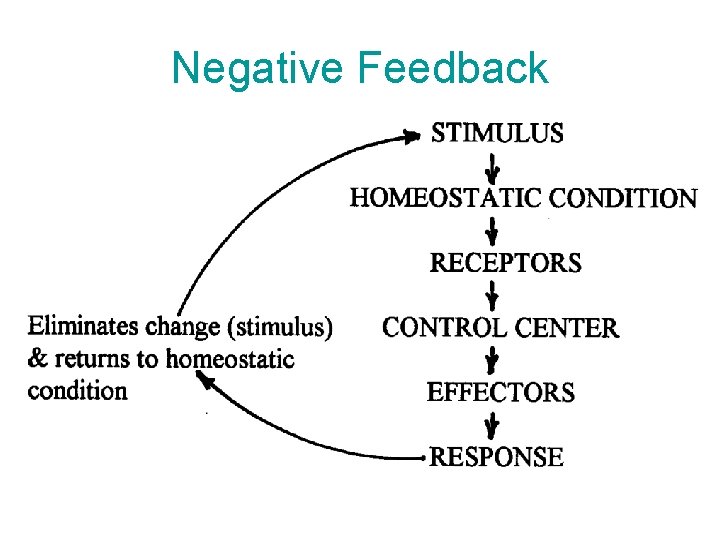
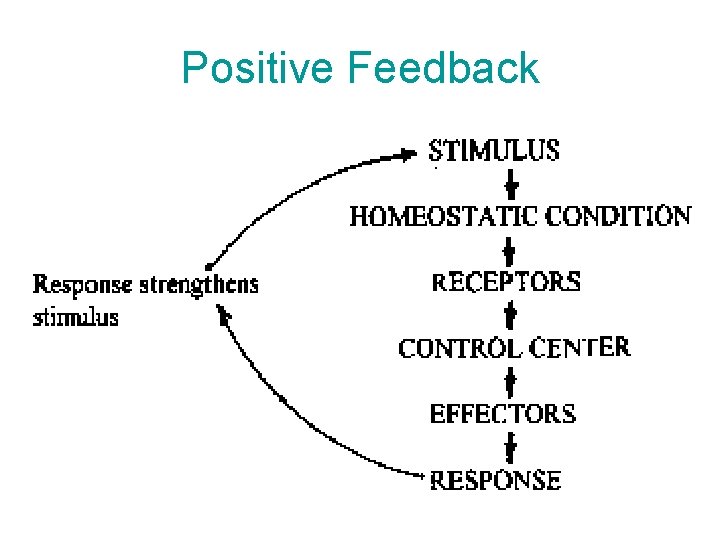
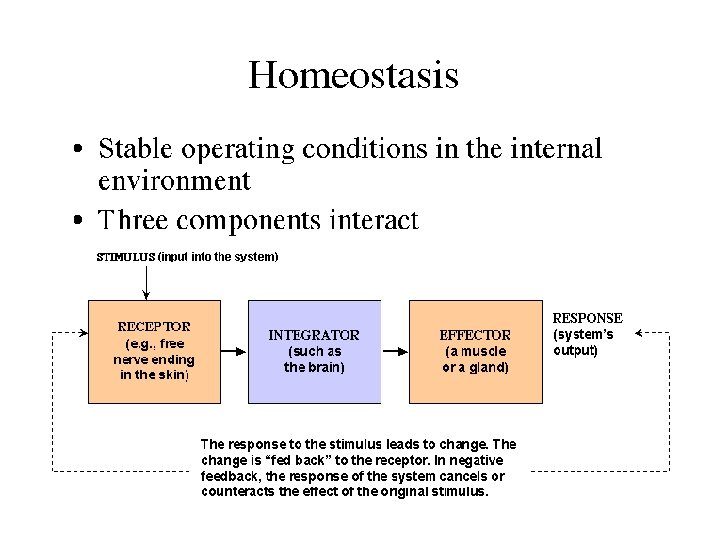
FEEDBACK MECHANISMS Feedback mechanisms are the general mechanism of nervous or hormonal regulation in animals. • Negative feedback is when the response diminishes the original stimulus. • Positive feedback is when the response enhances the original stimulus.
FEEDBACK LOOPS • Feedback mechanisms have certain essential components. • Stimulus: The change from ideal or resting conditions. • Receptor: The cells or tissue which detects the change due to the stimulus. • Relay: The transmission of the message, via nerves or hormones or both, to the effector.
FEEDBACK LOOPS • Effector: The cells or tissue, usually a gland or muscles, which cause the response to happen. • Response: An action, at cell, tissue or whole organism level which would not have occurred in the absence of the stimulus. • Feedback: The consequence of the response on the stimulus. May be positive or negative.
Negative Feedback
Positive Feedback
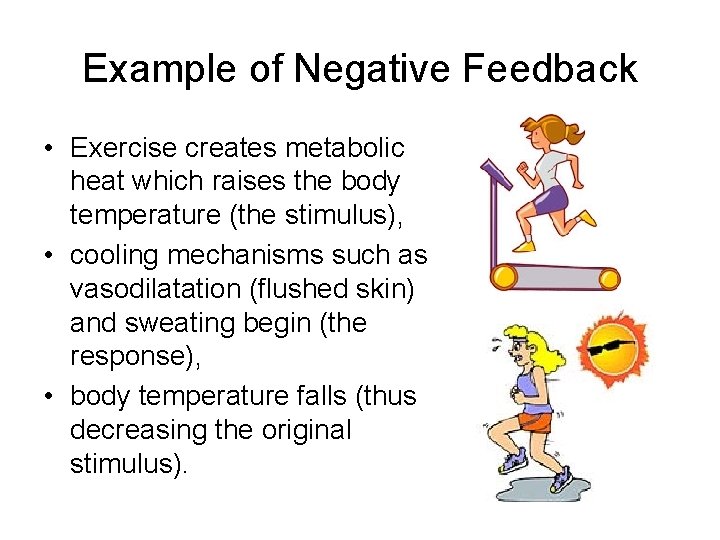
Example of Negative Feedback • Exercise creates metabolic heat which raises the body temperature (the stimulus), • cooling mechanisms such as vasodilatation (flushed skin) and sweating begin (the response), • body temperature falls (thus decreasing the original stimulus).
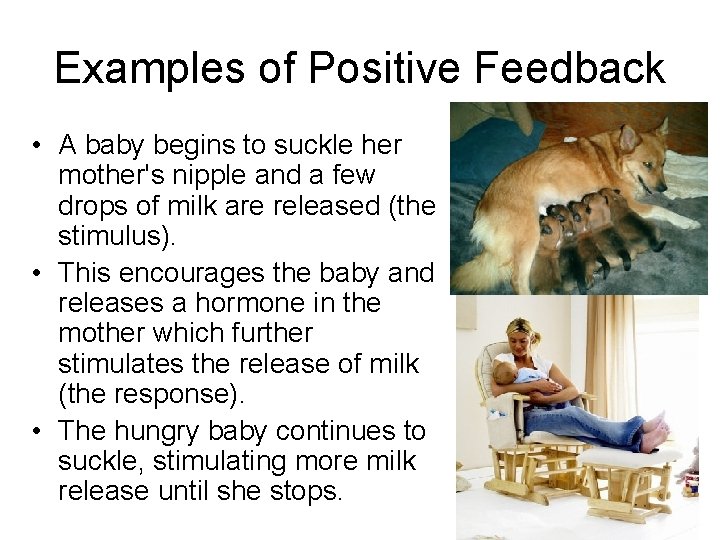
Examples of Positive Feedback • A baby begins to suckle her mother's nipple and a few drops of milk are released (the stimulus). • This encourages the baby and releases a hormone in the mother which further stimulates the release of milk (the response). • The hungry baby continues to suckle, stimulating more milk release until she stops.