
What is holding us back in the prevention
What is holding us back in the prevention of QRPs? Lex Bouter
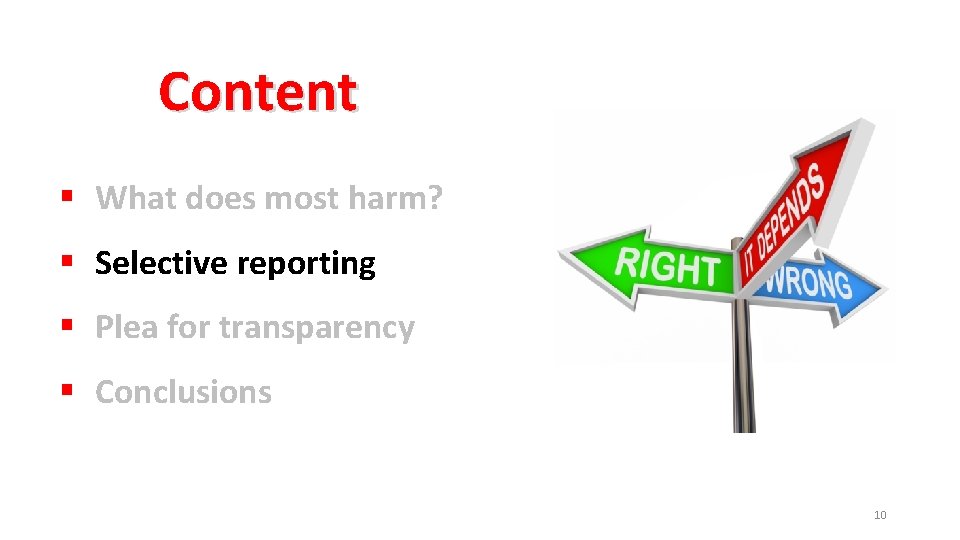
Content § What does most harm? § Selective reporting § Plea for transparency § Conclusions 2

Spectrum of research practices How it should be done: Relevant, Valid, Reproducible, Efficient Responsible Conduct of Research Sloppy science: Ignorance, honest error or dubious integrity Questionable Research Practices Scientific fraud: Fabrication, Falsification, Plagiarism Research Misconduct 3
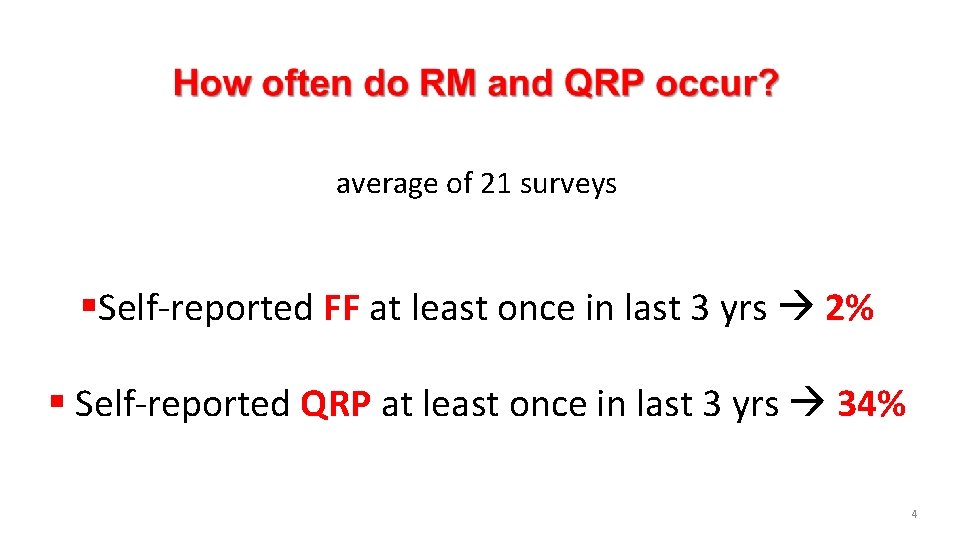
average of 21 surveys §Self-reported FF at least once in last 3 yrs 2% § Self-reported QRP at least once in last 3 yrs 34% 4
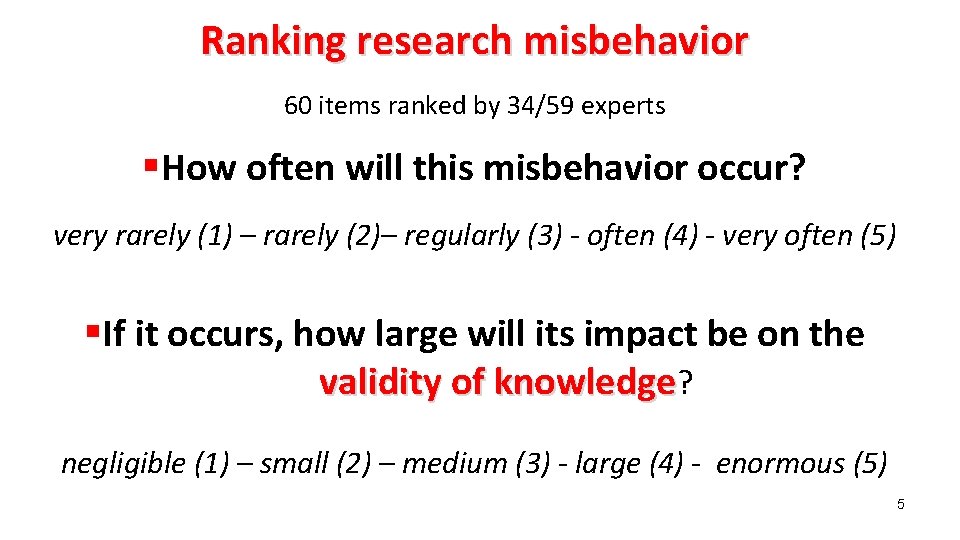
Ranking research misbehavior 60 items ranked by 34/59 experts §How often will this misbehavior occur? very rarely (1) – rarely (2)– regularly (3) - often (4) - very often (5) §If it occurs, how large will its impact be on the validity of knowledge? negligible (1) – small (2) – medium (3) - large (4) - enormous (5) 5
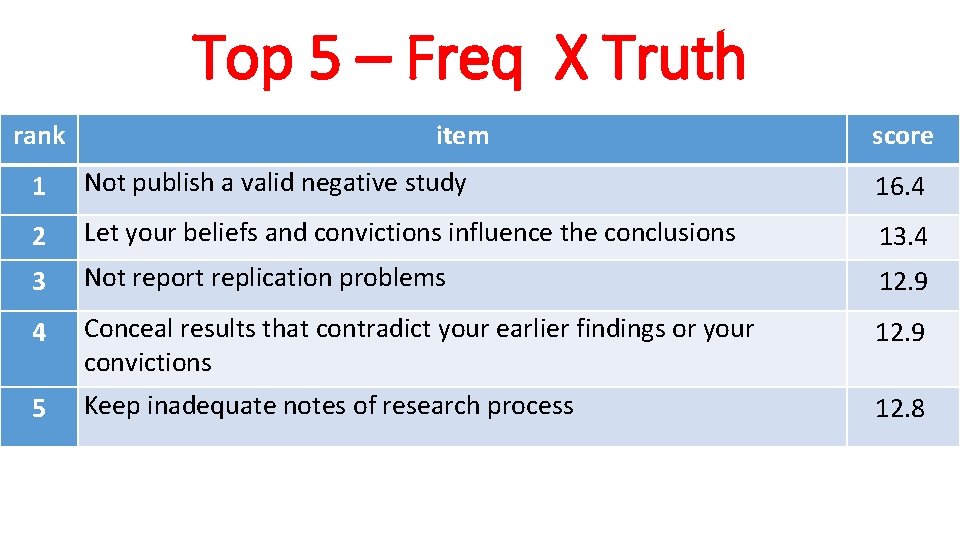
Top 5 – Freq X Truth rank item score 1 Not publish a valid negative study 16. 4 2 Let your beliefs and convictions influence the conclusions 13. 4 3 Not report replication problems 12. 9 4 Conceal results that contradict your earlier findings or your convictions 12. 9 5 Keep inadequate notes of research process 12. 8
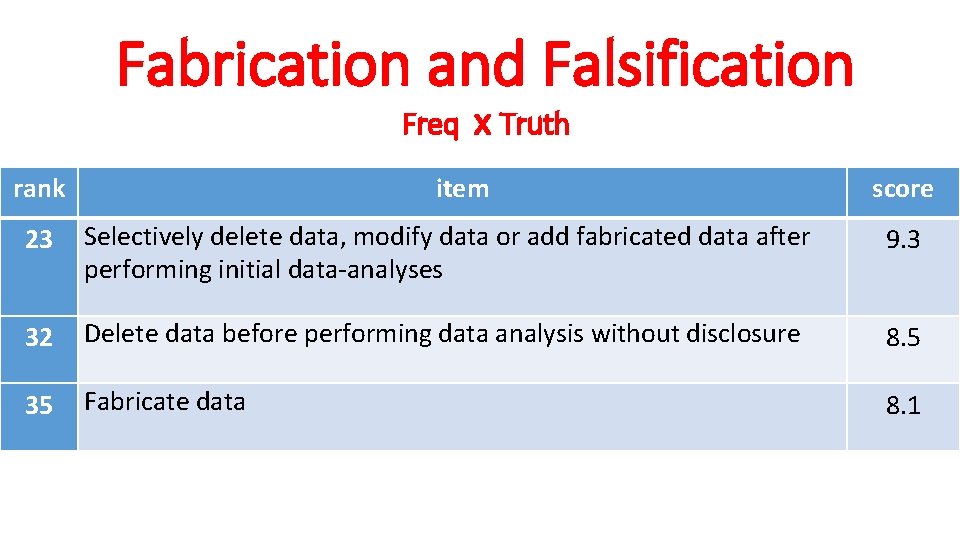
Fabrication and Falsification Freq rank x Truth item score 23 Selectively delete data, modify data or add fabricated data after performing initial data-analyses 9. 3 32 Delete data before performing data analysis without disclosure 8. 5 35 Fabricate data 8. 1
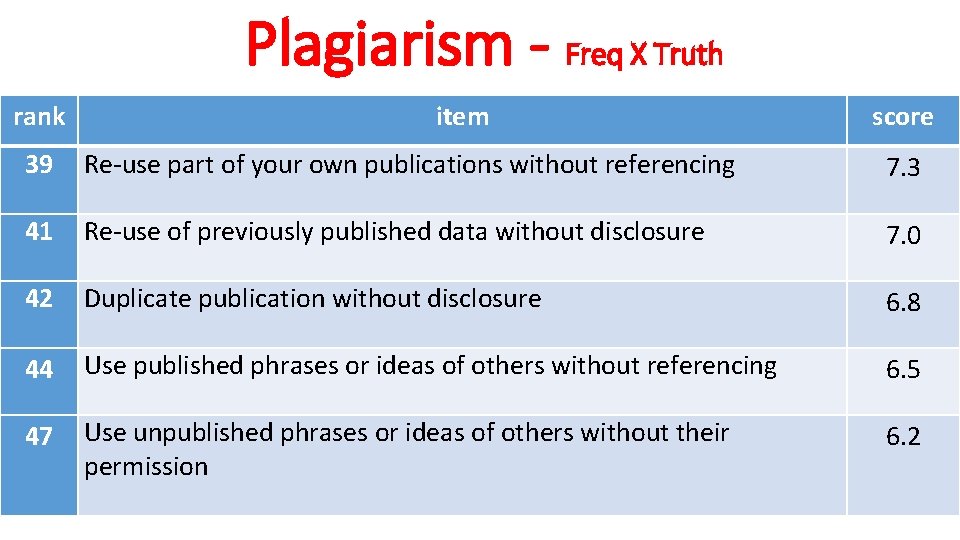
Plagiarism - Freq X Truth rank item score 39 Re-use part of your own publications without referencing 7. 3 41 Re-use of previously published data without disclosure 7. 0 42 Duplicate publication without disclosure 6. 8 44 Use published phrases or ideas of others without referencing 6. 5 47 Use unpublished phrases or ideas of others without their permission 6. 2
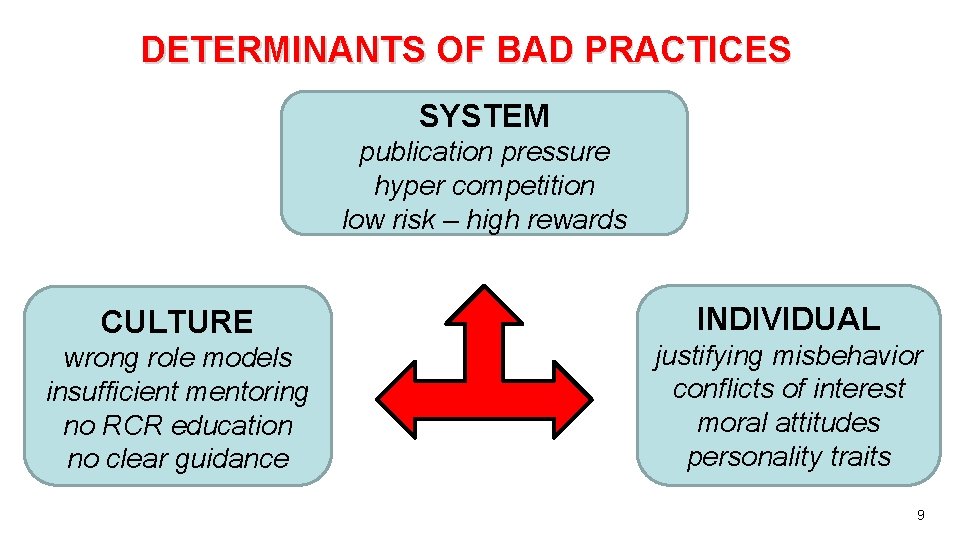
DETERMINANTS OF BAD PRACTICES SYSTEM publication pressure hyper competition low risk – high rewards CULTURE wrong role models insufficient mentoring no RCR education no clear guidance INDIVIDUAL justifying misbehavior conflicts of interest moral attitudes personality traits 9
Content § What does most harm? § Selective reporting § Plea for transparency § Conclusions 10
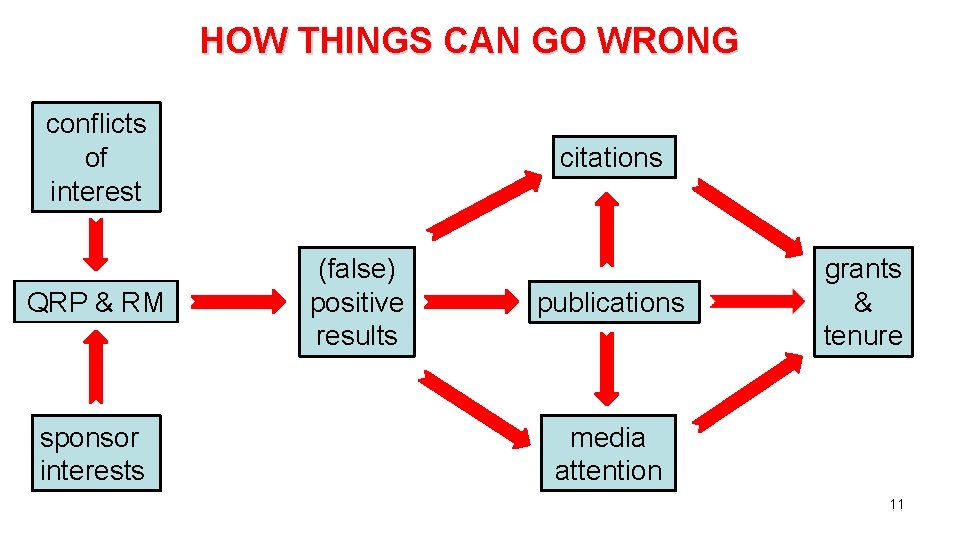
HOW THINGS CAN GO WRONG conflicts of interest QRP & RM sponsor interests citations (false) positive results publications grants & tenure media attention 11
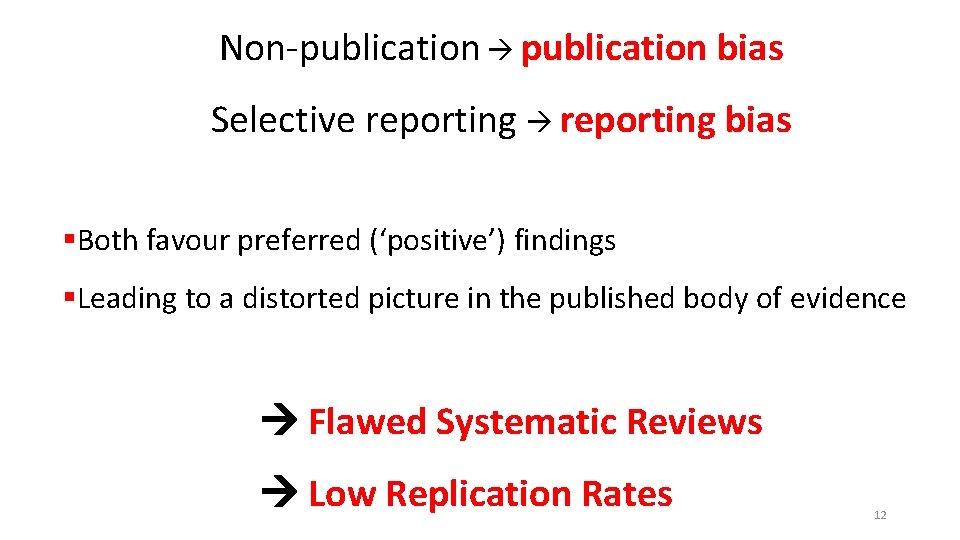
Non-publication bias Selective reporting bias §Both favour preferred (‘positive’) findings §Leading to a distorted picture in the published body of evidence Flawed Systematic Reviews Low Replication Rates 12
13
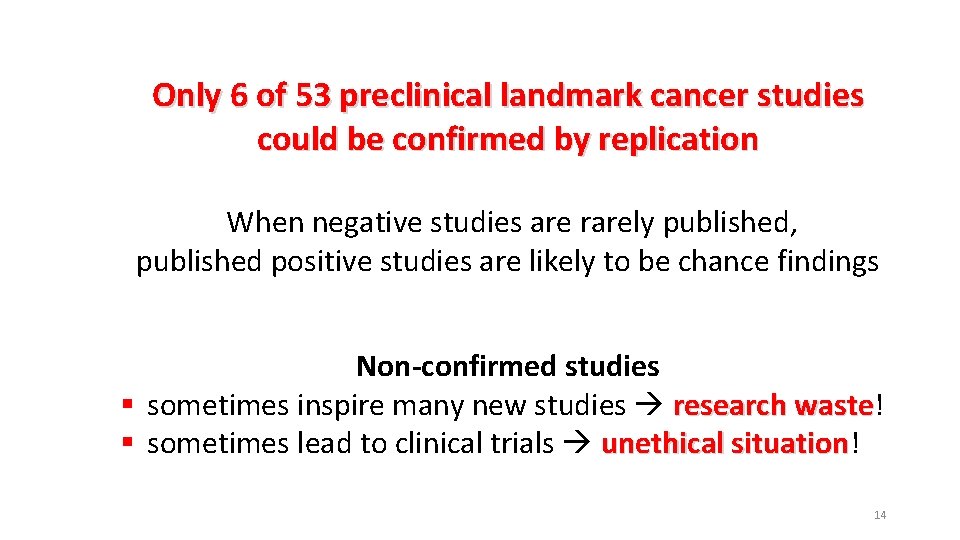
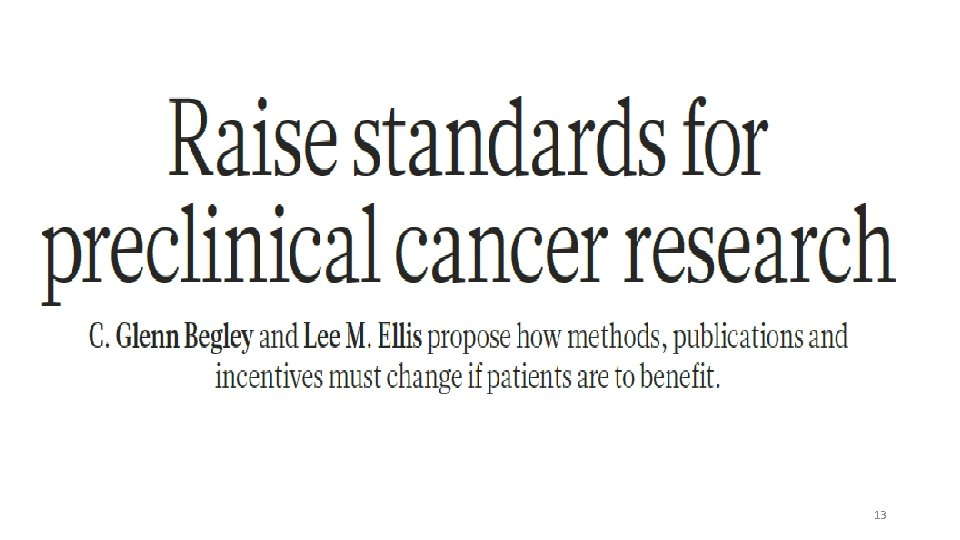
Only 6 of 53 preclinical landmark cancer studies could be confirmed by replication When negative studies are rarely published, published positive studies are likely to be chance findings Non-confirmed studies § sometimes inspire many new studies research waste! waste § sometimes lead to clinical trials unethical situation! situation 14
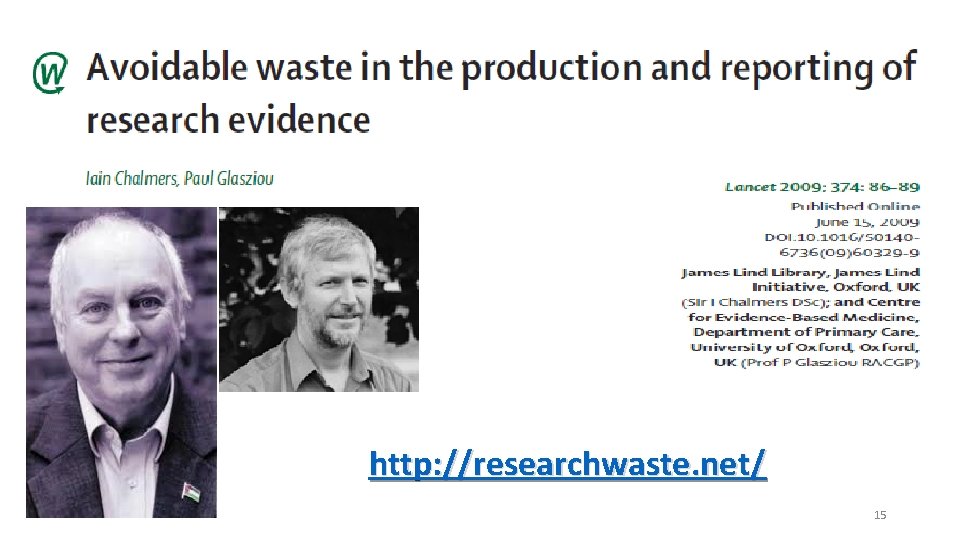
http: //researchwaste. net/ 15
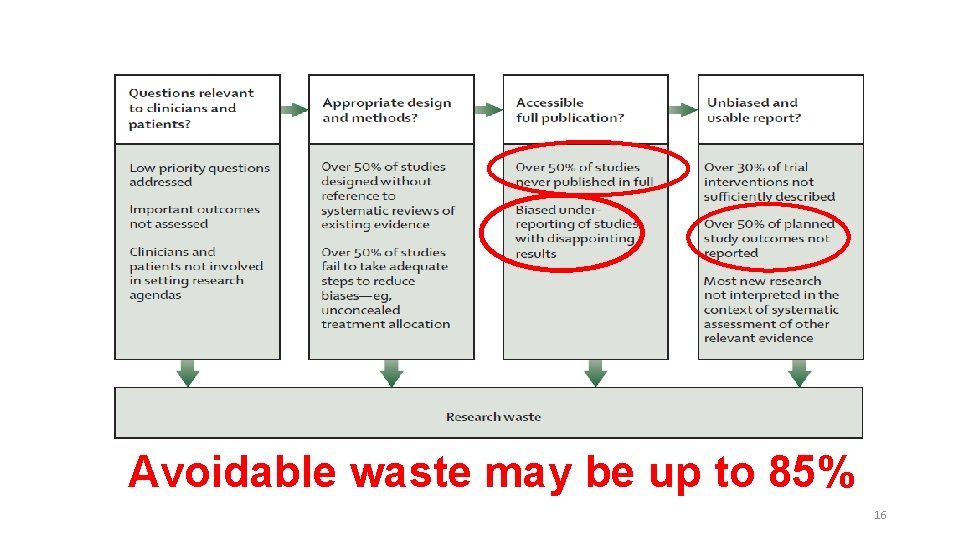
Avoidable waste may be up to 85% 16
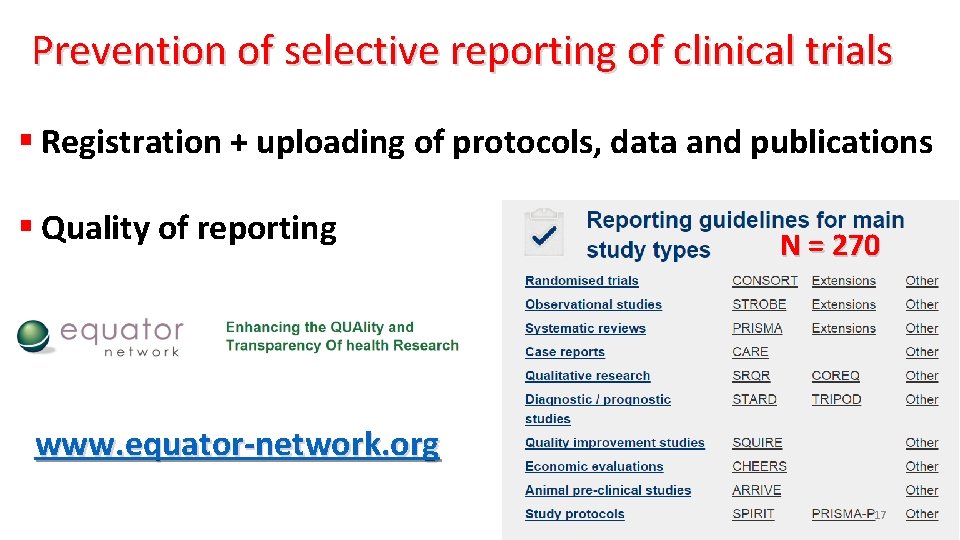
Prevention of selective reporting of clinical trials § Registration + uploading of protocols, data and publications § Quality of reporting N = 270 www. equator-network. org 17
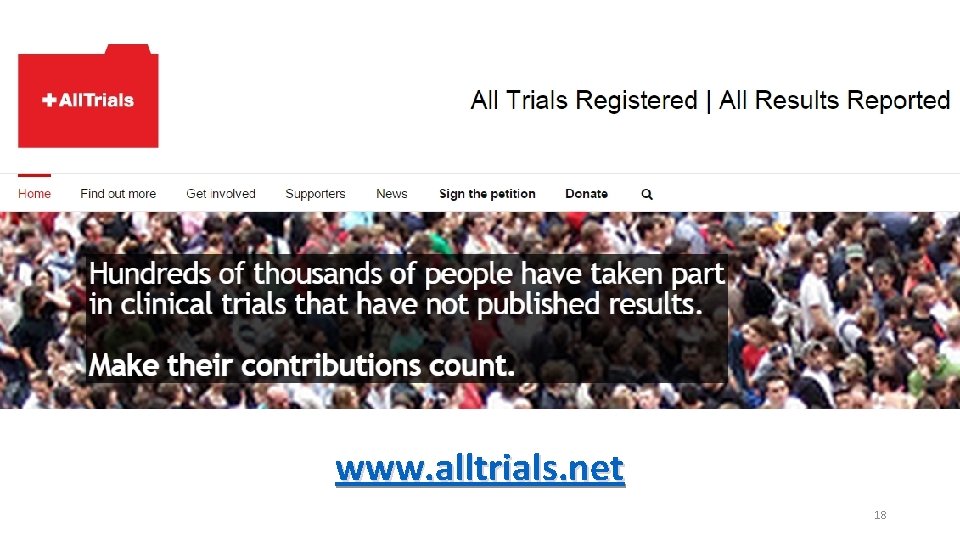
www. alltrials. net 18
The sad news § Slow rate of adoption § 50% of registered RCTs is not published § 50% of published RCTs is not registered § Open Data is slowly gaining momentum § Room for improvement § 46 recommendations for the stakeholders at issue § Other forms of clinical and preclinical research § But an inspiring example for other disciplinary fields 19
Content § What does most harm? § Selective reporting § Plea for transparency § Conclusions 20
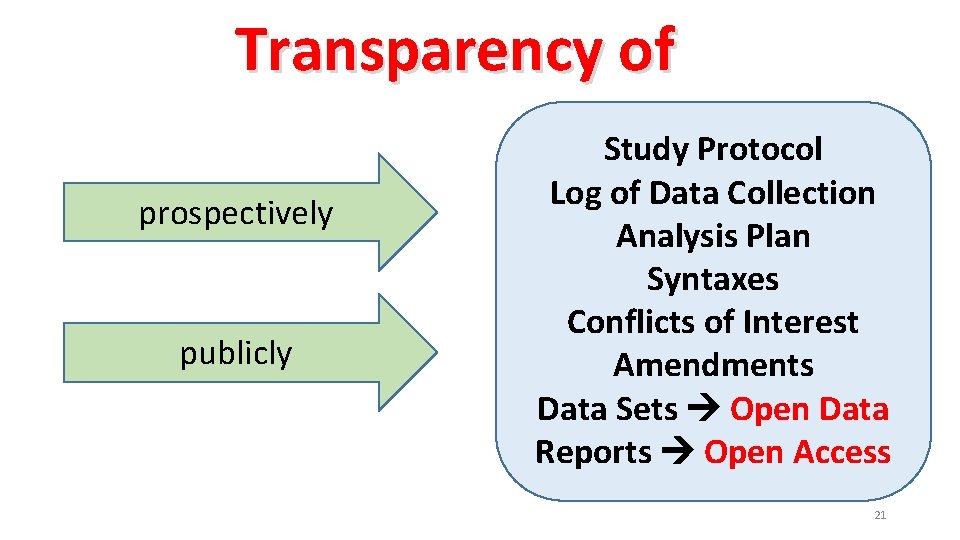
Transparency of prospectively publicly Study Protocol Log of Data Collection Analysis Plan Syntaxes Conflicts of Interest Amendments Data Sets Open Data Reports Open Access 21
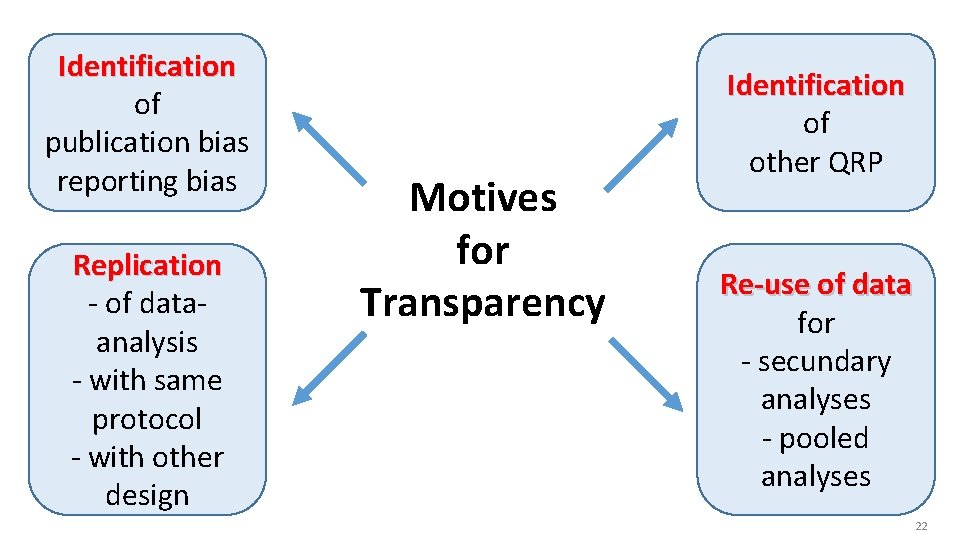
Identification of publication bias reporting bias Replication - of dataanalysis - with same protocol - with other design Motives for Transparency Identification of other QRP Re-use of data for - secundary analyses - pooled analyses 22
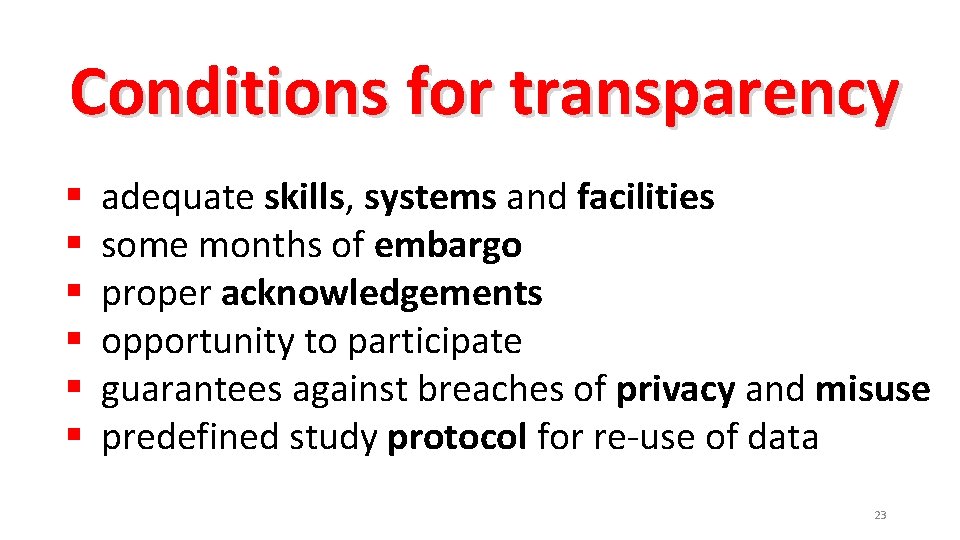
Conditions for transparency § § § adequate skills, systems and facilities some months of embargo proper acknowledgements opportunity to participate guarantees against breaches of privacy and misuse predefined study protocol for re-use of data 23
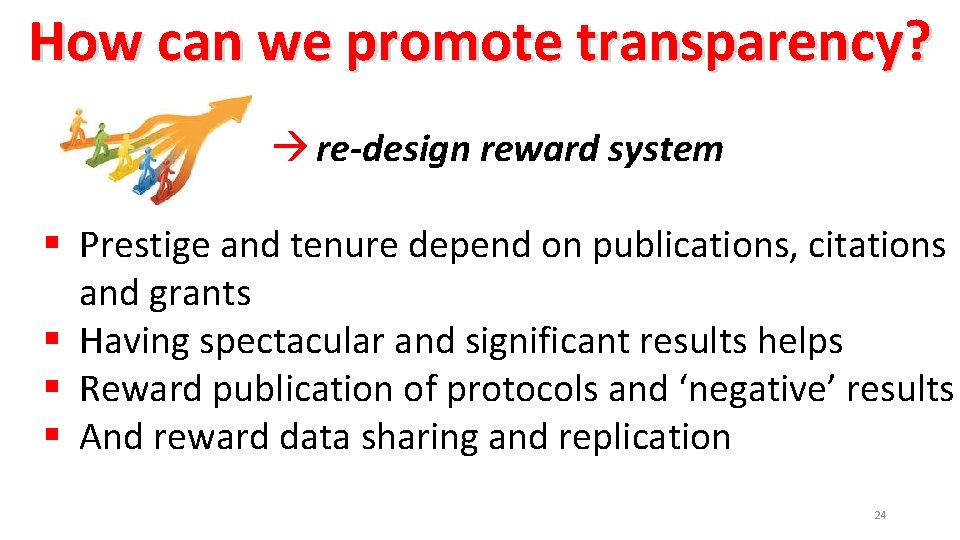
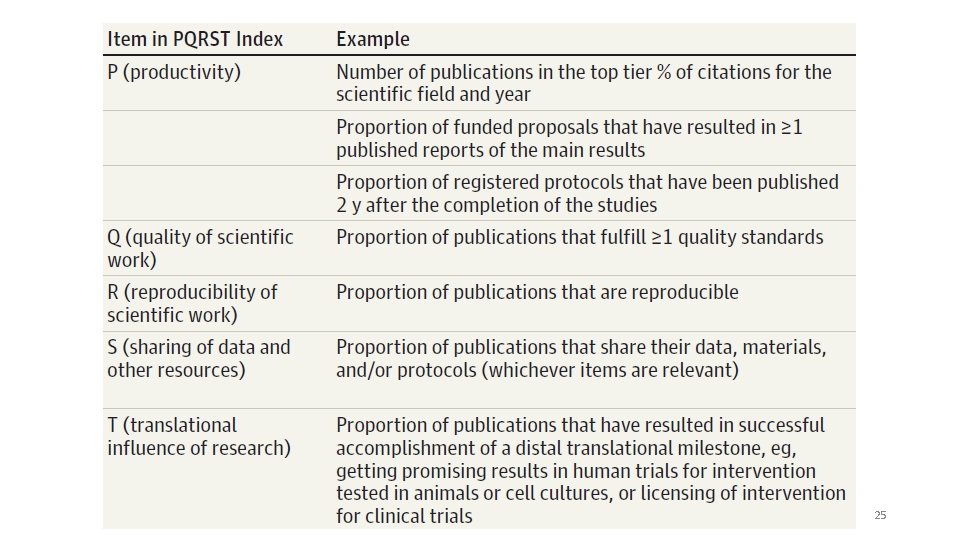
How can we promote transparency? re-design reward system § Prestige and tenure depend on publications, citations and grants § Having spectacular and significant results helps § Reward publication of protocols and ‘negative’ results § And reward data sharing and replication 24
25
How can we promote transparency? by nudging and forcing § § Permission to conduct study (review) boards Condition for (last) payment funders Eligibility for next grant application funders Condition for publication journals 26
What else can we do? § § Take RCR Education and Quality Care serious Good facilities data storage and expert help Senior staff giving the correct example role modeling Promote open seminar culture talk about dilemmas 27

28
Conclusions § Sloppy science is a larger evil than research misconduct § Especially selective reporting threatens validity and efficiency § More transparency is urgently needed § Factors in system, culture and individual are ‘holding us back’ § We must change the reward system and face our dilemmas 29

th 5 World Conference on Research Integrity www. wcri 2017. org The Netherlands th st May 28 -31 , 2017

lm. bouter@vu. nl 31
- Slides: 31