
What is historical inquiry Lesson 1 Unit 1
- Slides: 22
What is historical inquiry? Lesson 1, Unit 1 1
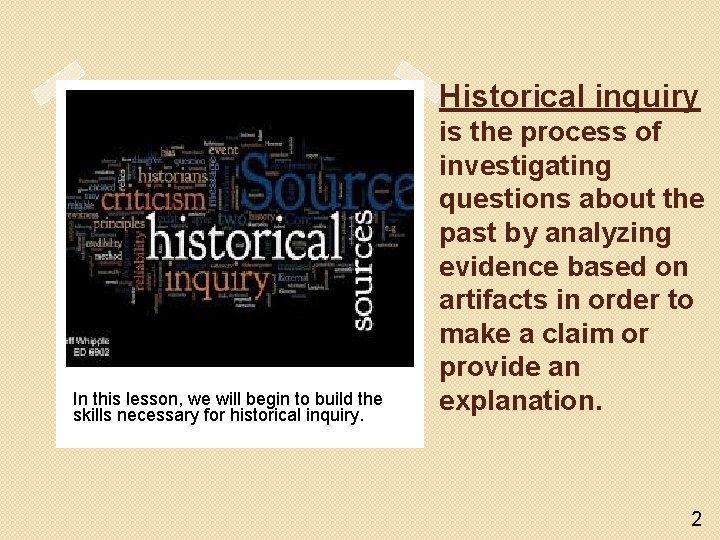
Historical inquiry In this lesson, we will begin to build the skills necessary for historical inquiry. is the process of investigating questions about the past by analyzing evidence based on artifacts in order to make a claim or provide an explanation. 2
Engaging in historical inquiry requires the application of historical reading skills. 3
Historical Reading Skills �Provides a way to approach written documents with the lens of a detective � Positions the reader as questioner of the origin and contents of the document Reading in history is different than reading in other subject areas! 4
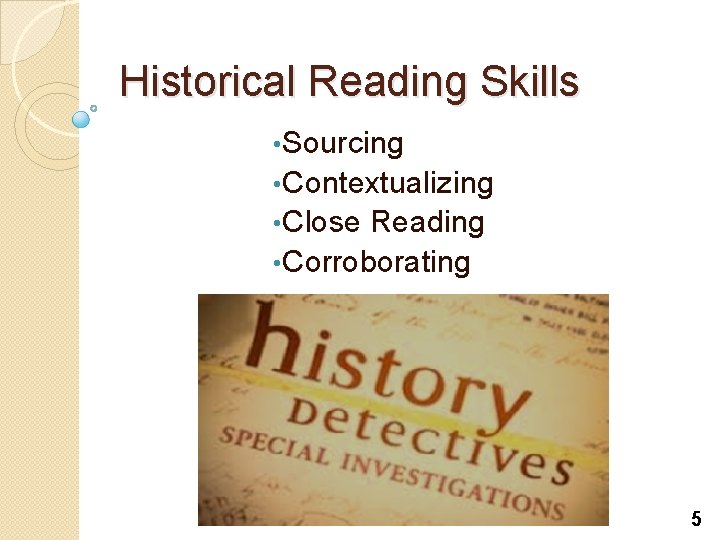
Historical Reading Skills • Sourcing • Contextualizing • Close Reading • Corroborating 5
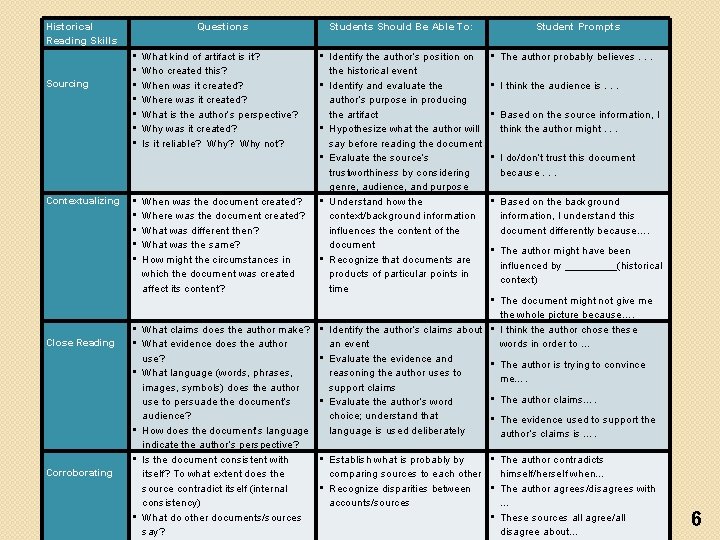
Historical Reading Skills Sourcing Contextualizing Close Reading • • • • • Corroborating • Questions Students Should Be Able To: What kind of artifact is it? Who created this? When was it created? Where was it created? What is the author’s perspective? Why was it created? Is it reliable? Why not? • Identify the author’s position on the historical event • Identify and evaluate the author’s purpose in producing the artifact • Hypothesize what the author will say before reading the document • Evaluate the source’s trustworthiness by considering genre, audience, and purpose • Understand how the context/background information influences the content of the document • Recognize that documents are products of particular points in time When was the document created? Where was the document created? What was different then? What was the same? How might the circumstances in which the document was created affect its content? Student Prompts • The author probably believes. . . • I think the audience is. . . • Based on the source information, I think the author might. . . • I do/don’t trust this document because. . . • Based on the background information, I understand this document differently because…. • The author might have been influenced by _____(historical context) • The document might not give me the whole picture because…. What claims does the author make? • Identify the author’s claims about • I think the author chose these What evidence does the author an event words in order to … use? • Evaluate the evidence and • The author is trying to convince What language (words, phrases, reasoning the author uses to me…. images, symbols) does the author support claims • The author claims…. use to persuade the document’s • Evaluate the author’s word audience? choice; understand that • The evidence used to support the How does the document’s language is used deliberately author’s claims is …. indicate the author’s perspective? Is the document consistent with • Establish what is probably by • The author contradicts itself? To what extent does the comparing sources to each other himself/herself when… source contradict itself (internal • Recognize disparities between • The author agrees/disagrees with consistency) accounts/sources … What do other documents/sources • These sources all agree/all say? disagree about… 6
Sourcing Historians ask questions such as: �Who wrote this? �What is the author’s perspective? �When was it written? �Where was it written? �Why was it written? �Is the artifact/source reliable? Why not? 7
By sourcing, students should be able to: • Identify the author and consider the author’s purpose in producing the document/artifact • Hypothesize what the author will say before reading the document • Evaluate the source’s trustworthiness by considering genre, audience, and purpose 8
Reflecting on Your Questions Small Group Discussion: Which questions, if any, had to do with sourcing? Remember, in sourcing a document, we ask: • Who wrote this? • What is the author’s perspective? • When was it written? • Where was it written? • Why was it written? • Is the artifact/source reliable? Why not? 9
Contextualizing Historians ask questions such as: � When and where was the document created? � What was different then? What was the same? � How might the circumstances in which the document was created affect its contents? 10
By contextualizing the document, students should be able to: • Understand how context/background information influences the content of the document • Recognize that documents are products of a particular time and place 11
Reflecting on Your Questions Turn and Talk: Which questions, if any, had to do with contextualizing? Remember, in contextualizing a document, we ask: • When and where was the document created? • What was different then? What was the same? • How might the circumstances in which the document was created affect its content? 12
Close Reading Historians ask questions such as: �What claims does the author make? �What evidence does the author use? �What language (words, phrases, images, symbols) does the author use to persuade the document’s audience? �How does the document’s language indicate the author’s perspective? 13
By closely reading the document, students should be able to: • Identify the author’s claims about an event • Evaluate the evidence and reasoning the author uses to support claims • Evaluate author’s word choice; understand that language is usually selected to convey a specific message 14
Reflecting on Your Questions Turn and Talk: Which questions, if any, had to do with closely reading the document? Remember, in closely reading a document, we ask: • What claims does the author make? • What evidence does the author use? • What language (words, phrases, images, symbols) does the author use to persuade the document’s audience? • How does the document’s language indicate the 15 author’s perspective?
Corroboration Historians ask questions such as: �What are other possible documents or sources? �What do other documents/sources say? �Do the documents/sources agree? If not, how do they differ? �What documents/sources are most reliable? 16
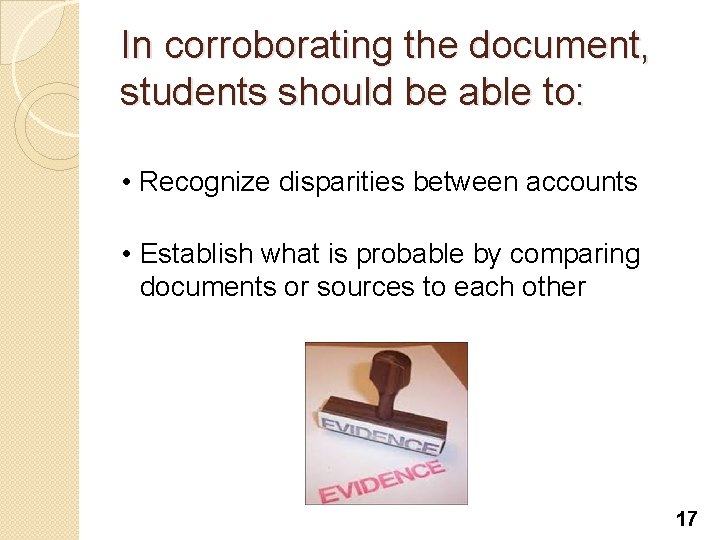
In corroborating the document, students should be able to: • Recognize disparities between accounts • Establish what is probable by comparing documents or sources to each other 17
Reflecting on Your Questions Turn and Talk: Which questions, if any, had to do with corroborating the content in the document? Remember, in corroborating a document, we ask: • What are other possible documents or sources? • What do other documents/sources say? • Do the documents/sources agree? If not, how do they differ? 18
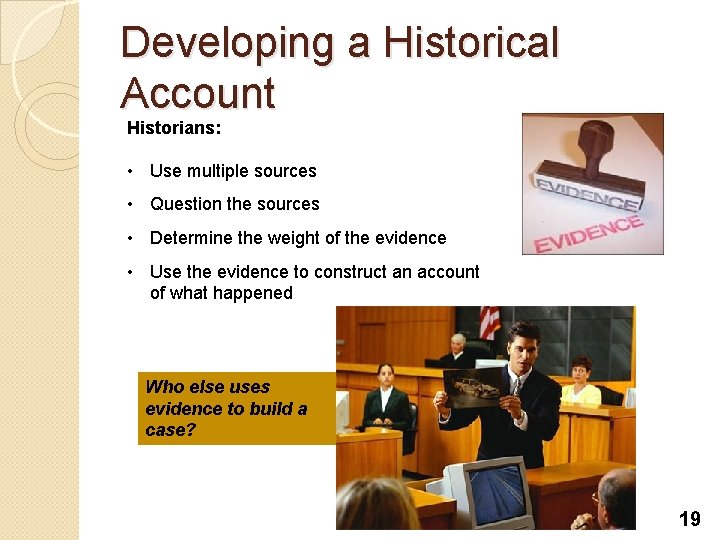
Developing a Historical Account Historians: • Use multiple sources • Question the sources • Determine the weight of the evidence • Use the evidence to construct an account of what happened Who else uses evidence to build a case? 19
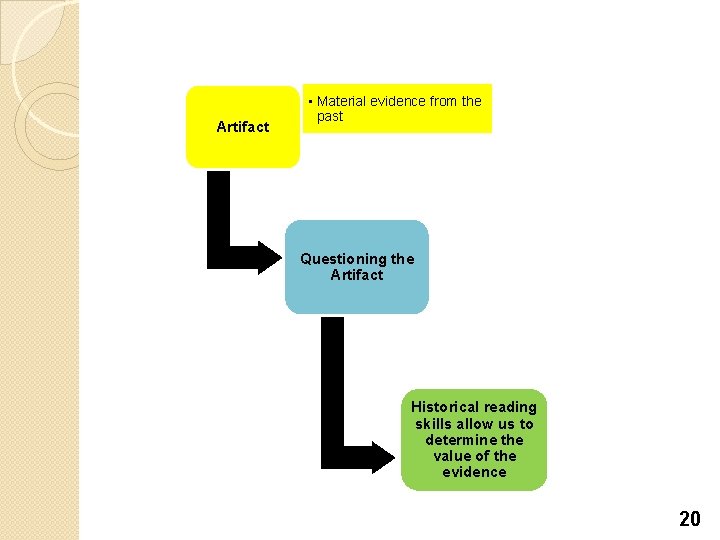
Artifact • Material evidence from the past Questioning the Artifact Historical reading skills allow us to determine the value of the evidence 20
Assignment • You are to locate and bring in an artifact that reflects your experience in elementary school. • The artifact should help answer the question, “What was elementary school like? ” • The artifact can be a document, such as a homework assignment, letter from a teacher, an award, a copy of a picture, a yearbook or some other source that reflects something about your time in elementary school. • Using the historical reading skill of sourcing, write your answers to the questions that historians would ask about your artifact listed on the handout. 21
Property of Oakland Schools Copyright © 2010 -2018 by Oakland Schools 22