
What is GPS GPS Global Positioning System Provides
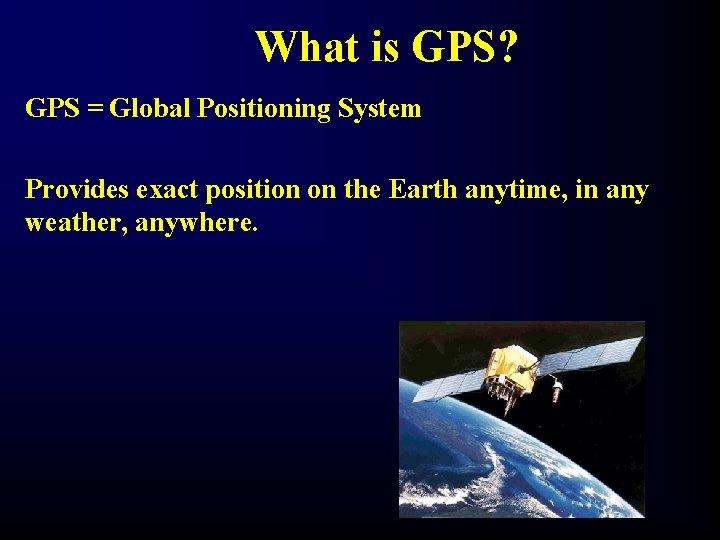
What is GPS? GPS = Global Positioning System Provides exact position on the Earth anytime, in any weather, anywhere.
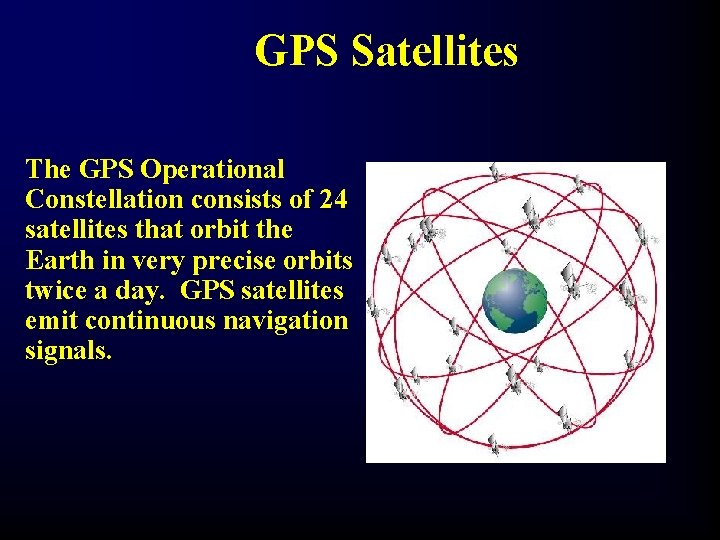
GPS Satellites The GPS Operational Constellation consists of 24 satellites that orbit the Earth in very precise orbits twice a day. GPS satellites emit continuous navigation signals.
The History of GPS Ø GPS First satellite launched in 1978. Ø System declared fully operational in April, 1995. Ø Other systems F GLONASS (Russia) F GALILEO ( Collective effort) FGNSS
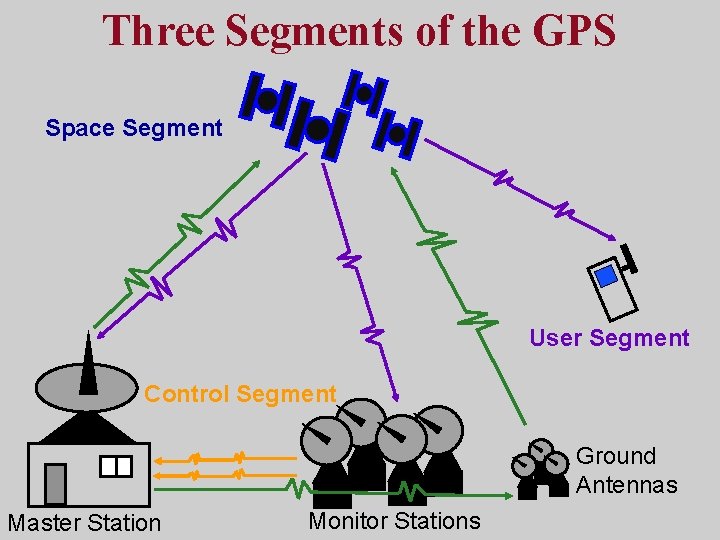
Three Segments of the GPS Space Segment User Segment Control Segment Ground Antennas Master Station Monitor Stations
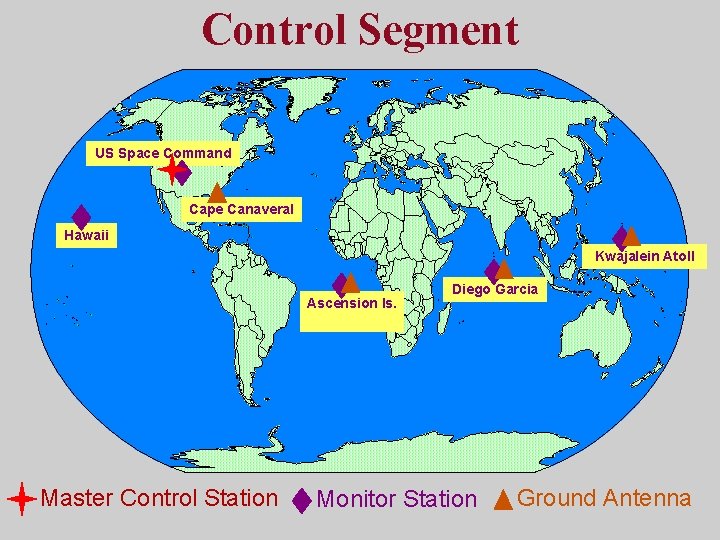
Control Segment US Space Command Cape Canaveral Hawaii Kwajalein Atoll Ascension Is. Master Control Station Diego Garcia Monitor Station Ground Antenna
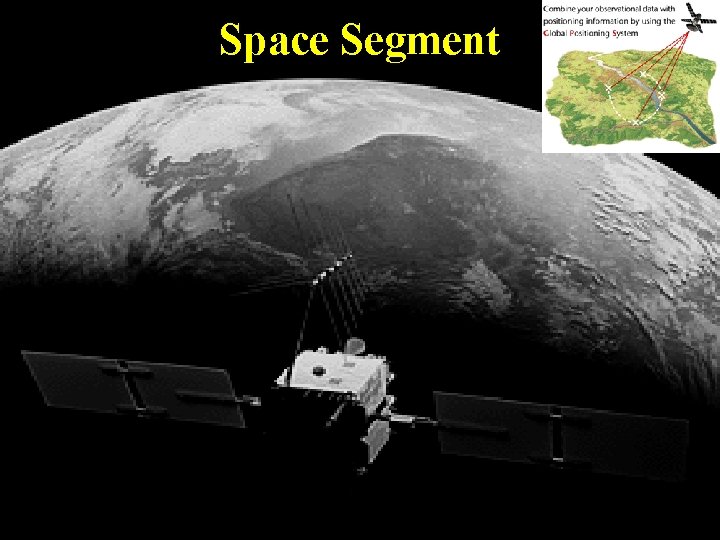
Space Segment
User Segment Ø Ø Ø Ø Ø Military. Search and rescue. Disaster relief. Surveying. Marine, aeronautical and terrestrial navigation. Remote controlled vehicle and robot guidance. Satellite positioning and tracking. Shipping. Geographic Information Systems (GIS). Recreation.
Four Basic Functions of GPS Ø Position and coordinates. Ø The distance and direction between any two waypoints, or a position and a waypoint. Ø Travel progress reports. Ø Accurate time measurement.
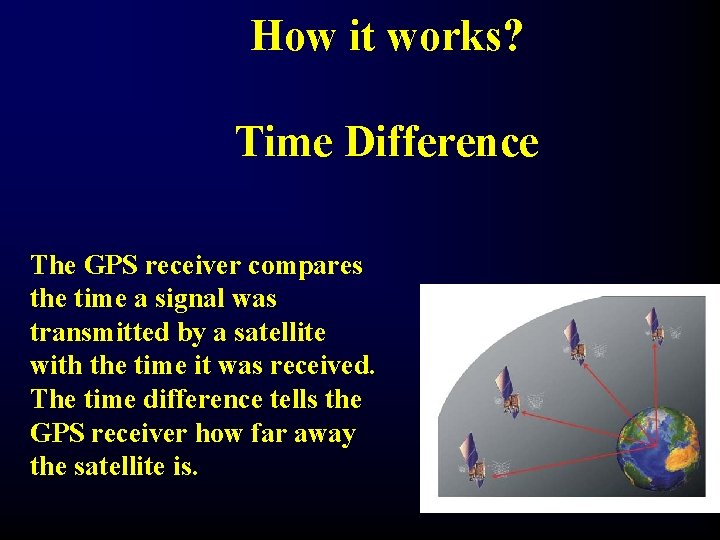
How it works? Time Difference The GPS receiver compares the time a signal was transmitted by a satellite with the time it was received. The time difference tells the GPS receiver how far away the satellite is.
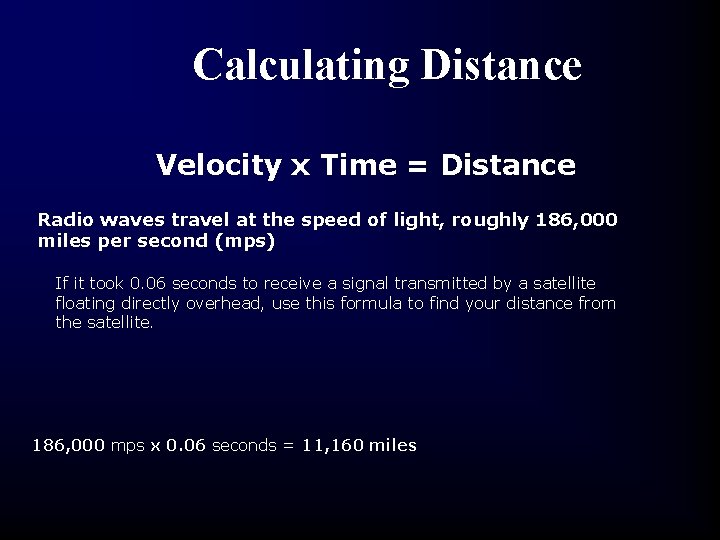
Calculating Distance Velocity x Time = Distance Radio waves travel at the speed of light, roughly 186, 000 miles per second (mps) If it took 0. 06 seconds to receive a signal transmitted by a satellite floating directly overhead, use this formula to find your distance from the satellite. 186, 000 mps x 0. 06 seconds = 11, 160 miles
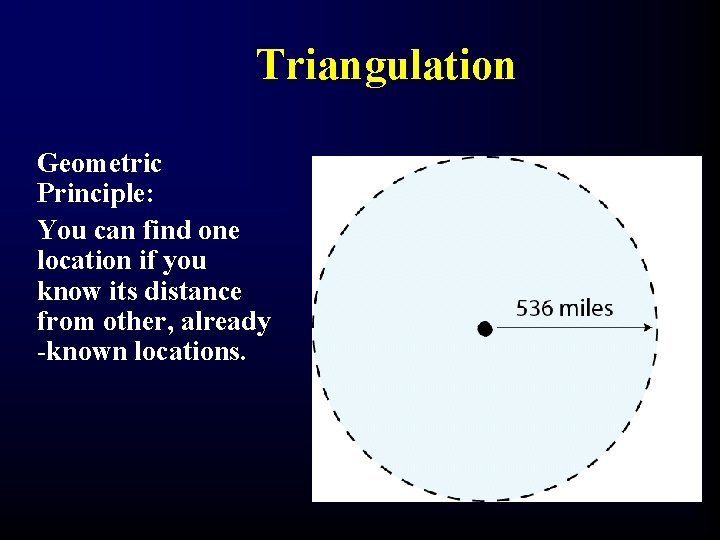
Triangulation Geometric Principle: You can find one location if you know its distance from other, already -known locations.
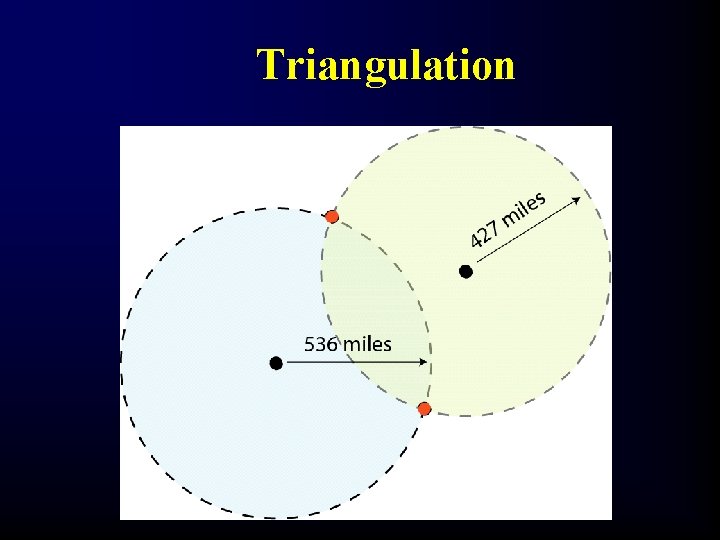
Triangulation
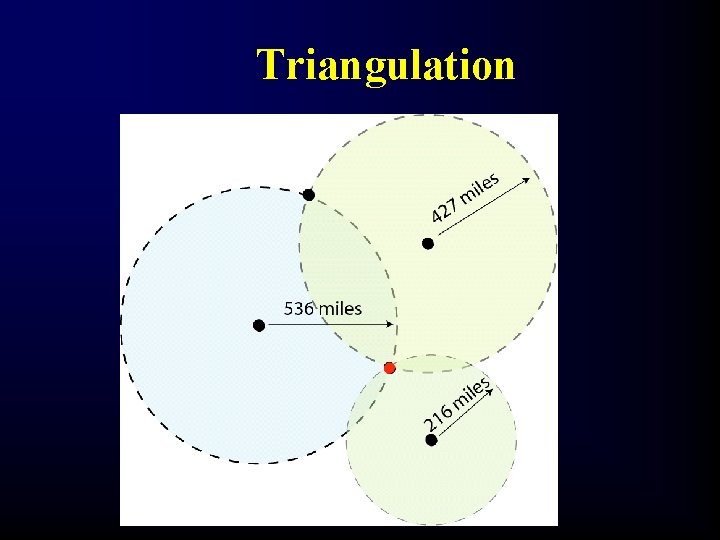
Triangulation
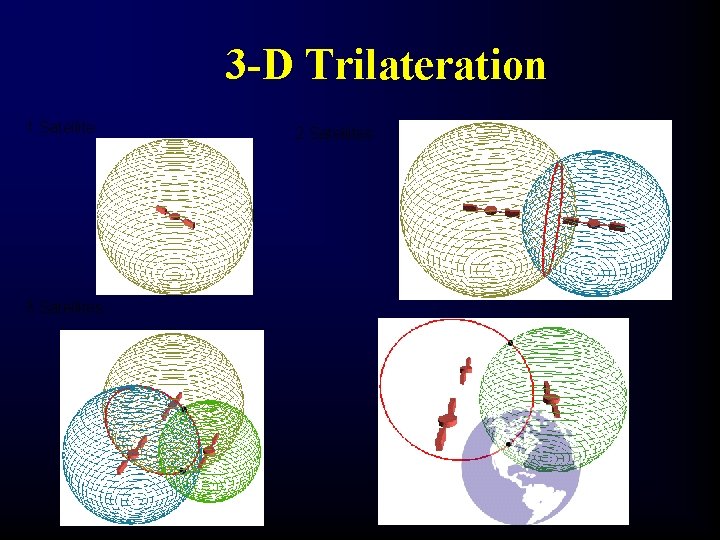
3 -D Trilateration 1 Satellite 3 Satellites 2 Satellites
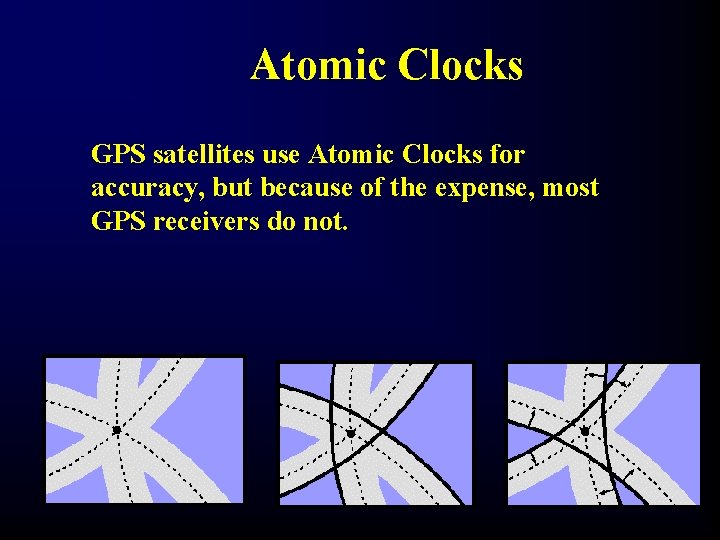
Atomic Clocks GPS satellites use Atomic Clocks for accuracy, but because of the expense, most GPS receivers do not.
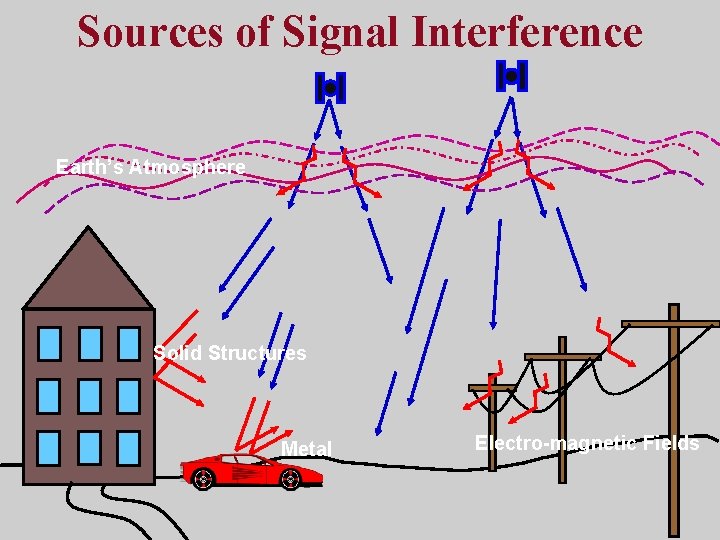
Sources of Signal Interference Earth’s Atmosphere Solid Structures Metal Electro-magnetic Fields
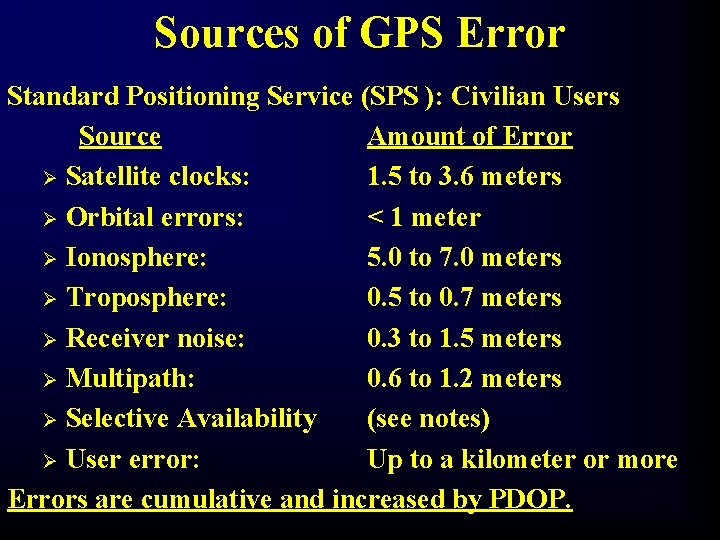
Sources of GPS Error Standard Positioning Service (SPS ): Civilian Users Source Amount of Error Ø Satellite clocks: 1. 5 to 3. 6 meters Ø Orbital errors: < 1 meter Ø Ionosphere: 5. 0 to 7. 0 meters Ø Troposphere: 0. 5 to 0. 7 meters Ø Receiver noise: 0. 3 to 1. 5 meters Ø Multipath: 0. 6 to 1. 2 meters Ø Selective Availability (see notes) Ø User error: Up to a kilometer or more Errors are cumulative and increased by PDOP.
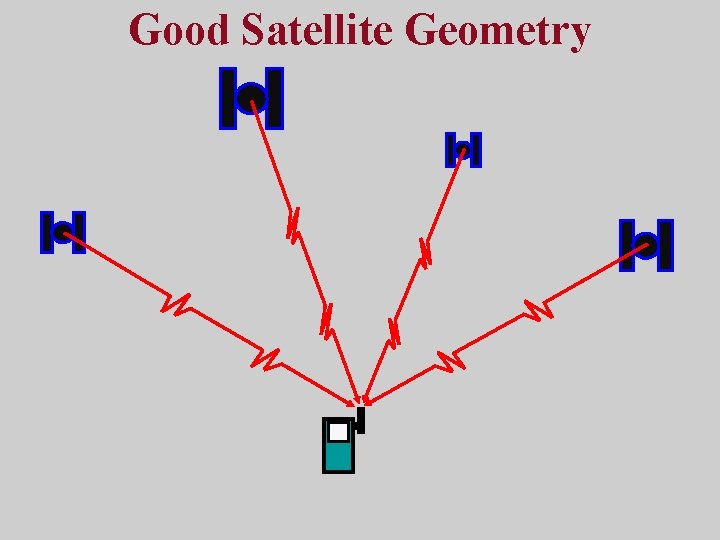
Good Satellite Geometry
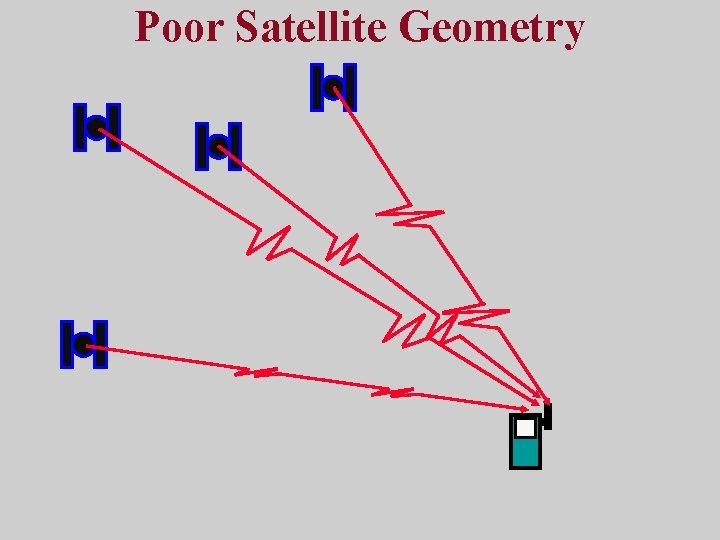
Poor Satellite Geometry
Differential GPS
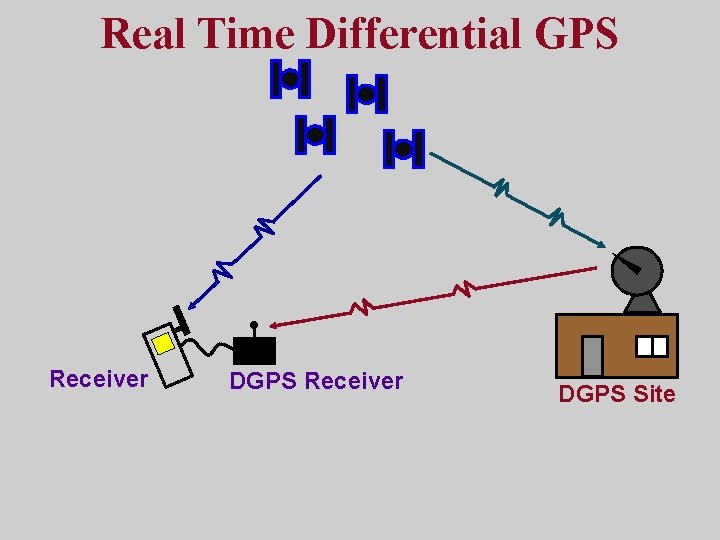
Real Time Differential GPS Receiver DGPS Site
Applications Ø Position Ø Navigation / Route Navigation Ø Time application (Indian Railways) Ø Tracking (Mobile GPS) Ø – Vehicle location Ø Precision Farming Ø Deformation studies Ø Control networks Ø Social services
- Slides: 22