
What is Geology The study of the forces

- Slides: 29
What is Geology? The study of the forces that change the Earth’s surface.
These forces can either build-up or wear-down the Earth.
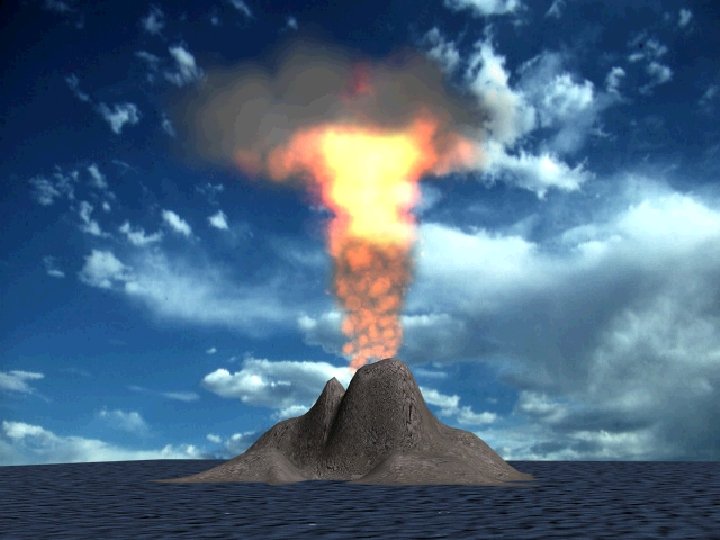
What are Constructive forces? Forces that shape the Earth’s surface by building up mountains and landmasses. Example: Volcanic Eruption adds new landmass.
What are Destructive forces? Forces that wear away mountains and every other feature on the Earth’s surface. Example: Weathering & Erosion due to wind or water.
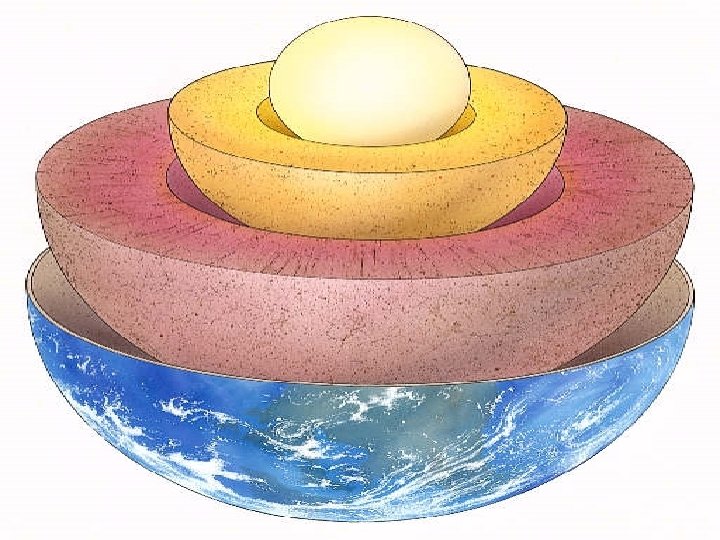
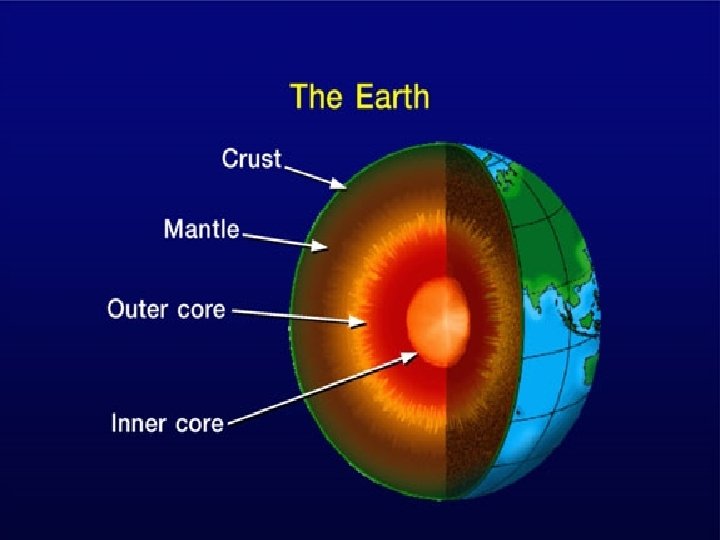
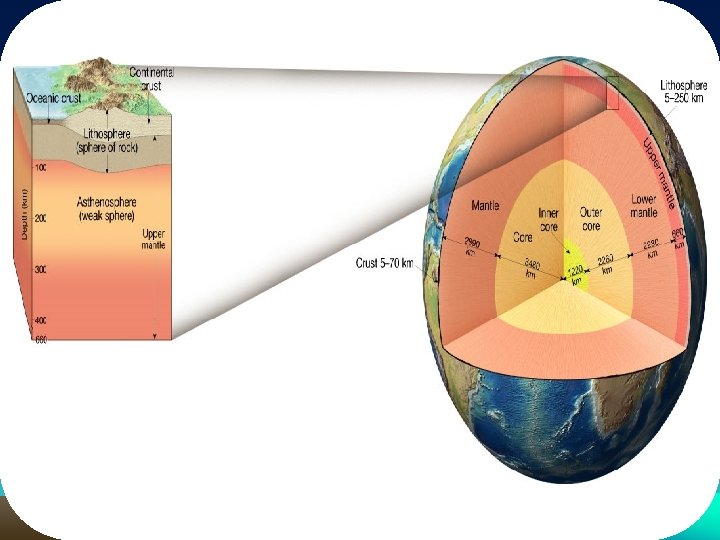
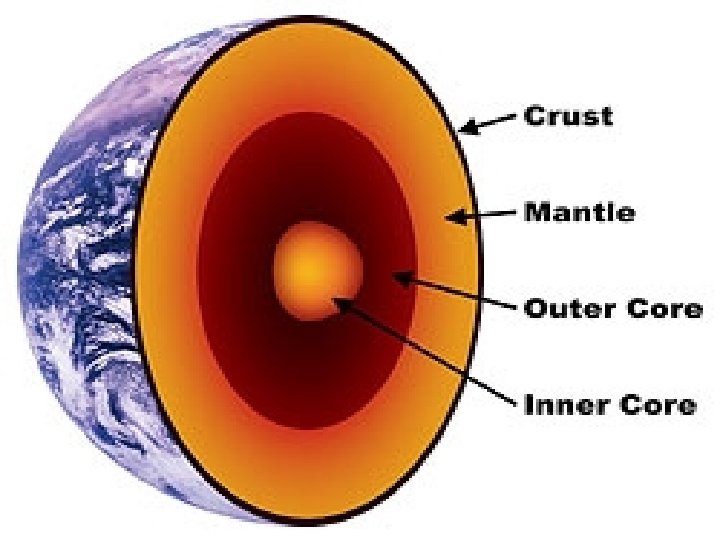
What are the main layers that make up the Earth’s interior? 1. Crust 2. Mantle 3. Outer Core 4. Inner Core
Describe the Crust. • It is the layer of the Earth that forms the outer skin. • It includes both continental land the ocean floor. • Anywhere from 7 -75 km thick.
Oceanic Crust is crust beneath the ocean & is made up from… BASALT
Continental Crust is crust that forms above the ocean & is made up mostly from … GRANITE
Density of Earth’s Crust • Continental crust has an average density of about 2. 7 g/cm 3. • Oceanic crust has an average density of about 3. 0 g/cm 3. Which type of crust is more dense?
Describe the Mantle. • A layer of hot rock material that is located beneath the crust. • Over 82% of Earth’s volume at about 2900 km thick. • Is divided into several layers. –Upper mantle which is made up of the lithosphere & asthenosphere –Lower mantle which is called the mesophere
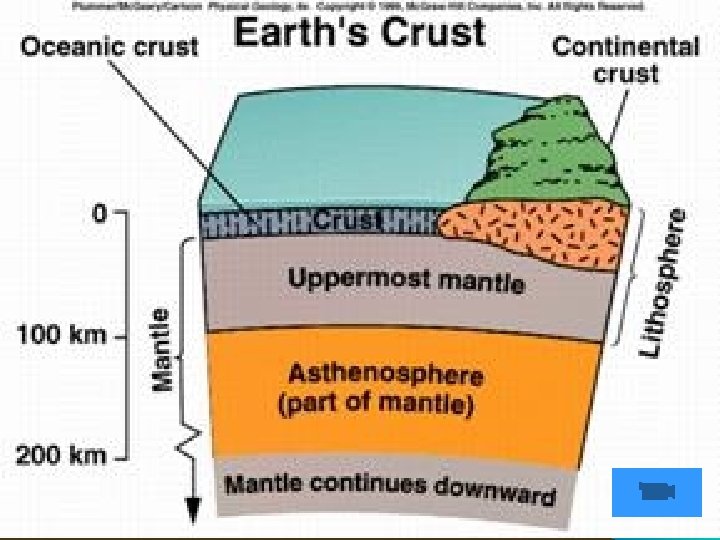
What is the Lithosphere? • The layer of rigid rock that includes all of the Crust and the upper portion of the Mantle. • It’s about 100 km thick
What is the Asthenosphere? • A layer of solid rock that behaves like a fluid (it flows and moves like a liquid). • This layer is found in the Mantle beneath the lithosphere. • The lithosphere floats on top of the asthenosphere.
The Earth’s Core is composed of what? • The inner core and the outer core together make up the structure of the Earth’s core. • Both the outer and inner cores are composed of iron & nickel. • The outer core is liquid (molten) metal and the inner core is solid metal
How do geologists know the internal structure of the Earth?
Because the actual interior of the Earth cannot be seen, geologists have relied on observations from indirect evidence.
What is indirect evidence? Indirect evidence is evidence that you get without actually seeing or touching the object you are studying.
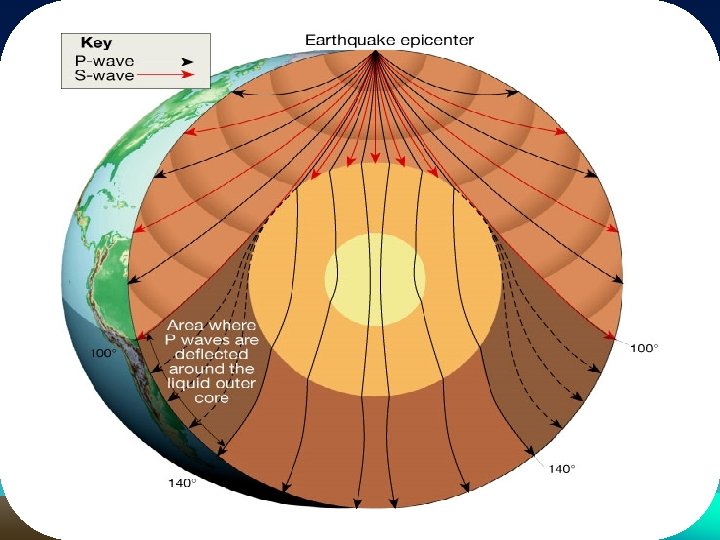
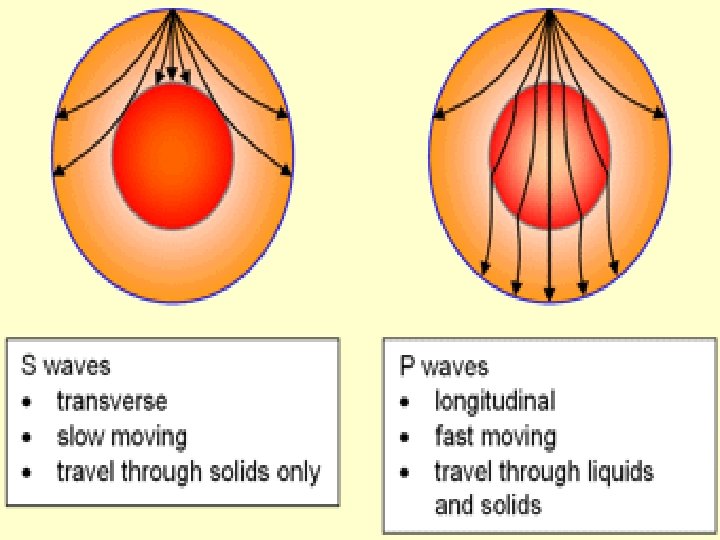
What are seismic waves? They are waves of energy generated by earthquakes.
How are seismic waves used to determine the Earth’s interior? • Seismologist, Andrija Mohorovicic, presented evidence for layering within the Earth by using seismic waves. He found that the velocity of seismic waves changed as they passed through the Earth. • He observed that seismic waves increased velocity abruptly about 50 km of depth. This boundary separates the crust from the underlying mantle and is known as the Moho. • Differences in each layer’s physical properties, such as density and state of matter, cause these waves to behave differently. • By carefully studying these waves geologist are able to create a picture of the Earth’s interior.
Where we will begin: In this unit, we will start with the outermost layer of the Earth: The Lithosphere! We will look at how erosion, weathering and soil formation affect the Earth’s Surface.