
What is geography Geography is a field of
- Slides: 17
What is geography? • Geography is a field of science dedicated to the study of the earth – Landscapes and features – Inhabitants—something that lives there – Phenomena—something that happens
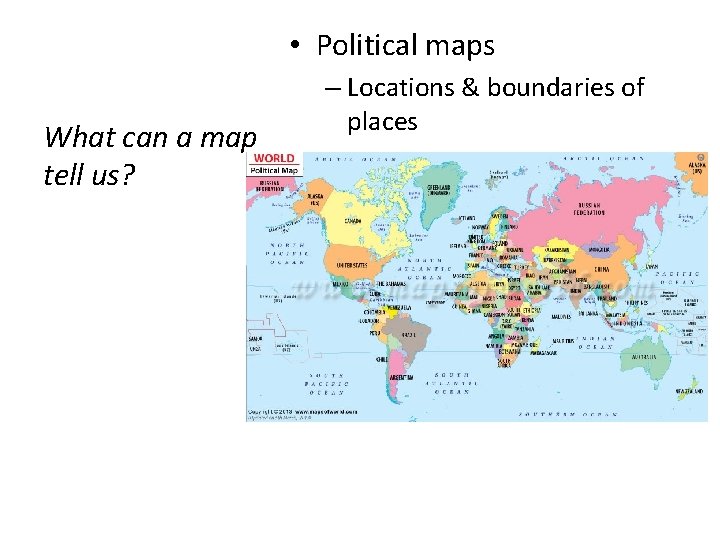
• Political maps What can a map tell us? – Locations & boundaries of places
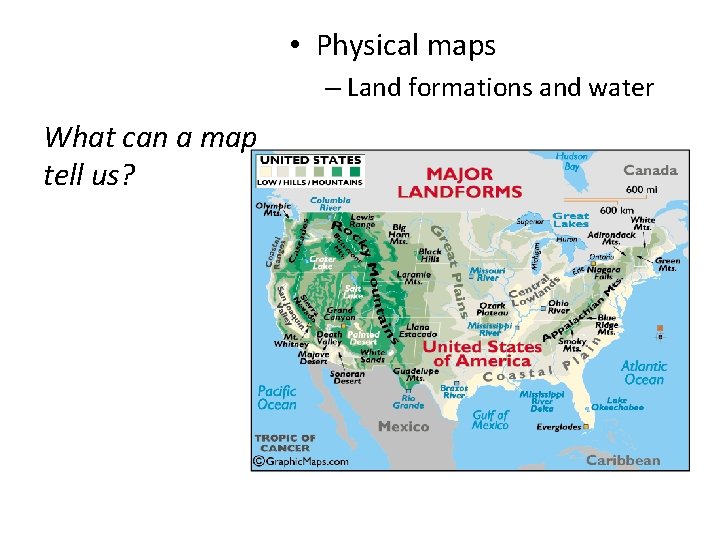
• Physical maps – Land formations and water What can a map tell us?
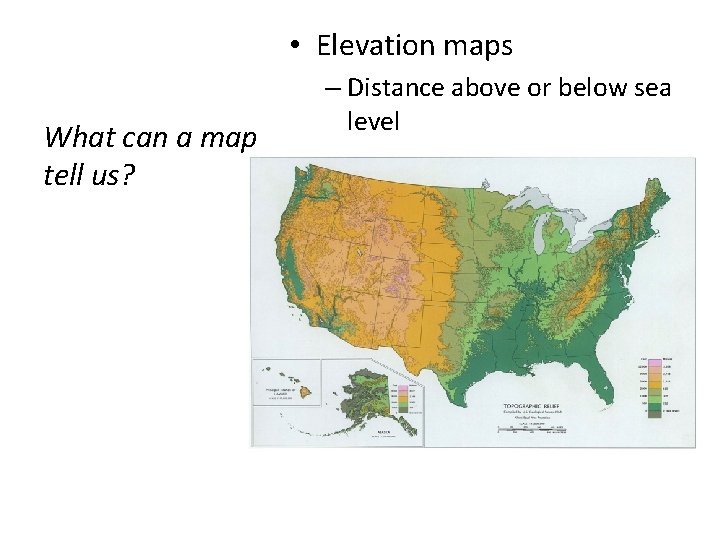
• Elevation maps What can a map tell us? – Distance above or below sea level
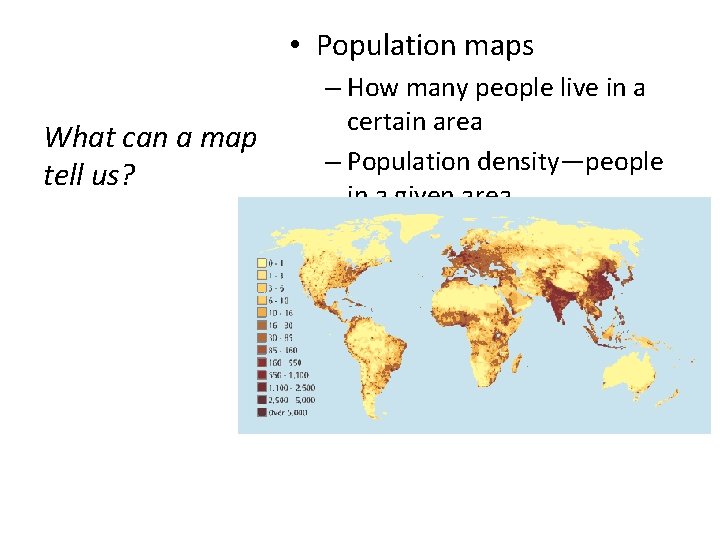
• Population maps What can a map tell us? – How many people live in a certain area – Population density—people in a given area
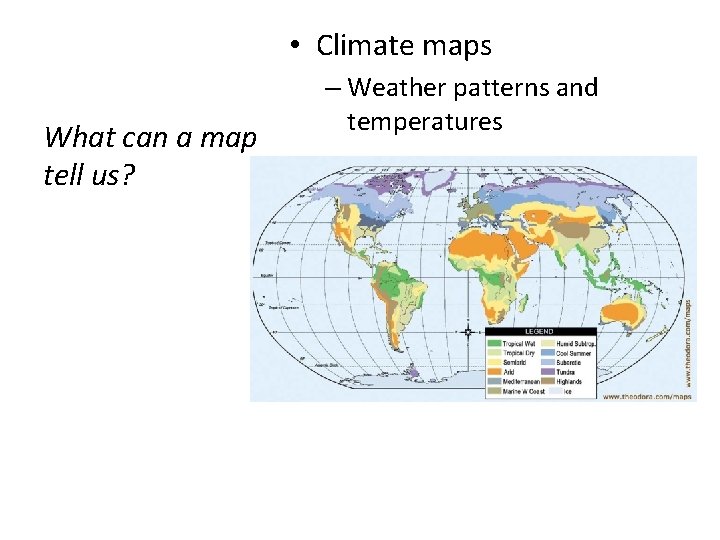
• Climate maps What can a map tell us? – Weather patterns and temperatures
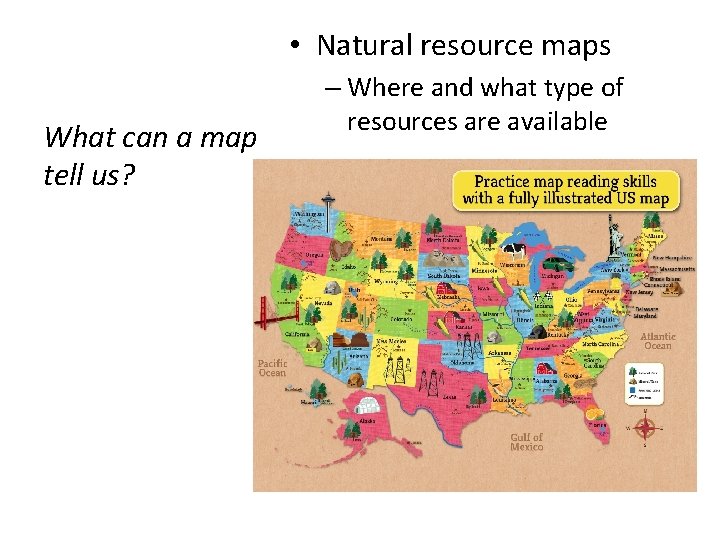
• Natural resource maps What can a map tell us? – Where and what type of resources are available
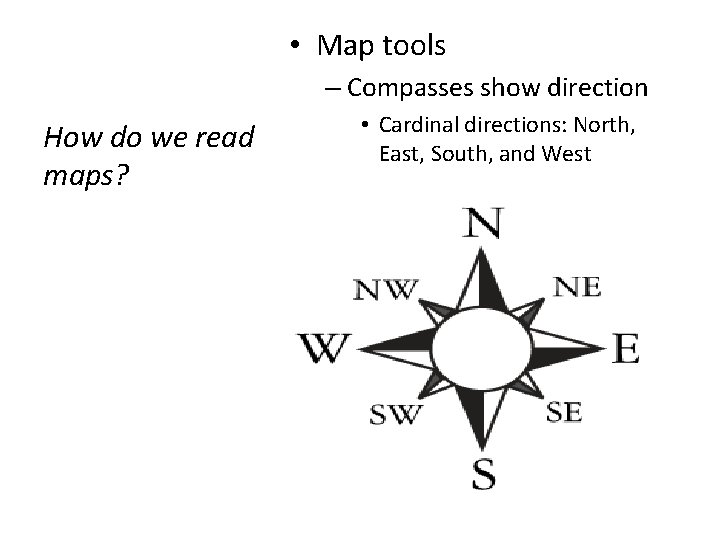
• Map tools – Compasses show direction How do we read maps? • Cardinal directions: North, East, South, and West
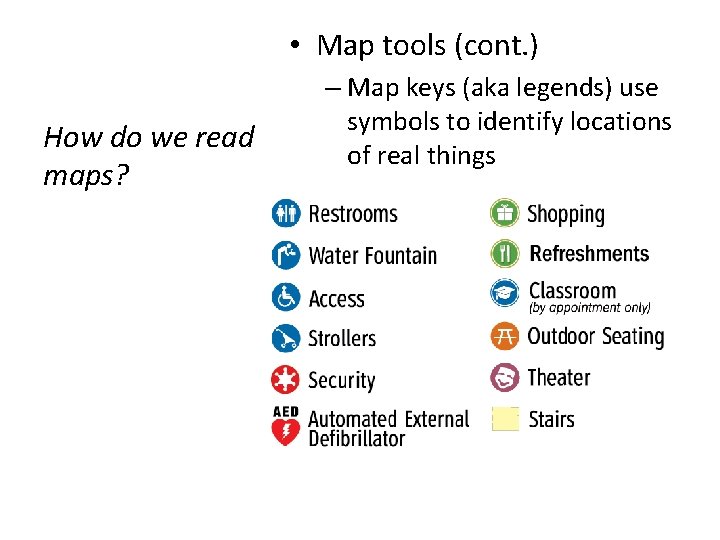
• Map tools (cont. ) How do we read maps? – Map keys (aka legends) use symbols to identify locations of real things
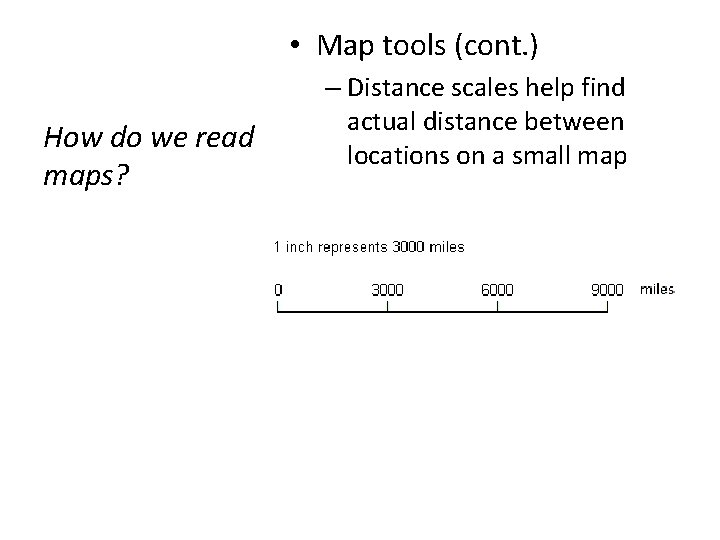
• Map tools (cont. ) How do we read maps? – Distance scales help find actual distance between locations on a small map
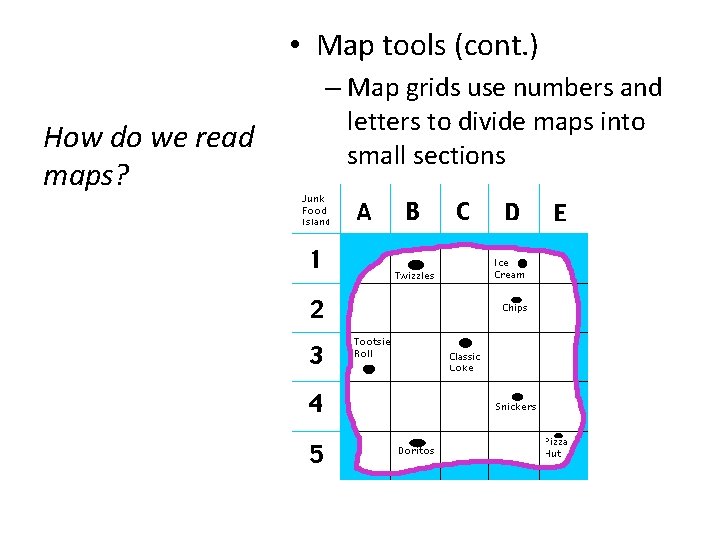
• Map tools (cont. ) How do we read maps? – Map grids use numbers and letters to divide maps into small sections
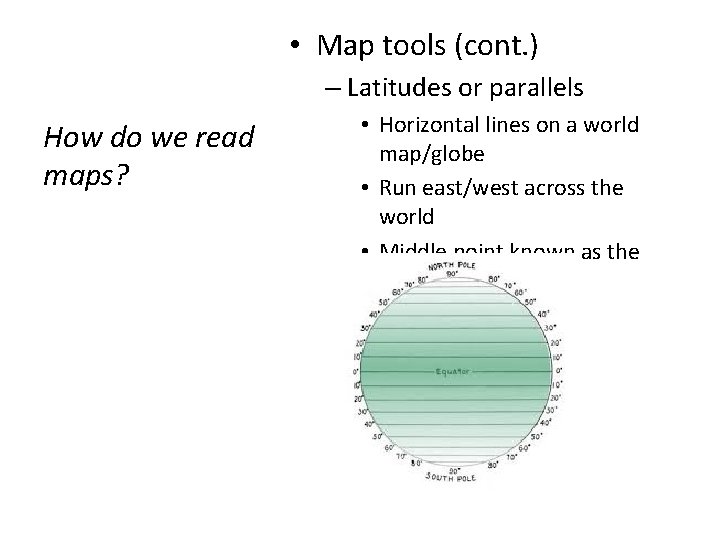
• Map tools (cont. ) – Latitudes or parallels How do we read maps? • Horizontal lines on a world map/globe • Run east/west across the world • Middle point known as the equator
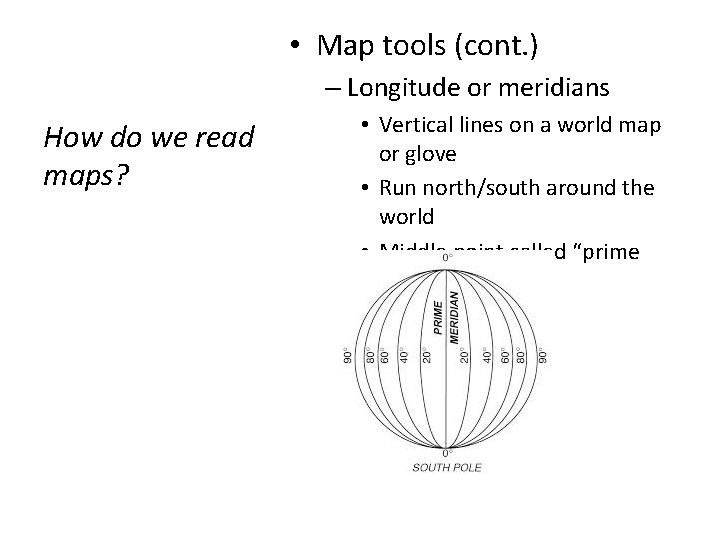
• Map tools (cont. ) – Longitude or meridians How do we read maps? • Vertical lines on a world map or glove • Run north/south around the world • Middle point called “prime meridian”
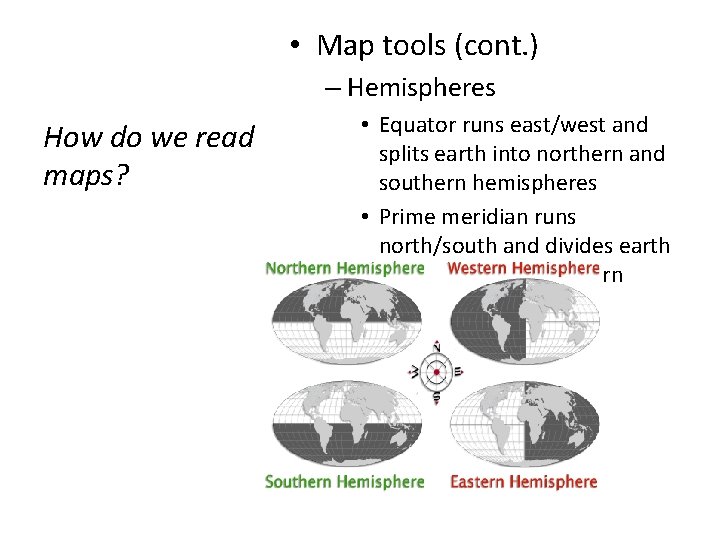
• Map tools (cont. ) – Hemispheres How do we read maps? • Equator runs east/west and splits earth into northern and southern hemispheres • Prime meridian runs north/south and divides earth into eastern and western hemispheres
What types of land formations exist? • Landforms are natural features of the earth’s surface – Mountains • High elevation (known as peak) • Usually formed through tectonic plate activity – Plains • Flat, dry area created by glaciers • Good for agriculture—fertile soil – Glaciers • Dense, slowly flowing body of ice • Created Great Plains during Ice Age
– Deserts What types of land formations exist? • Arid (very dry) climate • Lacks vegetation or animal life – Wetlands • Saturated with water and lots of wildlife – Rivers • Flowing body of water • Often floods during wet seasons and deposits nutrients into soil • Good for farming – Lakes • Depression filled with water • Formed through tectonics, landslides, craters, glacial activity
How is America divided up? • United States of America – States – Counties • Not in Alaska (boroughs), Louisiana (parishes), or Connecticut or Rhode Island (too small) – Cities, towns or townships, villages, etc.