
WHAT IS GAA Georgia Alternate Assessment PURPOSE Ensure




- Slides: 35
WHAT IS GAA? Georgia Alternate Assessment
PURPOSE • Ensure students with significant cognitive disabilities are provided the opportunity to access a challenging curriculum • Document student involvement in activities aligned to the general education curriculum • Demonstrate student progress towards achieving the curriculum standards
Overview of the GAA • The GAA is a portfolio of student work provided as evidence that a student is making progress toward grade-level academic standards, often at a prerequisite or entry level. • Evidence provided must show student work that is – aligned to specific grade-level standards, – adapted to meet the student’s cognitive, communication, physical and/or sensory impairments. • The Georgia alternate Assessment meets NCLB and IDEA mandates. 3
We do not teach GAA: GAA should be evidence of good instruction. GAA evidence is not an isolated event.
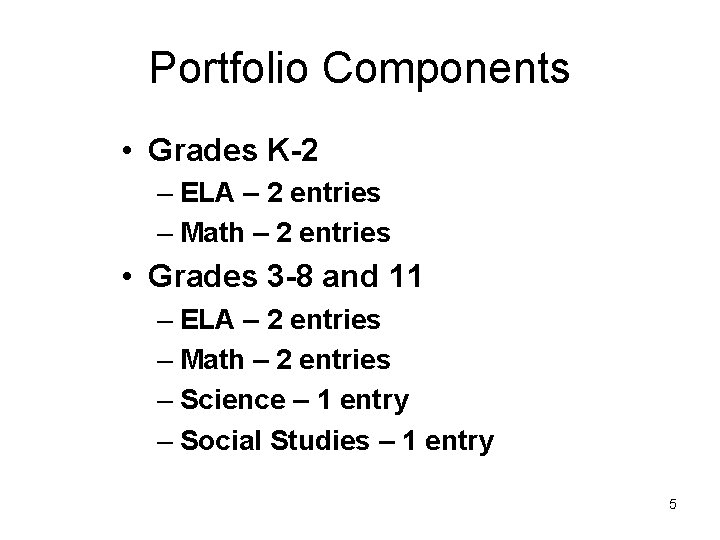
Portfolio Components • Grades K-2 – ELA – 2 entries – Math – 2 entries • Grades 3 -8 and 11 – ELA – 2 entries – Math – 2 entries – Science – 1 entry – Social Studies – 1 entry 5
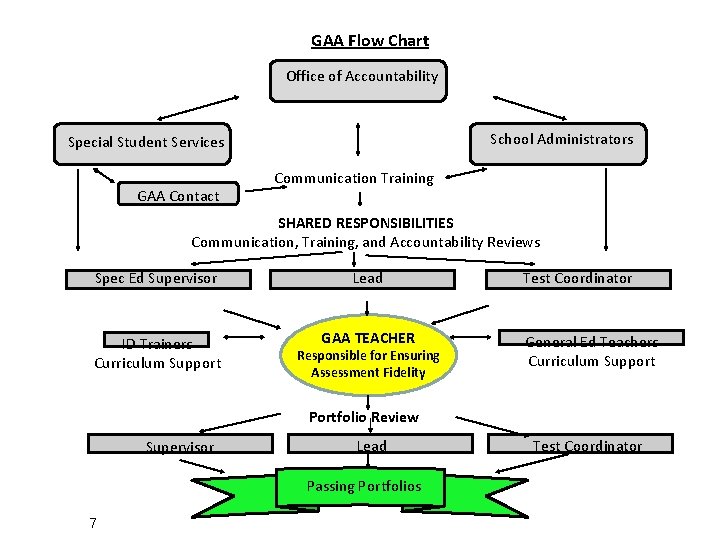
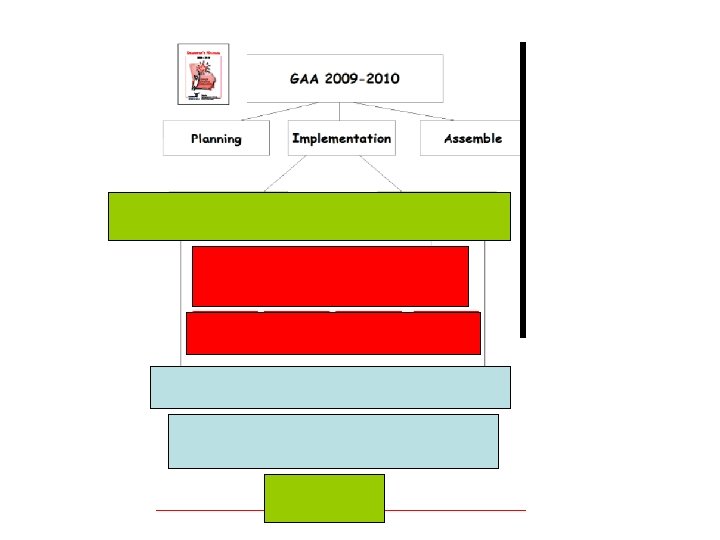
GAA Flow Chart Office of Accountability School Administrators Special Student Services GAA Contact Communication Training SHARED RESPONSIBILITIES Communication, Training, and Accountability Reviews Spec Ed Supervisor Lead ID Trainers Curriculum Support GAA TEACHER Responsible for Ensuring Assessment Fidelity Test Coordinator General Ed Teachers Curriculum Support Portfolio Review Supervisor Lead Passing Portfolios 7 Test Coordinator
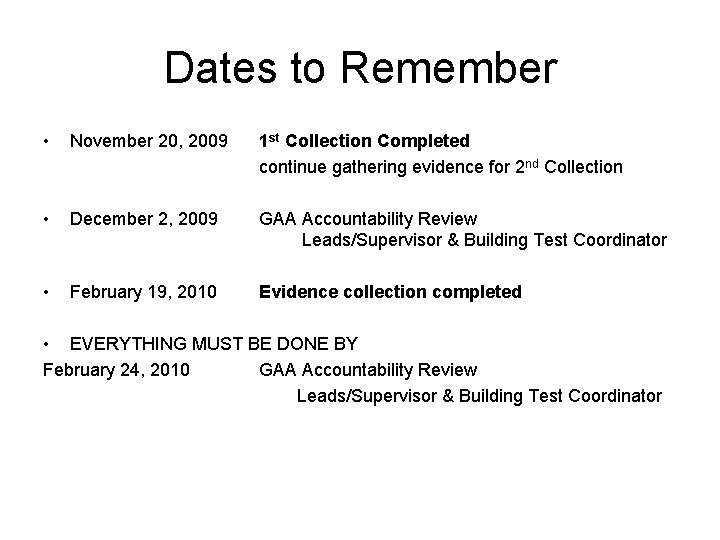
Dates to Remember • November 20, 2009 • December 2, 2009 GAA Accountability Review Leads/Supervisor & Building Test Coordinator 1 st Collection Completed continue gathering evidence for 2 nd Collection • February 19, 2010 Evidence collection completed • EVERYTHING MUST BE DONE BY February 24, 2010 GAA Accountability Review Leads/Supervisor & Building Test Coordinator
DOE information • http: //www. gadoe. org/ci_testing. aspx? Pag e. Req=CI_TESTING_GAA
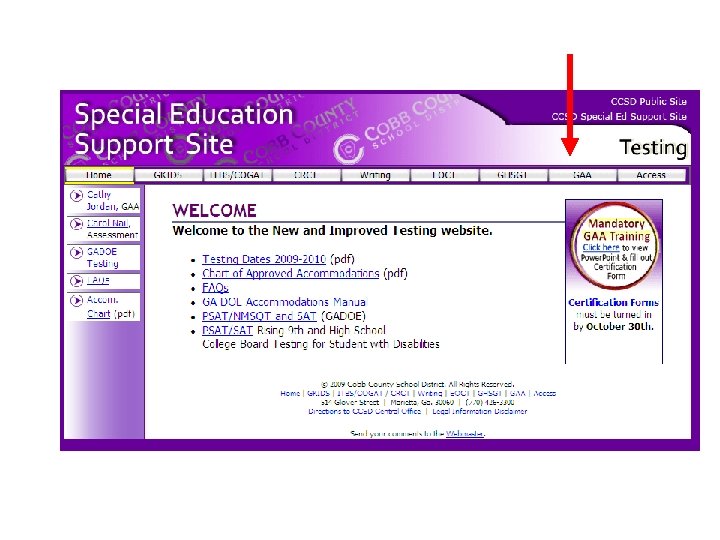
Where on Cobb site is info? • http: //support. cobbk 12. org/SSSpecial. Educ ation/gaa. htm
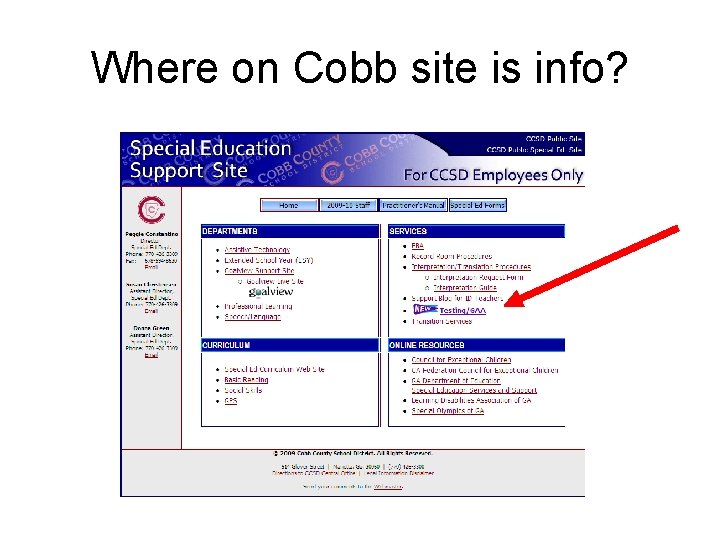
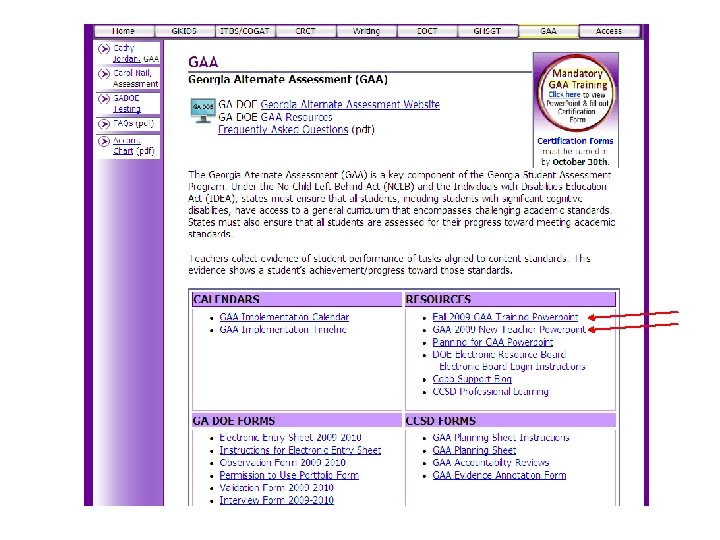
Where on Cobb site is info?
What is evidence?
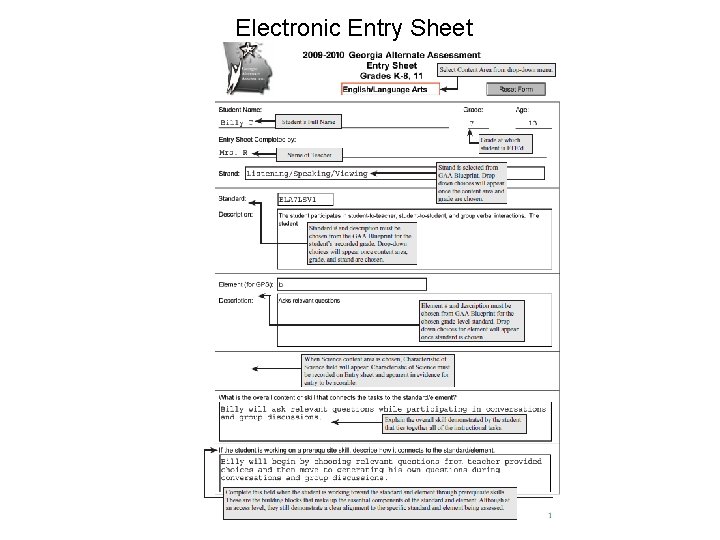
Entry Evidence • Entry – An entry for a content area consists of an Entry Sheet followed by pieces of evidence that show the student’s skill related to the standard/element indicated on the Entry Sheet. • Entry Sheet – An Entry Sheet is a 2 -page document that must be completed and placed in front of the evidence for that entry. – It serves as a table of contents for the entry. • Evidence – Student work samples, series of captioned photographs, etc. , that show or describe the student’s performance on instructional tasks related to the selected standard/element. 19
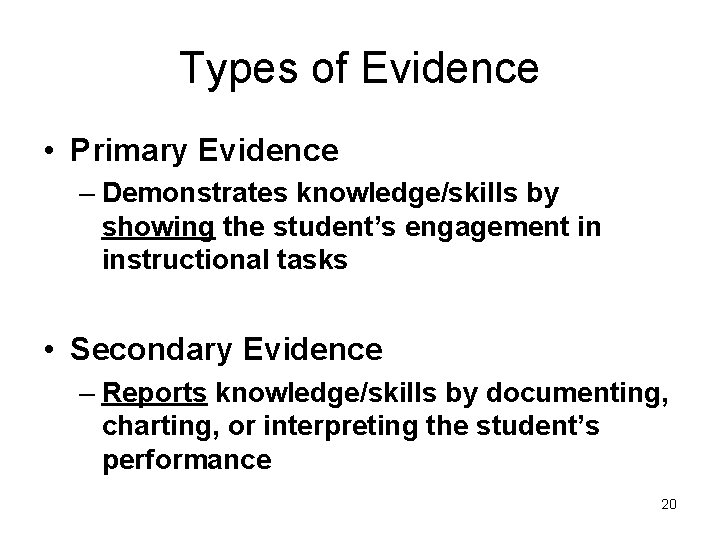
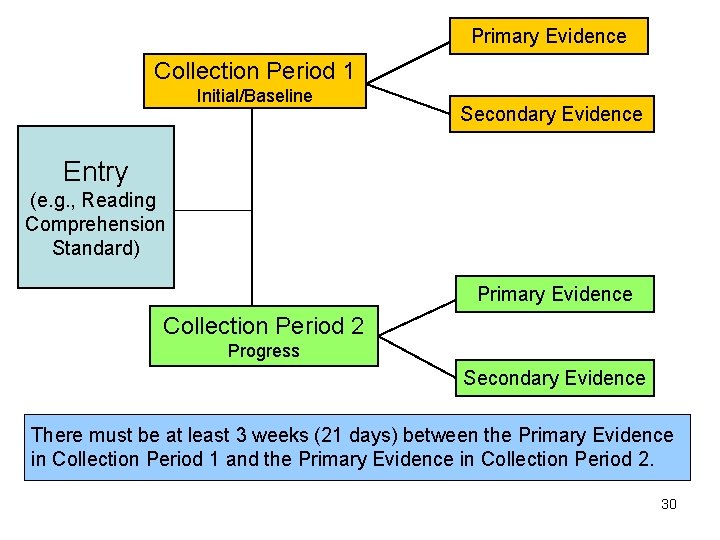
Types of Evidence • Primary Evidence – Demonstrates knowledge/skills by showing the student’s engagement in instructional tasks • Secondary Evidence – Reports knowledge/skills by documenting, charting, or interpreting the student’s performance 20
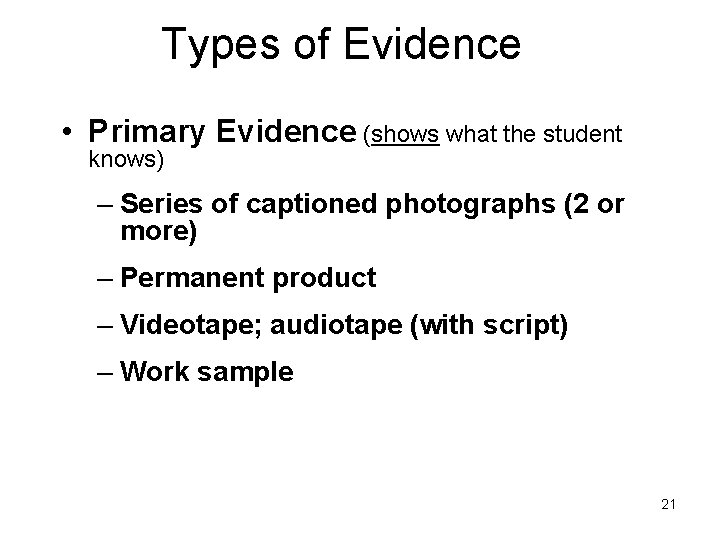
Types of Evidence • Primary Evidence (shows what the student knows) – Series of captioned photographs (2 or more) – Permanent product – Videotape; audiotape (with script) – Work sample 21
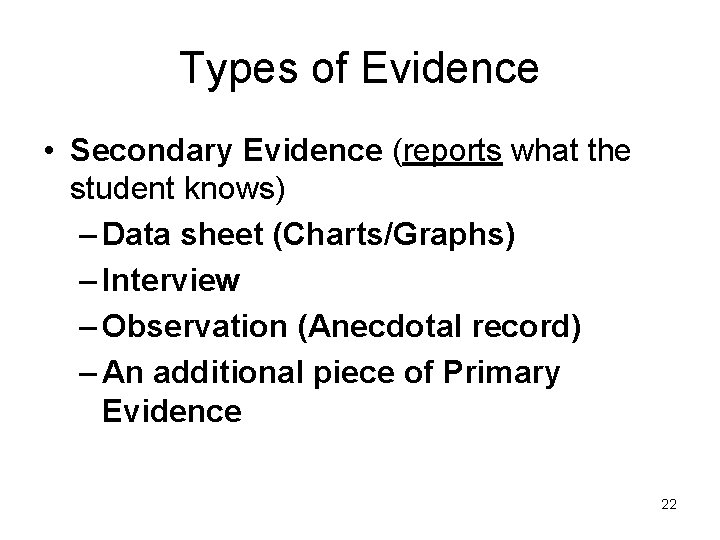
Types of Evidence • Secondary Evidence (reports what the student knows) – Data sheet (Charts/Graphs) – Interview – Observation (Anecdotal record) – An additional piece of Primary Evidence 22
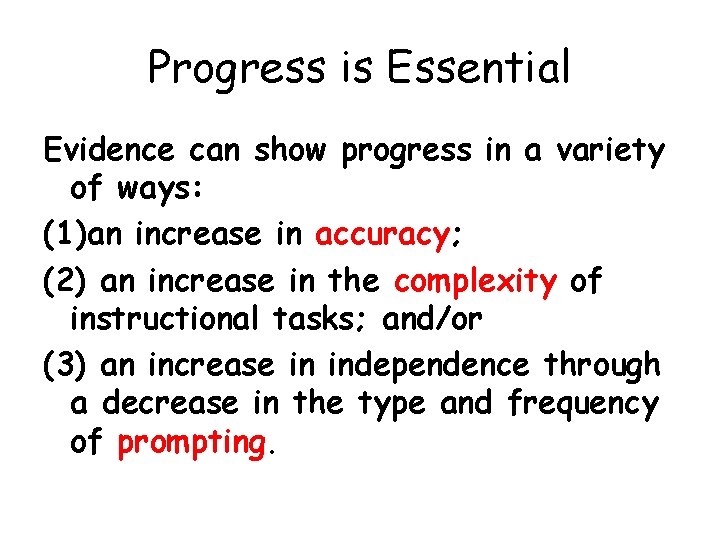
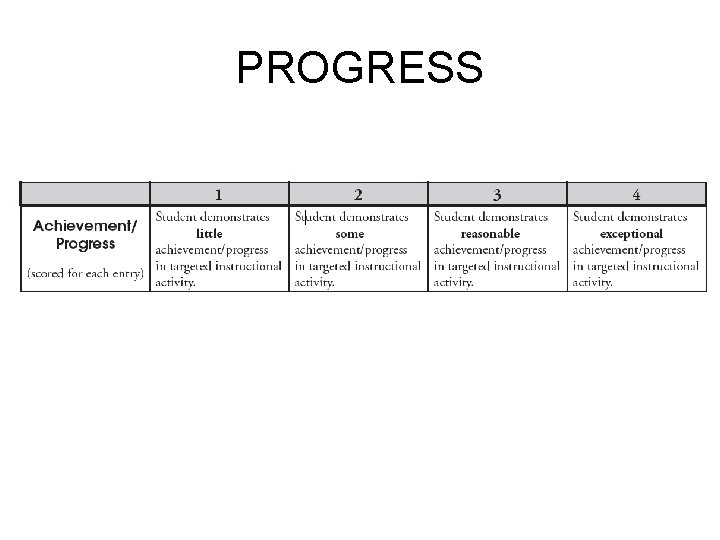
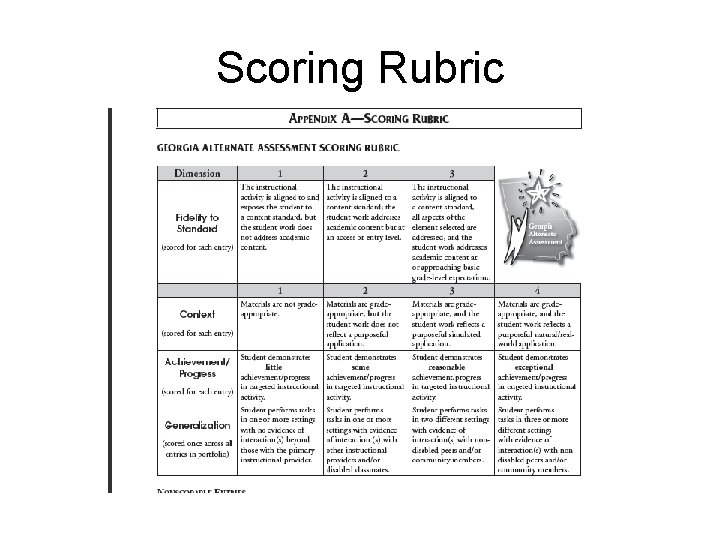
Progress is Essential Evidence can show progress in a variety of ways: (1)an increase in accuracy; (2) an increase in the complexity of instructional tasks; and/or (3) an increase in independence through a decrease in the type and frequency of prompting.
PROGRESS
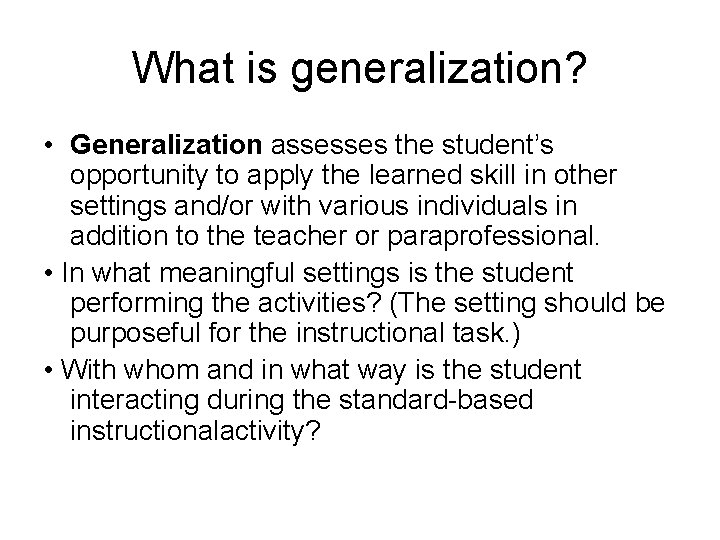
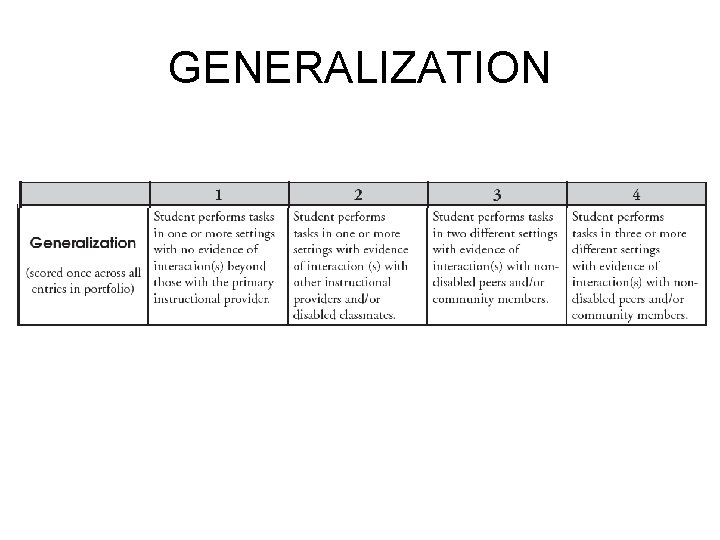
What is generalization? • Generalization assesses the student’s opportunity to apply the learned skill in other settings and/or with various individuals in addition to the teacher or paraprofessional. • In what meaningful settings is the student performing the activities? (The setting should be purposeful for the instructional task. ) • With whom and in what way is the student interacting during the standard-based instructionalactivity?
GENERALIZATION
Documenting Evidence • Use the same nouns & verbs that are in the standard and element in writing annotations and task descriptions • USE THE CHECKLISTS – Page 14 - 31
Electronic Entry Sheet
Scoring Rubric
Primary Evidence Collection Period 1 Initial/Baseline Secondary Evidence Entry (e. g. , Reading Comprehension Standard) Primary Evidence Collection Period 2 Progress Secondary Evidence There must be at least 3 weeks (21 days) between the Primary Evidence in Collection Period 1 and the Primary Evidence in Collection Period 2. 30
No changes for 2009 -2010 • There is no change at this time in the ages for moving students from elementary to middle school or from middle school to high school. • Any changes will be communicated formally through your special education supervisors.
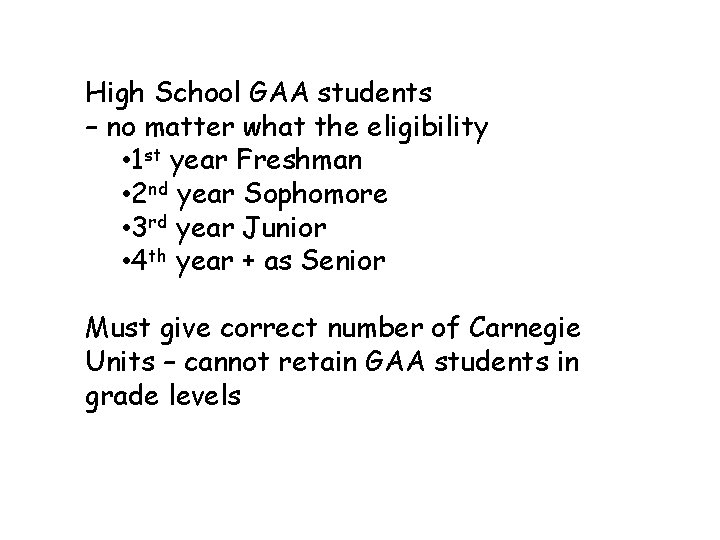
High School GAA students – no matter what the eligibility • 1 st year Freshman • 2 nd year Sophomore • 3 rd year Junior • 4 th year + as Senior Must give correct number of Carnegie Units – cannot retain GAA students in grade levels
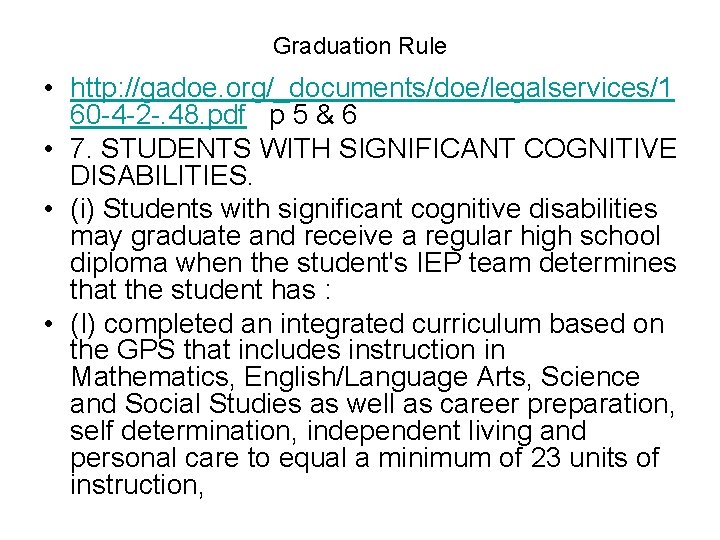
Graduation Rule • http: //gadoe. org/_documents/doe/legalservices/1 60 -4 -2 -. 48. pdf p 5 & 6 • 7. STUDENTS WITH SIGNIFICANT COGNITIVE DISABILITIES. • (i) Students with significant cognitive disabilities may graduate and receive a regular high school diploma when the student's IEP team determines that the student has : • (I) completed an integrated curriculum based on the GPS that includes instruction in Mathematics, English/Language Arts, Science and Social Studies as well as career preparation, self determination, independent living and personal care to equal a minimum of 23 units of instruction,
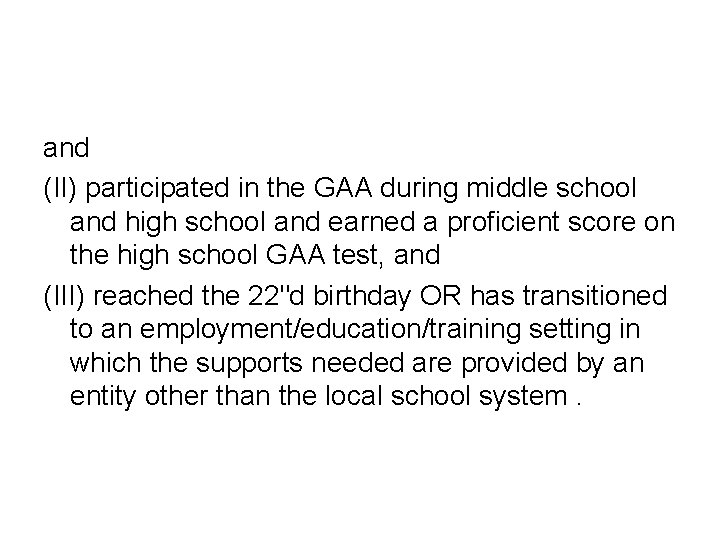
and (II) participated in the GAA during middle school and high school and earned a proficient score on the high school GAA test, and (III) reached the 22"d birthday OR has transitioned to an employment/education/training setting in which the supports needed are provided by an entity other than the local school system.