
What is funduscopy And Why is it important
- Slides: 29
What is funduscopy? And… Why is it important to you?
Web sites of interest: Welch Alleyn l www. panoptic. welchallyn. com l http: //www. welchallyn. com/medical/ go to “optometry student” menu drop down Red Atlas l http: //www. redatlas. com
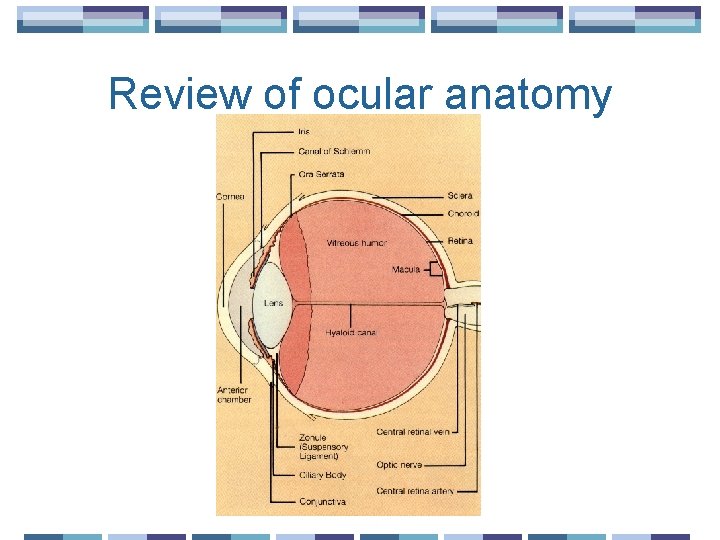
Review of ocular anatomy
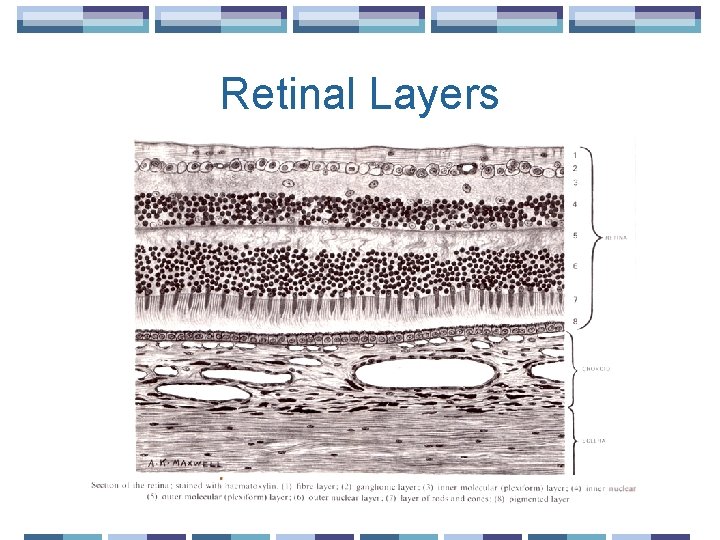
Retinal Layers
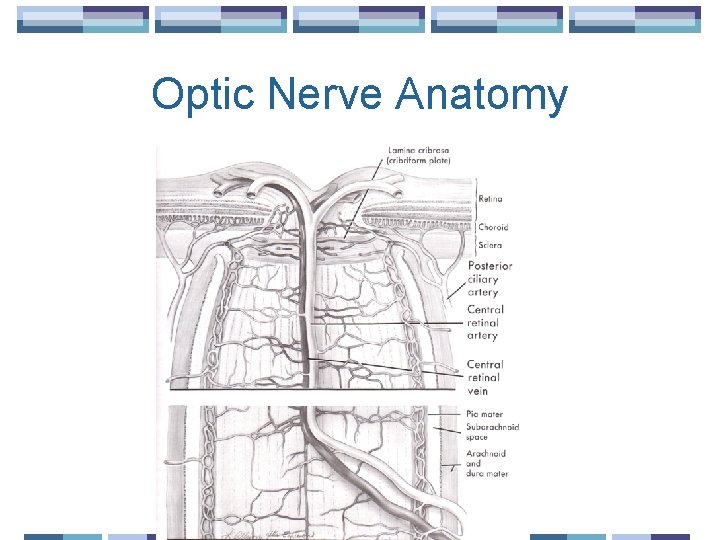
Optic Nerve Anatomy
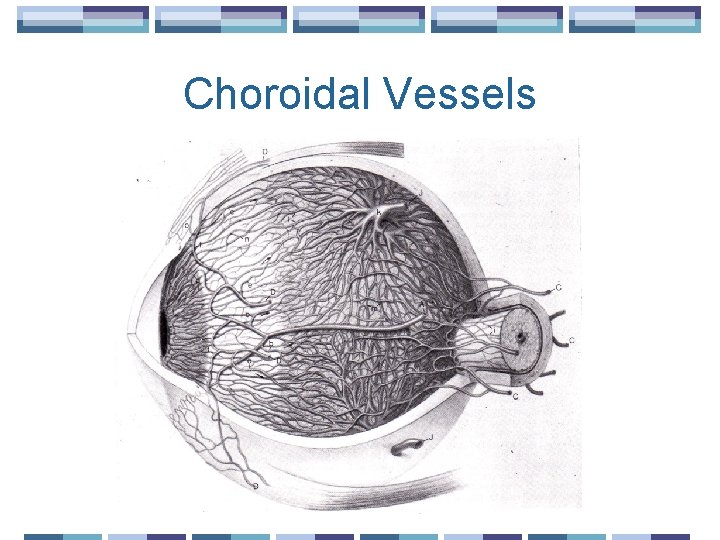
Choroidal Vessels
Funduscopy Techniques/instruments Direct Ophthalmoscopy Indirect Ophthalmoscopy Fundus Biomicroscopy Fundus Contact Lens
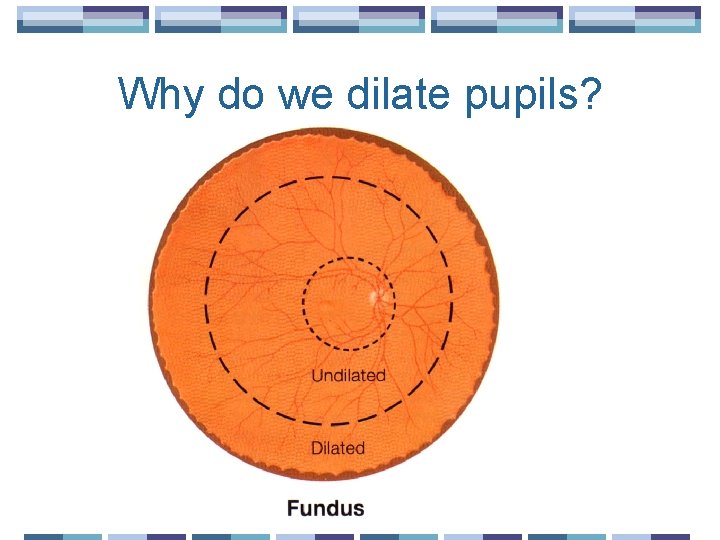
Why do we dilate pupils?
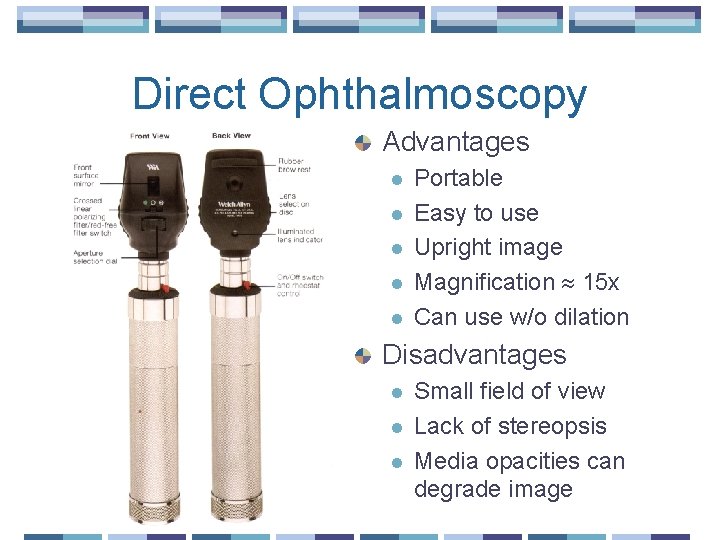
Direct Ophthalmoscopy Advantages l l l Portable Easy to use Upright image Magnification 15 x Can use w/o dilation Disadvantages l l l Small field of view Lack of stereopsis Media opacities can degrade image
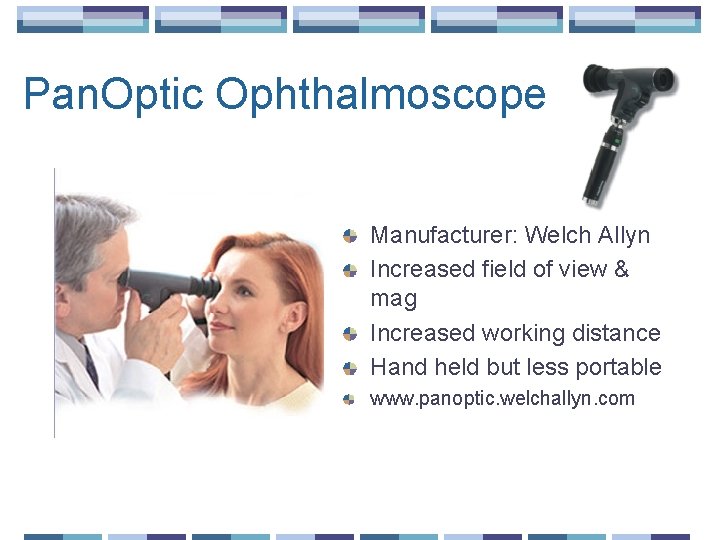
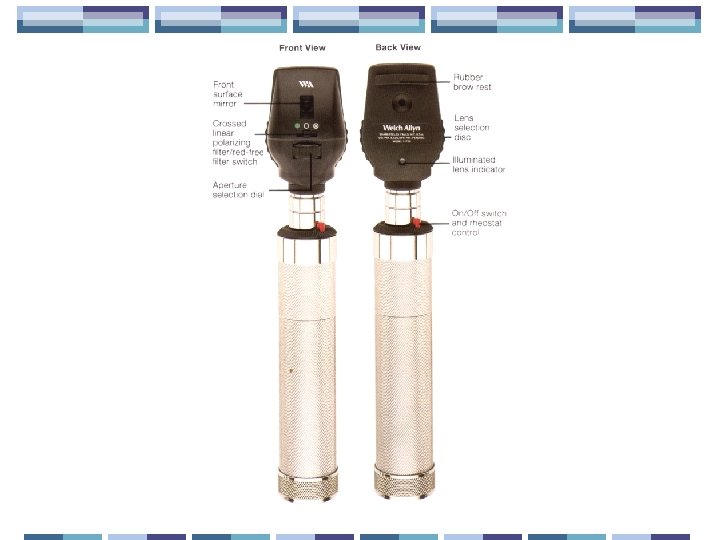
Pan. Optic Ophthalmoscope Manufacturer: Welch Allyn Increased field of view & mag Increased working distance Hand held but less portable www. panoptic. welchallyn. com
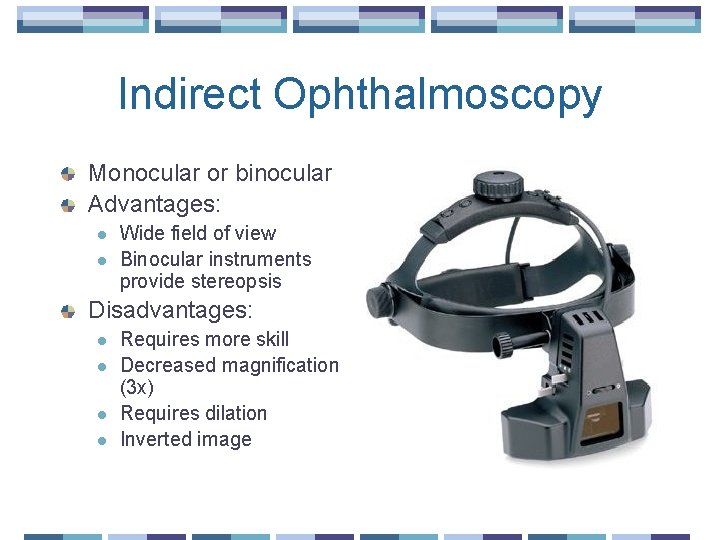
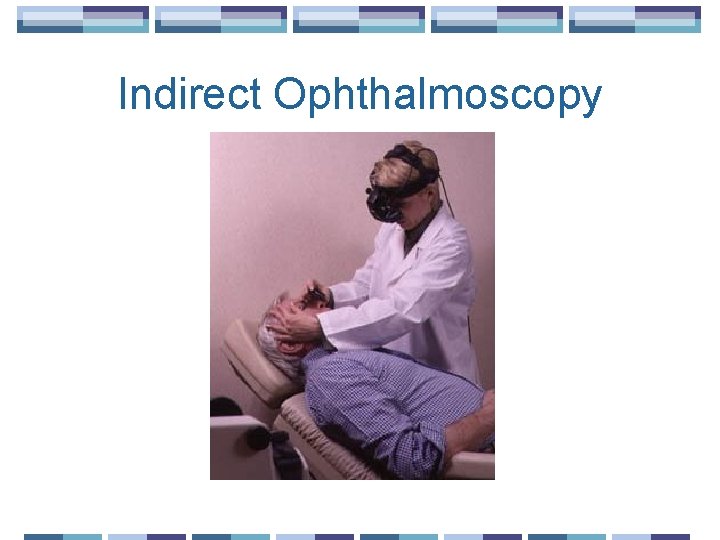
Indirect Ophthalmoscopy Monocular or binocular Advantages: l l Wide field of view Binocular instruments provide stereopsis Disadvantages: l l Requires more skill Decreased magnification (3 x) Requires dilation Inverted image
Indirect Ophthalmoscopy
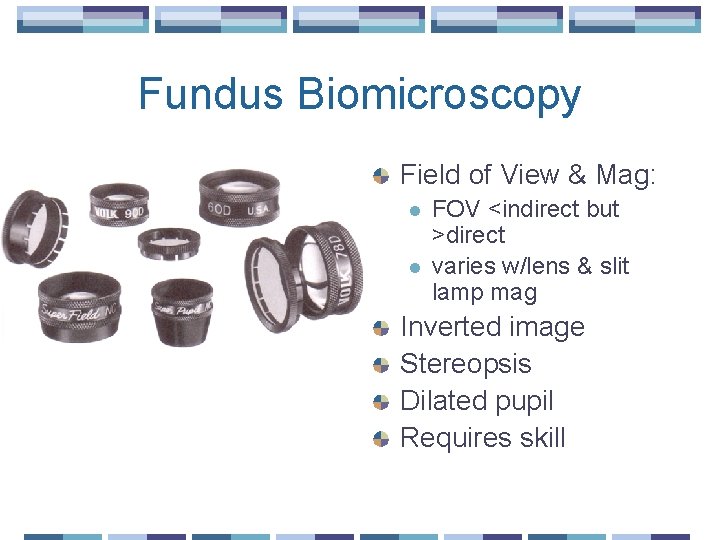
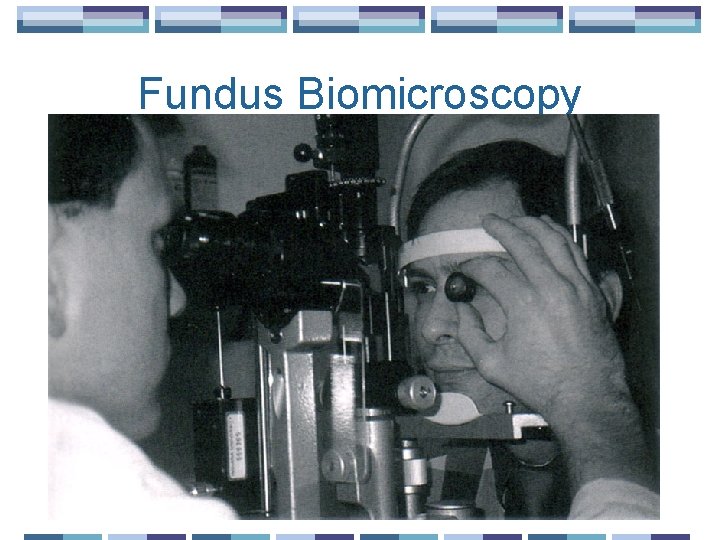
Fundus Biomicroscopy Field of View & Mag: l l FOV <indirect but >direct varies w/lens & slit lamp mag Inverted image Stereopsis Dilated pupil Requires skill
Fundus Biomicroscopy
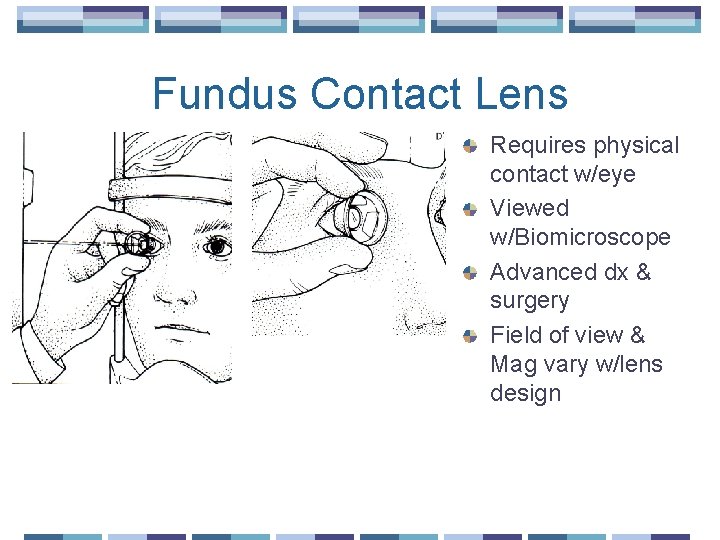
Fundus Contact Lens Requires physical contact w/eye Viewed w/Biomicroscope Advanced dx & surgery Field of view & Mag vary w/lens design
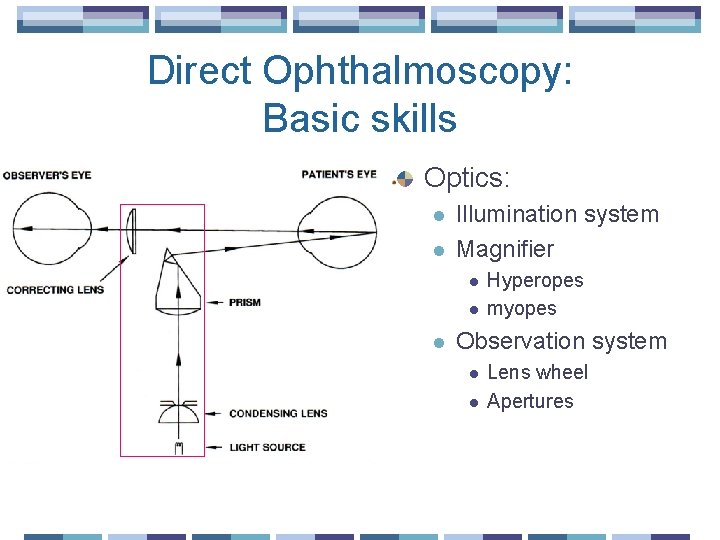
Direct Ophthalmoscopy: Basic skills Optics: l l Illumination system Magnifier l l l Hyperopes myopes Observation system l l Lens wheel Apertures
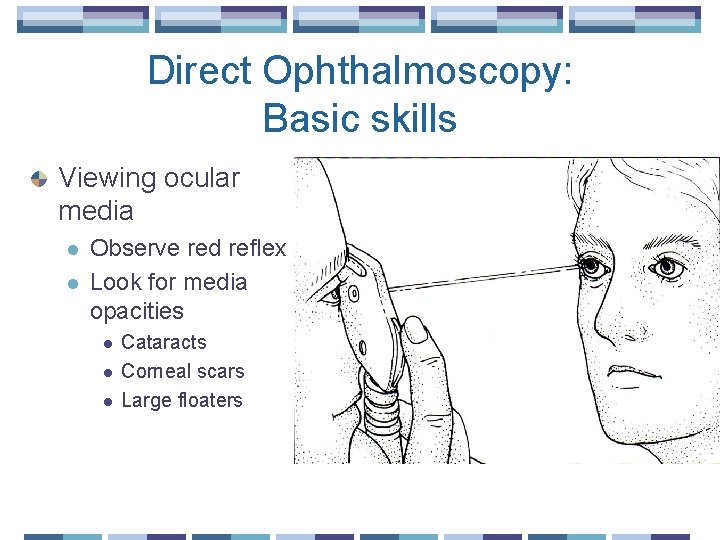
Direct Ophthalmoscopy: Basic skills Viewing ocular media l l Observe red reflex Look for media opacities l l l Cataracts Corneal scars Large floaters
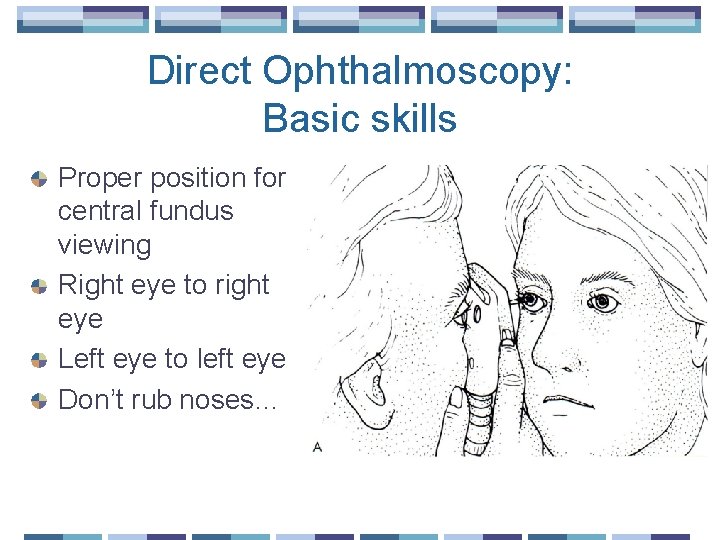
Direct Ophthalmoscopy: Basic skills Proper position for central fundus viewing Right eye to right eye Left eye to left eye Don’t rub noses…
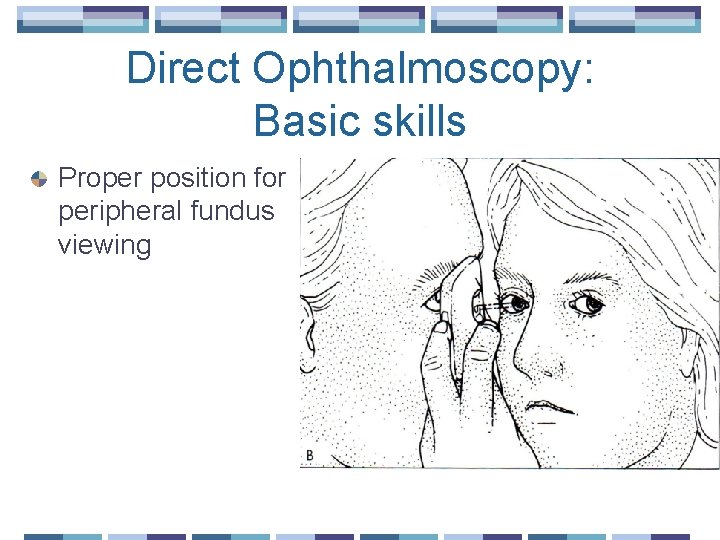
Direct Ophthalmoscopy: Basic skills Proper position for peripheral fundus viewing
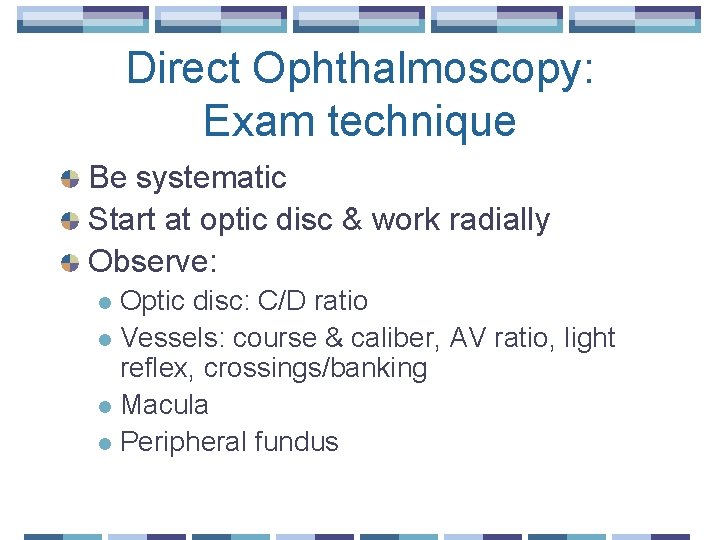
Direct Ophthalmoscopy: Exam technique Be systematic Start at optic disc & work radially Observe: Optic disc: C/D ratio l Vessels: course & caliber, AV ratio, light reflex, crossings/banking l Macula l Peripheral fundus l
Direct Ophthalmoscopy: Basic skills Clinical pearls FOV incr. when closer to Pt. l Larger pupil increases FOV l Contact lenses l Check lens wheel– watch accommodation l
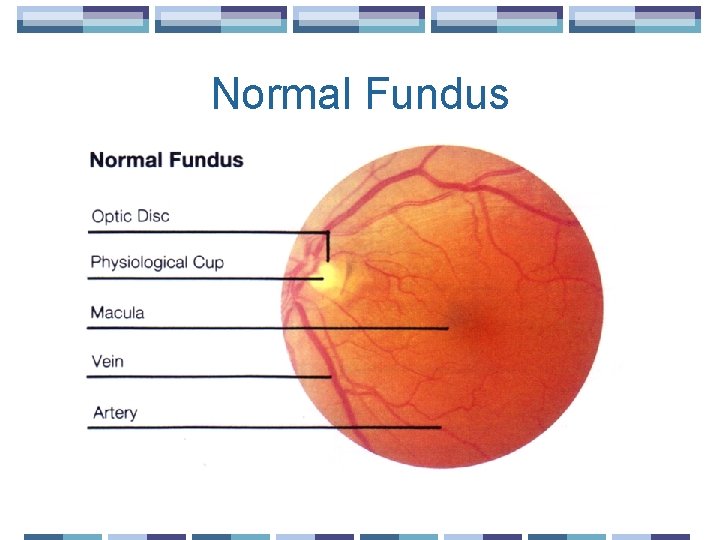
Normal Fundus
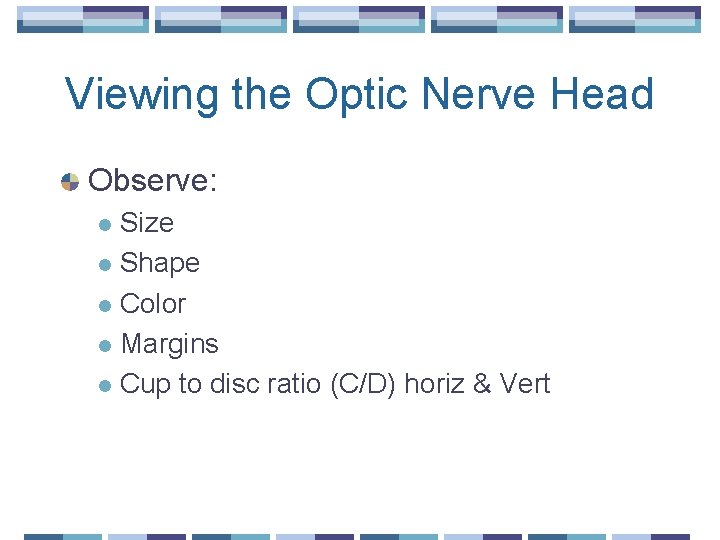
Viewing the Optic Nerve Head Observe: Size l Shape l Color l Margins l Cup to disc ratio (C/D) horiz & Vert l
Blood Vessel Evaluation Observe: Vessel diameter l Shape/tortuosity l Color l Crossings l Light reflex l Artery/Vein (A/V) ratio: after 2 nd bifurcation l
Hypertensive Retinopathy Scheie classification: I: Thinning of retinal arterioles relative to veins II: Obvious arteriolar narrowing w/focal areas of attenuation III: Stage II + cotton wool spots, exudates & hemes IV: Stage III + swollen optic disk (similar to papilledema)
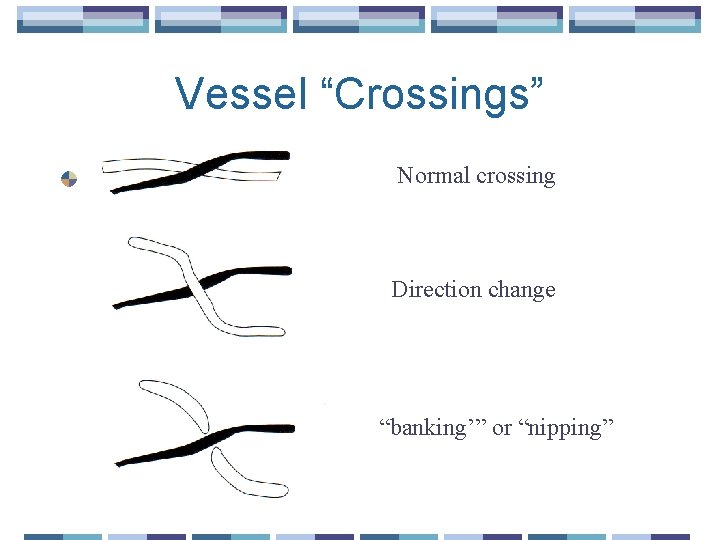
Vessel “Crossings” Normal crossing Direction change “banking’” or “nipping”
Arteriolosclerosis Increased light reflex (1/2) “Copper wire” arterioles “Silver wiring” arterioles l whitish appearance w/continuing sclerosis Increased A/V crossings
Macula Lies about 2 DD (disc diameters) temporal to the optic disc Should be avascular May appear darker red than surrounding retina Should see bright foveal reflex on younger pts