
What is Food Sovereignty Overview Pathway What is

- Slides: 12
What is ”Food Sovereignty”? Overview Pathway
What is “food sovereignty”? “The right of peoples to healthy and culturally appropriate food produced through ecologically sound and sustainable methods, and their right to define their own food and agriculture systems” Source: La Via Campesina
It is often described as a more powerful concept than “food security”. Sometimes people use “food sovereignty” and “food security” interchangeably. Food security can simply mean people having enough to eat – enough calories to sustain life – without considering the nature of the food and how it was produced.
Can you think of an example where someone might have “food security” but not “food sovereignty”?
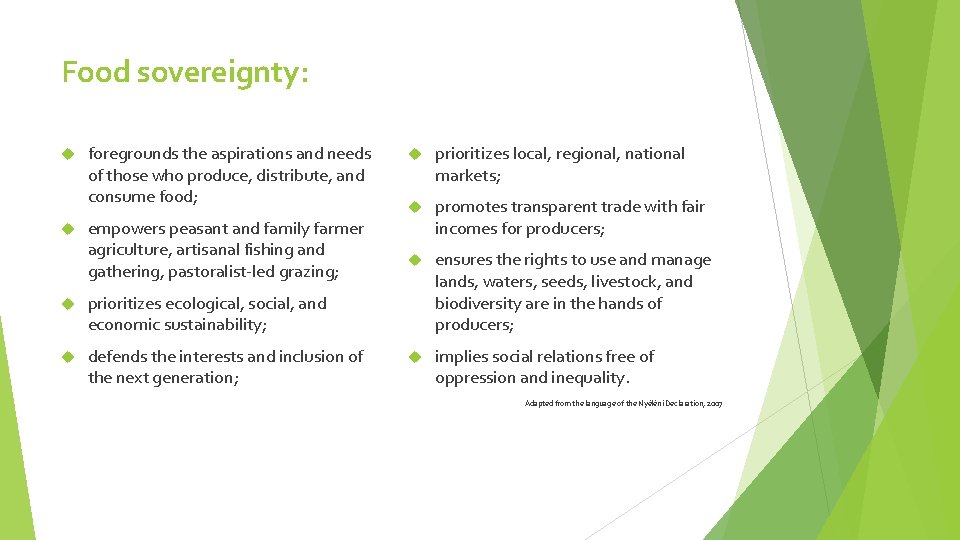
Food sovereignty: foregrounds the aspirations and needs of those who produce, distribute, and consume food; empowers peasant and family farmer agriculture, artisanal fishing and gathering, pastoralist-led grazing; prioritizes ecological, social, and economic sustainability; defends the interests and inclusion of the next generation; prioritizes local, regional, national markets; promotes transparent trade with fair incomes for producers; ensures the rights to use and manage lands, waters, seeds, livestock, and biodiversity are in the hands of producers; implies social relations free of oppression and inequality. Adapted from the language of the Nyéléni Declaration, 2007
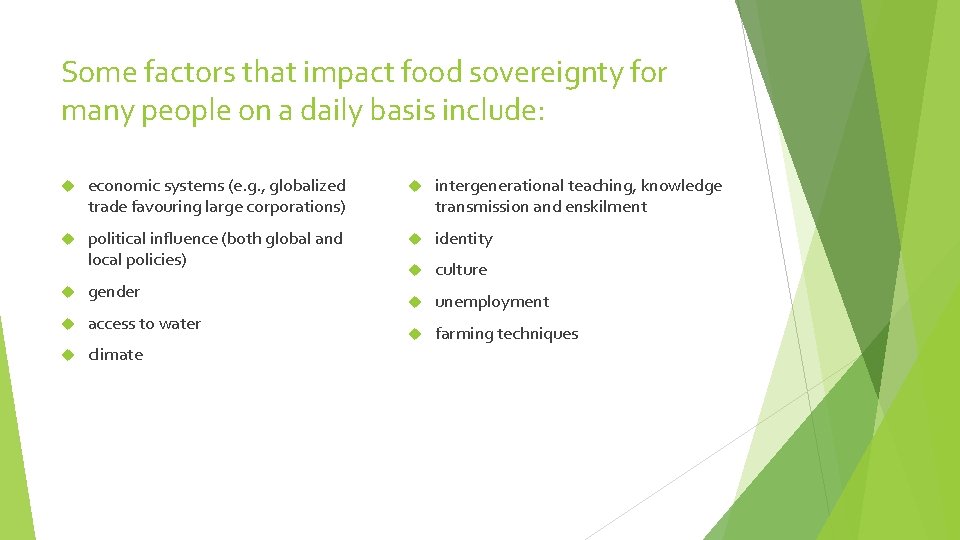
Some factors that impact food sovereignty for many people on a daily basis include: economic systems (e. g. , globalized trade favouring large corporations) intergenerational teaching, knowledge transmission and enskilment political influence (both global and local policies) identity culture unemployment farming techniques gender access to water climate
Which ones impact your community? Your family? Can you think of others to add to this list?
Part of the La Via Campesina statement refers to “culturally appropriate food”. What does this mean?
In explaining “culturally appropriate food”, participants in Four Stories have explained that “every land has its own seed” (Fatima O. from Jordan). How do you understand this statement?
Let’s try another activity… Note: further activities can be found on the website.
Follow the project! fourstoriesaboutfood. org